Landscape Lighting Ideas and Costs
Professionally installed landscape lighting usually costs $3,000–$6,000, or about $90–$150 per installed low-voltage fixture. Most homes use low-voltage LED lights for paths, trees, walls and patios.
By LandscapeLookup Editors5 min read
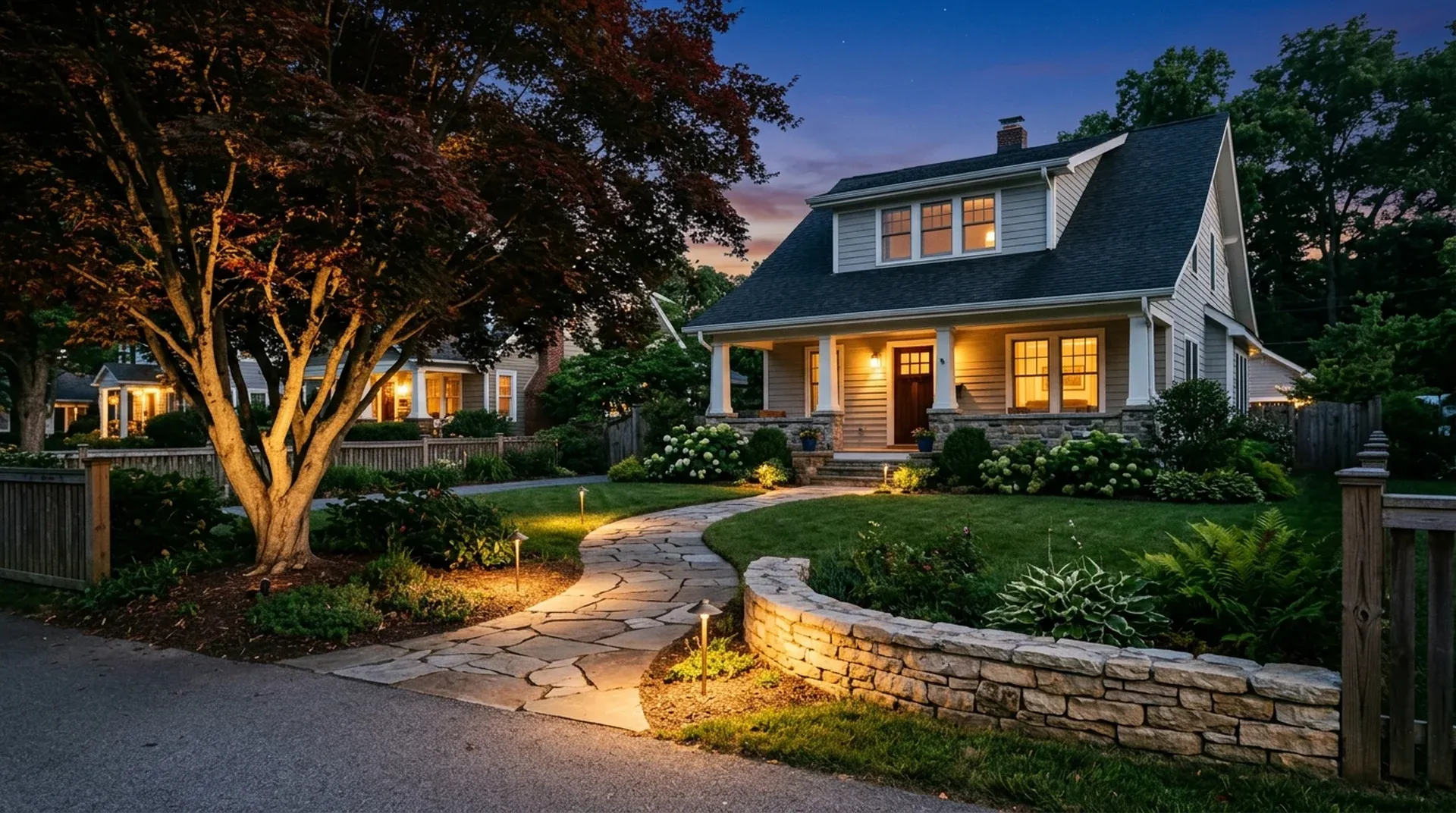
Professionally installed landscape lighting usually costs $3,000–$6,000, with an average around $4,000, according to HomeAdvisor. Basic systems start near $1,000, and a professionally installed low-voltage fixture runs about $90–$150. Most homes use low-voltage (12-volt) LED fixtures, which are cheaper to run and safer to work on than standard 120-volt wiring.
Outdoor lighting ideas that work
Good landscape lighting does three jobs: it makes paths and steps safe, shows off a few favorite features, and makes patios and decks usable after dark. You don't need to light everything. A handful of well-placed fixtures usually looks better than a runway of lights.
- Path lights. Short post-style fixtures along walkways and driveways. Stagger them from side to side instead of lining both edges, and keep them low so they light the ground, not people's eyes.
- Step and deck lights. Small fixtures set into stair risers, deck posts or retaining wall caps. They help prevent trips on stairs and raised decks.
- Uplighting. A fixture on the ground aimed up into a tree, along a column or at the front of the house. One or two uplit trees can anchor a whole yard.
- Downlighting. Fixtures mounted high in a tree or under eaves, aimed down. Light filtering through branches looks soft and natural over a lawn or patio.
- Wall washing and grazing. A fixture set back from a wall spreads even light across it (washing). Set close and aimed up, it brings out the texture of stone or brick (grazing).
- Patio and pergola lighting. String lights, small downlights on a pergola or gazebo, or task lights over a grill. If you're planning an outdoor kitchen, see our outdoor kitchen cost guide.
- Security lighting. Motion-activated floodlights near doors and driveways. Aim them down and away from neighbors' windows.
Shielded, downward-aimed fixtures keep light on your yard instead of in your neighbors' windows, and some communities require them. Ogden Valley, Utah, for example, requires most outdoor lighting to be fully shielded and directed downward, at 3000K or warmer. Check your city's rules and HOA guidelines before you buy fixtures.
What landscape lighting costs
Costs depend mostly on the number of fixtures, fixture quality and how much wire has to be run.
|
Fixture type |
Typical installed cost (each) |
|---|---|
|
Path light |
$50–$150 |
|
Uplight |
$100–$400 |
|
Porch light |
$65–$250 |
|
Floodlight |
$250–$800 |
|
Lamp post |
$400–$1,000 |
Source: HomeAdvisor. Low-voltage fixtures, the most common choice, run about $90–$150 each installed. Electrician or lighting contractor labor runs about $50–$100 an hour, and trenching for underground wire about $3–$5 per linear foot. Prices vary by region.
Homeyou breaks costs down by system type:
|
System |
Typical project cost |
|---|---|
|
Solar fixtures |
$688–$2,195 |
|
Low-voltage system |
$2,105–$5,089 |
|
Line-voltage (120V) system |
$3,501–$7,922 |
|
Full DIY installation |
$568–$2,878 |
Upgrading an existing system runs $1,191–$4,406 in Homeyou's figures, with an average near $2,497. That covers projects like swapping in LEDs, adding zones and installing timers or smart controls, so it isn't the price of a timer alone.
Low-voltage vs. line-voltage vs. solar
Low-voltage (12V)
This is the standard for residential landscape lighting. A transformer plugs into or wires to a 120-volt outlet and steps the power down to 12 volts.
As an electrical contractor explains in Fine Homebuilding, low-voltage cable can be hidden under a few inches of soil or mulch. That makes it easy to move fixtures as plants grow.
There are limits. One transformer can only power so many fixtures. Past about 100 feet of cable, voltage drop can make the farthest lights dim and yellow unless the system is designed for it. The author recommends heavier 10-gauge cable over the 12-gauge often packed in kits.
Lighting maker Volt notes that you don't need to be a licensed electrician to install 12-volt lighting, which is why it's a common DIY project. Rules vary, so check with your building department and HOA before you start.
Line-voltage (120V)
Line-voltage fixtures run on standard household current. They're used for bright floodlights, lamp posts and security lighting. Volt says 120-volt lighting requires an electrician, with cable buried 18 inches deep or run in conduit and sealed junction boxes at connections. HomeAdvisor notes that new circuits and extensive trenching often require a permit.
Solar
Solar stake lights are the cheapest and need no wiring at all. The trade-off, as Homeyou notes, is lower and less consistent light that depends on how much sun the panel gets, so they work best in open, sunny spots. Shade from trees or the house, and short winter days in northern states, cut their output.
LEDs and controls
Whatever fixtures you choose, use LEDs. The U.S. Department of Energy says LEDs use up to 90% less energy and last up to 25 times longer than incandescent bulbs, so you'll spend less on power and replace bulbs far less often.
Controls keep lights from running all night:
- Photocells turn lights on at dusk and off at dawn.
- Timers turn them off at a set hour, such as 11 p.m.
- Motion sensors keep security lights off until needed.
- Smart controls let you set schedules from your phone.
HomeAdvisor notes that timers, photocells and motion sensors all reduce energy use.
Safety, permits and digging
- Call 811 before trenching. 811 says every digging project needs a call, regardless of depth. It's free, and you should contact it a few business days before you dig so utilities get marked.
- Use a GFCI outlet. Outdoor receptacles at a home must be GFCI-protected under the National Electrical Code, as EC&M explains. Plug a transformer only into a working, weather-rated GFCI outlet.
- Hire a licensed electrician for any new outlet, new circuit or 120-volt fixture, and pull the permit your area requires.
- Check local rules. HOAs and some towns limit brightness, color temperature or how light can spill onto neighboring property.
- Coastal yards. Homeyou says brass or stainless steel housings hold up well to moisture and coastal conditions. It also suggests wet-rated fixtures with good seals to reduce corrosion.
When to call a pro
A small low-voltage kit along a path is a reasonable DIY project. Hire a lighting contractor or landscaper for a whole-yard design, and an electrician for any line-voltage work or new outlets.
When you hire:
- Get 2–3 written quotes that list the fixture count, fixture brand and material, transformer size and controls.
- Ask for nighttime photos of systems the company has installed.
- Check licensing and insurance where your state requires it, especially for electrical work.
- Get the scope, warranty on fixtures and labor, and the payment schedule in writing.
Lighting is easiest to plan alongside other projects, so it's worth asking about while you're building a deck or patio or paver patio. You can find outdoor living pros near you on LandscapeLookup. It's free with no sign-up, and you contact pros directly.
Editorial team
The LandscapeLookup editorial team writes guides to help US homeowners plan yard projects and hire the right pro. Each guide is based on university extension services, government sources such as EPA WaterSense and USDA, manufacturer instructions and published cost guides, and links to them so you can check the details.
Keep reading
Deck Repair or Replace? How to Decide and What It Costs
Repair a deck when the frame, ledger and posts are sound and the damage is limited to boards, railings, stairs or the finish. Replace it when rot or insects have spread through the framing. Repairs average about $1,465; replacement often runs $5,420 to $14,540.
October 5, 2026
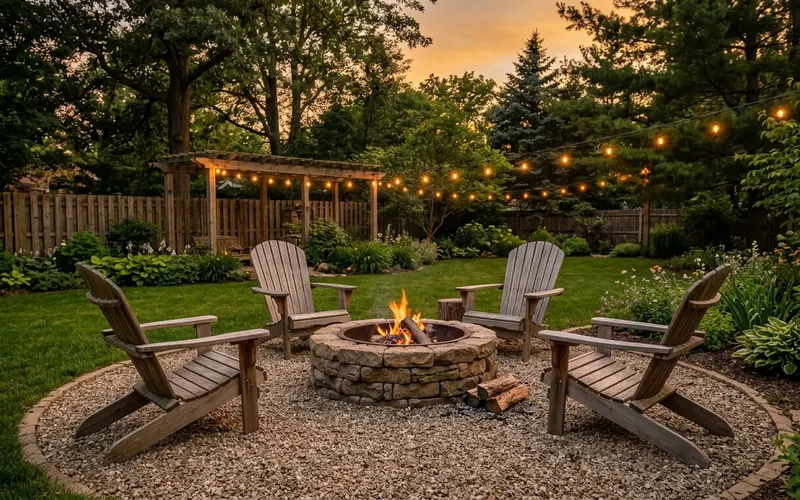
Fire Pit Ideas and Costs
Fire pit ideas run from a portable steel bowl on gravel to a stone pit or gas fire table built into a patio. HomeAdvisor puts the average at about $850, with most projects between $200 and $3,000.
September 29, 2026
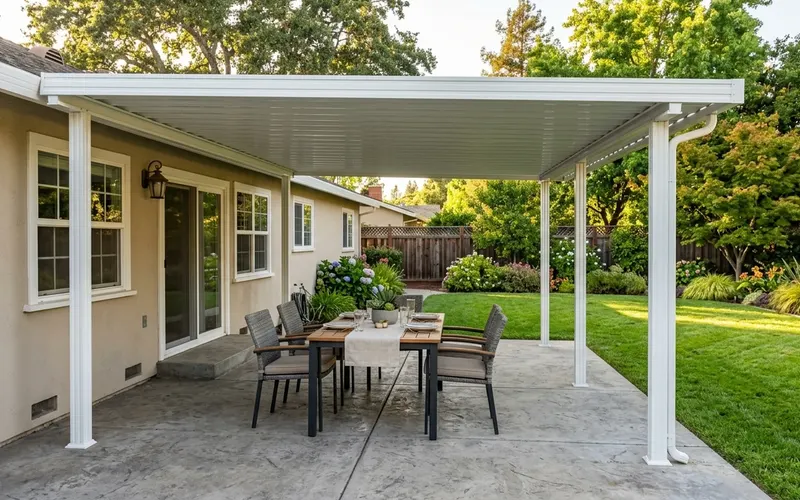
Patio Covers: Types, Materials and Costs
A patio cover can be a $120 shade canopy or a $30,000 gable roof. This Old House puts most patio roofs at $14,000 to $31,000, and the right type depends on whether you need shade, rain cover or snow strength.
September 27, 2026