Fire Pit Ideas and Costs
Fire pit ideas run from a portable steel bowl on gravel to a stone pit or gas fire table built into a patio. HomeAdvisor puts the average at about $850, with most projects between $200 and $3,000.
By LandscapeLookup Editors7 min read
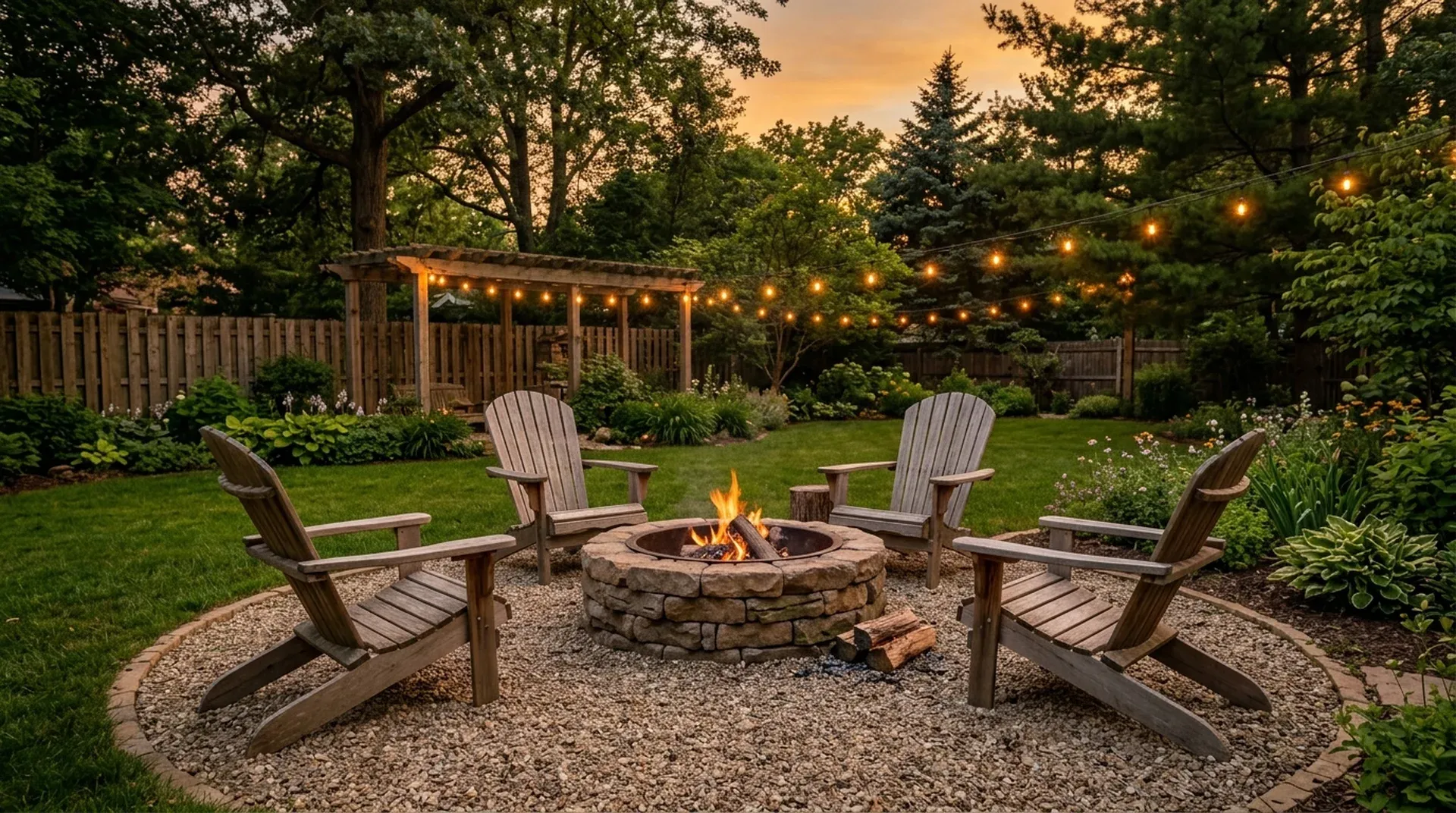
The best fire pit ideas match how often you'll light it: a portable steel bowl on gravel for the occasional night of s'mores, a block kit or stone pit for a permanent gathering spot, or a gas fire table if you want flame at the turn of a knob. HomeAdvisor puts the average fire pit at about $850, with most projects between $200 and $3,000.
Below are 8 ideas with typical costs, then where to put a fire pit, what to build it on, and when you need a licensed pro.
8 fire pit ideas, from simple to built-in
1. A portable steel bowl or ring
This is the cheapest, fastest way to get a fire going. HomeAdvisor lists portable pits at $75 to $500, and Lawn Love says a steel or aluminum above-ground pit is often under $200 at home improvement stores. Set it on gravel or pavers, not the lawn, and you can try a spot for a season before building anything permanent.
2. A concrete block fire pit kit
Kits come with tapered blocks that stack into rings, often with caps for the top. Western Interlock says its kits need only a shovel, rubber hammer, level, gravel and a caulking gun, which makes this a realistic weekend DIY project. HomeAdvisor puts a 36-inch concrete pit at $200 to $1,000 and notes that the most affordable kits are round or hexagonal.
3. A stone or brick fire pit
For a permanent, custom look, HomeAdvisor lists brick pits at $300 to $2,200 and stone at $350 to $3,000. The inner wall should be firebrick or another fireproof material. Choose dense stone such as granite, basalt or quartzite: HomeAdvisor warns that soft rocks with air pockets may explode when exposed to fire, so ask what stone you're getting.
4. A gas fire table or burner pit
Gas gives you a steady flame with what HomeAdvisor calls minimal mess and reduced emissions. HomeAdvisor puts propane pits at $300 to $950 and natural gas at $400 to $3,000. Propane tables run off a tank; natural gas needs a line run from the house. The burner sits under a layer of lava rock or fire glass, which one manufacturer says should completely cover the burner tube.
5. A sunken fire pit lounge
A pit set into a lowered seating area feels sheltered and private. HomeAdvisor lists in-ground pits at $1,000 to $3,000, with some over $5,000, and says to budget for drainage too. A sunken area collects rain, so plan where the water goes first (see our guide to yard drainage solutions).
6. A fire pit ringed by a seating wall
A low wall around the pit gives you permanent seats and fewer chairs to drag out. Lawn Love puts a built-in seating area at $1,500 to $2,500. For seating wall prices per linear foot, see our paver patio cost guide.
7. A fire pit built into a new patio
If you're adding a patio anyway, build the pit in. HomeAdvisor says a new patio with a built-in fire pit averages $6,750, versus about $3,500 for a patio alone, and retrofitting a pit into an existing patio can run up to $5,000. Pavers and flagstone both work as a non-combustible surround.
8. Upgrade the pit you already have
Small add-ons change how you use a pit. HomeAdvisor lists fire grates at $50 to $300, safety screens at $75 to $300 and covers at $25 to $30. A grate turns the pit into a cooking fire. If smoke is the problem, the EPA notes that kits to convert fire rings and pits to natural gas or propane are sold at hearth and patio stores.
Sizing and finishing touches: HomeAdvisor says most homeowners choose a 36- to 44-inch pit, which seats 6 to 8 chairs. Path lights or string lights make the area usable after dark (see our landscape lighting guide). Keep shrubs and mulch beds outside the clearance zone covered below.
How much does a fire pit cost?
Prices depend on fuel, size, materials and whether you hire it out. Here are HomeAdvisor's ranges (updated June 2026):
|
Fire pit type |
Typical cost |
|---|---|
|
Portable |
$75–$500 |
|
Wood-burning |
$300–$1,000 |
|
Propane |
$300–$950 |
|
Electric |
$350–$1,500 |
|
Natural gas |
$400–$3,000 |
|
Above-ground, built |
$200–$1,500 |
|
In-ground |
$1,000–$3,000 |
Source: HomeAdvisor
Lawn Love's numbers (updated December 2025) land close: an $830 average and a typical range of $250 to $2,200, with installation making up about half the total. Lawn Love puts a DIY wood or charcoal pit at about $150 to $300 in materials and tools.
Other costs to plan for, per HomeAdvisor:
- Labor: about $400 to $500 for less than a day from a fire pit installer, or $60 to $125 an hour for a handyperson.
- Gas line: $15 to $25 per linear foot for natural gas.
- Permits: $20 to $500, where your town requires one.
Costs vary by region, so get local quotes. If you're pairing a fire pit with a grill station, our outdoor kitchen cost guide covers the rest.
How far should a fire pit be from your house?
Keep a fire pit at least 10 feet from your house, but check your local fire code, which may require 25 feet for an open wood fire. The U.S. Fire Administration says to use fire pits at least 10 feet away from your home or anything that can burn. HomeAdvisor gives 10 to 15 feet from structures, plants and other flammable materials.
The International Fire Code is stricter. As quoted by Colorado's West Metro Fire Protection District:
|
Fire type (International Fire Code) |
Minimum distance |
|---|---|
|
Recreational fire (fuel pile up to 3 ft wide and 2 ft high) |
25 ft from a structure or combustible material |
|
Portable outdoor fireplace |
15 ft, but one- and two-family homes are exempt |
|
Bonfire |
50 ft |
Local rules vary. West Metro allows backyard fires only when no fire ban is in place, so call your local fire department before you build. Check HOA rules too. The EPA notes that some local governments restrict backyard recreational fires and urges extra care where brush fires are a concern.
Look up, too. One gas fire pit manual calls for 84 inches of clearance to branches overhead and 36 inches to the sides for units up to 200,000 BTU, and says never to install under an overhang or ceiling. Keep wood fires out from under pergolas, patio covers and low limbs.
Safety rules while it's burning
- Stay with it. The fire code says a fire must be constantly attended until it's out, with an extinguisher, garden hose, sand or water barrel ready.
- Screen wood fires. USFA recommends a metal screen over wood-burning fires to keep sparks in.
- Watch kids closely, and put the fire out before you leave the yard (USFA).
- Burn only clean, dry wood. The EPA says never to burn green wood, construction waste, plastic, garbage or yard waste.
What is the best base for a fire pit area?
Build on something that can't burn: a concrete patio, pavers or compacted gravel. Mutual Materials' kit instructions say fire pits should go only over a non-combustible surface like concrete patios or a compacted gravel base, and never over a wood deck. HomeAdvisor says putting a pit directly on grass is unsafe.
How deep the gravel goes depends on the product:
|
Manufacturer |
Base under a block fire pit |
|---|---|
|
Dig 3 inches, fill with 3/4-minus gravel, level and compact |
|
|
6 to 8 inches of 3/4-inch crusher run, compacted |
|
|
Level area about 65 x 65 inches for a 58-inch pit; 2 inches of gravel inside |
Follow the instructions for your kit, and use the high-heat adhesive that Unilock and Western Interlock call for between block courses. Any digging, even 3 inches, is a reason to contact 811 a few business days ahead. The service is free.
Want fire on a deck? A wood pit is out. Some gas fire pits are rated to sit on a combustible floor at the clearances in their manual, so check that rating before you buy. If you're still choosing a surface, compare deck vs. patio.
Wood or gas: which fire pit fuel fits you?
|
|
Wood |
Gas (propane or natural gas) |
|---|---|---|
|
Upfront cost |
$300–$1,000 |
$300–$950 propane, $400–$3,000 natural gas |
|
Smoke |
Yes |
Little |
|
Upkeep |
Scoop ashes after every burn |
Check connections, cover when not in use |
|
Who installs |
DIY-friendly |
Licensed gas pro for lines and hookups |
Costs: HomeAdvisor
Wood gives you crackle and smell, plus smoke. The EPA says children, older adults and people with heart or lung disease can be particularly sensitive to wood smoke. It recommends seasoned wood at about 20 percent moisture and skipping fires on air quality alert days. Buy firewood near home: the Don't Move Firewood campaign says to buy it where you'll burn it, or buy certified heat-treated firewood, since moving it can spread tree-killing pests.
Gas cuts pollution; the EPA says switching to natural gas or propane reduces harmful air pollutants. Firegear's burner manual says its fire pits are for outdoor use only, warns that using one in an enclosed area can kill you and requires a soapy-water leak test on connections before regular use.
When to call a pro
Hire a licensed plumber or gas fitter for any natural gas line or permanent gas hookup. One manufacturer suggests installers locally licensed in gas piping, and Lawn Love says gas and propane pits should only be attempted by a licensed professional. A hardscaping contractor is worth it for stone pits, sunken lounges, seating walls and pits built into a new patio.
Before you hire:
- Get 2 or 3 written quotes for the same scope: pit size, materials, base depth, and whether gas line and permits are included.
- Ask for photos of similar fire pits they've built, and references.
- Check licensing and insurance where your state requires it, especially for gas work.
- Ask who pulls the permit and who contacts 811.
- Get the scope and payment schedule in writing.
You can find outdoor living pros or hardscaping contractors near you on LandscapeLookup for free, with no sign-up. Pros are ranked by Google rating weighted by review count, plus how local they are and their main service, and you contact them directly.
Editorial team
The LandscapeLookup editorial team writes guides to help US homeowners plan yard projects and hire the right pro. Each guide is based on university extension services, government sources such as EPA WaterSense and USDA, manufacturer instructions and published cost guides, and links to them so you can check the details.
Keep reading
Deck Repair or Replace? How to Decide and What It Costs
Repair a deck when the frame, ledger and posts are sound and the damage is limited to boards, railings, stairs or the finish. Replace it when rot or insects have spread through the framing. Repairs average about $1,465; replacement often runs $5,420 to $14,540.
October 5, 2026
Patio Covers: Types, Materials and Costs
A patio cover can be a $120 shade canopy or a $30,000 gable roof. This Old House puts most patio roofs at $14,000 to $31,000, and the right type depends on whether you need shade, rain cover or snow strength.
September 27, 2026
How Often to Stain a Deck (and When)
Most wood decks need a fresh coat every 2 to 3 years, from about 1 year for a clear sealer to 4 to 6 years for a semitransparent stain. Stain on a dry, mild day between 50°F and 90°F, out of direct midday sun, with no rain in the forecast.
September 23, 2026