

Types of Grass for Lawns, by Region
Lawn grasses are cool-season (Kentucky bluegrass, tall fescue, perennial ryegrass, fine fescue) for the North or warm-season (Bermuda, zoysia, St. Augustine, centipede, bahia, buffalograss) for the South. Pick by region first, then by sun, traffic and water.
By LandscapeLookup Editors8 min read
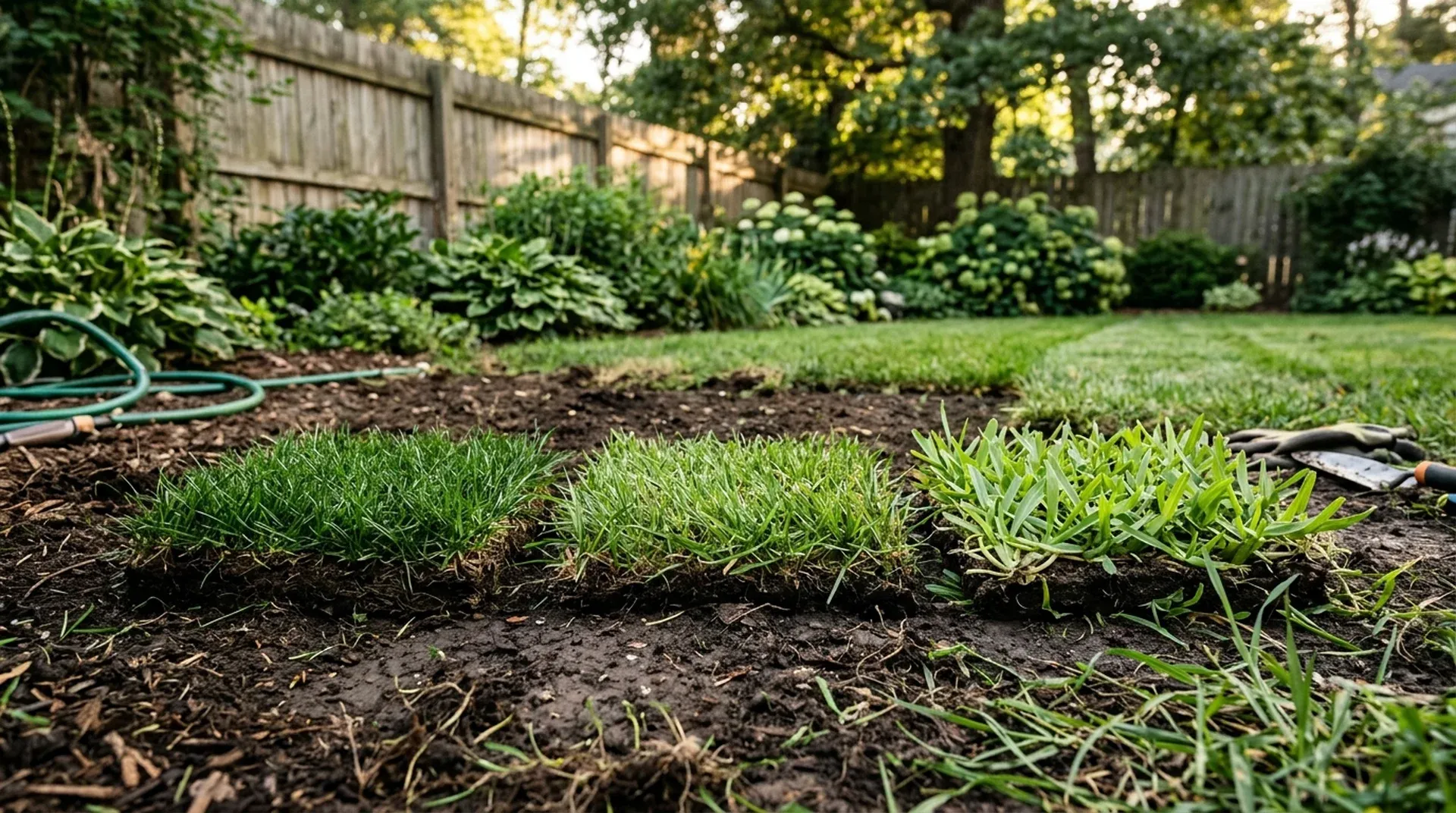
The types of grass used for lawns fall into two groups. Cool-season grasses (Kentucky bluegrass, tall fescue, perennial ryegrass and the fine fescues) suit the northern U.S., while warm-season grasses (Bermuda, zoysia, St. Augustine, centipede, bahia and buffalograss) suit the South. Pick the group your region supports first. Then narrow it down by sun, foot traffic and how much you're willing to water and mow.
Here's how each grass behaves, which ones fit your part of the country, and how to choose between close calls like zoysia and Bermuda.
What's the difference between cool-season and warm-season grass?
The split comes down to temperature. UGA Extension says cool-season grasses grow well when temperatures average 60 to 75°F. Warm-season grasses grow best at 80 to 95°F.
That shapes the whole year. The University of Maryland says cool-season grasses go dormant in hot summers and pause in winter. Warm-season grasses grow through summer and turn completely brown when dormant in winter. Illinois Extension adds that cool-season grasses handle frost, low light and lower temperatures better, and warm-season grasses need less water.
That's a catch for southerners who want year-round green. UF/IFAS says fescue, bluegrass and ryegrass grow in north and central Florida only during fall, winter and early spring. They won't survive the summers.
Cool-season grass types
These are the main lawn grasses across the North, the Midwest, the Pacific Northwest and higher elevations. Traits below are from the University of Maryland unless noted.
|
Grass |
Sun and shade |
Traffic |
Upkeep |
Notes |
|---|---|---|---|---|
|
Tall fescue |
Full sun, moderate (dappled) shade |
Good |
Low |
Grows in clumps; best drought and pest resistance of the four |
|
Kentucky bluegrass |
Full sun; low shade tolerance |
Excellent |
High |
Spreads by rhizomes and self-repairs; needs more nitrogen, less drought-tolerant |
|
Perennial ryegrass |
Full sun |
Good |
Moderate |
Sprouts in 5 to 10 days; mixed with bluegrass to establish faster |
|
Fine fescues |
Partial shade; good to excellent shade tolerance |
Poor |
Moderate |
Creeping red, Chewings, hard and sheep fescue; less mowing and fertilizer |
A few details matter when you shop:
- Tall fescue. Turf-type tall fescue is finer and darker than the old forage type, Kentucky 31, which Maryland calls coarser-looking and less dense. It has no runners, so Clemson says a tall fescue lawn may need reseeding in fall to stay thick.
- Kentucky bluegrass. It's the most widely used lawn grass in Colorado, per CSU Extension. Maryland notes it is more vulnerable to drought, summer patch and grubs, and needs periodic dethatching.
- Perennial ryegrass. In Maryland it is too disease-prone to use by itself. In western Oregon, Oregon State says the most commonly planted lawns are mixes of perennial ryegrass, fine fescue and Kentucky bluegrass.
- Fine fescues. The University of Minnesota says they tolerate shade better than other cool-season grasses and need less mowing, water and fertilizer than Kentucky bluegrass. Mow them at 2.5 to 4 inches.
Warm-season grass types
These grasses cover the Southeast, the Gulf Coast, Florida and most of Texas. Shade, traffic and mowing heights are from Texas A&M AgriLife. Upkeep levels and the bahia row are from Clemson, except buffalograss, which Texas A&M calls low-maintenance.
|
Grass |
Sun and shade |
Traffic |
Upkeep |
Mowing height |
|---|---|---|---|---|
|
Bermuda |
Full sun only |
High |
High |
1 to 2 inches |
|
Zoysia |
Light to moderate shade, by variety |
Moderate to high |
High |
0.5 to 2 inches |
|
St. Augustine |
Most shade-tolerant warm-season grass |
Low |
Moderate |
2.5 to 3 inches |
|
Centipede |
Full sun to light shade |
Low |
Low |
1.5 to 2 inches |
|
Bahia |
Poor shade tolerance |
Good |
Low |
3 to 4 inches (Clemson) |
|
Buffalograss |
Full sun, little shade tolerance |
Low |
Low |
2.5 to 3 inches |
|
Seashore paspalum |
Low shade tolerance |
Moderate to high |
Moderate |
0.5 to 1 inch |
What sets each one apart:
- Bermuda handles drought and traffic well, but Texas A&M says it requires full sunlight and needs mowing every 3 to 7 days. Maryland warns it can invade garden beds and neighboring lawns.
- St. Augustine is coarse-textured and isn't available as seed, so it goes in as sod or plugs.
- Centipede is a low-maintenance grass that, per Clemson, grows best in acid soils and yellows from iron chlorosis in alkaline ones. UF lists it for North Florida and the Panhandle.
- Bahia is more drought-tolerant than most and grows well in sandy soil, Clemson says. UF adds that it may survive without irrigation but won't form a dense, lush lawn like other species.
- Buffalograss is a Great Plains native. CSU Extension says newer varieties stay green on 50% to 75% less irrigation than Kentucky bluegrass. But it needs just as much water to get established, and it stays brown until mid to late spring.
- Seashore paspalum is the salt specialist. UF says it thrives on salt-affected sites such as coastal yards.
One caution on drought ratings. UF says an "excellent" rating mostly reflects good dormancy and doesn't necessarily mean less irrigation. The grass still needs water to stay green.
Which grass is best for your region?
Use this as a starting point, then check with your county extension office, since elevation, soil and microclimate shift the answer.
|
Region |
Grasses extension services recommend |
Source |
|---|---|---|
|
Upper Midwest (Minnesota) |
Kentucky bluegrass, the most common; fine fescues for shade and low upkeep |
|
|
Pacific Northwest (west side) |
Mixes of perennial ryegrass, fine fescue and Kentucky bluegrass |
|
|
Transition zone (mid-Atlantic, upper South) |
Tall fescue; zoysia where winters allow |
|
|
Southeast (South Carolina) |
Bermuda, zoysia, centipede, St. Augustine; tall fescue only at higher elevations |
|
|
Florida |
St. Augustine, zoysia, Bermuda, bahia statewide; centipede in the north |
|
|
Texas |
Bermuda statewide, St. Augustine in Southeast Texas, buffalograss Central to West, tall fescue in North Texas |
|
|
Colorado and the high Plains |
Kentucky bluegrass, buffalograss and blue grama, tall fescue, fine fescues |
|
|
California |
Bermuda, Kentucky bluegrass, perennial ryegrass, red fescue, St. Augustine, tall fescue |
The transition zone is the hardest place to grow a lawn. Maryland describes it as the band where temperate and subtropical climates meet, so neither group is happy all year. It recommends tall fescue for most Maryland homes and zoysia as the warm-season pick, though zoysia isn't reliably cold-hardy in western Maryland.
Elevation matters out West. CSU says buffalograss is limited to about 6,500 feet or less. In the Southeast, Clemson says tall fescue lasts in South Carolina only in the upper Piedmont and mountains, above about 800 feet.
Wherever you live, check local watering rules and HOA landscaping rules before you commit to a thirsty grass. If you're cutting water use, see xeriscaping for lawn alternatives.
Which grass handles shade and traffic?
Zoysia vs. Bermuda
Clemson says these two have the finest leaf texture of the Southern grasses, and Texas A&M says zoysia's range is similar to Bermuda's. The differences:
|
|
Bermuda |
Zoysia |
|---|---|---|
|
Shade |
Very low to low |
Moderate to high, by variety |
|
Traffic |
High |
Moderate to high |
|
Drought |
Very good to excellent |
Very good, but browns sooner in long droughts |
|
Fertilizer |
More nitrogen |
Improved varieties need less |
|
Mowing |
Every 3 to 7 days |
Every 5 to 10 days |
|
Speed to fill in |
Fast |
Slower from seed, sprigs or plugs |
Source: Texas A&M AgriLife. Choose Bermuda for full sun, kids and dogs. Choose zoysia if part of the yard gets shade or you'd rather mow less often. Variety matters: Texas A&M says Zoysia matrella types are finer and denser but need closer, more frequent mowing than Zoysia japonica types.
Best grass for shade
Clemson says an area with less than 4 hours of sun a day is too shady for grass to grow well. Within that limit, your best bets are:
- Cool-season: fine fescues first, then tall fescue. Clemson says tall fescue grows well with as little as 5 hours of sun. For tree shade, Minnesota suggests a mix of about 40% Chewings, 40% strong creeping red and 20% hard fescue.
- Warm-season: St. Augustine, then zoysia. Clemson names El Toro, Diamond, Belaire and Cavalier as zoysias with good shade tolerance, and says Bermuda has extremely poor tolerance to any shade.
To help shady turf, Clemson recommends pruning so the lowest tree branches sit over 6 feet above the soil. Give shaded grass one-half to two-thirds the nitrogen of sunny areas. Where grass keeps failing, shade-tolerant ground cover plants are often the better answer.
Buying seed or sod
Some grasses can't be seeded. Clemson says hybrid Bermuda, most zoysias and St. Augustine are limited to sod, sprigs or plugs, while tall fescue, bluegrass, ryegrass, centipede and bahia grow from seed. Compare prices by grass type in our sod cost guide, or see hydroseeding for larger areas.
When you buy seed, Maryland's advice applies anywhere:
- Pick tested varieties. Universities run variety trials, and Maryland suggests buying products with recommended cultivars for your area.
- Read the tag. Germination should be at least 70%, other crop seed no more than 0.5%, and avoid mixes with annual ryegrass, which lives only one year.
- Buy fresh. Use seed within a year of purchase; fine fescue seed ages fastest.
Timing differs by group. CSU suggests sowing Kentucky bluegrass in late August to early September. Our guide to overseeding a lawn covers fall seeding for other cool-season grasses. CSU says buffalograss seed goes in from spring until late July, once soil warms above 55°F. UF recommends a soil test before planting, which tells you whether pH suits grasses like centipede that prefer acid soil.
When to call a pro
Hire a lawn care company if you're replacing a whole lawn or switching grass types. It also helps with shade, slopes or poor soil. A pro can remove old turf, regrade, and install seed, sod or plugs. If the job involves regrading or new irrigation lines, call 811 before anyone digs.
Before you hire:
- Get 2 or 3 written quotes that name the grass and variety, the amount of seed or sod, and the prep.
- Ask for photos of similar lawns they've installed, ideally with the same grass.
- Check licensing and insurance where your state requires it, including pesticide licensing if they'll apply herbicides.
- Get the scope and payment schedule in writing, along with watering instructions for the first few weeks.
For other prices, see how much lawn care costs. You can find lawn care pros near you on LandscapeLookup for free, with no sign-up. Pros are ranked by Google rating weighted by review count, plus how local they are and their main service, and you contact them directly. If you're adding sprinklers for a new lawn, you can also find irrigation pros.
Editorial team
The LandscapeLookup editorial team writes guides to help US homeowners plan yard projects and hire the right pro. Each guide is based on university extension services, government sources such as EPA WaterSense and USDA, manufacturer instructions and published cost guides, and links to them so you can check the details.
Keep reading
When to Apply Pre-Emergent for Crabgrass
Apply crabgrass pre-emergent in spring, a week or two before the soil holds about 55°F for several days in a row, then water it in. That ranges from mid-February in the Florida Panhandle to mid-April through early May in places like Nebraska.
October 14, 2026
How to Test Your Lawn Soil (and When to Add Lime)
Mix 10 or more small soil cores from your lawn, send about 2 cups to your state's extension lab, and add lime only if the report says your pH is too low, in spring or fall, at no more than 50 lb per 1,000 sq ft at a time.
October 12, 2026
Topdressing and Leveling a Lawn
Topdressing means spreading a thin layer of compost, topsoil or sand, no more than 1/2 inch at a time, over a growing lawn to improve the soil or fill shallow low spots. Match the material to your soil and keep the grass blades showing.
October 10, 2026