Skip to content
LandscapeLookup

Lawn Care

When to aerate, overseed, dethatch and fertilize your lawn by grass type and region, plus what lawn care services cost.

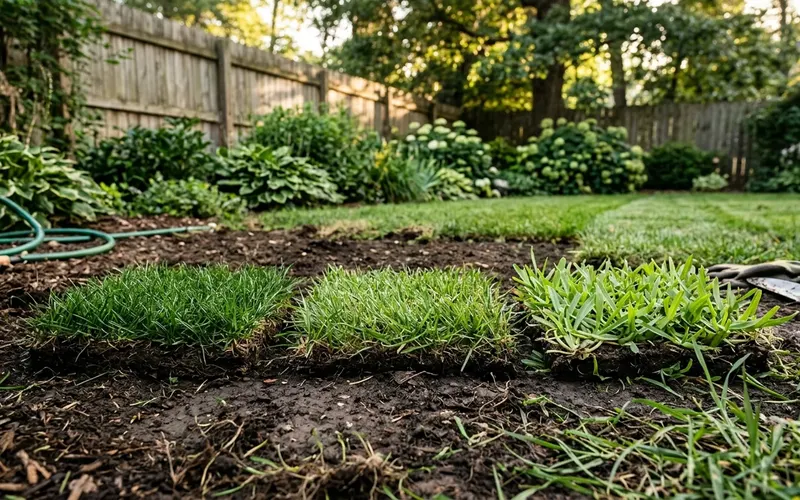
Three side-by-side squares of lawn grass with different blade widths and shades of green on bare soil

Types of Grass for Lawns, by Region

Lawn grasses are cool-season (Kentucky bluegrass, tall fescue, perennial ryegrass, fine fescue) for the North or warm-season (Bermuda, zoysia, St. Augustine, centipede, bahia, buffalograss) for the South. Pick by region first, then by sun, traffic and water.

October 28, 2026
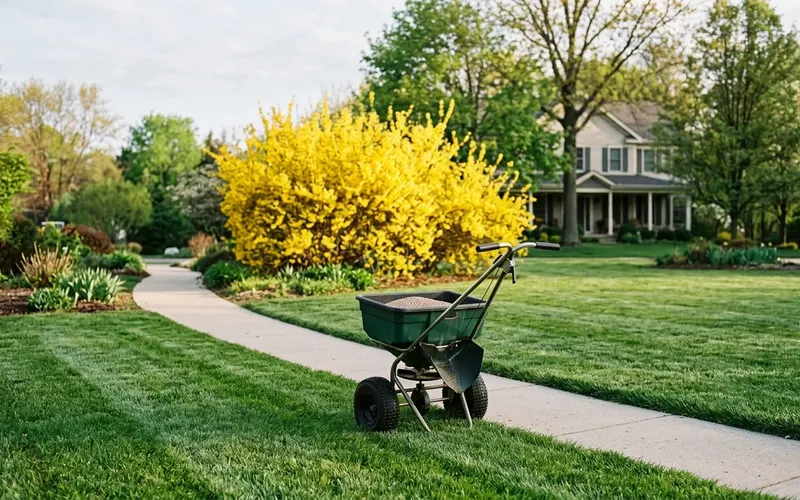
Push spreader on a green spring lawn beside a sidewalk, with a yellow forsythia shrub in bloom behind it

When to Apply Pre-Emergent for Crabgrass

Apply crabgrass pre-emergent in spring, a week or two before the soil holds about 55°F for several days in a row, then water it in. That ranges from mid-February in the Florida Panhandle to mid-April through early May in places like Nebraska.

October 14, 2026

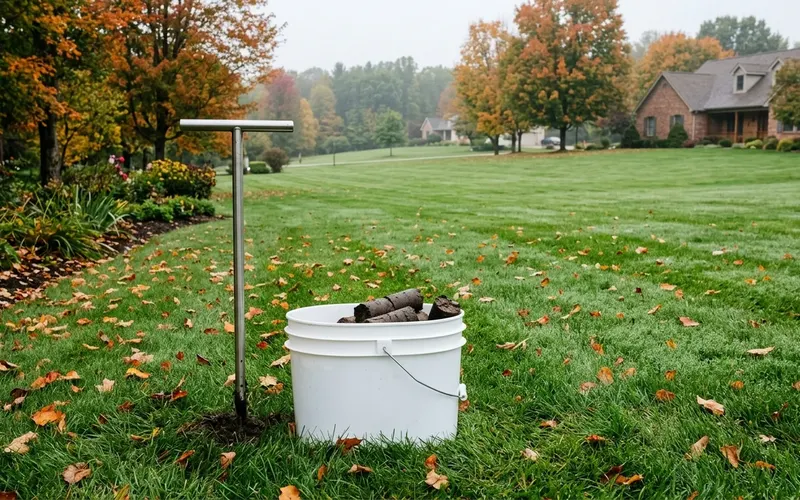
Clean plastic bucket of mixed soil cores and a hand soil probe resting on a green lawn

How to Test Your Lawn Soil (and When to Add Lime)

Mix 10 or more small soil cores from your lawn, send about 2 cups to your state's extension lab, and add lime only if the report says your pH is too low, in spring or fall, at no more than 50 lb per 1,000 sq ft at a time.

October 12, 2026

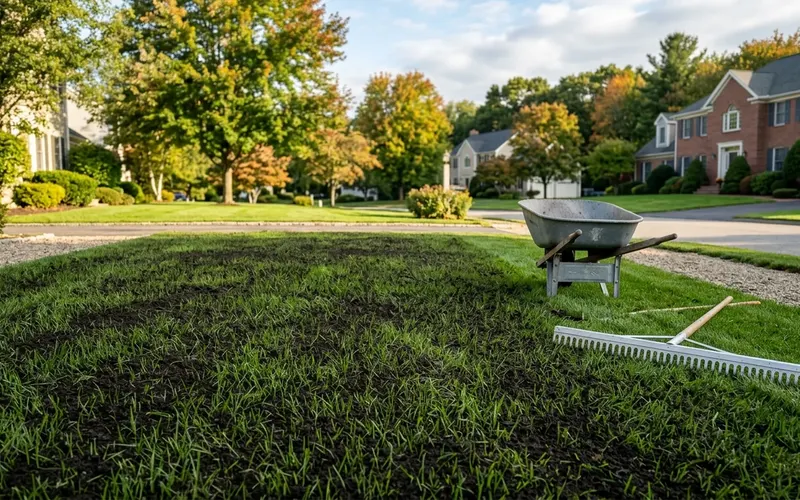
Thin layer of dark compost raked into a green lawn, with grass blades poking through and a wheelbarrow at the edge

Topdressing and Leveling a Lawn

Topdressing means spreading a thin layer of compost, topsoil or sand, no more than 1/2 inch at a time, over a growing lawn to improve the soil or fill shallow low spots. Match the material to your soil and keep the grass blades showing.

October 10, 2026

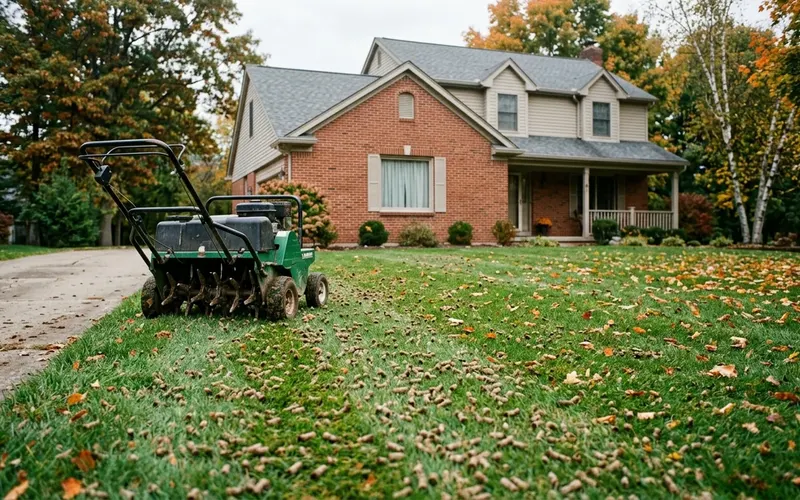
Core aerator parked on a front lawn covered in soil plugs and fallen autumn leaves

When to Aerate Your Lawn

Aerate cool-season grass (bluegrass, fescue, ryegrass) in early fall or spring, and warm-season grass (Bermuda, zoysia, St. Augustine) from late spring through midsummer, while it's actively growing and has at least 4 weeks to recover.

October 8, 2026

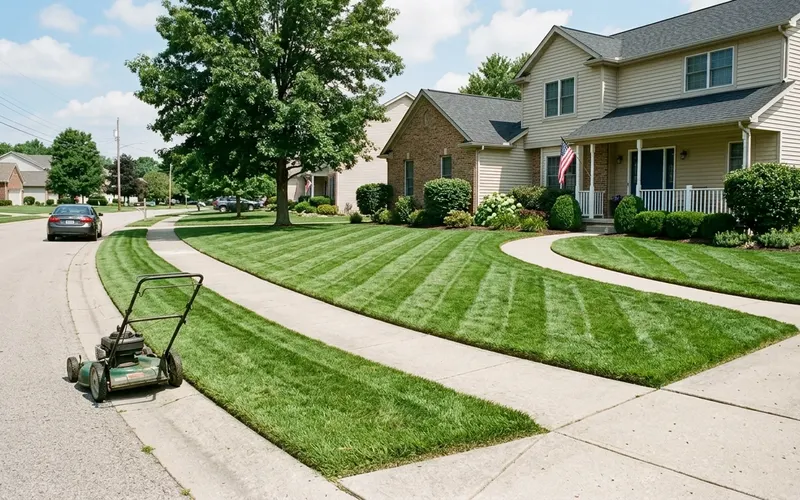
Freshly striped front lawn along a curved sidewalk with a push mower at the curb

How Much Does Lawn Care Cost?

Professional lawn mowing typically costs about $44 to $71 per visit, and monthly lawn care plans run about $100 to $500 across the major cost guides, depending on lawn size, services and where you live. Here's what each service costs and what drives the price.

October 6, 2026

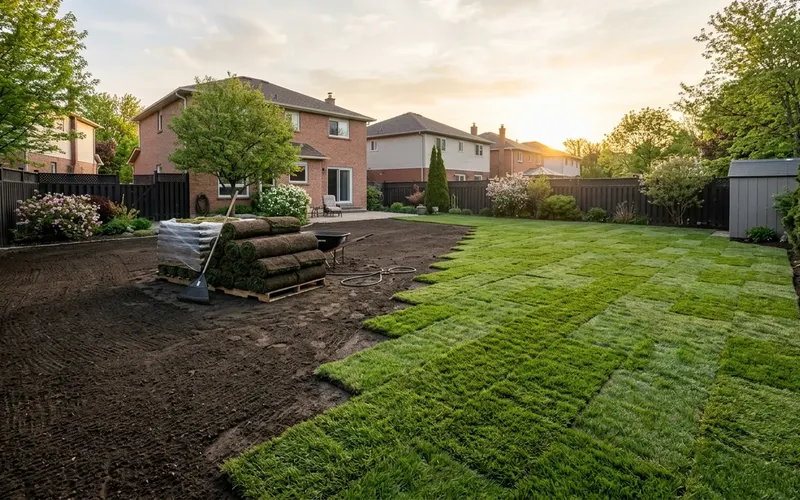
Fresh rolls of green sod laid in staggered rows over smooth brown soil, with a pallet of sod at the edge of the yard

How Much Does Sod Cost?

Sod itself runs about $0.35 to $1 per sq ft ($150 to $450 a pallet). Installed on prepared bare soil, most pros charge about $1 to $2.60 per sq ft, and $2 to $4.50 if the old lawn has to come out first.

October 1, 2026

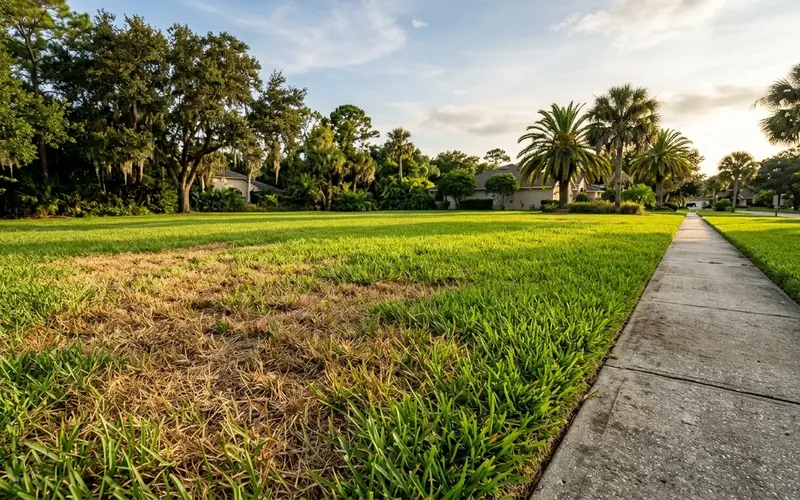
Irregular yellow and brown patch spreading through a sunny St. Augustine lawn beside a concrete sidewalk

Chinch Bugs: How to Spot and Treat Them

Chinch bugs are tiny black-and-white bugs that suck sap from grass and leave yellow-to-brown patches that don't green up with water. Confirm them with a can test at the edge of the damage, fix thatch and watering, and spot-treat only if you count about 20 or more per square foot.

September 30, 2026

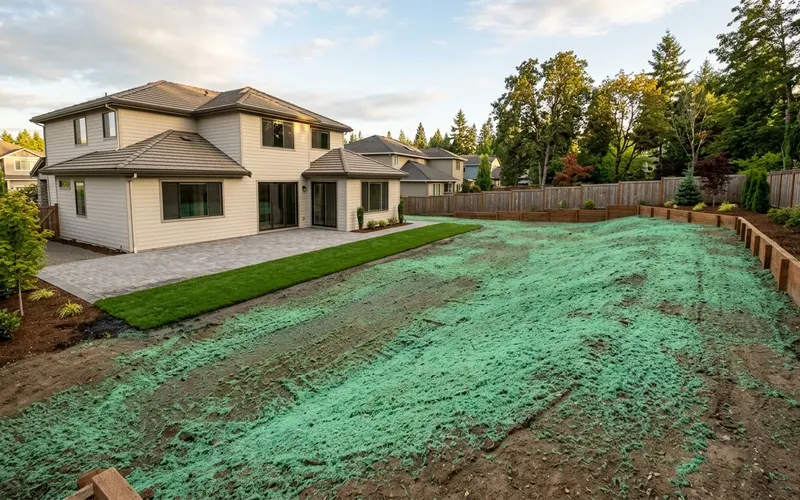
Bare graded yard covered in green hydroseed mulch beside a strip of freshly laid sod

Hydroseeding vs. Sod vs. Seed: Cost and Results

Hydroseeding sprays seed, mulch, fertilizer and water onto bare soil for about $0.07 to $0.21 per sq ft, far less than sod at about $1.65 installed. Sod is usable in weeks; hydroseed and plain seed take a season to mature.

September 28, 2026

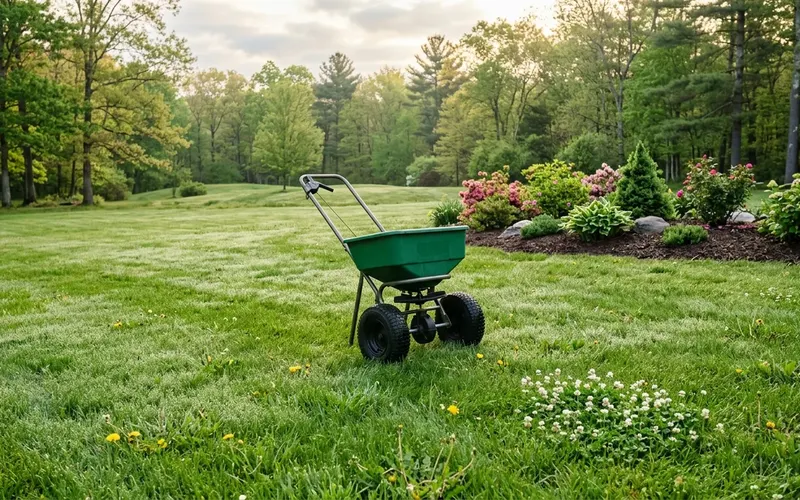
Push broadcast spreader on a dewy lawn dotted with dandelions and clover

Weed and Feed: Does It Work and When to Apply It

Weed and feed can kill broadleaf weeds like dandelions and clover while it fertilizes, but only on damp, actively growing weeds. For most cool-season lawns, early fall is the best time to apply it.

September 26, 2026

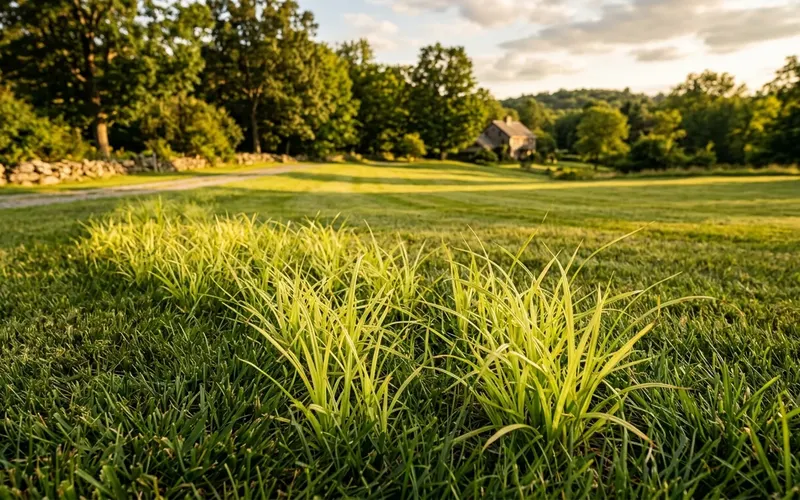
Clumps of glossy yellow-green nutsedge growing taller than the surrounding lawn grass

How to Get Rid of Nutsedge

Nutsedge is a sedge, not a grass, so regular weed killers miss it. Pull or spray young plants in late spring to early summer before new tubers form, use a sedge herbicide like halosulfuron, fix wet spots, and expect 2 to 3 years of follow-up.

September 22, 2026

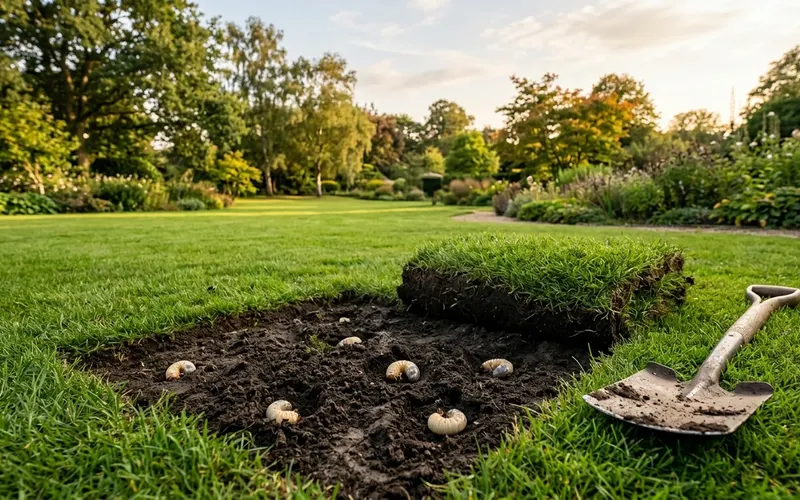
A square of sod folded back on a lawn, exposing several white C-shaped grubs in the soil

Lawn Grub Worms: Signs, Damage and When to Treat

Grub worms are beetle larvae that eat grass roots, leaving brown patches that peel up like carpet in late summer. Treat only if you find about 5 to 10 or more per square foot: preventive products go down in late spring to midsummer, curative ones in late summer before grubs reach full size.

September 18, 2026