How Much Does a Retaining Wall Cost?
Most retaining walls cost $20–$53 per square foot of wall face, or about $3,500–$9,400 for a typical project. Material, height, drainage and site access drive the price, and walls over about 4 ft usually need an engineer and a permit.
By LandscapeLookup Editors6 min read
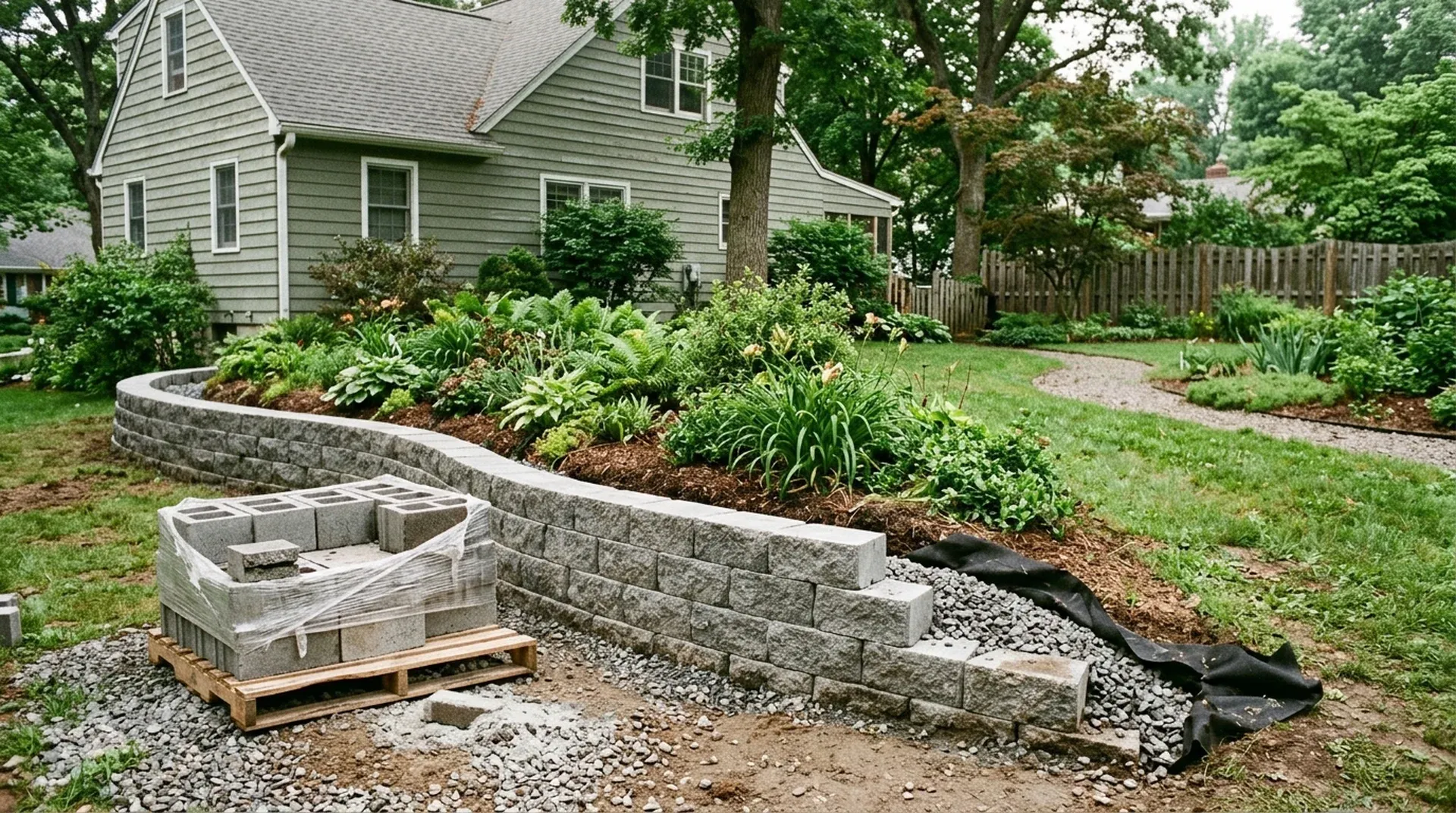
Most retaining walls cost $20 to $53 per square foot of wall face, with an average around $33, according to LawnStarter's 2026 cost guide. LawnStarter says most projects run $3,500 to $9,400, averaging about $6,300, and Lawn Love puts the average near $6,000. Height is the big variable: once a wall goes over about 4 feet, you'll usually need an engineered design, a permit and a licensed contractor, and the price climbs quickly.
Retaining wall cost by size
Contractors usually price walls by the square foot of wall face (length × height) or by the linear foot. A 30-foot wall that's 3 feet tall has about 90 square feet of face.
|
Wall face area |
Example wall |
Typical cost |
|---|---|---|
|
42 sq ft |
14 ft long × 3 ft tall |
$840–$2,226 |
|
175 sq ft |
50 ft long × 3.5 ft tall |
$3,500–$9,275 |
|
350 sq ft |
100 ft long × 3.5 ft tall |
$7,000–$18,550 |
Costs from LawnStarter, which multiplies each area by $20–$53 per sq ft. That's why the middle row is close to, but not exactly, its $3,500–$9,400 typical project range. Example dimensions are illustrations of each area.
Per linear foot, Lawn Love gives a broad $40 to $345, for walls 2 to 6 feet tall. That works out to $800 to $6,900 for a 20-foot wall and $2,000 to $17,250 for a 50-foot wall. The wide spread reflects how much material, height and site conditions matter.
Cost by material
Material choice affects both the price and how tall you can safely build without extra reinforcement.
|
Material |
Installed cost per sq ft |
Notes |
|---|---|---|
|
Vinyl |
$10–$15 |
Low walls and garden edging |
|
Gabion (wire cages of stone) |
$10–$40 |
Drains freely; modern look |
|
Wood or timber |
$13–$35 |
One of the cheaper options for short walls; typically lasts 20–40 years |
|
Interlocking concrete blocks |
$15–$35 |
Easy to install and affordable |
|
Landscape blocks |
$15–$60 |
Wider range of styles and sizes |
|
Brick |
$17–$43 |
Classic look; mortared |
|
Railroad ties |
$18–$25 |
Soaked in creosote, which is toxic; banned in some towns |
|
Poured concrete |
$20–$40 |
Typically reinforced with rebar |
|
Natural stone |
$20–$90 |
Dry-stacked or mortared; labor-heavy |
|
Steel |
$42–$137 |
Thin profile, contemporary look |
Ranges and notes from LawnStarter. Lawn Love lists poured concrete higher, at $20 to $55, and stone at $15 to $95.
Labor makes up a big share. Lawn Love, whose figures run a bit higher, puts labor at $15 to $40 per square foot, or $50 to $75 an hour. That comes from a different dataset, so it won't line up exactly with LawnStarter's installed prices above.
Height, permits and engineering
This is the part of the project you can't skip. A retaining wall holds back thousands of pounds of soil and water, and when a tall wall fails it can damage property or hurt someone.
When a wall needs an engineer
Many local building codes follow the International Residential Code. Its Section R404.4, shown here in California's version of the code, says a wall must be designed to accepted engineering practice if it:
- retains more than 48 inches of unbalanced soil and isn't braced at the top, or
- is over 24 inches tall and holds back extra load beyond the soil itself, called a surcharge (a driveway, a slope above the wall, a building or a pool).
That design has to account for overturning, sliding, foundation pressure and water uplift.
When you need a permit
The residential code's permit section (IRC R105.2, shown in California's version) exempts walls up to 4 feet tall unless they support a surcharge, and many cities follow it. The 4 feet is measured from the bottom of the footing, not from the ground. That means a wall that shows 3½ feet above grade can still need a permit once you count the buried part. As one example, Tukwila, Washington requires a permit for walls over 4 feet tall measured to the bottom of the footing, and for walls over 2 feet that support a surcharge.
Some areas are stricter. Lawn Love notes that some set the permit trigger at 3 feet, and Tukwila never exempts walls in designated critical areas. Call your local building department before you buy materials, and check your HOA's rules too.
Regional factors
- Cold climates: for poured or mortared walls on concrete footings, the residential code calls for exterior footings at least 12 inches deep and below the frost line (IRC R403.1.4). Each jurisdiction sets its own frost depth (IRC Table R301.2). Segmental block walls sit on a compacted gravel base instead and follow the manufacturer's embedment rule. Tukwila's handout shows one city's version: at least 12 inches of embedment. Ask your building department for your number.
- Earthquake zones: Lawn Love says earthquake-resistant engineering adds 5% to 10% to the cost.
- Waterfront walls: shoreline walls run $108 to $288 per linear foot, per LawnStarter.
Drainage, excavation and other costs
Water trapped behind a wall adds pressure the wall has to resist, which is why good contractors spend real money on drainage. The Tukwila handout points out that all retaining walls must be properly drained. Allan Block, a wall block maker, calls for drainage rock in the block cores and 12 inches behind the wall. It also requires a drain pipe at the base for any reinforced wall, any gravity wall over 4 feet, and any site with poor drainage, vented to daylight every 50 feet.
Common add-on costs from the cost guides:
|
Item |
Typical cost |
Source |
|---|---|---|
|
Excavation |
$50–$200 per cubic yard |
|
|
Leveling or grading |
$0.40–$2 per sq ft |
LawnStarter, Lawn Love |
|
Backfill soil |
$15–$50 per cubic yard |
|
|
Drainage excavation |
$60–$70 per linear foot (2022 data) |
|
|
Waterproofing |
$2–$10 per sq ft |
LawnStarter |
|
Rebar reinforcement |
$1.50–$2.50 per sq ft |
LawnStarter |
|
Removing an old wall |
$15–$30 per foot of wall |
Lawn Love |
|
Permit |
$40–$450 |
LawnStarter |
Location in the yard matters too. LawnStarter lists walls along a driveway at $38 to $138 per linear foot and walls on a slope at $40 to $200. If water is already pooling or washing out your yard, see our guide to yard drainage solutions before you build.
How a short retaining wall is built
If you're thinking about building a low garden wall yourself, here's the basic process for a segmental block wall, based on Allan Block's residential instructions. LawnStarter puts DIY costs at $4 to $20 per square foot, with interlocking blocks at $2 to $10 each.
- Call 811 a few business days before you dig. It's free and applies to every digging project (811 Before You Dig).
- Dig a base trench about 24 inches wide along the length of the wall (Allan Block allows 18 inches for walls under 4 feet). Make it 6 inches deep plus 1 inch for each foot of wall height, so taller walls bury more of the first course.
- Add at least 6 inches of compactible wall rock (well-graded crushed gravel), rake it smooth and compact it with a plate compactor.
- Set and level the first course. This is the step that decides whether the wall ends up straight.
- Fill the block cores and 12 inches behind the wall with drainage rock, then backfill and compact in layers as you stack each course.
- Add a drain pipe at the bottom back of the trench where the manufacturer requires one, and run it to daylight.
Keep DIY walls short and out of the way of driveways, slopes and structures. Anything approaching 4 feet, or holding back a surcharge, belongs to a pro working from engineered plans. If the wall is part of a bigger yard project, our guides to landscaping costs and paver patio costs can help you budget the rest.
When to call a pro
Hire a licensed contractor for any wall over about 4 feet, any wall supporting a driveway, slope or structure, and any wall on a property line. For those, ask whether the price includes engineered plans and who pulls the permit.
- Get 2–3 written quotes that list wall length and height (including buried courses), material, base depth, drainage rock, drain pipe and backfill.
- Ask for photos of similar walls, ideally ones that have been through a few winters or rainy seasons.
- Check licensing and insurance where your state requires them for hardscape or landscape contractors.
- Get the scope and payment schedule in writing, including excavation, soil haul-away, permits, engineering and any warranty.
LandscapeLookup lists local hardscaping pros for free, with no sign-up. Pros are ranked by Google rating weighted by review count, plus how local they are, and you contact them directly. Find a hardscaping pro near you.
Editorial team
The LandscapeLookup editorial team writes guides to help US homeowners plan yard projects and hire the right pro. Each guide is based on university extension services, government sources such as EPA WaterSense and USDA, manufacturer instructions and published cost guides, and links to them so you can check the details.
Keep reading
Flagstone Patios: Cost and How They're Built
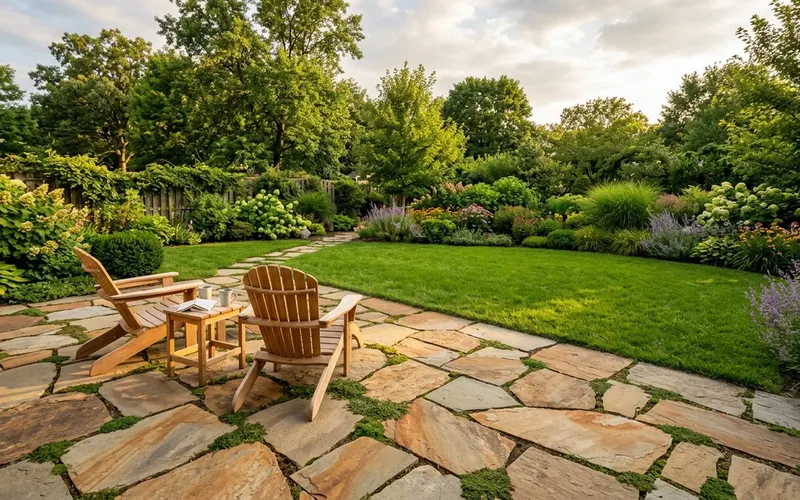
A flagstone patio usually costs $15 to $27 per square foot installed, or about $3,600 on average. Most are dry-laid on compacted gravel and sand; mortared stone on a concrete slab costs more and can crack in freeze-thaw climates.
October 3, 2026
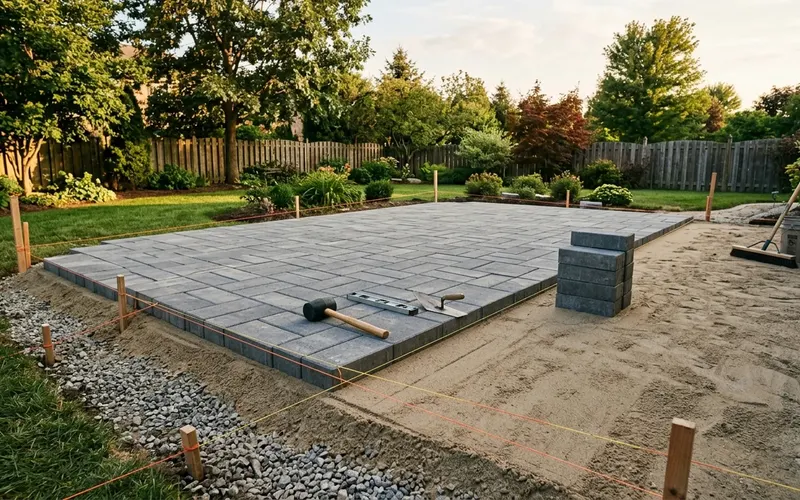
How to Lay Pavers: Base, Sand and Steps
Lay pavers on at least 4 inches of compacted crushed-stone base (more on clay or in freezing climates), then 1 inch of screeded concrete sand. Set the pavers, add edge restraints, compact and sweep in joint sand, with a slope of 1/8 to 1/4 inch per foot.
September 24, 2026
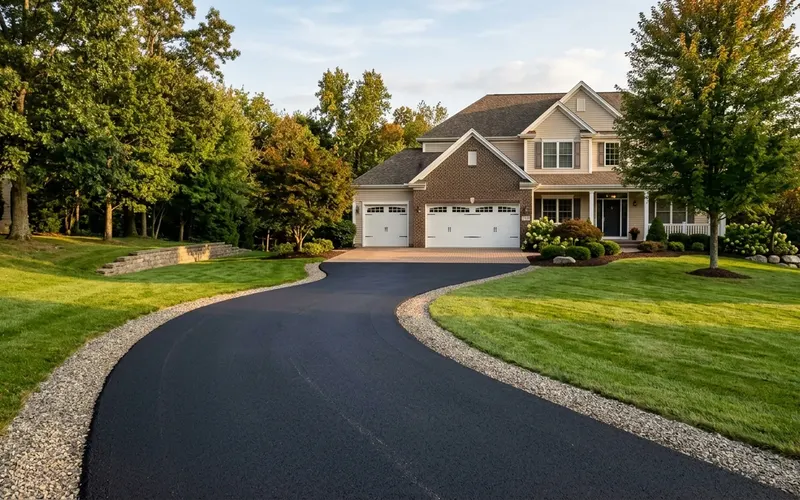
Driveway Costs for Asphalt, Concrete, Pavers and Gravel
A new asphalt driveway usually costs $7 to $15 per square foot installed, or about $3,100 to $7,400 for a typical job. Gravel costs less, concrete a bit more, and pavers the most.
September 20, 2026