Yard Drainage Solutions and French Drain Costs
Start by sloping soil away from the house (at least 6 inches of drop in the first 10 feet) and extending downspouts. If water still pools, add a swale, rain garden, dry well or French drain. Exterior French drains run about $10 to $75 per linear foot.
By LandscapeLookup Editors6 min read
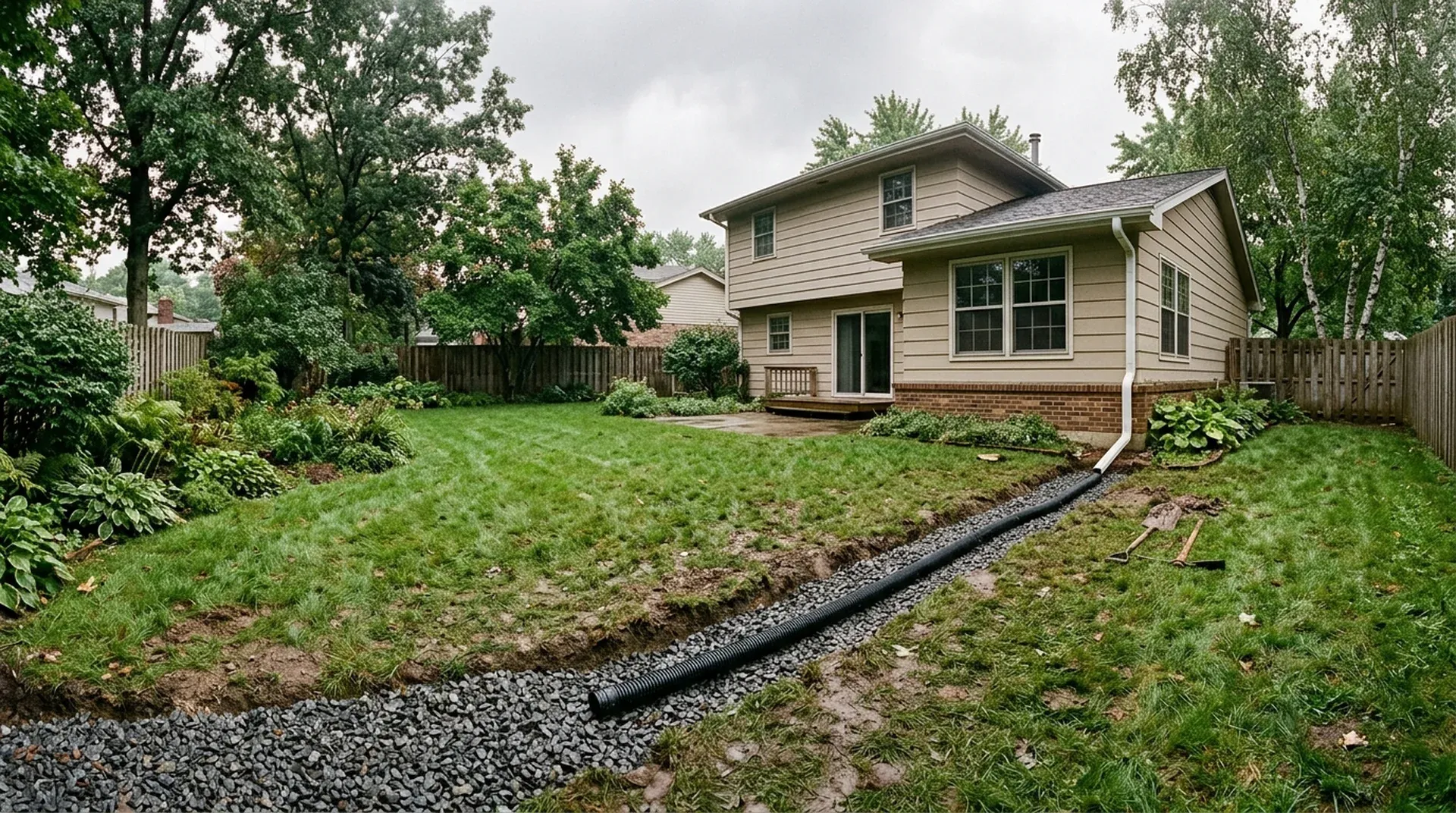
Most yard drainage problems are fixed in two steps: move water away from the house, then give it somewhere to go. First, regrade so the soil drops at least 6 inches in the first 10 feet from your foundation, and extend your downspouts. Then add a swale, rain garden, dry well or French drain where water still collects. A professionally installed exterior French drain typically costs $10 to $75 per linear foot.
Figure out where the water comes from
Before you pick a fix, watch your yard during a heavy rain. Rutgers Cooperative Extension suggests noting where puddles form, which areas drain slowly and where runoff flows, especially from downspouts. A few photos and a rough sketch will help you, and any contractor you call, choose the right solution.
Common culprits:
- Settled soil next to the house. Fill dirt around a foundation often sinks over time and leaves a low spot that holds water, according to Iowa State University guidance republished by North Dakota's emergency services agency.
- Downspouts that dump water at the foundation.
- A low spot in the lawn where water from your yard, or a neighbor's, collects.
- Dense clay soil that soaks up water slowly.
Fix grading and downspouts first
Start here. These fixes often cost the least, and they deal with water against your foundation, which the Iowa State guidance ties to wet basements.
Slope soil away from the house
The Iowa State guidance says soil should drop at least 6 inches in the first 10 feet from the house. Past that point, the ground just needs to keep falling gently so water moves on instead of pooling. The guidance also recommends:
- Keeping at least 8 inches between soil and wood siding to prevent rot.
- Using soil that drains slowly right against the house. Don't use rock or gravel as surface cover there, since it can channel water down along the foundation.
Cost guides put regrading at about $650 to $4,000:
- Lawn Love's landscaping guide: $650 to $3,600
- LawnStarter: $1,175 to $3,645
- Lawn Love's French drain guide: $800 to $4,000
How much soil has to move makes the biggest difference.
Extend your downspouts
For homes with basement water problems, Iowa State says downspout water should land at least 5 to 10 feet from the house. A simple splash block is usually enough only on steep, well-drained lawns with no basement issues.
For a permanent fix, you can bury the extension. This Old House describes a trench at least 6 inches wide and 10 inches deep, sloping steadily away from the house, ending in a gravel-lined outlet. In cold climates, shallow buried pipe can freeze, so make sure the outlet stays clear.
Drainage solutions compared
If grading and downspouts don't solve it, here are the main options. Costs are national ranges from LawnStarter and Lawn Love, and they vary by region, soil and access.
|
Solution |
Best for |
Typical cost |
Cost source |
|---|---|---|---|
|
Regrading |
Water flowing toward the house; shallow low spots |
$650–$4,000 |
Lawn Love, LawnStarter |
|
Swale |
Moving surface water across a yard to an outlet |
Varies with length and lining |
None listed |
|
Rain garden |
Soaking up roof or lawn runoff in a planted bed |
$1–$5/sq ft DIY; $10–$20/sq ft pro |
LawnStarter |
|
Dry well |
Collecting downspout water underground where there's no outlet |
$500–$4,255 |
LawnStarter, Lawn Love |
|
Exterior French drain |
Soggy areas and groundwater that grading can't fix |
$10–$75 per linear ft |
LawnStarter, Lawn Love |
|
Storm drain connection |
Sending water to a street or storm sewer, where allowed |
$500–$3,500 |
LawnStarter |
|
Sump pump (with a drain) |
Sites too flat for gravity to move the water |
$625–$2,625 extra |
Lawn Love |
French drains: how they work and what they cost
A French drain is a gravel-filled trench with a perforated pipe that collects water underground and carries it to an outlet. Michigan State University Extension describes a typical version as about 1.5 feet deep and 10 to 12 inches wide. The trench is lined with landscape fabric, with a 4- to 6-inch pipe surrounded by gravel. MSU stresses sending the water to a suitable outlet; otherwise you "just move the problems downhill."
French drain cost
LawnStarter and Lawn Love both put the average professionally installed French drain at about $5,000. LawnStarter's typical range is $1,650 to $12,250, and Lawn Love's is $2,800 to $6,500. Length drives most of the price. The ranges below combine both guides, except the 50-foot row, which only LawnStarter lists:
|
Drain length |
Exterior |
Interior (basement) |
|---|---|---|
|
50 ft |
$500–$3,250 |
$2,000–$5,000 |
|
100 ft |
$1,000–$7,500 |
$4,000–$10,000 |
|
200 ft |
$2,000–$15,000 |
$8,000–$20,000 |
Interior drains, installed under a basement floor, cost $40 to $100 per linear foot. Exterior yard drains run $10 to $65 per foot in LawnStarter's estimate and up to $75 in Lawn Love's.
What pushes the price up
LawnStarter lists:
- Hard digging. Clay and shale take longer to trench.
- Access. If a trencher or mini-excavator can't reach the area, hand digging adds labor.
- Materials. Pipe runs $0.50 to $3 per linear foot and gravel $25 to $53 per ton.
- Permits. About $58 to $225 where required.
- A sump pump, if gravity alone can't move the water.
Rain gardens, swales and dry creek beds
Rain gardens
A rain garden is a shallow, planted depression that lets runoff soak in instead of running off. Rutgers says it allows about 30% more water to soak into the ground than a conventional lawn. Siting tips from Rutgers and University of Minnesota Extension:
- Place it at least 10 feet from the foundation, on a slope of 1% to 10%, and not over a septic system.
- Most home rain gardens are 100 to 300 square feet.
- Test drainage first: UMN suggests digging a hole about 10 inches deep and filling it with water. If it drains within 48 hours, the spot works.
- Dig about 3 inches deep in clay soil, or 3 to 6 inches in sandy soil, per UMN.
Rutgers recommends native perennials that survive both wet and dry conditions and don't need much fertilizer. For the Northeast and Mid-Atlantic, its list includes swamp milkweed, cardinal flower, Joe-Pye weed and buttonbush. In other regions, ask your county extension office for natives suited to wet sites.
Swales and dry creek beds
A swale is a wide, shallow ditch that carries surface water to an outlet. MSU Extension recommends covering it with grass, or with stone over landscape fabric where grass won't grow. A stone-lined swale doubles as a dry creek bed, one of the spots where UF/IFAS says rock works better than mulch.
Rules to know before you dig
- Don't send water onto your neighbor's property. Iowa State notes that regulations on water flow apply and you can't change drainage in a way that harms a neighbor. Talk to neighbors and local officials before a big project.
- Storm sewer connections need approval. Drain outlets can empty into street gutters or storm sewers only where local codes allow it.
- Check permits and HOA rules for regrading, new drains or work near the street.
- Contact 811 first. It's the free national before-you-dig service. Request marking a few business days before you dig so utility lines can be located.
When to call a pro
Downspout extensions and small rain gardens are reasonable DIY projects. Call a landscaper or drainage contractor for regrading near the foundation, French drains, dry wells or sump pumps. If water is already getting into your basement, a basement waterproofing contractor can assess interior drains and sump pumps. If a slope needs a retaining wall over about 4 feet tall, use a licensed pro; our retaining wall cost guide covers what to expect. When you hire:
- Get 2 or 3 written quotes that describe the same fix, including trench length, depth, pipe size and where the outlet goes.
- Ask for photos of similar drainage work, ideally on soil like yours.
- Check licensing and insurance where your state requires it.
- Get the scope and payment schedule in writing, including lawn repair after trenching and who pulls any permits.
Drainage is often the first step in a bigger project, so see how much landscaping costs if you're planning more. If you're replanting near a wet spot, group plants by how much water they need; our xeriscaping guide explains how hydrozoning works. Compare local landscapers on LandscapeLookup or hardscaping pros. It's free, with no sign-up, and you contact pros directly.
Editorial team
The LandscapeLookup editorial team writes guides to help US homeowners plan yard projects and hire the right pro. Each guide is based on university extension services, government sources such as EPA WaterSense and USDA, manufacturer instructions and published cost guides, and links to them so you can check the details.
Keep reading
How Much Does Artificial Turf Cost?
Professional artificial turf installation runs about $5 to $20 per sq ft, with recent cost guide averages running about $13 to $20. A typical 500 sq ft yard costs roughly $2,700 to $10,000, depending on turf quality, prep work and where you live.
October 15, 2026
How to Build a Rain Garden
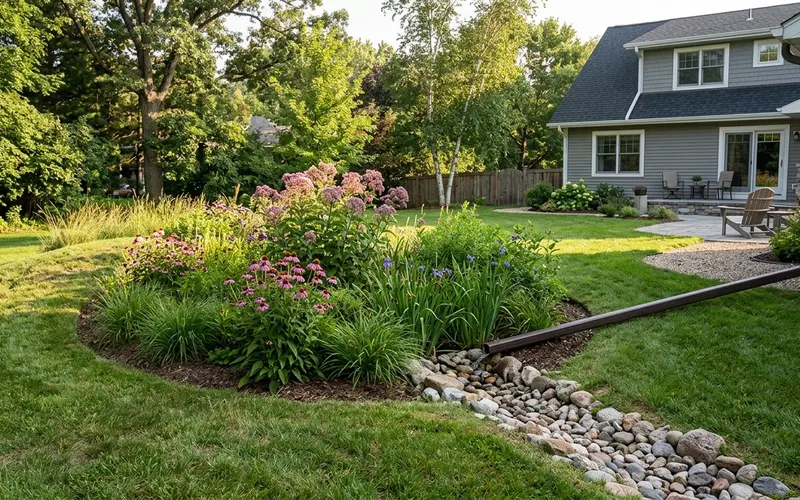
Pick a spot at least 10 feet from the house where runoff flows but water doesn't already pond, dig a level basin 3 to 8 inches deep (usually 100 to 300 sq ft), berm the low side and plant natives that handle wet and dry.
October 13, 2026
Landscape Rock: Types, Costs and Where to Use It
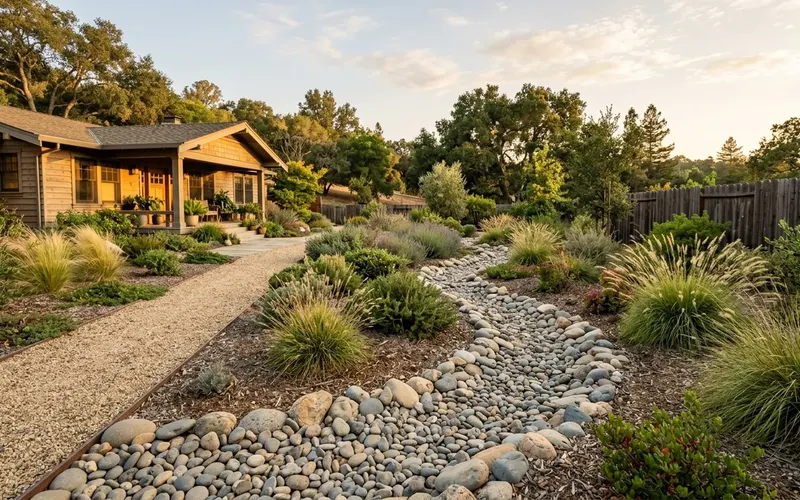
Common landscape rock like pea gravel, crushed stone, river rock and lava rock runs about $10 to $220 per ton in 2026 cost guides. It works best on paths, dry creek beds and in desert or wildfire-prone yards, and less well in most planting beds.
October 11, 2026