

Driveway Costs for Asphalt, Concrete, Pavers and Gravel
A new asphalt driveway usually costs $7 to $15 per square foot installed, or about $3,100 to $7,400 for a typical job. Gravel costs less, concrete a bit more, and pavers the most.
By LandscapeLookup Editors7 min read
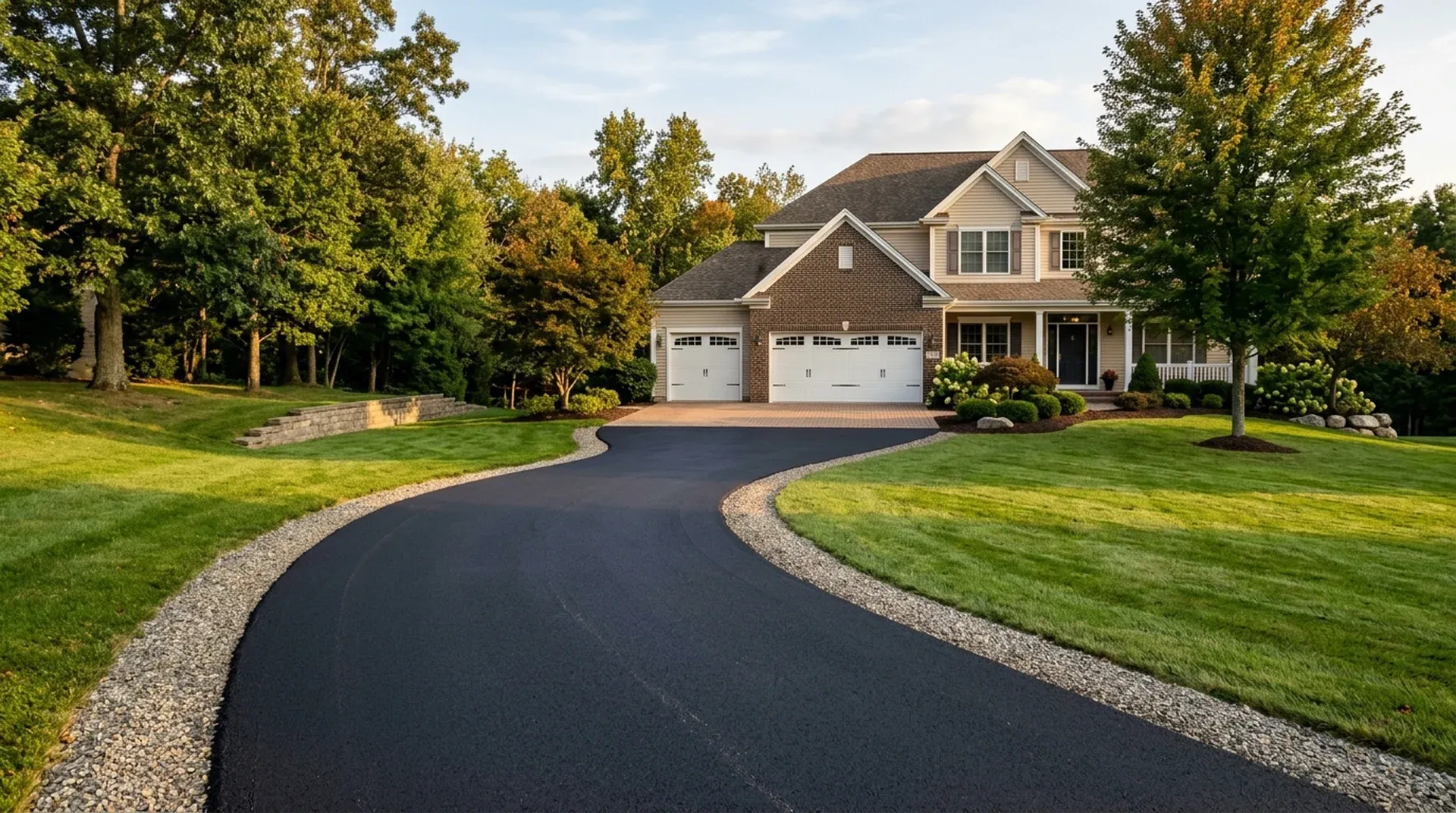
A professionally installed asphalt driveway usually costs $7 to $15 per square foot, according to NerdWallet. Typical asphalt jobs run about $3,100 to $7,400. Gravel is the cheapest surface, concrete costs a little more than asphalt, and pavers cost the most. Size, site prep, climate and local labor rates decide where your quote lands, so treat every number here as a national ballpark.
Driveway cost by material and size
Here's how the four common surfaces compare on installed price, using one dataset so the rows line up. The two-car column is simple math for a 24 × 24-foot driveway (576 sq ft).
|
Material |
Installed cost per sq ft |
2-car driveway (576 sq ft) |
Typical lifespan |
|---|---|---|---|
|
Gravel |
$1.25–$4 |
$720–$2,304 |
Up to 100 years with regular upkeep |
|
Asphalt |
$7–$15 |
$4,032–$8,640 |
12–25 years |
|
Concrete |
$8–$18 |
$4,608–$10,368 |
20–40 years |
|
Pavers |
$10–$30 |
$5,760–$17,280 |
25–50 years |
Installed costs, labor included, from NerdWallet's 2025 guide to repaving a driveway. Lifespans from Fixr, except gravel, from LawnStarter. Prices vary by region.
Is asphalt cheaper than concrete? Usually, but not always. NerdWallet's averages are a little over $5,000 for asphalt and just under $6,500 for concrete. LawnStarter runs the other way, at about $3,500 for concrete and $4,996 for asphalt. Cost guides disagree, so local quotes are what count.
Cost by driveway size
LawnStarter calls size the biggest factor in what you'll pay. Fixr's estimates below cover paved driveways at $8 to $25 per square foot, labor included:
|
Driveway |
Dimensions |
Typical installed cost |
|---|---|---|
|
Single stall |
10 × 20 ft |
$1,600–$5,000 |
|
Single |
12 × 24 ft |
$2,300–$7,200 |
|
Double stall |
20 × 20 ft |
$3,200–$10,000 |
|
Double |
24 × 24 ft |
$4,610–$14,400 |
|
Triple |
24 × 36 ft |
$6,910–$21,600 |
Source: Fixr, updated 2025.
For anything else, multiply length by width, then by a per-foot price. A 300-foot drive that's 10 feet wide is 3,000 sq ft. That's about $3,000 to $9,000 in gravel at LawnStarter's $1 to $3 per square foot, or $21,000 to $45,000 in asphalt at NerdWallet's $7 to $15.
How much is 2,000 sq ft of asphalt? About $14,000 to $30,000 at NerdWallet's rates. LawnStarter's asphalt guide lists $3.92 to $6.25 per square foot, which gives only $7,840 to $12,500, though it notes labor is sometimes billed separately. That spread is why written quotes matter.
How much does an asphalt driveway cost?
NerdWallet puts the typical asphalt driveway at $5,258, with most jobs between $3,128 and $7,391. LawnStarter is close, at about $4,996 on average and $3,086 to $7,912 for most projects. Labor alone usually runs $5 to $7 per square foot, per NerdWallet.
The type of job matters as much as the size. NerdWallet lists:
- New asphalt driveway: $7 to $13 per sq ft
- Tear-out and replacement: $8 to $15 per sq ft
- Overlay on an existing asphalt or concrete driveway: $3 to $7 per sq ft
For ordinary cars and trucks, LawnStarter says 2 inches of asphalt is generally enough. Some homeowners pay for 4 inches for extra strength. Plan on resealing every 2 to 5 years. Fixr puts professional sealcoating at $0.68 to $2.10 per square foot.
NerdWallet says asphalt typically lasts 15 to 20 years and suits very cold climates, but it can turn tacky in extreme heat. Small cracks cost about $1 to $3 per linear foot to fix.
How much does a concrete driveway cost?
Concrete usually runs $8 to $20 per square foot installed, about $6,400 on average, according to Angi figures quoted by NerdWallet. LawnStarter gives a lower $6 to $16. A plain finish is the cheapest, and a stamped finish costs significantly more (see our guide to stamped concrete).
Thickness drives both price and strength. Concrete maker County Materials recommends at least 4 inches for cars, light trucks and SUVs. Plan on 5 inches or more if garbage trucks or other heavy vehicles will use it. That extra inch adds about 20% to the concrete cost but almost 50% to the load the slab can carry.
What to look for in a concrete quote:
- Control joints about 10 feet apart or closer, cut at least one quarter of the slab's depth (County Materials). Wider spacing invites random cracks.
- At least 7 days of curing, starting right after finishing.
- Air-entrained concrete in freeze-thaw areas. The Tennessee Concrete Association summarizes the American Concrete Institute's residential code (ACI 332) this way: driveways exposed to moisture, deicers and freezing need an air-entrained mix rated at 4,500 psi.
In snowy regions, don't use salt or deicers the first winter, the Tennessee Concrete Association advises. County Materials says sand is fine for traction. NerdWallet says a well-kept concrete driveway can last 30 to 40 years. The downsides: it can crack in freezing temperatures, and repairs cost more than on asphalt.
How much does a paver driveway cost?
Pavers are the premium choice. LawnStarter's paver driveway guide puts most jobs at $10 to $30 per square foot, with an average around $13,000. A two-car driveway runs $5,760 to $17,280. Lawn Love gives a wider $10 to $40, matching the range in our paver patio cost guide.
The extra cost is mostly underneath. Paver maker Unilock calls for 8 to 12 inches of base for driveways, about twice the depth for walkways. In return, NerdWallet notes that individual pavers are easy to replace, though they usually need sealing to keep their look. See whether you should seal pavers and our step-by-step guide on how to lay pavers.
Permeable options
If runoff or puddling is a problem, ask about permeable surfaces. The EPA lists pervious asphalt, pervious concrete, interlocking pavers and plastic grid pavers. All of them let rain and snowmelt soak through to the soil and gravel below. That cuts runoff and can reduce the need for salt. NerdWallet puts permeable pavers at $10 to $70 per square foot. For other fixes, see our guide to yard drainage solutions.
What's the cheapest driveway option?
Gravel. Fixr calls it the cheapest paving option. LawnStarter puts the average gravel driveway at about $1,500, or $1 to $3 per square foot with labor. NerdWallet adds that handy homeowners can build one themselves for about $700 to $1,000 in materials plus about $150 in tools.
Build it right and it lasts much longer:
- Depth: at least 4 inches, though LawnStarter says experts recommend 8 to 12 inches.
- Gravel type: buy crushed gravel with angular edges and fines that pack down (Vermont Agency of Natural Resources). Skip rounded "bank run" gravel, which tires push aside.
- Crown: raise the center about 1/2 inch for every foot from the center to the edge. A 10-foot driveway gets a 2 1/2-inch crown that sheds water to the sides.
- Upkeep: the same Vermont guide recommends grading 2 to 4 times a year, in spring and fall.
The trade-offs, per LawnStarter, are harder snow and ice removal, ruts and scattered stone. Fixr adds that gravel doesn't hold up well to heavy rain. A stabilizer makes it more durable but adds $3 to $7 per square foot.
Hidden costs, permits and digging
The surface is only part of the bill. NerdWallet lists these common extras:
|
Extra |
Typical cost |
|---|---|
|
Demolition of the old driveway |
$1,000–$3,000 |
|
Excavation |
$1,000–$2,500 |
|
Culvert under the driveway |
$1,000–$9,000 |
|
Permit (where required) |
About $250 on average |
|
Heated driveway |
$12–$21 per sq ft |
|
Steep slope, curves or unusual shapes |
Adds 15%–30% |
LawnStarter puts concrete removal at $2 to $6 per square foot if you're replacing a slab.
Check the rules before you sign. Fixr says that in most communities, a driveway that meets the street needs a license to pave, with fees of $50 to $600. The apron that connects to the street may also be regulated by local building codes. Fixr also notes that many cities limit how many entrance and exit points a driveway can have onto a public road. Ask your building department, and check your HOA's rules if you have one, before you sign.
Any excavation means calling 811 a few business days ahead. It's free, and utilities will mark buried lines before your crew digs (811 Before You Dig).
When to call a pro
NerdWallet doesn't recommend a DIY asphalt or concrete driveway unless you're an experienced contractor. It takes specialized tools, hard physical labor and specific skills, and mistakes are costly. Gravel is the one surface many handy homeowners tackle themselves. Hire a pro for any paved driveway, a sloped site, a culvert or a connection to the street.
- Get 2 or 3 written quotes that list square footage, base depth, surface thickness, joint spacing (for concrete) and who pulls the permit.
- Ask for photos of similar work, ideally driveways a few winters old.
- Check licensing and insurance where your state requires it for paving or hardscape work.
- Get the scope and payment schedule in writing, including removal of the old driveway, cleanup and any warranty on cracking or settling.
LandscapeLookup is free for homeowners, with no sign-up. Pros are ranked by Google rating weighted by review count, plus how local they are and their main service. You contact them directly. Find a hardscaping pro near you.
Editorial team
The LandscapeLookup editorial team writes guides to help US homeowners plan yard projects and hire the right pro. Each guide is based on university extension services, government sources such as EPA WaterSense and USDA, manufacturer instructions and published cost guides, and links to them so you can check the details.
Keep reading
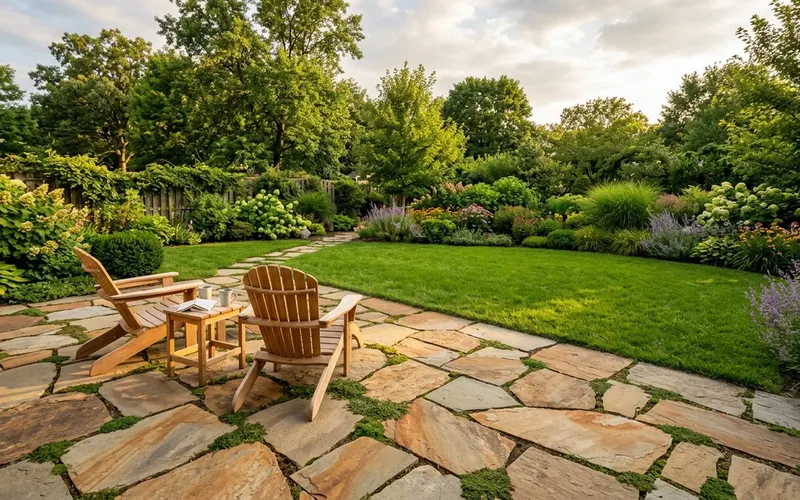
Flagstone Patios: Cost and How They're Built
A flagstone patio usually costs $15 to $27 per square foot installed, or about $3,600 on average. Most are dry-laid on compacted gravel and sand; mortared stone on a concrete slab costs more and can crack in freeze-thaw climates.
October 3, 2026
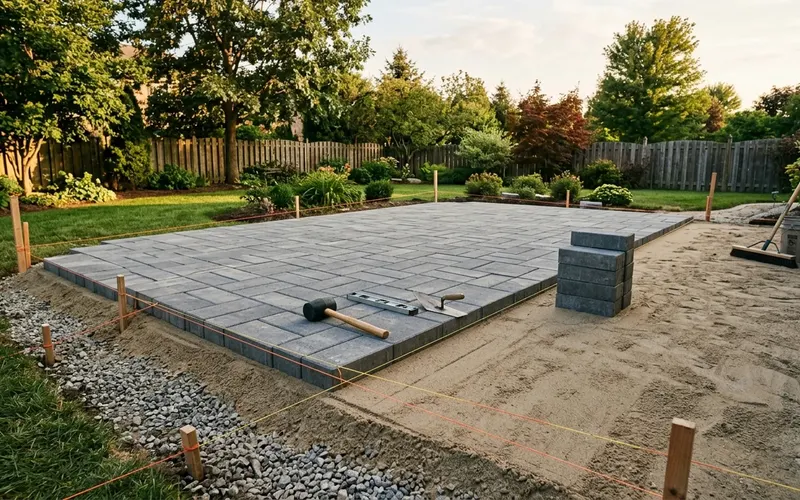
How to Lay Pavers: Base, Sand and Steps
Lay pavers on at least 4 inches of compacted crushed-stone base (more on clay or in freezing climates), then 1 inch of screeded concrete sand. Set the pavers, add edge restraints, compact and sweep in joint sand, with a slope of 1/8 to 1/4 inch per foot.
September 24, 2026
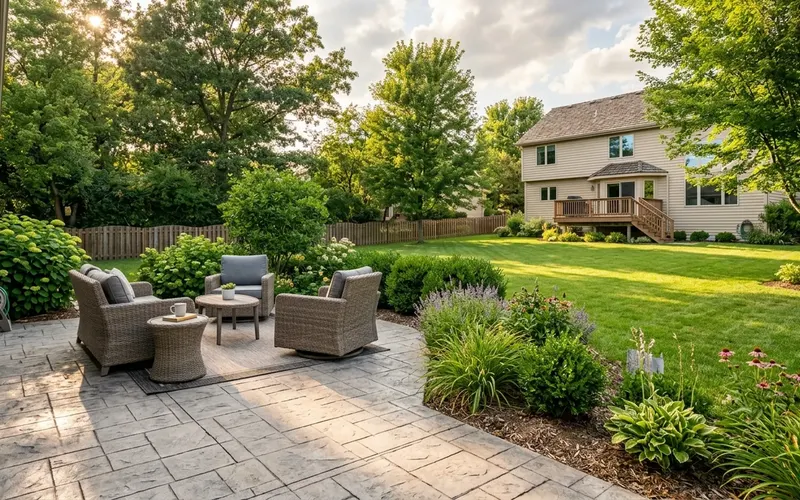
Stamped Concrete Patios: Cost, Pros and Cons
A stamped concrete patio usually costs about $8 to $25 per square foot installed, so a 20 x 20 ft patio often runs $4,000 to $8,000. It looks like stone or brick for less than pavers, but it can crack and needs resealing every 2 to 3 years.
September 15, 2026