
How Much Does Tree Removal Cost?
Most tree removals cost about $385–$1,070, with national averages of $630–$850. Small trees can run a few hundred dollars, while very large or hard-to-reach trees can top $2,000. Stump grinding and hauling are often extra.
By LandscapeLookup Editors6 min read
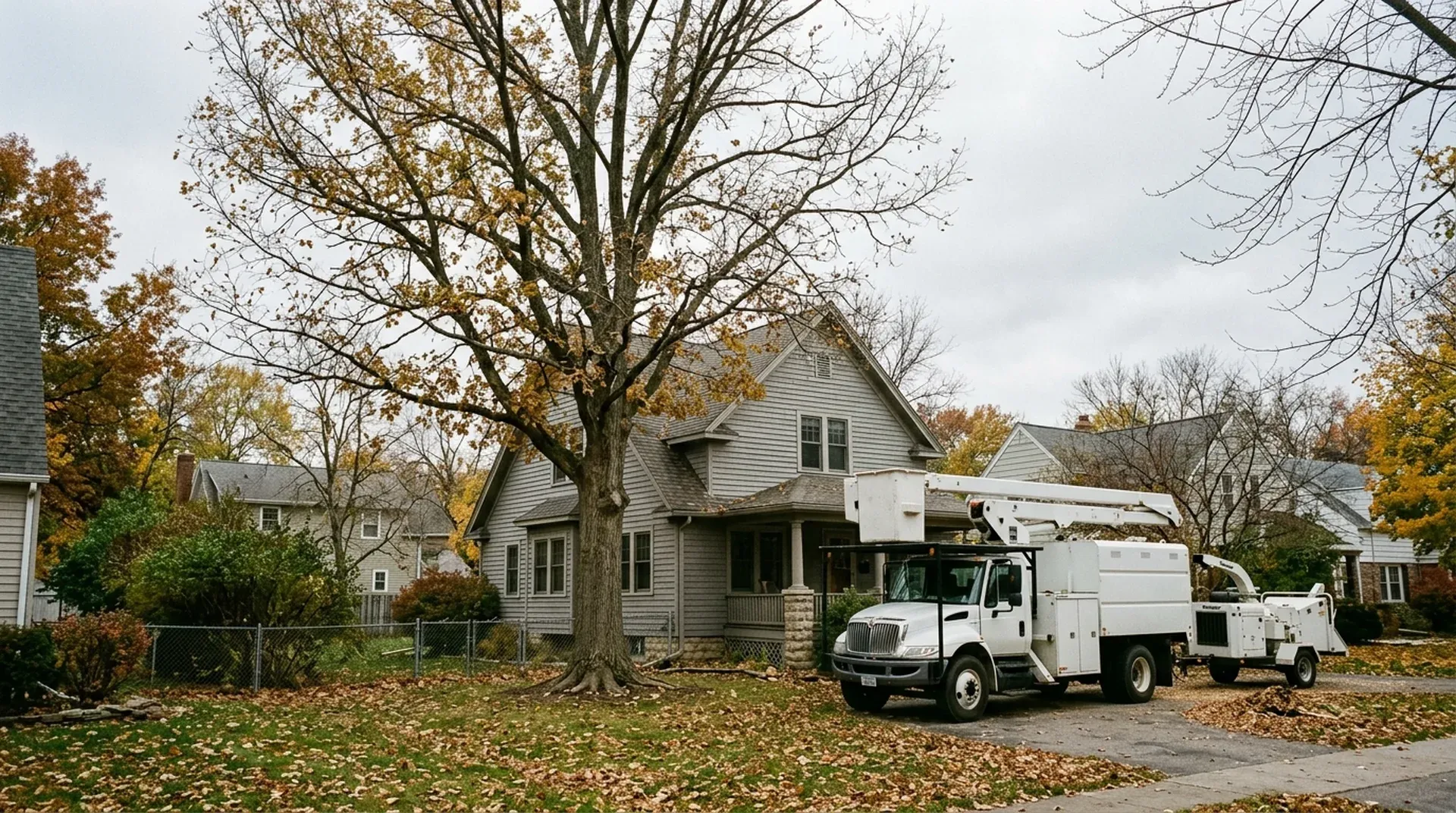
Most homeowners pay about $385 to $1,070 to have a tree removed, according to LawnStarter. Cost guides put the national average at $630 (LawnStarter) to $850 (Lawn Love). A small tree with easy access can cost under $300. A very tall tree, a hazardous tree or one wedged between buildings can pass $2,000, and stump grinding is usually billed separately.
Cost guides agree height drives the price most. Species, access, the tree's condition and what's underneath it all change the quote too. Below are typical ranges by height, the extras to ask about and how to hire safely.
Tree removal cost by height
Taller trees take more time, more rigging and often more equipment. Two cost guides publish height-based ranges, and they line up closely:
|
Tree height |
Lawn Love (2026) |
Fixr (2025) |
|---|---|---|
|
Up to 30 ft |
$285–$435 |
$150–$400 |
|
30–60 ft |
$435–$870 |
$450–$700 |
|
60–80 ft |
$870–$1,160 |
$900–$1,200 (60–100 ft) |
|
Over 80 ft |
$1,160–$2,000 |
$1,300–$2,000 (100 ft+) |
Lawn Love also gives a rough rate of $9.50 to $14.50 per foot of height, and LawnStarter's is close at $10 to $14 per foot. That's a handy check if your tree falls between tiers.
Regional differences
Where you live changes the price too. Lawn Love says removal usually costs less in rural areas, where crews have room to work, than in cramped urban yards. It also says prices in Southern states are generally lower than in Northern states. Treat the national figures as starting points, and get local quotes to see what crews near you charge.
What else changes the price
Two 50-foot trees can get very different quotes. These are the factors tree services weigh most:
- Species and trunk size. Dense hardwoods and wide trunks take longer to cut and haul. Fixr lists pine at $200–$1,500, palm at $250–$1,200, oak at $900–$2,000 and maple at $1,000–$1,800. LawnStarter's averages by type: palm $725, oak $775, pine $925 and maple $1,150.
- Access. A tree crews can't reach with a truck, or one hanging over a roof, fence or pool, has to come down in small, roped pieces. LawnStarter says a hard-to-reach tree can add up to 50% to the bill.
- Condition. A tree that has already fallen is cheaper to deal with: about $85–$300, according to LawnStarter. A dead or diseased tree that's still standing can be riskier to climb, which can raise the price.
- Crane work. When a tree can't be climbed or dropped safely, some companies bring in a crane. Fixr puts crane-assisted removal at $1,500–$2,500.
- Emergencies. A tree on your roof after a storm costs more. Lawn Love lists emergency removal at $450–$3,000, and Fixr says emergency rates can run 2 to 3 times the normal price.
Add-ons that may not be in the quote
Many quotes cover cutting the tree down and little else. Ask which of these are included:
|
Add-on |
Typical cost |
|---|---|
|
Stump grinding |
$131–$438 per job (LawnStarter); $150–$300 (Fixr) |
|
Full stump removal, including roots |
$175–$516 (LawnStarter); $200–$700 (Fixr) |
|
Hauling away debris |
$50–$90 (LawnStarter); $100–$200 (Lawn Love) |
|
Wood chipping |
$65–$125 (LawnStarter); $75–$125 per hour (Lawn Love) |
|
Splitting logs into firewood |
$50–$90 (LawnStarter); $75–$100 per tree (Lawn Love) |
|
Travel fee for distant jobs |
$50–$200 flat, or about $0.50 per mile (Lawn Love) |
|
Permit, where required |
$60–$150 (Fixr) |
The stump figures come from the dedicated stump guides at LawnStarter and Fixr. Stump work is easy to overlook. If you want the spot replanted or turned back into lawn, read our guide to stump grinding costs and what to expect before you sign.
Permits and HOA rules
Most cities and counties require a permit to take down a tree, with some exceptions (LawnStarter). Fixr lists typical permit fees of $60–$150. HOAs can have their own rules on top of that. Ask each company whether the quote includes pulling the permit, but since it's your property, confirm with your city or county and your HOA before work starts.
Trees near power lines need a utility or line-clearance pro
Don't attempt this one yourself, and don't hire just anyone with a chainsaw. According to OSHA, contact with electricity is one of the leading causes of death for tree care workers. OSHA's rule for regular tree crews is to stay at least 10 feet from overhead lines, and farther from higher-voltage lines.
The International Society of Arboriculture's tree risk brochure is blunt: never try to remove branches or any part of a tree from or near power lines, and never go near downed lines. If a tree is touching a line, or could fall into one, call your electric utility first. Cost guides such as Fixr note that utilities usually trim around their own lines at no charge. Your utility can tell you whether it will handle the tree or whether you need a licensed, line-clearance-qualified contractor.
Will homeowners insurance pay for tree removal?
Sometimes, and usually only part of it. The Insurance Information Institute (Triple-I) says that if a tree falls on your house or another insured structure, your policy generally covers the damage plus tree removal, typically up to about $500 to $1,000 depending on your insurer and policy.
If the tree falls and doesn't hit anything insured, there's generally no coverage for removing it. Some insurers will pay if it blocks your driveway or an accessibility ramp.
Triple-I also notes that poor maintenance isn't covered. That's a good reason to deal with a dead or declining tree before a storm does it for you. Not sure if yours qualifies? Our guide on how to tell if a tree is dying walks through the warning signs.
How to save money on tree removal
- Make sure removal is the right call. The ISA's Why Hire an Arborist brochure recommends removal when a tree is dead, dying or an unacceptable risk, blocks something pruning can't fix, is crowding and harming better trees, or is in the way of construction. If the problem is a few heavy limbs over the roof, pruning may solve it for less. Compare what tree trimming costs.
- Bundle jobs. If you have several trees or stumps, ask for one quote. Stump grinders commonly charge less for each additional stump (Fixr lists about $40–$75 each), and it's worth asking whether a crew will discount extra trees too.
- Keep the wood. If you can use firewood or mulch, ask whether skipping hauling or chipping lowers the price.
- Avoid emergency rates. Removing a dead or leaning tree on your schedule costs less than paying for a storm callout later.
- Compare written scopes, not just totals. A low quote that leaves the trunk, branches and stump in your yard isn't really cheaper.
When to call a pro
Tree removal is one job where hiring a pro is almost always worth it. Felling a tree near a house, fence or power line takes training, rigging and insurance. The ISA suggests these checks when you hire:
- Get 2 to 3 written quotes that spell out the scope: cutting, cleanup, hauling, stump work and who pulls the permit.
- Ask for proof of insurance and call the insurance company to confirm it's active.
- Check licensing where your state or city requires it, and look for an ISA Certified Arborist. You can confirm a credential with the free "Verify a Credential" tool on TreesAreGood.org.
- Ask for references or photos of similar removals, especially for big trees near structures.
- Be wary of door-to-door offers, which are common after storms.
- Get the scope and payment schedule in writing. Avoid paying the full amount up front.
Ready to compare local options? Find tree care pros near you. LandscapeLookup is free to use with no sign-up. Pros are ranked by their Google rating weighted by review count, how local they are and their main service, and you contact them directly.
Editorial team
The LandscapeLookup editorial team writes guides to help US homeowners plan yard projects and hire the right pro. Each guide is based on university extension services, government sources such as EPA WaterSense and USDA, manufacturer instructions and published cost guides, and links to them so you can check the details.
Keep reading

How to Plant a Tree (and When)
Plant in fall after leaf drop or in early spring before bud break. Dig a hole 2 to 3 times wider than the root ball but no deeper, set the root flare at or just above grade, backfill with the soil you dug out, water well and mulch 2 to 3 inches deep without touching the trunk.
October 30, 2026
What a Certified Arborist Does and When to Hire One
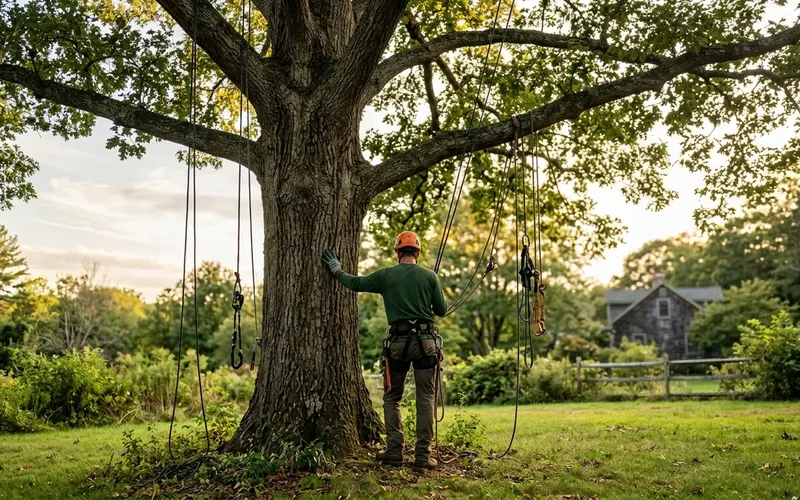
An ISA Certified Arborist has at least 3 years of tree care experience, passed a 200-question exam and keeps up with continuing education. Hire one for large-tree pruning, risk checks, removal decisions and sick trees.
October 26, 2026
When to Prune Trees
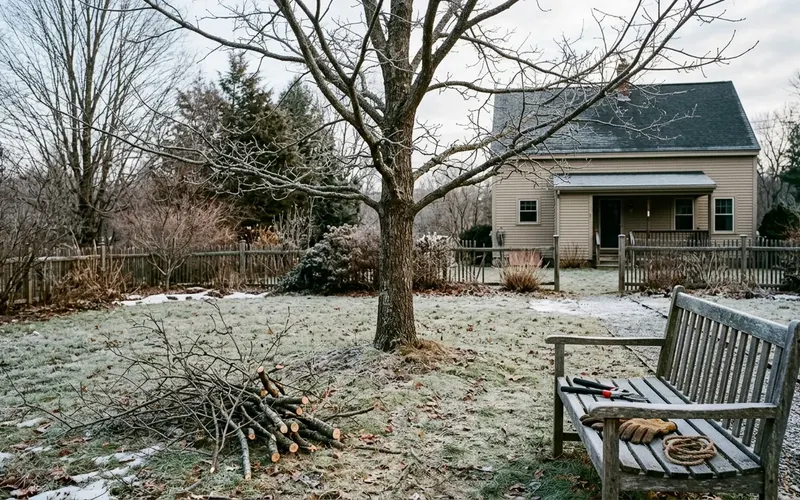
Prune most trees in late winter to early spring, while they're dormant and before new growth starts. Remove dead or broken branches any time. Prune spring-flowering trees right after bloom, and avoid pruning oaks during your area's oak wilt season.
September 9, 2026