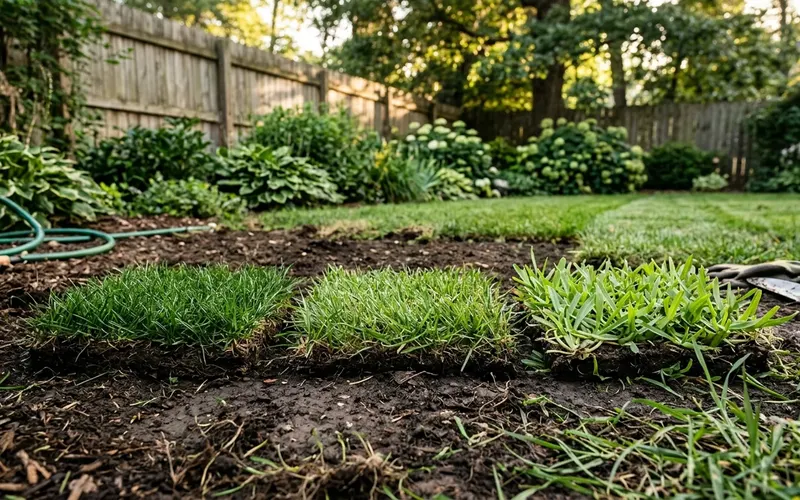
When to Prune Trees
Prune most trees in late winter to early spring, while they're dormant and before new growth starts. Remove dead or broken branches any time. Prune spring-flowering trees right after bloom, and avoid pruning oaks during your area's oak wilt season.
By LandscapeLookup Editors6 min read
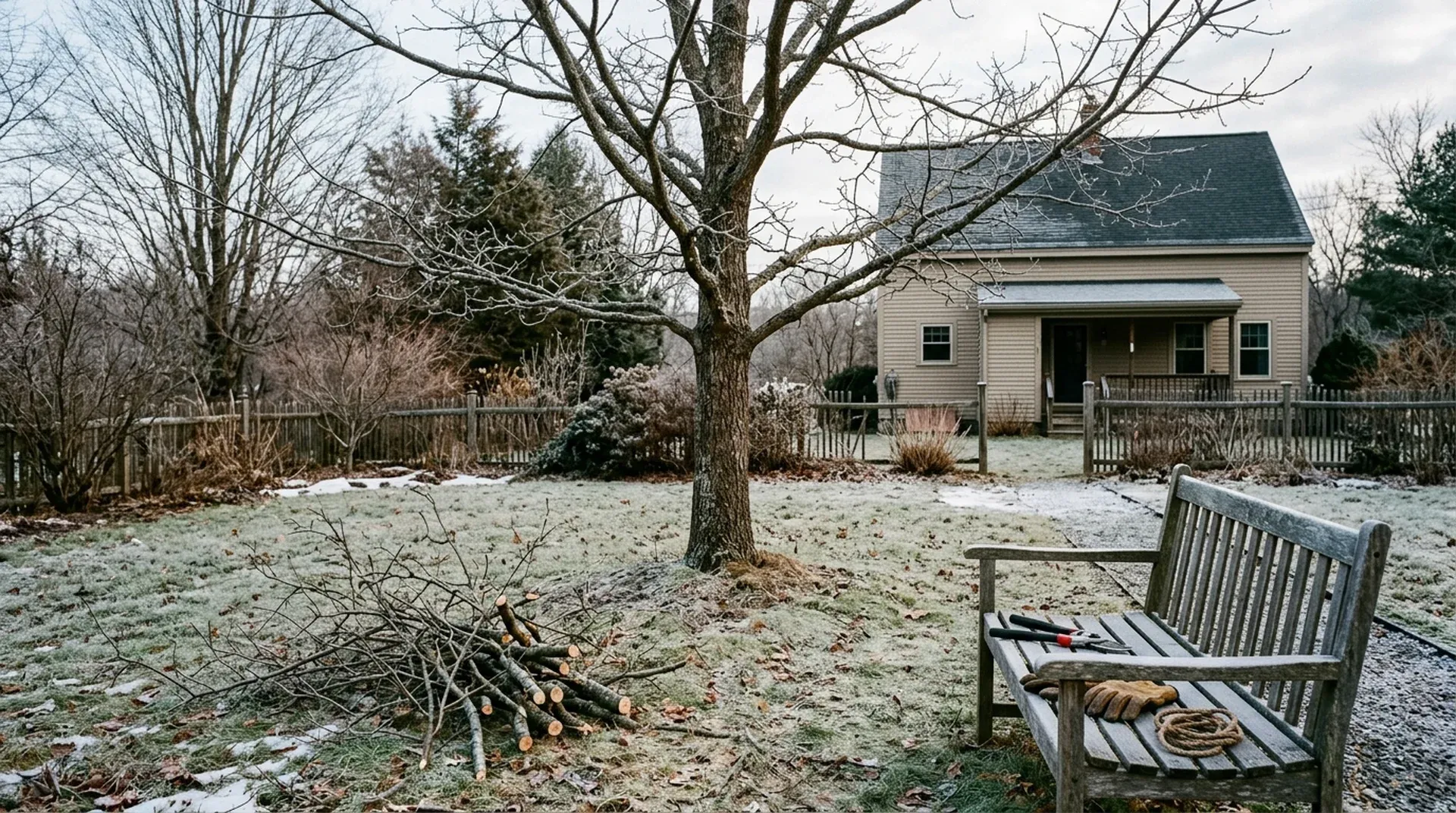
The best time to prune most trees is late winter to early spring, while they're still dormant and before new growth starts. Dead, broken or diseased branches can come off any time of year. The main exceptions: prune spring-flowering trees right after they bloom, and don't prune oaks during your region's oak wilt season.
Timing matters because each cut is a wound the tree has to close. Get it right and the tree seals cuts quickly. Get it wrong and you can invite disease, sap bleeding or weak regrowth.
Why late winter is the best time for most trees
University of Minnesota Extension calls the late dormant season (late winter to early spring) best for most pruning. The International Society of Arboriculture (ISA) gives the reason in its brochure on pruning mature trees: growth and wound closure are maximized when you prune before the spring growth flush.
Times to avoid
- Right after spring leaf-out. The ISA says to avoid heavy pruning of live tissue just after the spring growth flush, especially on weak trees. The tree has just spent a lot of stored energy making new leaves.
- Fall. UNH Extension calls fall a poor time to prune woody plants. Fungal levels are high, and cooler weather slows healing, so cuts stay open into winter. Pruning can also push tender new growth that frost can damage. UNH says to start once trees are dormant.
- Fall and early winter for apples and their relatives. This one is specific to apples, crabapples, mountain ash and hawthorns. For them, UMN Extension says autumn or early winter pruning is more likely to cause drying and dieback at the cuts.
Light pruning to remove weak, dead or diseased limbs is the exception. The ISA says that kind of work can be done any time with little effect on the tree.
Is June too late to prune?
Not for light work, since dead or broken branches can come off any time. Skip heavy cuts just after the spring growth flush, when the ISA says the tree has just used up stored energy on new leaves. UMN Extension actually prefers late spring or early summer for maples, birches and walnuts, once their leaves are fully expanded. In Minnesota and Texas, June also falls inside the oak no-prune window (see below).
Pruning calendar by tree type
|
Tree or shrub |
When to prune |
Why |
|---|---|---|
|
Most shade trees |
Late winter to early spring |
Best wound closure before growth starts |
|
Oaks |
Outside oak wilt season (see below) |
Fresh cuts attract beetles that spread oak wilt |
|
Maples, birches, walnuts |
Late spring or early summer, after leaves fully expand (UMN) |
Limits sap bleeding; late winter also OK |
|
Apples, crabapples, hawthorns, mountain ash |
Late winter, February to early April (UMN) |
Spring and summer cuts raise fire blight risk |
|
Peaches |
Late February or later, not before a cold snap (Penn State) |
Fresh cuts lower cold tolerance |
|
Lilac, magnolia, flowering cherry, forsythia |
Right after flowering (UMN) |
They bloom on last year's growth |
|
Crape myrtle |
Late winter or early spring (Clemson) |
Flowers form on new growth |
|
Spruce, fir, Douglas-fir |
Late winter, before growth begins (UMN) |
Most conifers need little pruning |
|
Pines |
Spring, before the new needles on each shoot ("candle") mature; cut up to two-thirds of the candle (UMN) |
Don't cut back past the current year's growth |
|
Arborvitae, juniper, yew, hemlock |
Any time through midsummer (UMN) |
Prune only to correct problems |
|
Dead, broken or diseased limbs |
Any time (oaks in wilt season: paint the wound) |
Safety and tree health |
About maples and birches: they "bleed" sap if you prune them in early spring. The ISA's pruning mature trees brochure says it may look unsightly but is of little consequence to the tree. UMN Extension agrees it causes little harm, so if late winter is when your arborist can come, that's fine too.
Oaks and oak wilt: timing depends on where you live
Oak wilt is a fungal disease that sap-feeding beetles carry to fresh wounds, so the "don't prune" window shifts with your climate:
- Minnesota and the Upper Midwest: UMN Extension says do not prune oaks from April to October.
- Texas: The Texas A&M Forest Service says not to prune or wound oaks from February through June, the season of highest risk.
Both sources say to paint oak wounds: UMN during the risky window, Texas A&M year-round. UMN Extension suggests latex paint or wound dressing to mask the scent of fresh wood. That's an oak-specific exception. For other trees, the ISA says wound dressings don't reduce decay or speed closure.
If you live elsewhere, ask your county extension office or a local arborist for your area's oak wilt dates.
Fruit trees
UMN Extension says to prune fruit trees every year in late winter or early spring, after the coldest weather has passed and before growth begins. Prune young trees minimally, since excessive pruning can reduce fruiting.
Peaches need a little more patience. Penn State Extension notes that pruning temporarily reduces a tree's tolerance to low temperatures, so it advises waiting until late February and not pruning ahead of a forecast cold snap. Penn State also describes summer pruning in July to manage shading and select branches on young trees. In warmer regions where winters are mild, your local extension office can give dates that fit your climate.
Crape myrtles and the problem with topping
Crape myrtles are a classic example of pruning gone wrong. Clemson Cooperative Extension recommends pruning them in late winter or early spring, while dormant. It notes that topping is common, calls it "crape murder," and says only light pruning, if any, is usually needed. Clemson also calls it a common misconception that heavy pruning makes them flower better.
The same goes for shade trees. The ISA's Why Topping Hurts Trees explains that topping can remove 50–100% of the leaf-bearing crown and triggers fast, weakly attached shoots that break easily.
If a tree has to be smaller, the better approach is reduction: cut a limb back to a side branch at least one-third its diameter. If the tree is simply too big for its spot, the ISA says replacing it with a better-suited species is sometimes the best answer. Our guide to tree removal costs can help you budget for that.
How much to prune and how to cut
Timing is only half of it. Common mistakes include topping, leaving stubs, cutting flush with the trunk and taking too much at once. A few rules from the ISA's pruning brochures:
- Limit the amount. Generally remove no more than 25% of the crown at once, and less on mature trees.
- Go easy on new trees. For newly planted trees, the ISA's Pruning Young Trees brochure says to remove only dead or broken branches until the second or third year.
- Cut at the collar. Make cuts just outside the branch collar (the swollen ring where a branch meets the trunk), not flush with the trunk and not leaving a stub.
- Use the three-cut method on big limbs. Undercut about 12–18 inches out from the trunk, cut through from the top a little farther out, then remove the stub at the collar. This keeps the bark from tearing.
- Use the right tool. Bypass hand pruners for small twigs, and loppers or a pruning saw for anything over about ½ inch in diameter.
Not sure whether a branch is dead or just dormant? Our guide on how to tell if a tree is dying covers simple checks.
When to call a pro
Small trees you can reach from the ground are a reasonable DIY job. The ISA recommends hiring a professional arborist for any pruning that involves working above the ground or using power equipment. Never prune near power lines: UMN Extension says to contact your utility company instead. For anything the utility won't handle, hire a line-clearance-qualified arborist.
When you hire:
- Get 2 to 3 written quotes that say which trees, which type of pruning, roughly how much will be removed and whether cleanup is included. Our guide to tree trimming costs shows typical prices.
- Look for an ISA Certified Arborist and confirm the credential on TreesAreGood.org.
- Ask for proof of insurance, check licensing where your state or city requires it, and ask for photos or references from similar work.
- Turn down anyone who offers to top your tree, and get the scope and payment schedule in writing.
Find tree care pros near you. LandscapeLookup is free with no sign-up, and you contact pros directly.
Editorial team
The LandscapeLookup editorial team writes guides to help US homeowners plan yard projects and hire the right pro. Each guide is based on university extension services, government sources such as EPA WaterSense and USDA, manufacturer instructions and published cost guides, and links to them so you can check the details.
Keep reading
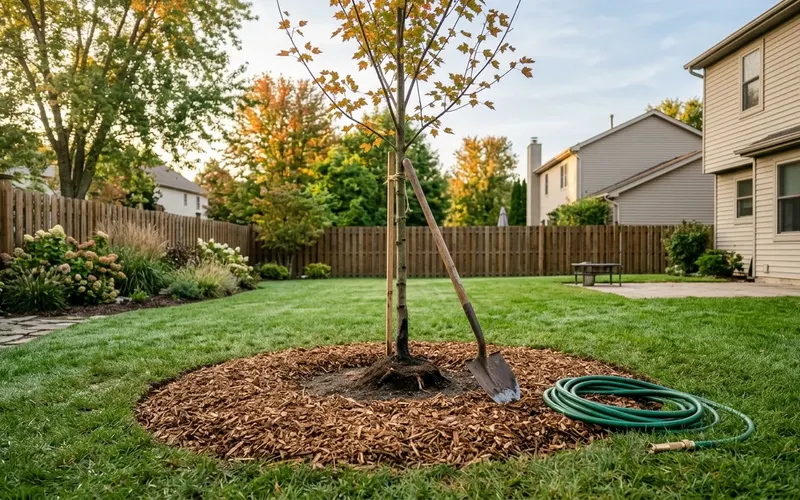
How to Plant a Tree (and When)
Plant in fall after leaf drop or in early spring before bud break. Dig a hole 2 to 3 times wider than the root ball but no deeper, set the root flare at or just above grade, backfill with the soil you dug out, water well and mulch 2 to 3 inches deep without touching the trunk.
October 30, 2026
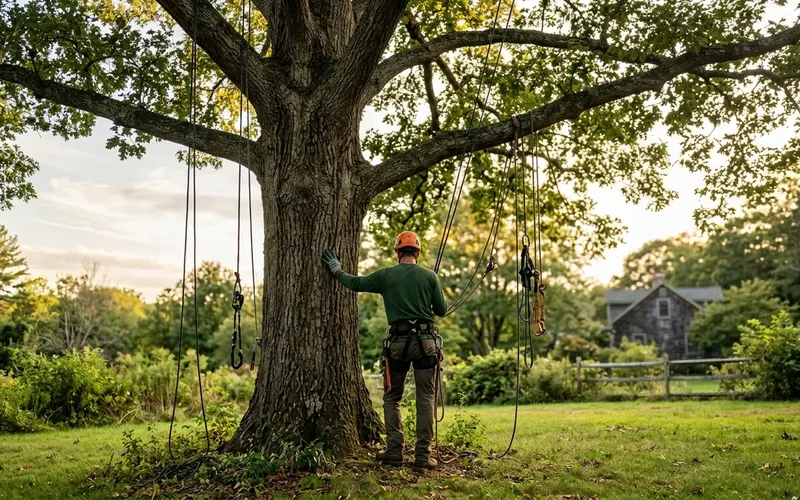
What a Certified Arborist Does and When to Hire One
An ISA Certified Arborist has at least 3 years of tree care experience, passed a 200-question exam and keeps up with continuing education. Hire one for large-tree pruning, risk checks, removal decisions and sick trees.
October 26, 2026
Stump Grinding Cost and What to Expect
Stump grinding usually costs $131–$438 per job, with national averages around $200–$272. Many pros charge $2–$5 per inch of stump diameter with a minimum of about $100, and extra stumps cost less each.
September 4, 2026