How Much Does Artificial Turf Cost?
Professional artificial turf installation runs about $5 to $20 per sq ft, with recent cost guide averages running about $13 to $20. A typical 500 sq ft yard costs roughly $2,700 to $10,000, depending on turf quality, prep work and where you live.
By LandscapeLookup Editors7 min read
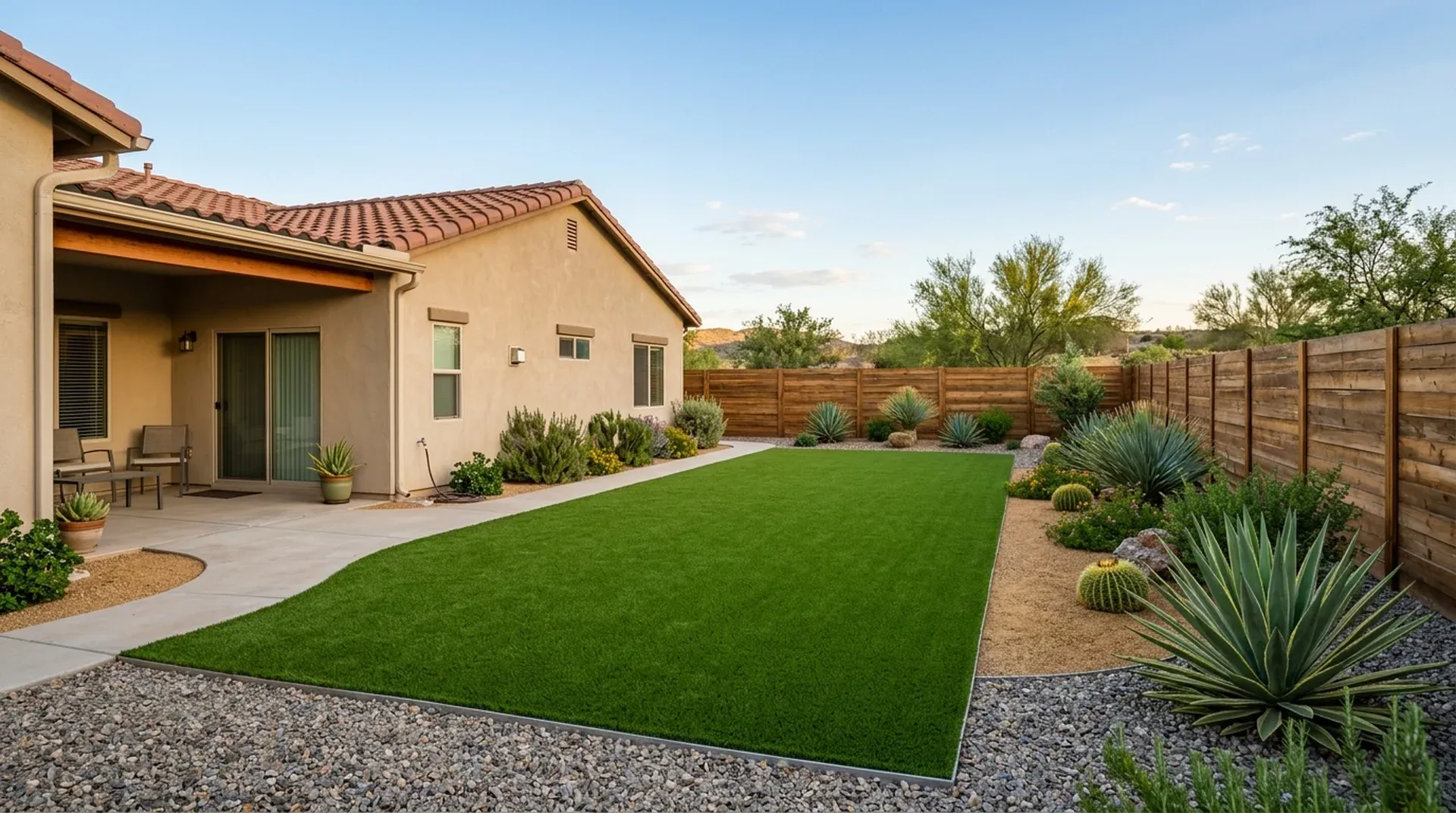
Professional artificial turf installation usually costs about $5 to $20 per square foot, materials and labor included, and the averages in recent cost guides run about $13 to $20. For a typical 500 sq ft yard, that's roughly $2,700 to $10,000. Turf quality, how much prep the site needs and your local labor rates decide where you fall in that range.
Below are prices by square foot and yard size, what pushes a quote up, how turf compares with sod over time, and the downsides worth weighing before you sign.
Artificial turf cost per square foot
The major cost guides don't agree on a single number, so it helps to see them side by side. All of these include materials and professional installation.
|
Source (date) |
Per sq ft installed |
Typical project |
|---|---|---|
|
LawnStarter (Oct. 2026) |
$15–$19 |
$7,400–$9,350 for 500 sq ft |
|
Homewyse (May 2026) |
$16.08–$19.74 |
Basic mid-range job |
|
Thumbtack (July 2026) |
$5–$20 |
$2,709–$7,660 (most pay about $4,569) |
|
Lawn Love (Dec. 2025) |
$5.45–$20 (avg. $12.75) |
$2,725–$10,000 |
Thumbtack says projects under 1,500 sq ft average $7 to $15 per square foot, and that bigger jobs cost less per foot. Homewyse's figure leaves out permit fees, and it says to add 13% to 22% if a general contractor supervises the job.
Cost by yard size
A 1,000 sq ft artificial lawn usually costs about $7,000 to $19,000 installed; the low end uses Thumbtack's $7 per sq ft rate for jobs under 1,500 sq ft. At 1,500 sq ft, expect roughly $19,000 to $28,500 at Lawn Love and LawnStarter rates. The table shows Lawn Love's averages (at its $12.75 rate) next to LawnStarter's $15 to $19 range applied to the same areas.
|
Area |
Lawn Love average |
At LawnStarter's $15–$19 rate |
|---|---|---|
|
300 sq ft |
$3,820 |
$4,500–$5,700 |
|
500 sq ft |
$6,365 |
$7,500–$9,500 |
|
800 sq ft |
$10,180 |
$12,000–$15,200 |
|
1,000 sq ft |
$12,725 |
$15,000–$19,000 |
|
1,500 sq ft |
$19,090 |
$22,500–$28,500 |
Sources: Lawn Love, LawnStarter. Most homeowners turf only part of the yard: LawnStarter says the average project is about 500 square feet.
What drives the price
Turf material
The fiber is the biggest material choice. Per-square-foot prices for the turf alone, from Lawn Love:
|
Turf fiber |
Material only, per sq ft |
|---|---|
|
Polyethylene |
$2.20–$4.10 |
|
Polypropylene |
$2–$6.35 |
|
Nylon |
$5–$6.40 |
LawnStarter says choosing nylon adds about 20% to the total. Infill adds to the bill too. Lawn Love prices sand infill at $0.30 to $1.80 per pound, at about 1 pound per square foot, and says antimicrobial infill for pet areas may cost more.
Labor and site prep
Labor is roughly 50% to 60% of the total, or about $3.45 to $12 per square foot, per Lawn Love. Removing an existing lawn costs about $0.88 to $1.84 per square foot, and LawnStarter notes that installers don't always include it. Thumbtack says hauling off debris, and especially breaking out concrete, raises the price further.
Shape, slope and access
- Curves: Curved edges add 15% to 20% because of extra cutting and labor.
- Slopes: LawnStarter says sloped yards can cost 50% to 60% more, since turf is harder to hold in place and prep takes longer.
- Obstacles: Trees, shrubs and hard-to-reach yards can all push the price up, per Lawn Love.
Where you live
LawnStarter's city ranges for mid-range turf run from $12 to $15 per sq ft in Gilbert, Arizona to $17 to $23 in New York. Atlanta and Knoxville come in at $14 to $17, and Boston at $17 to $20. LawnStarter ties the spread mostly to local cost of living.
Artificial turf vs. sod: which costs less?
Sod is far cheaper upfront. Installed sod usually runs about $1 to $2.60 per square foot (see our sod cost guide), so 500 sq ft is often under $1,300, while turf for the same area costs several thousand. Lawn Love compares $653 for sod with $6,365 for turf on a 500 sq ft yard.
Turf's case rests on lower upkeep. Lawn Love claims a 4 to 5 year payback, but that assumes you'd otherwise pay $1,500 to $6,000 a year for a monthly lawn care plan. If you mow and water a small lawn yourself, the payback stretches much longer. Turf isn't free to keep up, either: LawnStarter puts brushing, rinsing and infill top-ups at about $250 to $350 a year. For what a lawn service charges in your case, see how much lawn care costs.
Downsides to weigh before you buy
- Heat. University of Florida researcher Marco Schiavon says artificial turf can reach 174°F on the hottest days, while natural turf stays near 102°F. A UNLV and Desert Research Institute study found green turf's peak surface temperature was about 69 degrees higher than irrigated grass, with readings as high as 169 degrees. Expect heat to matter most in hot, sunny climates, especially where kids and dogs play.
- Watering anyway. The UF team found that California's artificial athletic fields were being watered to stay usable in summer, which eats into the water savings.
- Reflected sunlight. An installation guide hosted by The Home Depot warns that some windows reflect sun hotter than 180°F, and that most turf yarn melts at 180°F to 220°F. It says manufacturers can't warranty that damage.
- Pet areas need rinsing. TigerTurf's care guide recommends hosing down spots after pickup and rinsing regularly, since you can't see where dogs have urinated.
- It wears out. Lawn Love cites 10- to 25-year warranties, and Homewyse's mid-range price assumes turf with a 10-year warranty. Budget for replacement eventually.
Rebates and local rules
Don't count on a water rebate. Some lawn replacement programs exclude turf entirely: the LA County Waterworks Districts state flatly that artificial turf is not eligible. Southern Nevada's program accepts permeable turf only as a mulch substitute, and only if the yard still meets its 50% plant coverage rule and you get a site visit before removing grass.
Local rules vary too. Florida passed a 2025 law that keeps local governments from banning synthetic turf that meets state standards, on certain single-family lots. Elsewhere, check your city code and get HOA approval in writing before you remove a front lawn. If saving water is the main goal, xeriscaping or a low-maintenance front yard with living plants may stay cooler and qualify for rebates that turf doesn't.
How turf is installed (and whether to DIY)
Manufacturer guides agree on the basic steps, though depths vary by product:
- Call 811 first. It's free, and you should contact it a few business days before digging. MSI's guide warns of irrigation and electrical lines under turf areas.
- Dig out the old lawn. Guides call for removing 2 to 3 inches, 3 to 4 inches or up to 4 to 6 inches of soil, then capping or removing sprinkler heads.
- Build a compacted base. Crushed rock, road base or decomposed granite goes down and gets compacted to 90% with a plate compactor, graded so water drains away from the house. MSI says never put plastic under turf because it traps water.
- Lay, seam and secure the turf, with the grain of every piece facing the same way, then brush in infill at 1 to 2 pounds per square foot. That guide says never to use regular sand, and it doesn't recommend weed cloth under turf where pets will be.
DIY can save money. LawnStarter estimates savings of $7.83 to $10.38 per square foot depending on the fiber. But you'll need a sod cutter for larger lawns, a plate compactor and a lot of base: about 1 ton per 100 sq ft at 3 inches deep, per the Home Depot-hosted guide. It also warns to stretch turf taut, never overlap seams and not drive nails so deep they leave a dip. Clean, durable edges help too; see our guide to landscape edging.
When to call a pro
Thumbtack says that, unlike sod, artificial turf is best installed by a professional. A pro makes the most sense for large yards, slopes, poor drainage or anywhere concrete has to come out, since base problems are hard to fix once the turf is down.
Before you hire:
- Get 2 or 3 written quotes for the same scope. Thumbtack suggests a contract that spells out prep work, square footage, turf type and brand, and costs. Ask for base depth and infill type too.
- Ask who removes the old lawn and hauls debris, and whether that's in the price.
- Ask for photos of similar work, including installs that are a few years old, so you can see how seams hold up.
- Ask about both warranties: the manufacturer's on the turf and the installer's on labor.
- Check licensing and insurance where your state requires it for landscape contractors.
- Get the scope, timeline and payment schedule in writing.
You can find landscaping pros near you on LandscapeLookup for free, with no sign-up. Pros are ranked by their Google rating weighted by review count, plus how local they are and their main service, and you contact them directly. If you're redoing the whole yard, see what landscaping costs overall.
Editorial team
The LandscapeLookup editorial team writes guides to help US homeowners plan yard projects and hire the right pro. Each guide is based on university extension services, government sources such as EPA WaterSense and USDA, manufacturer instructions and published cost guides, and links to them so you can check the details.
Keep reading
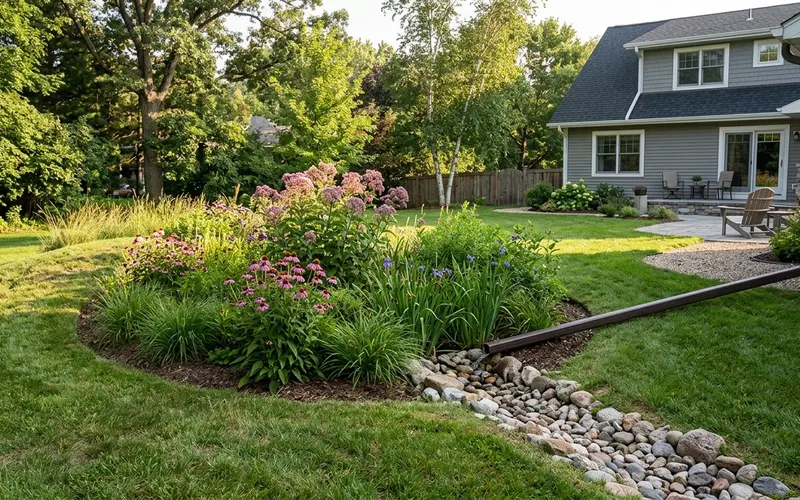
How to Build a Rain Garden
Pick a spot at least 10 feet from the house where runoff flows but water doesn't already pond, dig a level basin 3 to 8 inches deep (usually 100 to 300 sq ft), berm the low side and plant natives that handle wet and dry.
October 13, 2026
Landscape Rock: Types, Costs and Where to Use It
Common landscape rock like pea gravel, crushed stone, river rock and lava rock runs about $10 to $220 per ton in 2026 cost guides. It works best on paths, dry creek beds and in desert or wildfire-prone yards, and less well in most planting beds.
October 11, 2026
Backyard Landscaping Ideas
The best backyard ideas start with how you'll use the space: a patio sized for your furniture, shade over part of it, privacy along the edges, layered planting beds and only as much lawn as you play on. Here are ideas by job, plus typical costs.
October 9, 2026