

How to Build a Rain Garden
Pick a spot at least 10 feet from the house where runoff flows but water doesn't already pond, dig a level basin 3 to 8 inches deep (usually 100 to 300 sq ft), berm the low side and plant natives that handle wet and dry.
By LandscapeLookup Editors8 min read
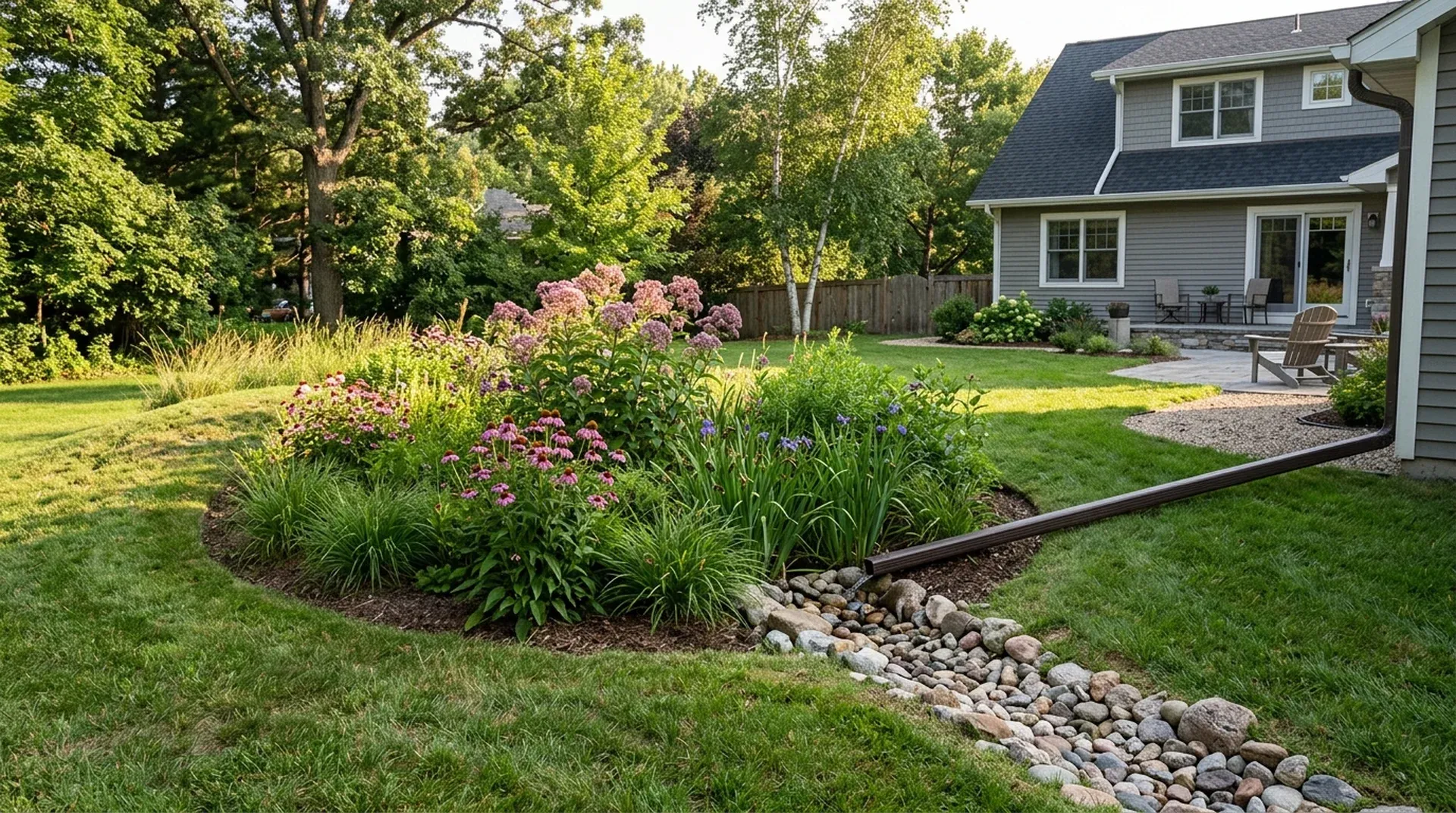
A rain garden is a shallow, planted basin that catches runoff from your roof or driveway and lets it soak into the ground within a day or two. To build one, pick a spot at least 10 feet from the house where runoff flows but water doesn't already pond, dig a level bowl 3 to 8 inches deep (most home gardens are 100 to 300 sq ft), build a low berm on the downhill side and plant native perennials that handle both wet and dry spells.
Here's how to site, size, dig and plant one.
What a rain garden does (and its downsides)
The EPA describes a rain garden as a depressed area that collects rain water from a roof, driveway or street and lets it soak in, filtering out some pollutants and feeding butterflies and birds. Rutgers says it lets 30% more water soak into the ground than a conventional lawn.
It is not a pond. Wisconsin's homeowner manual says it holds a few inches of water after a storm and is dry between rainfalls. The Northern Virginia Soil and Water Conservation District (NVSWCD) says it should drain within 24 to 48 hours.
Do rain gardens attract mosquitoes? Not if they drain. Mosquitoes need 7 to 12 days to lay and hatch eggs, and the water usually lasts a few hours.
The real downsides:
- Digging is work. Even small gardens mean moving a lot of soil, and large ones may need heavy equipment.
- Weeding up front. Expect some weeding and watering for the first two years while plants fill in.
- Bad soil costs more. In a spot that never dries, the soil has to be amended or replaced and often needs an underdrain, which can add a lot to the cost.
If water is reaching your foundation or basement, start with grading and downspouts. Our yard drainage guide covers those fixes and when a French drain or dry well makes more sense.
Where should a rain garden go?
First, watch your yard in a heavy rain and note where runoff flows, especially from downspouts. Then find a spot that fits these rules.
|
Keep the garden |
Guideline |
Source |
|---|---|---|
|
Away from the house |
At least 10 ft |
|
|
Away from a well |
At least 8 ft (Illinois says 10 ft) |
Wisconsin DNR, Illinois Extension |
|
Away from a septic system |
At least 5 ft (Illinois says 10 ft) |
Wisconsin DNR, Illinois Extension |
|
Above bedrock or high groundwater |
At least 1 ft |
Wisconsin DNR |
|
Close to the downspout |
Within about 30 ft |
Wisconsin DNR |
|
On a gentle slope |
Under about 12%; Rutgers suggests 1% to 10% |
Wisconsin DNR, Rutgers |
Rutgers' green building manual relaxes the house setback to 2 feet for homes without basements. Where guides disagree, use the bigger number or your local rule.
Don't build where water already ponds. Illinois Extension says standing water means conditions are not right for good infiltration. Put the garden upstream of the wet spot instead, in full sun, outside the dripline of nearby trees.
Call 811 a few business days before you dig. It's the free national before-you-dig service. The Wisconsin manual notes you'll have to find private lines, such as sprinkler pipes, yourself.
How big and deep should a rain garden be?
Depth: set by your slope
The Wisconsin manual says a typical rain garden is 3 to 8 inches deep. Deeper than that can pond too long and become a tripping hazard. To find your slope, run a level string between stakes about 15 feet apart, divide the height at the downhill stake by the distance and multiply by 100.
|
Lawn slope |
Garden depth |
|---|---|
|
Under 4% |
3 to 5 inches |
|
5% to 7% |
6 to 7 inches |
|
8% to 12% |
About 8 inches |
|
Over 12% |
Pick another spot or call a pro |
Soil: test how fast it drains
Clay soaks water up slowly, so a garden in clay has to be bigger. For Wisconsin's infiltration test, fill a hole 6 to 12 inches deep with water, let it soak for an hour, refill it and measure the drop over the next hour. A quicker check from University of Minnesota Extension: a 10-inch hole full of water should empty within 48 hours.
Size: drainage area times a sizing factor
Wisconsin, Rutgers and UMN put a typical home rain garden at 100 to 300 sq ft. UConn calls 50 to 100 sq ft typical.
Estimate the roof area that feeds your downspout. Many houses have 4 downspouts, each taking about 25% of the roof. Multiply that area by Wisconsin's sizing factor:
|
Garden depth |
Sandy |
Silty |
Clayey |
|---|---|---|---|
|
3 to 5 inches |
0.17 |
0.35 |
0.44 |
|
6 to 7 inches |
0.13 |
0.30 |
0.35 |
|
8 inches |
0.11 |
0.23 |
0.25 |
|
More than 30 ft from downspout |
0.03 |
0.08 |
0.10 |
Example: a 600 sq ft drainage area, silty soil and a 6-inch depth give 600 x 0.30 = 180 sq ft. Make it about twice as long as wide, long side across the slope, and 10 to 15 feet wide.
You can shrink it by up to 30% and still control almost 90% of the runoff, and anything much over 300 sq ft should be split into smaller gardens. These factors are for Wisconsin. Texas A&M uses slightly different ones for Texas, so use your state's guide if one exists.
How to build a rain garden, step by step
Rutgers recommends building in spring for easier digging and better plant establishment. These steps follow the Wisconsin manual unless noted.
- Lay out the shape with string or a hose. Crescent, kidney and teardrop shapes all work.
- Kill and remove the sod. Black plastic over the grass is the low-chemical route; if you use an herbicide, follow the label. A rented sod cutter helps.
- Dig a level bottom. Set stakes along both sides about 5 feet apart, tie level strings between them and dig down from the strings to your depth. Check with a level on a 2x4, then rake smooth without packing it.
- Add compost. About 2 inches worked into the top 4 to 6 inches improves clay and helps sand hold moisture. Rutgers says to rototill it into clay.
- Build the berm. Pile dug soil on the downhill side, tapering up the sides, into a ridge about a foot across with gentle slopes. Compact it well. Illinois notes it's often only inches tall.
- Connect the water. Add a downspout extension or dig a shallow grass swale so runoff flows straight in.
- Protect the berm. Cover it with erosion-control mat or straw while grass takes root.
- Plant and mulch. Space plants at least 1 foot apart, water right away, then weekly through the first summer if needed. Spread about 3 inches of double-shredded mulch, keeping it off plant crowns (how much mulch you need).
Choosing rain garden plants and keeping them healthy
Pick plants that can sit in water for a day, then go weeks without rain. Natives usually do this best. Texas A&M describes three planting zones: wet-tolerant plants in the deepest middle, plants that handle occasional standing water around it, and drought-tolerant natives on the outer edge and berm.
|
Region |
Examples from extension lists |
|---|---|
|
Northeast and Mid-Atlantic |
Swamp milkweed, cardinal flower, Joe-Pye weed, tussock sedge, buttonbush, spicebush (Rutgers) |
|
Northern Virginia |
Winterberry holly, Virginia sweetspire, chokeberry, black-eyed Susan, mountain mint (NVSWCD) |
|
Upper Midwest |
Blue flag iris, fox sedge, great blue lobelia, Culver's root, little bluestem (Wisconsin DNR) |
Elsewhere, ask your county extension office or a native plant nursery. NVSWCD notes the plants must also survive summer drought, which matters even more in dry regions. See our ground cover plants and xeriscaping guides for low-water edge plants.
Upkeep
- Weed by hand, especially early on. Texas A&M advises avoiding herbicides in the garden.
- Skip the fertilizer. Rutgers says fertilizing is not part of rain garden care. Test the soil before planting and every 3 to 5 years.
- Cut back in spring. Leave stems over winter for birds. When new growth reaches at least 4 inches, cut old stems to 6 to 8 inches.
- Clear sediment with a flat shovel when it builds up.
- If water stands too long in a new garden, Wisconsin suggests a small gravel-lined opening in the berm, restored after a year once roots improve the soil.
How much does a rain garden cost?
If you do the digging, plants are the main cost. Prices vary by region, plant choice and soil.
|
Source |
Range |
Notes |
|---|---|---|
|
$3 to $5 per sq ft |
Friends and family do the labor; more if a landscaper does it all |
|
|
$3 to $5 per sq ft |
Depends on soil, plants and whether you hire labor |
|
|
About $600 for 200 sq ft ($3 per sq ft) |
Compost, mulch and plants, DIY |
|
|
$3 to $10 per sq ft |
$450 to $1,500 for a 150 sq ft garden |
|
|
LawnStarter, October 2026 |
$1 to $5 per sq ft DIY |
$10 to $20 per sq ft professionally installed |
UConn puts plants alone at around $1 to $2 per sq ft. Soil replacement, extra plants and an underdrain push costs up.
Check for rebates before you start. Washington, DC, for example, pays $41 per sq ft up to $3,000 for qualifying rain gardens that use native plants. Ask your city, county or conservation district what's offered near you.
Ask about permits and HOA rules too. UConn suggests urban homeowners check whether their town requires a permit. In Fairfax County, Virginia, you don't need one if you disturb less than 2,500 sq ft. For a wider look at yard project budgets, see what landscaping costs.
When to call a pro
UConn says most home-size gardens can be dug by hand. Bring in a landscaper if your slope is over about 12%, the garden needs machinery, your soil fails the drainage test (it may need replacing or an underdrain), or runoff already reaches your foundation. Conservation districts and Master Gardeners may help with sizing at no cost.
Before you hire:
- Get 2 or 3 written quotes for the same scope: size, depth, soil amendment, berm, inlet and the plant list.
- Ask for photos of rain gardens they've built and how those drained after storms.
- Confirm who calls 811 and who handles any permit or rebate paperwork.
- Check licensing and insurance where your state requires it.
- Get the scope, plant warranty (if any) and payment schedule in writing.
You can find landscaping pros near you on LandscapeLookup for free, with no sign-up. Pros are ranked by their Google rating weighted by review count, plus how local they are and their main service, and you contact them directly.
Editorial team
The LandscapeLookup editorial team writes guides to help US homeowners plan yard projects and hire the right pro. Each guide is based on university extension services, government sources such as EPA WaterSense and USDA, manufacturer instructions and published cost guides, and links to them so you can check the details.
Keep reading
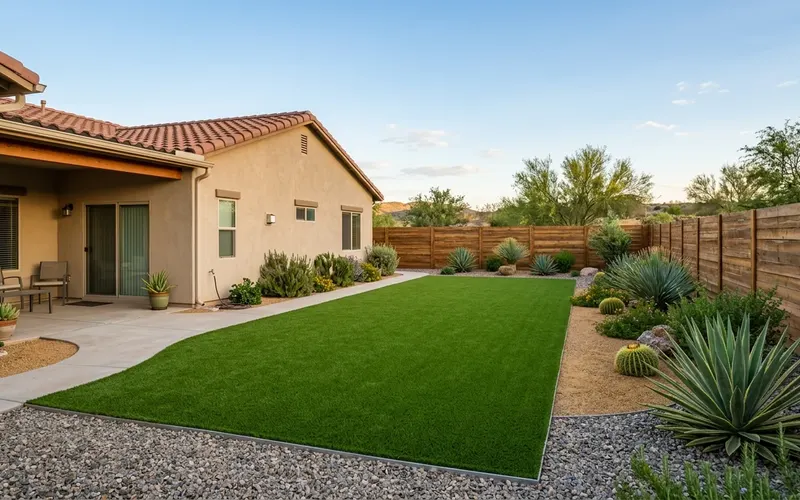
How Much Does Artificial Turf Cost?
Professional artificial turf installation runs about $5 to $20 per sq ft, with recent cost guide averages running about $13 to $20. A typical 500 sq ft yard costs roughly $2,700 to $10,000, depending on turf quality, prep work and where you live.
October 15, 2026
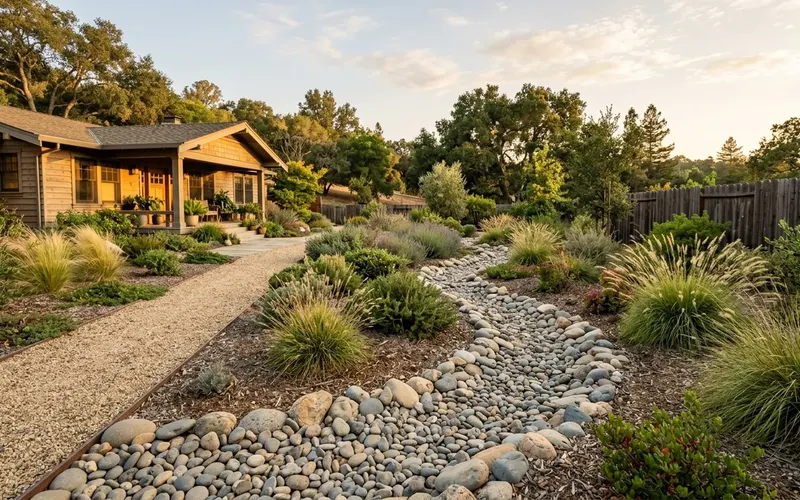
Landscape Rock: Types, Costs and Where to Use It
Common landscape rock like pea gravel, crushed stone, river rock and lava rock runs about $10 to $220 per ton in 2026 cost guides. It works best on paths, dry creek beds and in desert or wildfire-prone yards, and less well in most planting beds.
October 11, 2026
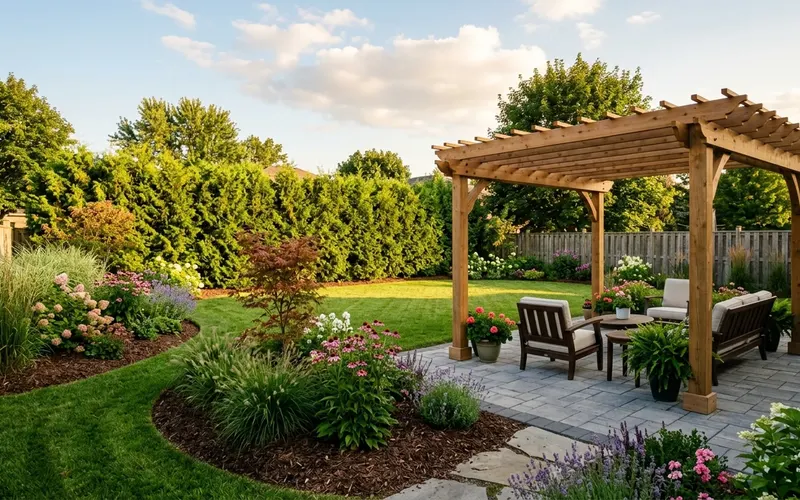
Backyard Landscaping Ideas
The best backyard ideas start with how you'll use the space: a patio sized for your furniture, shade over part of it, privacy along the edges, layered planting beds and only as much lawn as you play on. Here are ideas by job, plus typical costs.
October 9, 2026