Landscape Rock: Types, Costs and Where to Use It
Common landscape rock like pea gravel, crushed stone, river rock and lava rock runs about $10 to $220 per ton in 2026 cost guides. It works best on paths, dry creek beds and in desert or wildfire-prone yards, and less well in most planting beds.
By LandscapeLookup Editors8 min read
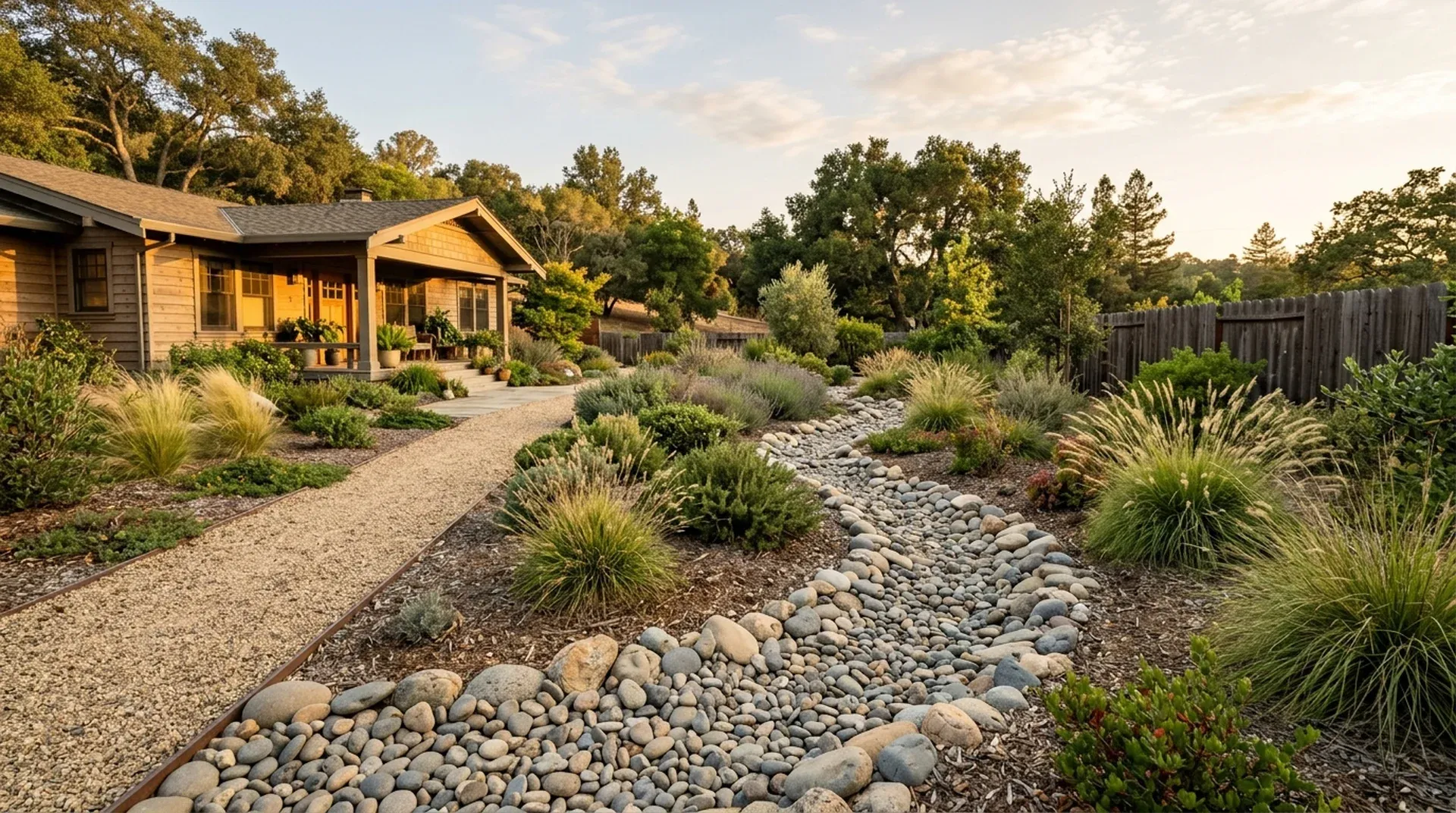
Landscape rock is loose stone, such as pea gravel, crushed stone, river rock, decomposed granite and lava rock, spread as a permanent ground cover. Common types cost about $10 to $220 per ton in 2026 cost guides from Lawn Love and This Old House. Specialty stone like Mexican beach pebbles runs much higher. Rock works best on paths, in dry creek beds, under downspouts and in desert or wildfire-prone yards. In most planting beds, it's a poor substitute for mulch.
Here's how the main types compare, what they cost, how much to order and where rock earns its place.
Common types of landscape rock
Most landscape supply yards sell the same handful of rock families. Colorado State University Extension lists rock, cobblestone, pea gravel, lava rock and crushed rock as the common inorganic mulches. The University of Nevada adds decomposed granite.
|
Type |
What it is |
Where it works |
|---|---|---|
|
Pea gravel |
Small, rounded stones |
Paths, play areas, around succulents and xeric plants |
|
Crushed stone |
Angular pieces that lock together |
Paths, patios, drainage trenches |
|
Decomposed granite (DG) |
Fine, sandy granite that packs down firm |
Paths and driveways over a compacted base |
|
River rock |
Smooth, water-worn stones in mixed colors |
Dry creek beds, under downspouts, borders |
|
Lava rock |
Light, porous volcanic rock, often red or black |
Accents; covers more area per ton |
|
Boulders and cobble |
Large individual stones |
Focal points and edges |
A few notes on where each one fits:
- Pea gravel for plants. Colorado State's Larimer County Extension generally doesn't recommend rock mulch, except pea gravel for succulent or xeric plants.
- River rock for water. UF/IFAS suggests saving rock for pathways, dry creek beds and areas under downspouts, which is where river rock usually ends up.
- DG for firm paths. One DG product's installation sheet calls for about 4 inches of compacted aggregate base and 3 to 4 inches of DG for walkways. Anything over 3 inches goes down in 2-inch layers, each dampened and compacted.
- Smaller is better as mulch. The University of Nevada notes that a mulch of smaller rocks holds soil water better than larger ones.
Flat stone for patios and walkways is a different project; see our guide to flagstone patios.
Which rock is best around your house?
It depends on your biggest risk, fire or water.
- In wildfire country, NFPA Firewise and the Insurance Institute for Business and Home Safety (IBHS) say the first 5 feet around a building matter most. They recommend hard surfaces or noncombustible mulch such as rock there instead of wood mulch.
- Where basement water is the worry, Iowa State University advises against rock and gravel as surface cover right around the house, since they let water into the ground there. It also says the soil should drop at least 6 inches in the first 10 feet. Fix the grade first; our yard drainage solutions guide covers how.
- In hot, sunny yards, Colorado State says to avoid large areas of unshaded rock next to a house, because rock stores and radiates heat.
How much does landscape rock cost?
Rock is priced by the ton or cubic yard, and the type matters more than anything else. Two cost guides give these per-ton material prices:
|
Rock type |
Lawn Love (Oct. 2026) |
This Old House (June 2026) |
|---|---|---|
|
Pea gravel |
$10-$60 |
$20-$50 |
|
Crushed stone |
$30-$55 |
$20-$30 (crushed limestone) |
|
Crushed granite |
$50-$100 |
$65-$185 |
|
Decomposed granite |
$35-$70 |
$35-$60 |
|
River rock |
$60-$170 |
$80-$150 |
|
Lava rock |
$115-$215 |
$115-$220 |
|
Bull rock |
$70-$110 |
$75-$100 |
|
Boulders |
$100-$385 |
$100-$600 |
|
Mexican beach pebbles |
$690-$865 |
$500-$950 |
Sources: Lawn Love and This Old House.
Delivery and installation
- Delivery: Lawn Love lists $5 to $10 per ton or $65 to $100 an hour for river rock, and $200 to $600 for boulders. This Old House puts delivery at $200 to $400.
- Labor: Lawn Love says pros charge $40 to $90 an hour and take about 2 hours to place a ton of river rock. This Old House lists $50 to $100 an hour.
- Whole project: Lawn Love says most homeowners pay $365 to $1,500 for a river rock project (average $655). This Old House puts installation at $250 to $2,500.
What's the cheapest landscape rock? Both Lawn Love and This Old House name pea gravel. Prices vary by region. Lawn Love notes that rural or distant deliveries often cost more, while metro areas usually pay more for the same service. Its advice: buy from the closest supplier. (Lawn Love may earn a referral fee for matching you with contractors.)
How much rock do you need?
Work out cubic yards the same way you would for mulch: square feet × depth in inches ÷ 324 = cubic yards. Our mulch calculator guide walks through the math. Then convert to tons, since many yards sell rock by weight. Lawn Love multiplies cubic yards by 1.4 to get tons and suggests adding 10% for waste.
Example: a 10 by 10 foot bed at 3 inches deep is 100 × 3 ÷ 324 = about 0.93 cubic yards, or roughly 1.3 tons.
Rock size changes coverage a lot. This Old House gives these figures for 1 ton spread 3 inches deep:
|
Rock |
Area 1 ton covers at 3 inches |
|---|---|
|
Crushed rock |
65-75 sq ft |
|
Landscape rock, 0.75 to 1.5 inches |
75-85 sq ft |
|
Landscape rock, 1.5 to 3 inches |
45-60 sq ft |
|
Lava rock |
200-210 sq ft |
Ask your supplier for its own weight per yard, since it varies by stone.
How deep should rock go? Less than mulch. Colorado State suggests about 3 inches for weed control, with less right around plants so water reaches the roots. The University of Nevada says 2 inches of rock over landscape fabric is enough, and Lawn Love suggests 2 to 3 inches for river rock.
Rock vs. mulch: which is better?
Rock lasts far longer than bark, but it doesn't do a mulch's job in most beds. UF/IFAS says rock won't add nutrients or water-holding capacity, won't moderate soil temperature like organic mulch, and can get kicked onto lawns. Utah State rates decorative rock high for weed control and longevity but notes it provides no nutrients.
Heat is the big catch. The University of Nevada says rock mulch raises the temperature of both the soil and the surrounding air. EPA WaterSense advises against rock mulch in sunny areas or around plants not adapted to dry climates, since the heat and water loss can scorch them.
How that plays out depends on where you live:
- Desert Southwest and Great Basin: Nevada Extension calls rock, often over fabric, the usual choice for desert plants. If you're replacing lawn for a rebate, read the rules first. The Southern Nevada Water Authority requires mulch (most often decorative rock or bark), and mature plants must cover at least 50 percent of the converted area. Bare rock alone won't qualify.
- Wildfire-prone areas: rock is the safer cover within 5 feet of the house, per the Firewise fact sheet, which also advises against shrubs and trees in that zone.
- Humid regions and mixed beds of shrubs and perennials: organic mulch is usually the better pick. See our mulch vs. rock comparison for costs side by side.
For more on building a water-wise yard that isn't all gravel, see our xeriscaping guide. Before you swap a front lawn for rock, check HOA rules too.
How do you install landscape rock?
Can you put gravel directly on dirt? You can, but most guides add a barrier. UF/IFAS recommends landscape fabric under rock so it doesn't sink into sandy soil, and Utah State notes fabric resists puncture under rock. Fabric isn't a permanent weed fix, though. Larimer County Extension says weeds grow in the soil that settles into the rock, and the fabric's pores can clog and keep water from reaching roots. UNH Extension adds that weeds rooted through fabric are almost impossible to pull. Our landscape fabric guide covers when it's worth it.
- Call 811 first. It's the free national before-you-dig service; contact it a few business days before you dig, even for shallow edging trenches.
- Clear and shape the area. Remove sod and weeds, and grade the soil so water drains away from the house.
- Install edging. A firm border keeps rock out of the lawn. See our landscape edging guide for materials.
- Lay fabric if you're using it. Use a permeable fabric, not sheet plastic, which Colorado State says blocks air and moisture.
- Spread the rock evenly to the depth you planned, keeping it thinner right around plant stems.
Upkeep and changing your mind
Rock isn't maintenance-free. The University of Nevada says rock mulches are hot and heavy, trap trash, and make weeds hard to remove. Rocks also slowly degrade and need refreshing. It also warns against putting compost or other organic mulch on top of rock. Blow leaves off before they break down into soil.
Think long term, too. Larimer County Extension calls rock incredibly expensive to move. This Old House puts professional removal at $275 to $500 for a small load and about $1,200 for a large one.
When to call a pro
A few bags of river rock around a downspout is an easy weekend job. Hire a landscaper or hardscaper for big areas measured in tons, boulders or regrading near the foundation. The same goes for a dry creek bed that has to carry real runoff, or DG paths that need a compacted base. Lawn Love notes that moving large rocks yourself can be dangerous. If rock is part of a slope or a retaining wall over about 4 feet, get a licensed pro.
Before you hire:
- Get 2 or 3 written quotes that list the rock type, size, depth, tons and whether fabric and edging are included.
- Ask for photos of similar work, ideally rock beds that are a few years old.
- Check licensing and insurance where your state requires it.
- Get the scope, delivery date and payment schedule in writing, including who removes old sod or rock.
You can find landscaping pros or hardscaping pros near you on LandscapeLookup for free, with no sign-up. Pros are ranked by their Google rating weighted by review count, plus how local they are and their main service, and you contact them directly.
Editorial team
The LandscapeLookup editorial team writes guides to help US homeowners plan yard projects and hire the right pro. Each guide is based on university extension services, government sources such as EPA WaterSense and USDA, manufacturer instructions and published cost guides, and links to them so you can check the details.
Keep reading
How Much Does Artificial Turf Cost?
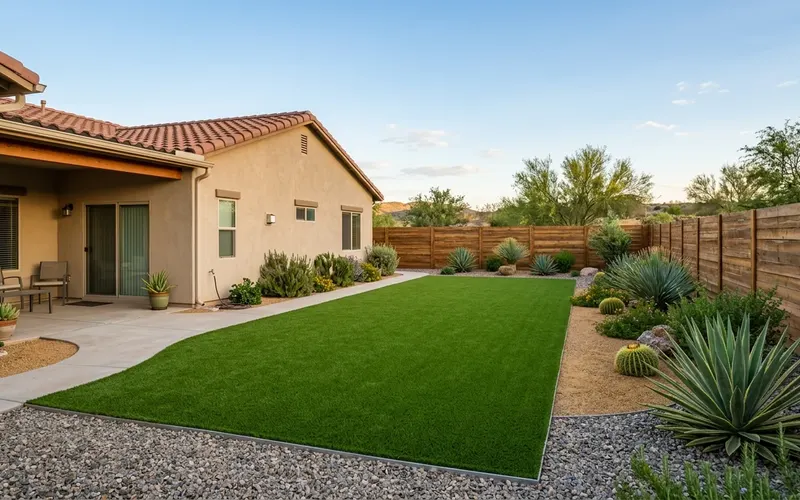
Professional artificial turf installation runs about $5 to $20 per sq ft, with recent cost guide averages running about $13 to $20. A typical 500 sq ft yard costs roughly $2,700 to $10,000, depending on turf quality, prep work and where you live.
October 15, 2026
How to Build a Rain Garden
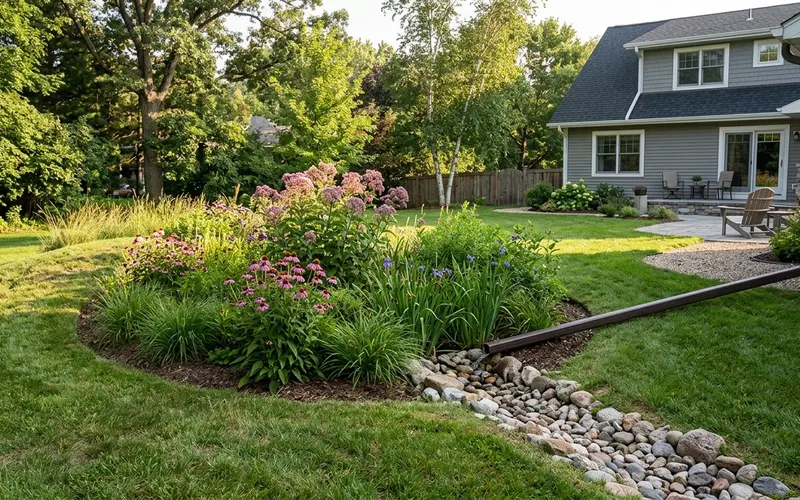
Pick a spot at least 10 feet from the house where runoff flows but water doesn't already pond, dig a level basin 3 to 8 inches deep (usually 100 to 300 sq ft), berm the low side and plant natives that handle wet and dry.
October 13, 2026
Backyard Landscaping Ideas
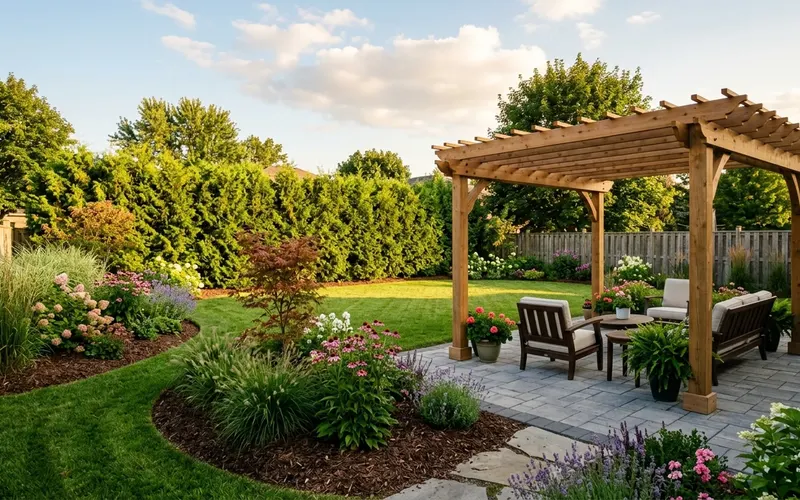
The best backyard ideas start with how you'll use the space: a patio sized for your furniture, shade over part of it, privacy along the edges, layered planting beds and only as much lawn as you play on. Here are ideas by job, plus typical costs.
October 9, 2026