Pounds of seed per 1,000 sq ft. Warm-season rates and the Georgia planting windows are UGA Extension’s; tall fescue and bluegrass rates are K-State Research and Extension’s; ryegrass over Bermuda is the University of Arizona’s.
How much grass seed per 1,000 square feet?
It depends on the grass. UGA Extension lists 1 to 2 lb of hulled common Bermudagrass (3 to 6 lb unhulled), ¼ to 1 lb of centipedegrass, 1 to 3 lb of zoysiagrass and 3 to 8 lb of bahiagrass. For a new tall fescue lawn, K-State recommends 6 to 8 lb and UGA 5 to 6 lb; for Kentucky bluegrass, K-State says 2 to 3 lb and UGA 1 to 3 lb.
When should I plant grass seed in Georgia?
UGA Extension says to seed warm-season grasses like Bermuda, centipede and zoysia from May to June, once soil 4 inches down is consistently 65°F and rising, and no later than early to mid-August. Tall fescue and Kentucky bluegrass go in from September to October or from late February through March; UGA generally doesn’t recommend seeding tall fescue in December or after April.
Can I grow St. Augustinegrass from seed?
Plan on sod or plugs. UGA’s establishment bulletin says centipedegrass, most common bermudagrasses and some zoysiagrass cultivars can be grown from seed, and lists St. Augustinegrass only under sod and plugs, with no seeding rate.
How much seed do I need to overseed?
For tall fescue and Kentucky bluegrass, about half the new-lawn rate, according to K-State, which uses the same half rate for seeding in shade. For tall fescue that’s 3 to 4 lb per 1,000 sq ft. UGA lists a single rate for warm-season grasses.
How much ryegrass do I need to overseed Bermuda?
The University of Arizona Extension recommends 12 to 15 lb of ryegrass per 1,000 sq ft when overseeding Bermudagrass for winter color. UGA lists 5 to 10 lb of annual or perennial ryegrass for overseeding in Georgia, sown from September to November.
What about other grasses and mixes?
Rates differ by grass and by mix, so the bag’s own rate is the safest number for anything not listed. Pick “Use the rate on my seed bag” and enter it.
How do I spread grass seed evenly?
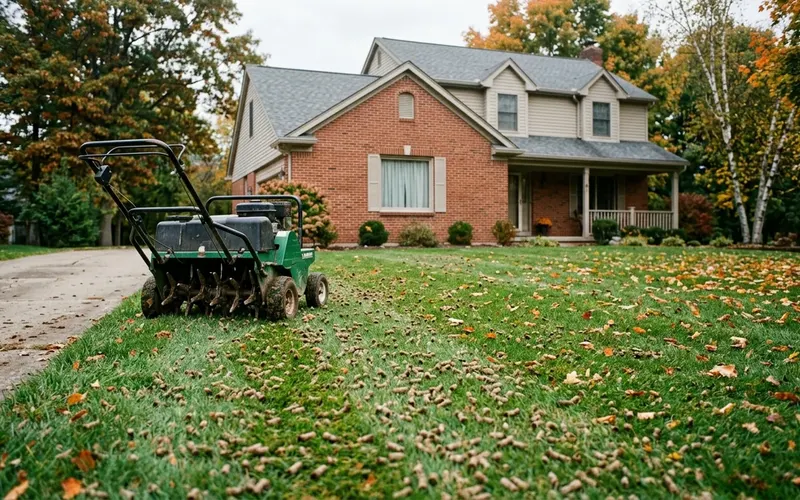
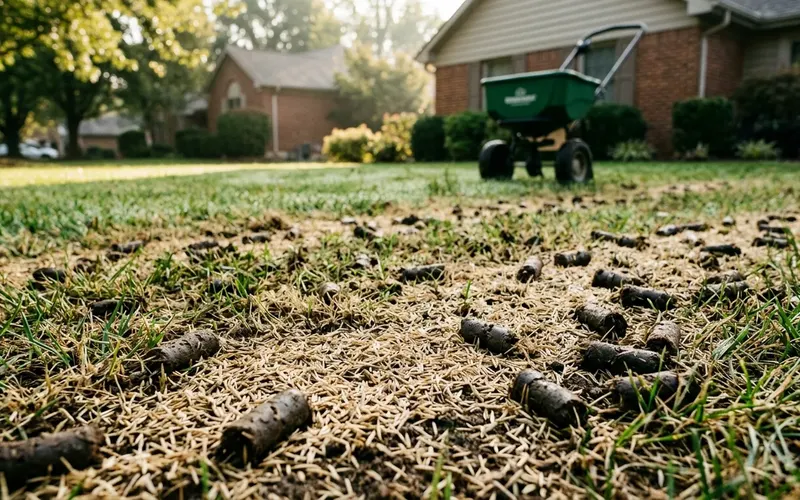
Purdue Extension recommends a drop spreader, since rotary spreaders don’t spread seed evenly. Set it low, sow half the seed in one direction and the other half at right angles, then rake lightly and roll so the seed touches the soil.
How often should I water new grass seed?
UGA Extension says to keep the top 1 to 2 inches of soil moist, not wet, which usually means about ⅛ to ¼ inch of water a day for the first 2 to 3 weeks. Purdue says that can take two to four light waterings a day, depending on the weather. As roots grow, water less often and more deeply. Georgia law allows watering new seed and turf during a 30-day establishment period.
When should I overseed a tall fescue lawn?
K-State Research and Extension suggests September for thickening a thin tall fescue lawn. Mow short first, to 1 to 1.5 inches, remove the clippings, and make sure there’s no more than ¼ inch of thatch.
Free to cite or embed. The embed shows the full calculator, with a link back to this page.
Results are estimates. Suppliers’ bag sizes, pallet sizes and stone weights vary, so check theirs before you order.