Measure the area, set the depth and get cubic yards of topsoil or compost, or the number of bags.
Topsoil per 1,000 square feet
Cubic yards and 1 cubic foot bags for every 1,000 sq ft of area, using square feet × depth in inches ÷ 324.
Depth
Cubic yards
1 cu ft bags
¼ in
0.77
21
½ in
1.54
42
1 in
3.09
84
2 in
6.17
167
4 in
12.35
334
6 in
18.52
500
How this calculator works
Cubic yards = square feet × depth in inches ÷ 324, the same formula Texas A&M AgriLife Extension gives for compost, soil and mulch.
Bags = cubic yards × 27 ÷ bag size in cubic feet, rounded up.
Topsoil settles, and lawn topdressing should go down thin: Clemson Extension’s limit is ½ inch per application.
Common questions
How much area does a yard of topsoil cover?
Divide 324 by the depth in inches: about 324 sq ft at 1 inch, 162 at 2 inches, 81 at 4 inches and 54 at 6 inches. It’s the same cubic-yard formula Texas A&M AgriLife Extension gives for compost, soil and mulch.
How many bags of topsoil are in a yard?
Texas A&M’s table lists about 36 bags of 0.75 cubic feet, 27 bags of 1 cubic foot, 22 bags of 1.25 cubic feet or 14 bags of 2 cubic feet per cubic yard.
How thick should topdressing be on a lawn?
Light. Clemson Cooperative Extension says no more than ½ inch of material at a time, so enter 0.25 or 0.5 as the depth when you topdress.
Should I topdress with compost, topsoil or sand?
Clemson calls compost the best choice for the average home lawn. Topsoil is the alternative where the native soil isn’t sandy, and sand should only go on lawns whose native soil is already sandy.
How much topsoil do I need for a new lawn?
Purdue Extension’s sod guide says about 19 cubic yards make a 6-inch layer over 1,000 sq ft, which matches this calculator’s 18.5 yards before rounding up. If your topsoil lacks organic matter, Purdue suggests mixing in compost, peat or decomposed manure at 1 to 3 cubic yards per 1,000 sq ft, worked 6 to 8 inches deep.
Should I test topsoil before I spread it?
Purdue recommends testing your soil at least a month before you plant, and says topsoil brought in from off-site must be tested too, so you can add any nutrients it needs before the lawn goes in.
Use this calculator on your site
Free to cite or embed. The embed shows the full calculator, with a link back to this page.
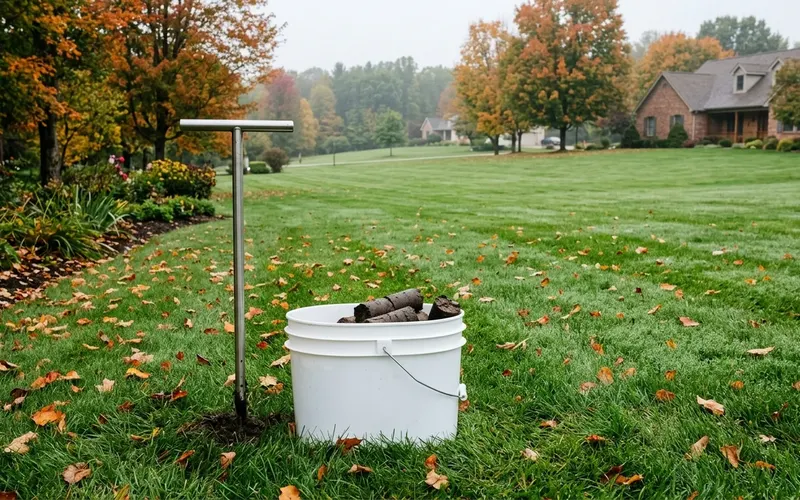
Mix 10 or more small soil cores from your lawn, send about 2 cups to your state's extension lab, and add lime only if the report says your pH is too low, in spring or fall, at no more than 50 lb per 1,000 sq ft at a time.
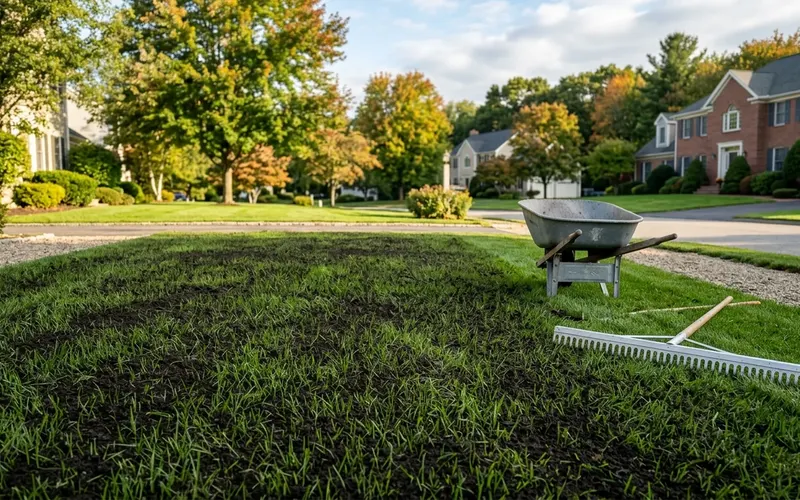
Topdressing means spreading a thin layer of compost, topsoil or sand, no more than 1/2 inch at a time, over a growing lawn to improve the soil or fill shallow low spots. Match the material to your soil and keep the grass blades showing.
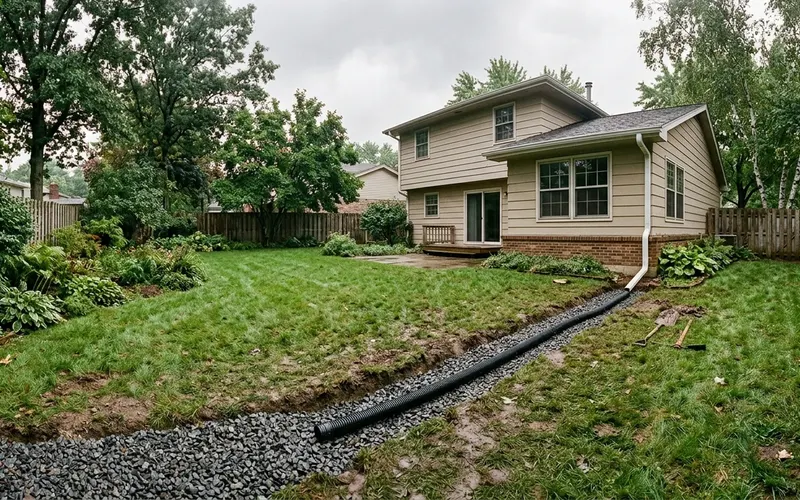
Start by sloping soil away from the house (at least 6 inches of drop in the first 10 feet) and extending downspouts. If water still pools, add a swale, rain garden, dry well or French drain. Exterior French drains run about $10 to $75 per linear foot.