Plants That Grow in Shade
Hostas, ferns, astilbe, hellebores, coral bells and foamflower are dependable shade perennials, and impatiens, begonias and torenia bloom with little sun. Match each plant to your hours of direct sun, your zone and whether the soil stays moist or dry.
By LandscapeLookup Editors8 min read
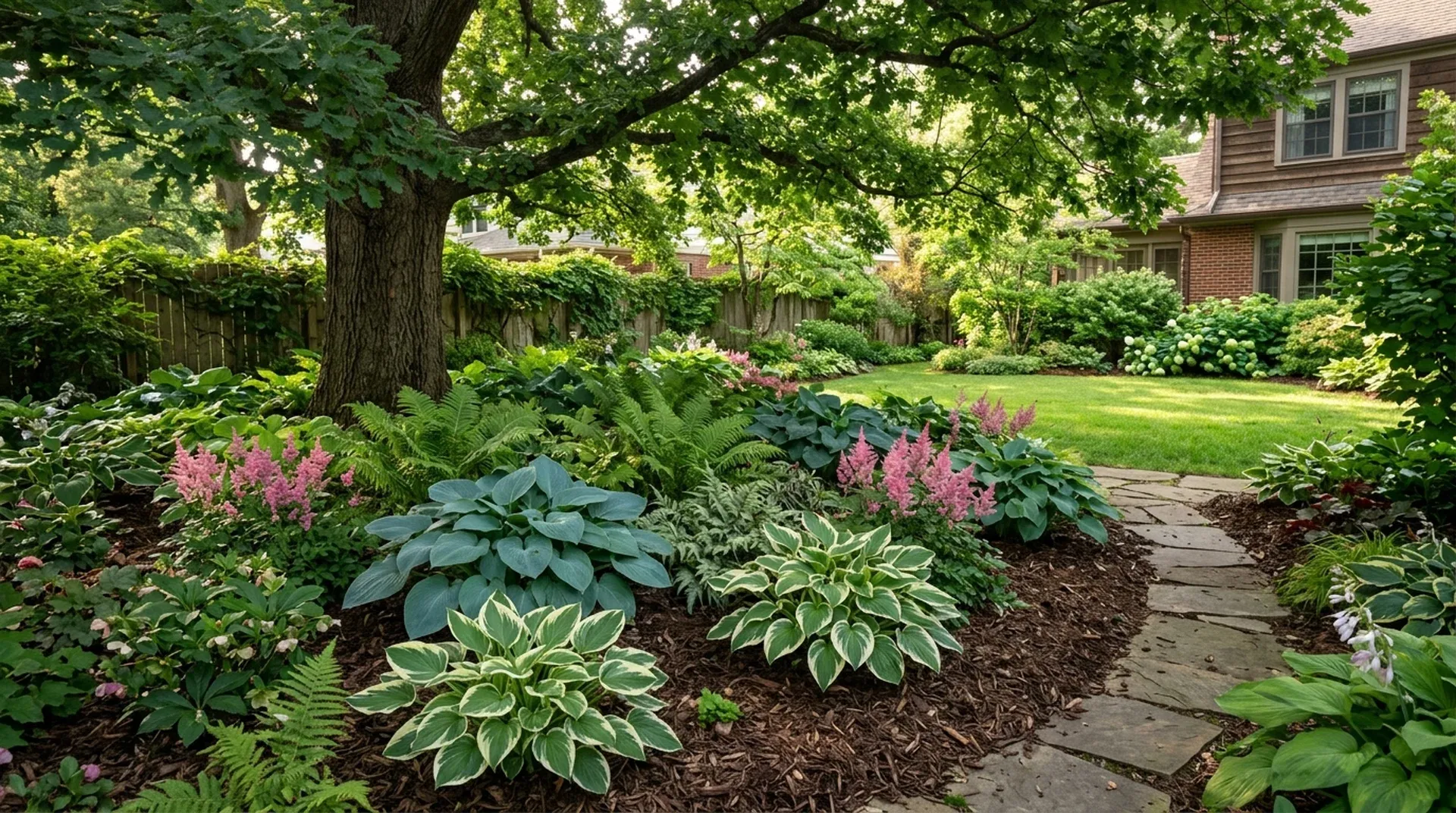
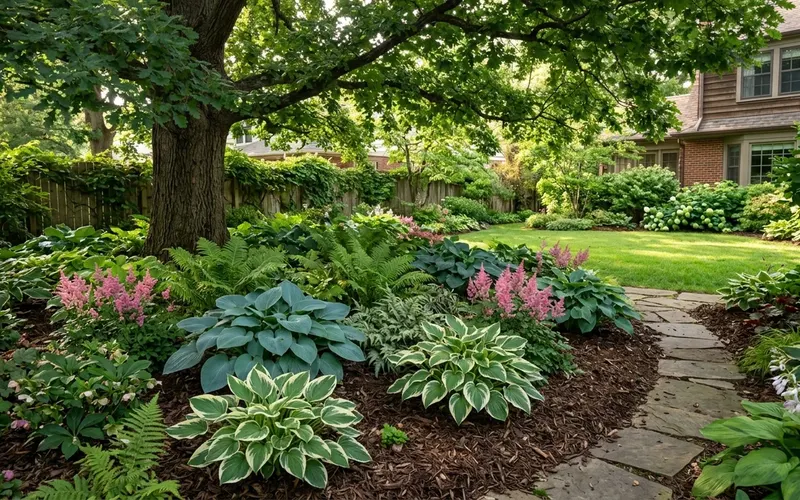
Plenty of plants grow in shade. The most dependable shade plants are perennials: hostas, ferns, astilbe, hellebores, coral bells and foamflower, all of which grow across much of the country. Impatiens, begonias and torenia bring summer color with little sun. Shrubs like mountain laurel, aucuba and oakleaf hydrangea fill out the bed.
The trick is matching each plant to your spot. Count the hours of direct sun, check your hardiness zone, and note whether the soil stays moist or goes dry under tree roots.
How much shade does your yard get?
Plant tags use a handful of light labels, and extension services define them a little differently:
|
Label |
Direct sun per day |
Source |
|---|---|---|
|
Full sun |
6 hours or more |
|
|
Part sun or part shade |
3 to 6 hours; UMass says 4 to 6 hours of morning or evening sun, not midday |
|
|
Dappled shade |
Indirect light filtered through trees |
|
|
Full shade |
Less than 3 to 4 hours |
|
|
Deep shade |
Less than 2 hours to none |
To find out what you have, watch the spot for a whole day. UF/IFAS gives the example of a bed that gets sun from 8 a.m. to noon: that's four hours of direct light. Timing matters too. UF says shade plants do best when their few hours of sun come during the cooler hours of the day. UMass counts only morning or evening sun toward part shade, not midday.
Some shade is too dark for almost anything. UF says most plants struggle under canopies so dense you can't see the sun and in the shadow of buildings or fences. A plant that gets too little light turns tall and leggy, and fertilizer can't fix it. In those spots, UF suggests a bench, art or a patio instead of plants.
Lawns give up first. Clemson says a spot with less than 4 hours of sun is too shady for grass to grow well. If you'd rather keep turf, see our guide to types of grass for the most shade-tolerant ones.
What perennials grow in shade?
These come back every year and do the heavy lifting in most shade beds:
|
Plant |
Light |
USDA zones |
Good to know |
|---|---|---|---|
|
Hosta |
Part to deep shade |
3 to 9 |
Deer love the leaves (UVM) |
|
Ferns |
Shade |
2 to 8, by type |
Japanese painted fern has silver fronds about 18 inches tall (UVM) |
|
Astilbe |
Part to full shade |
3 to 8 |
Feathery plumes; 12 to 48 inches tall (UVM) |
|
Lenten rose (hellebore) |
Part to deep shade |
4 to 9 |
Evergreen, blooms in winter; leaves and roots are poisonous (NC State) |
|
Coral bells (heuchera) |
Part shade |
4 to 9 |
Grows best with 4 to 6 hours of sun (UVM) |
|
Bleeding heart |
Part to full shade |
3 to 9 |
Dies back after it flowers in spring (UVM) |
|
Brunnera |
Part to deep shade |
3 to 8 |
Needs moist soil and cool nights (NC State) |
|
Foamflower |
Dappled to full shade |
3 to 8 |
Native; not drought tolerant (NC State) |
|
Jacob's ladder |
Part to full shade |
4 to 8 |
Blue or white flowers that draw pollinators (UVM) |
Hosta light and zone ratings are from NC State and UVM.
For the most color, keep in mind UMass's warning that too much shade can mean reduced growth and few or no flowers. Lean on foliage: variegated hostas, silver ferns and purple or lime coral bells read as color all season.
What is the best plant for full shade?
There's no single winner. NC State rates all of these for deep shade, meaning under 2 hours of direct sun:
- Hosta, which NC State says does best in full or dappled shade in the South to avoid leaf burn.
- Lenten rose, brunnera and foamflower.
- Wild ginger, a native ground cover for zones 4 to 6 that wants constant moisture.
- Japanese forest grass, an arching green grass (gold cultivars exist) for zones 5 to 9.
- Solomon's seal, a native that grows in partial to full shade but does best with some sun.
- Cast iron plant, a dense shade pick for zones 7 to 11. NC State says it's named for its ability to withstand neglect.
What flowers bloom all summer in shade?
Annuals give you the longest show, but they still need some light. Clemson says most annuals need at least 6 hours of sun to flower well. Its list of exceptions includes begonias, impatiens, torenia (wishbone flower), monkey flower, edging lobelia and coleus, which bloom or color up with less. UVM adds fuchsia and sweet alyssum, which stays under 10 inches tall and tolerates part shade.
- Torenia handles part sun to shade, especially in hot summers, and works in containers and hanging baskets.
- Caladiums are grown for their pink, red and white leaves. They take partial to deep shade and are perennial only in zones 9 and 10. NC State notes they're poisonous to people, cats and dogs.
- Astilbe is the perennial option: depending on variety, it blooms from late spring to fall. Keep its soil moist so the leaves hold up in summer heat.
A warning about impatiens
Classic garden impatiens can collapse from impatiens downy mildew. UConn Extension says infected plants will not recover and its spores can survive the winter in soil. If you see leaves yellow and drop, pull the plants, bag them and don't compost them.
If you've had the disease, UConn says to plant something else for 1 to 2 seasons. New Guinea impatiens aren't susceptible. UConn also lists Beacon, Imara XDR, SunPatiens and Bounce as resistant types, along with begonia, coleus, torenia and lobelia as alternatives.
Which shrubs grow in shade?
Clemson's advice is to think "shade tolerant" rather than "shade loving." Most shrubs grow best in dappled or partial shade, or in morning sun with afternoon shade. Its list flags these as handling the most shade:
- Evergreen: aucuba, fatsia, mountain laurel, leucothoe, Oregon grape holly, Japanese pieris, cherry laurel and sweet box
- Deciduous: Virginia sweetspire, spicebush, mapleleaf viburnum, fiveleaf aralia, Japanese kerria and jetbead
Hydrangeas, azaleas, rhododendrons, camellias, boxwood and viburnums also make Clemson's list, without the extra-shade flag, so give them brighter spots.
A few to know in more detail:
|
Shrub |
Zones |
Notes |
|---|---|---|
|
Mountain laurel |
4 to 9 |
Native evergreen that blooms in late spring to early summer; highly poisonous (NC State) |
|
Aucuba |
7 to 10 |
6 to 10 ft; young leaves blacken in sun (NC State) |
|
Oakleaf hydrangea |
5 to 9 |
Native; needs some sun to bloom (NC State) |
Expect less fruit from berry shrubs in shade: UVM says they may not flower or fruit as heavily as in full sun.
For height, Clemson suggests small understory trees like serviceberry, redbud and flowering dogwood in partial or dappled shade.
How do you plant under trees and in dry shade?
Dry shade under a big tree is the hardest spot in the yard. The tree's roots always win the fight for water. Go easy on those roots:
- Call 811 a few business days before you dig. It's the free national before-you-dig service, and it covers planting.
- Don't build a raised bed around the trunk. Nebraska Extension says added soil cuts off oxygen to the roots. The tree's decline may not show for 2 to 5 years. Penn State says to add no more than 2 inches of soil or compost and none within 1 foot of the trunk.
- Plant small. Use plugs or small divisions and a hand trowel. If you hit a root 2 inches or more across, refill the hole and try another spot.
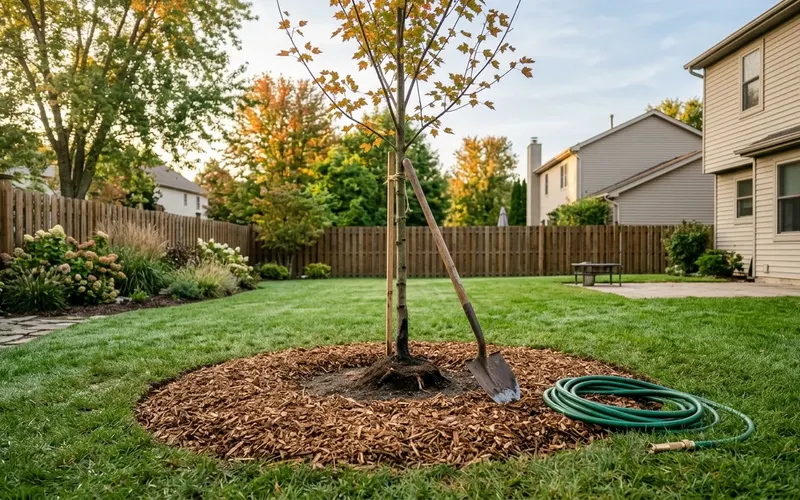
- Mulch lightly and water deeply. Penn State recommends an inch or two of shredded bark or compost. Then give a deep soak once a week for the first year or two. Our mulch calculator tells you how much to buy. Later on, UVM suggests checking the soil 2 to 3 inches down before you water, since shade beds can stay moist longer.
Penn State calls well-established dry shade perennials the best plants for this harsh environment. It names Lenten rose, Christmas fern, barrenwort (epimedium) and Japanese forest grass. Clemson adds early bulbs like crocus, scilla and snowdrops, which bloom before deciduous trees leaf out. For low spreaders, see our list of ground cover plants.
Under a black walnut, check your picks first: Penn State says its roots prevent the growth of many plants. NC State lists astilbe and Japanese forest grass as walnut tolerant.
If you want more light instead, thinning the canopy is a job for a tree pro. See when to prune trees first.
Which shade plants suit your region?
Zone ratings only tell you about winter cold. Summer heat, humidity and rainfall matter just as much:
- North and Northeast: UVM Extension's Vermont picks include hostas, astilbe, ferns and Jacob's ladder. NC State says brunnera performs best with cooler nights and isn't recommended for the hot, humid Southeast.
- Southeast: Hostas need a couple of months below 40°F in winter, so make sure your winters get cold enough. Clemson's shade list, written for South Carolina conditions, includes cast iron plant, aucuba, camellia and native azaleas.
- Florida and the Gulf Coast: UF/IFAS suggests firespike, ti plant, beautyberry, begonias, gingers, caladiums and bromeliads for color. For ground cover, try liriope or Asiatic jasmine.
- Colorado and the dry West: CSU recommends lady's mantle, sweet woodruff and coralbells, with mahonia, golden currant and thimbleberry as shrubs. Save astilbe, foxglove, hostas and ferns for moist spots.
Deer are a regional issue too. NC State rates hellebore, brunnera, foamflower and cast iron plant as deer resistant, while hostas are a favorite food. For local picks, UF suggests your county Extension office.
When to call a pro
A landscaper can design and plant a shade bed. That help pays off most on a large bed, or under mature trees where careless digging could hurt the roots. Want the canopy thinned for more light? Call a tree care company or ISA-certified arborist, and always use one for limbs near power lines.
Before you hire:
- Get 2 or 3 written quotes that list the plants, sizes, quantities and mulch.
- Ask for photos of shade gardens they've planted, ideally under trees.
- Check licensing and insurance where your state requires it.
- Get the scope and payment schedule in writing, including any plant warranty and who handles watering at first.
You can find landscaping pros near you or tree care pros on LandscapeLookup for free, with no sign-up. Pros are ranked by Google rating weighted by review count, plus how local they are and their main service, and you contact them directly.
Editorial team
The LandscapeLookup editorial team writes guides to help US homeowners plan yard projects and hire the right pro. Each guide is based on university extension services, government sources such as EPA WaterSense and USDA, manufacturer instructions and published cost guides, and links to them so you can check the details.
Keep reading
How Much Does Artificial Turf Cost?
Professional artificial turf installation runs about $5 to $20 per sq ft, with recent cost guide averages running about $13 to $20. A typical 500 sq ft yard costs roughly $2,700 to $10,000, depending on turf quality, prep work and where you live.
October 15, 2026
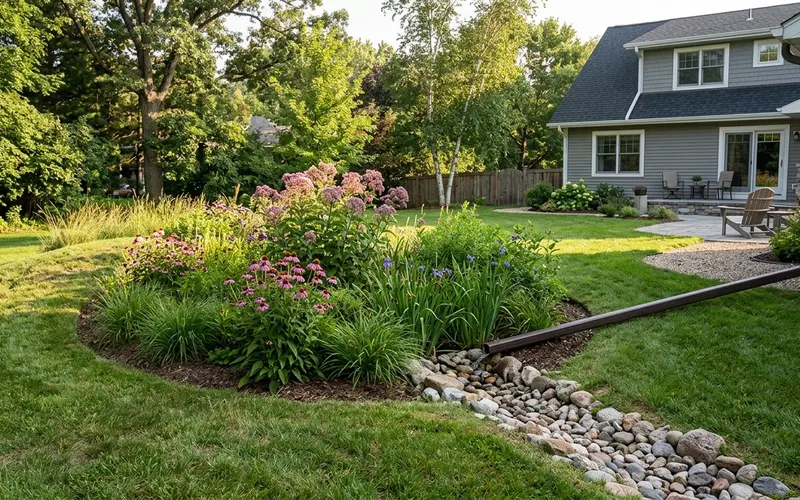
How to Build a Rain Garden
Pick a spot at least 10 feet from the house where runoff flows but water doesn't already pond, dig a level basin 3 to 8 inches deep (usually 100 to 300 sq ft), berm the low side and plant natives that handle wet and dry.
October 13, 2026
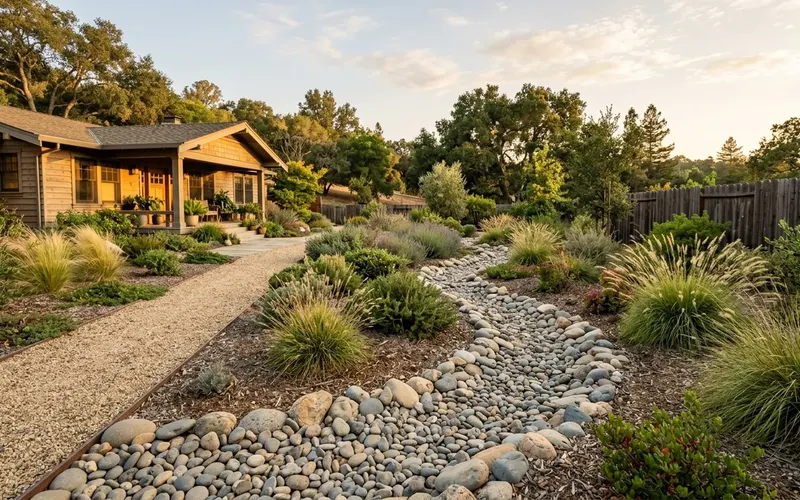
Landscape Rock: Types, Costs and Where to Use It
Common landscape rock like pea gravel, crushed stone, river rock and lava rock runs about $10 to $220 per ton in 2026 cost guides. It works best on paths, dry creek beds and in desert or wildfire-prone yards, and less well in most planting beds.
October 11, 2026