Backflow Testing: What Homeowners Need to Know
A backflow test checks that the device keeping sprinkler water out of your drinking water still works. Many utilities require one every year by a certified tester; a typical test costs about $70–$90, plus any local filing fee.
By LandscapeLookup Editors6 min read
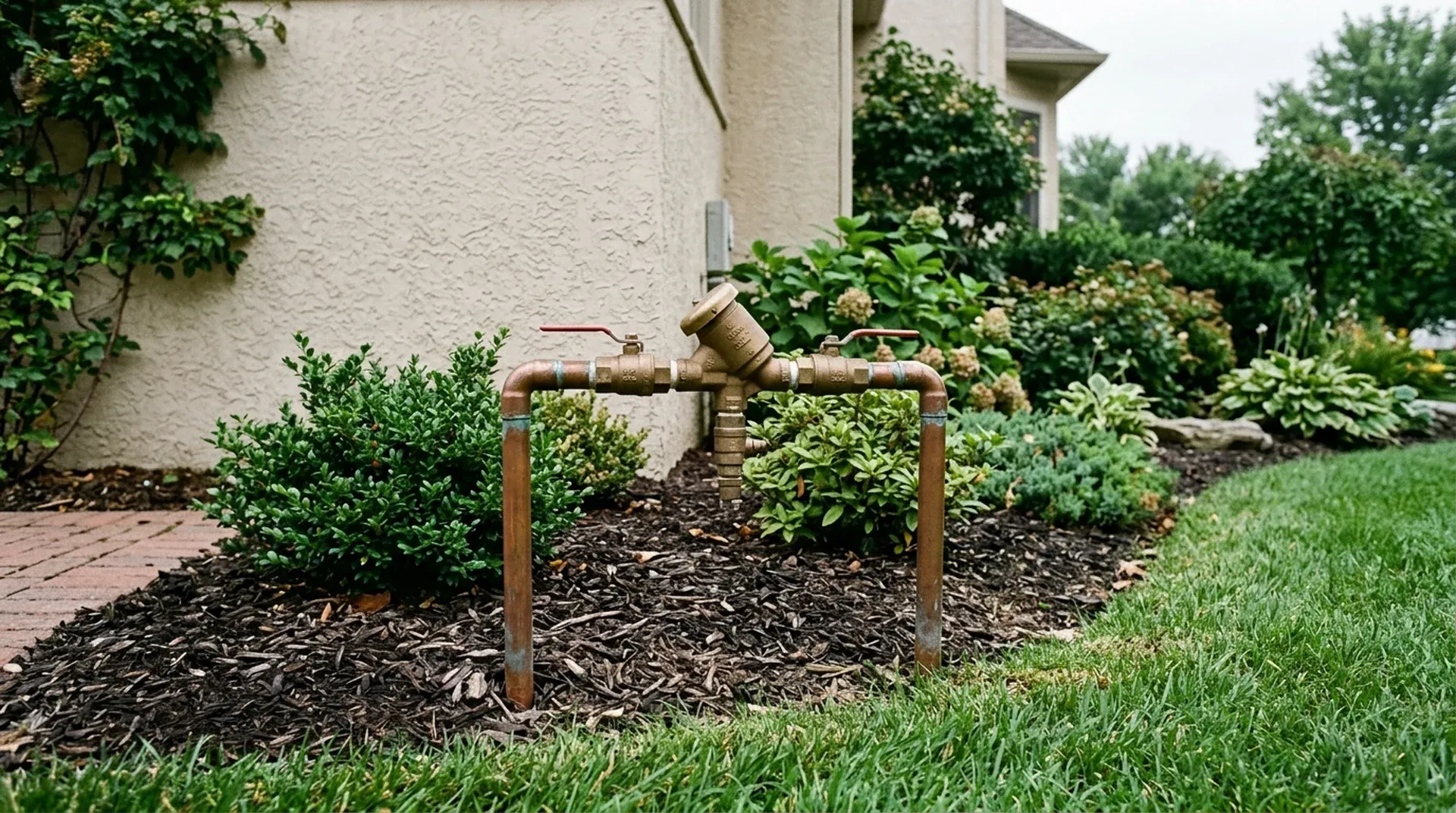
Backflow testing checks that the device on your sprinkler system still keeps lawn water out of your drinking water. Many water utilities require a test every year by a certified tester, who files the results with the utility. A typical test costs about $70–$90, according to HomeAdvisor, and some cities add a yearly fee of about $25 per device.
What backflow is and why sprinklers are a risk
Backflow is water flowing the wrong way into your drinking water pipes. The Ohio EPA's backflow manual says it takes two things:
- A cross-connection. This is a physical link, like a sprinkler line tied into your water service.
- A pressure change. Something pushes or pulls water the wrong way.
That pressure change can happen two ways:
- Backsiphonage: supply pressure drops (say, from a main break), and suction pulls water backward.
- Backpressure: something downstream, like a pump, pushes harder than the public supply.
Sprinklers are a textbook cross-connection. The Ohio manual notes that water can pond around sprinkler heads. That water may contain fertilizer, weed killer or pesticide, and it can be pulled back into the water system. A backflow preventer is a one-way barrier that stops it. Testing confirms the barrier still works.
Types of backflow preventers on irrigation systems
Your device type decides how it's tested and how well it protects you. Here's how the Ohio manual describes the common ones:
|
Device |
How it works |
Protects against |
Notes |
|---|---|---|---|
|
Pressure vacuum breaker (PVB) |
Spring-loaded check valve plus an air inlet |
Backsiphonage only |
Most common on homes; mounted at least 12 inches above the highest head |
|
Reduced pressure (RP or RPZ) assembly |
Two check valves with a relief valve between |
Backsiphonage and backpressure |
For higher hazards, like chemical injection; relief-port leaks signal trouble |
|
Double check valve assembly (DCVA) |
Two check valves |
Backsiphonage and backpressure |
Only for non-health hazards; can fail with no visible sign |
|
Atmospheric vacuum breaker (AVB) |
Gravity-operated air inlet |
Backsiphonage only |
No shutoff allowed downstream; some utilities ban it |
Source: Ohio EPA backflow manual (2015). Denver Water, for one, doesn't allow AVBs on irrigation.
PVBs, RPs and DCVAs are called "assemblies." They have shutoff valves and small test ports, so a tester can check them in place. Your state rules and water supplier decide which device you need. Drip zones tied to your water supply need backflow protection too. See drip irrigation vs. sprinklers.
Who requires testing and how often
Rules are local, so start by asking your water utility. Some examples:
- Ohio: State rules, Ohio Administrative Code 3745-95, allow a PVB on a home sprinkler system that carries only water. The PVB must be tested at least every 12 months. The tester must be one your water supplier approves. The Ohio EPA manual adds one more rule: if you shut the system down for winter, test the PVB at start-up each year.
- Columbus, Ohio: The city requires a yearly test by a city-approved certified tester. It also charges a $25 yearly fee per device.
- Rogers, Minnesota: The City of Rogers, citing the Minnesota Plumbing Code, says testable devices installed on or after January 23, 2016 need a test by a certified tester. The test is due at installation and every year after. Rogers charges a $25 permit fee per device. It exempts lawn irrigation systems installed before that date.
- Denver, Colorado: Denver Water has irrigation devices tested every year when the water is turned on. The testing season runs May to September. A certified tester does the work, and the utility mails a reminder 30 days before the test is due. For single-family homes, Denver Water says the rules depend on the hazards at each site.
As Rogers and Denver show, not every home needs a yearly test everywhere. Call your utility and ask. Where a start-up test is required, as in Ohio, book it for when you turn the system back on in spring.
If you skip a required test
Skipping a test can cost you your water service. Ohio's rule 3745-95-08 says the water supplier shall deny or cut off service, after reasonable notice, if a required device isn't tested. The rule adds that service won't be restored until the problem is fixed. In Denver, service can be suspended after three mailed notices go unanswered, and the utility charges a $250 penalty.
What happens during a test
The tester hooks a special gauge to small test ports on the device. The Ohio manual explains that this gauge compares the pressure at two points. That shows whether each check valve seals tight. It also shows whether the air inlet or relief valve opens when it should.
If the device passes, the tester files the results with your water supplier where required, as in Columbus and Denver. If it fails, it needs a repair or a new device, then a retest. The Ohio manual lists common PVB failures:
- A torn rubber membrane or a failed valve disc
- Corrosion or lime buildup on the valve seat, which makes it leak or stick
What backflow testing costs
Prices vary by region and by how many devices you have. Here are HomeAdvisor's ranges:
|
Item |
Typical cost |
|---|---|
|
Annual backflow test |
$70–$90 (as high as $350 in some areas) |
|
Utility or city fee |
$25 per device in Columbus, OH and Rogers, MN; varies elsewhere |
|
Backflow preventer for a sprinkler system (device) |
$100–$600 |
|
Installation |
About $350 on average ($150–$450 typical) |
|
Permit |
HomeAdvisor cites about $50; check your city's fee |
Sources: HomeAdvisor; city pages above. The cost guides don't list repair prices, since they depend on what failed. Ask for repair and retest prices up front.
If you're planning a new system, budget for the device and its yearly test from the start. Our guide to sprinkler system costs covers the full install.
How to keep your backflow preventer from failing
Freezing is the big threat in cold climates. Hunter Industries' winterization guide warns that ice inside a backflow device damages its parts. It can even crack the brass body.
- Drain it before winter. Follow the device's drain steps or have a pro do it. Our guide on how to winterize a sprinkler system walks through the process.
- Never blow compressed air through it. Hunter and Colorado State University Extension both say to hook up the compressor past the device. CSU notes the heat can melt the rubber seals inside.
- Insulate, but don't block it. Rain Bird recommends wrapping above-ground devices with insulation tape. Don't cover the air vents or drain outlets.
- Open valves slowly in spring. CSU says to open the ball valves slowly at start-up. That avoids water hammer, a pressure surge that can damage pipes.
- Watch for leaks. The Ohio manual says water coming out of an RP's relief port means the device isn't working right.
When to call a pro
Where testing is required, it isn't a DIY job. Columbus and Rogers, Minn., accept results only from certified testers. Ohio's rules require a tester your water supplier approves. Installing or replacing a backflow preventer is work for a licensed plumber or irrigation contractor, and it may need a permit.
When you hire:
- Ask your water utility for its list of approved or certified testers first.
- Get 2–3 written quotes covering the test, the filing fee, and the price of a retest or common repairs.
- Confirm the tester will send results to your utility, and keep a copy.
- Check licensing and insurance where your state requires it.
- Get the scope and payment terms in writing.
You can compare irrigation pros on LandscapeLookup for free with no sign-up. Then contact them directly to confirm they're certified for testing in your area.
Editorial team
The LandscapeLookup editorial team writes guides to help US homeowners plan yard projects and hire the right pro. Each guide is based on university extension services, government sources such as EPA WaterSense and USDA, manufacturer instructions and published cost guides, and links to them so you can check the details.
Keep reading
Sprinkler Repair: Common Problems and Costs
Most sprinkler repairs are small jobs: a broken head, a clogged nozzle, a leaking valve or a cut wire. HomeAdvisor puts a typical pro repair at $137 to $422, and many head and nozzle fixes are easy DIY.
October 4, 2026
Smart Sprinkler Controllers: Are They Worth It?
A smart sprinkler controller adjusts watering to the weather or soil moisture. It usually pays off if your lawn gets more water than it needs, especially with a utility rebate, but saves little if you already water carefully.
September 17, 2026
The Best Time to Water Your Lawn (and How Much)
Water your lawn in the early morning, roughly 5–9 a.m., when less is lost to evaporation and grass dries quickly. Most lawns need about 1 inch of water a week, rain included, applied in 1–2 deep waterings rather than daily sprinkles.
September 5, 2026