

Sprinkler Repair: Common Problems and Costs
Most sprinkler repairs are small jobs: a broken head, a clogged nozzle, a leaking valve or a cut wire. HomeAdvisor puts a typical pro repair at $137 to $422, and many head and nozzle fixes are easy DIY.
By LandscapeLookup Editors7 min read
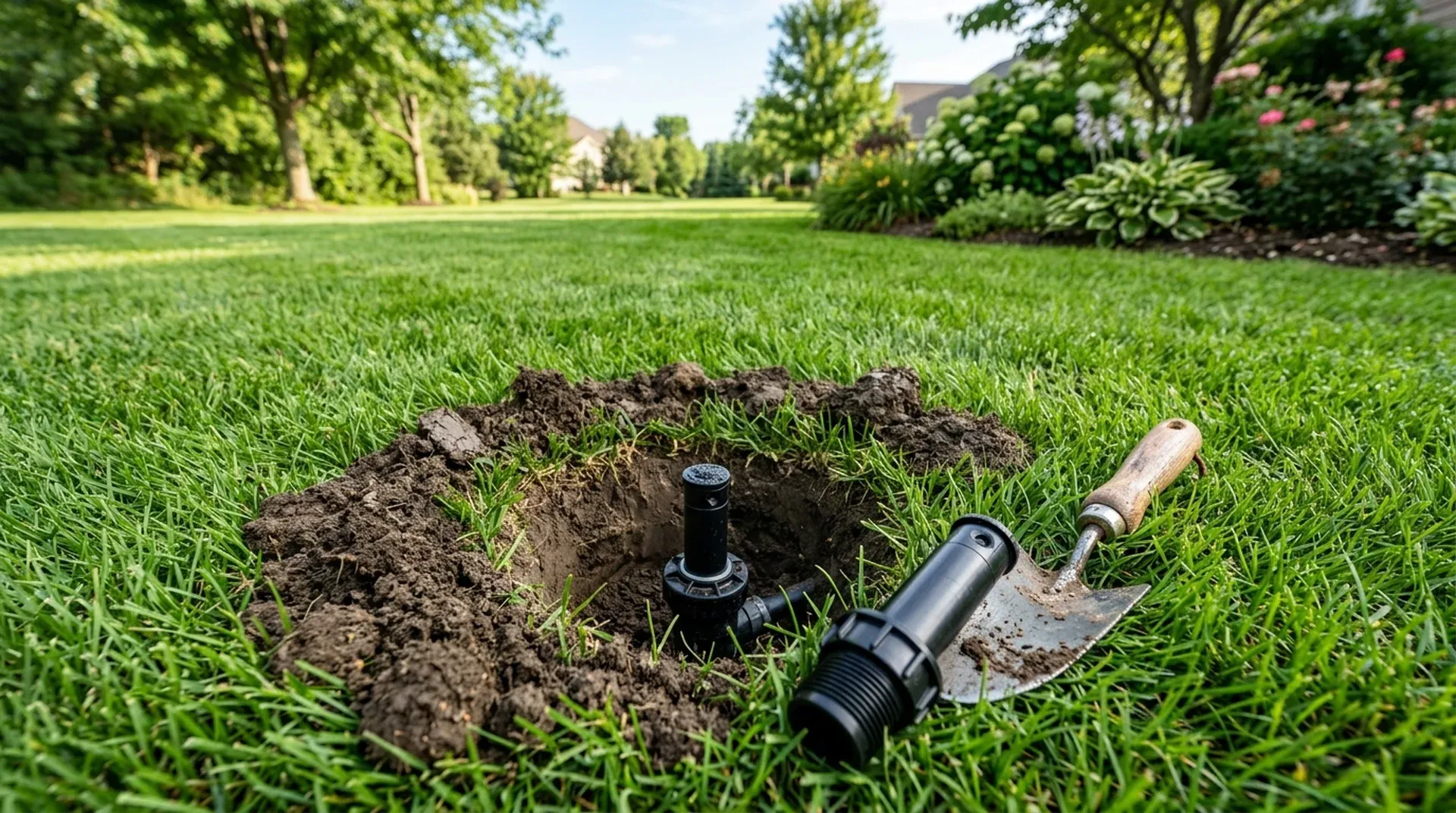
Most sprinkler repairs are small jobs: a head that got hit by the mower, a clogged nozzle, a valve that sticks, or a cut wire. HomeAdvisor puts a typical professional repair at $137 to $422, with an average of $278. Many head and nozzle problems are easy to fix yourself once you know what you're looking at.
Here's how to read the symptoms, what you can safely fix, and what a pro will charge.
Common sprinkler problems and what causes them
Most problems show up as a dry patch, a soggy patch, or a zone that won't behave. This table matches the usual symptoms to their likely cause.
|
What you see |
Likely cause |
Usually DIY? |
|---|---|---|
|
Little or no water from one head |
Clogged nozzle or filter |
Yes |
|
Water bubbling up around a head, or a geyser |
Broken riser or cracked fitting below the head |
Often |
|
Head won't pop up, sits low, or tilts |
Grass grown over it, or pushed down by a mower or car |
Yes |
|
Water hitting the driveway or house |
Head twisted out of line, or the wrong nozzle pattern |
Yes |
|
Soggy spot or extra-green strip away from any head |
Underground pipe leak |
Sometimes |
|
Lowest head drips after the zone shuts off, then stops |
Low head drainage (normal) |
No fix needed |
|
Heads keep leaking while the zone is off |
Valve not closing all the way |
Sometimes |
|
One zone won't turn on |
Wiring, solenoid, or debris in the valve |
Sometimes |
|
A zone won't turn off |
Controller, stuck solenoid, or debris in the valve |
Pro if basics fail |
Sources: UF/IFAS Extension, Rain Bird's valve guide, University of Georgia.
What's the most common cause of trouble? Physical damage is a big one. UF/IFAS Extension says leaking sprinklers are often a result of damage during mowing or other lawn maintenance, and cars that run over heads can cause large leaks.
One thing not to do: turn up the run time. The same UF guide warns that a longer timer setting won't make up for dry areas caused by leaks, clogs or broken pipe. Find the problem and fix it instead.
How to find the problem
Run each zone one at a time and walk it while it's on. UF calls inspecting the system while it's running the most important part of maintaining it.
EPA WaterSense's Sprinkler Spruce-Up checklist gives you a simple routine:
- Look for heads that don't pop up fully or are tilted. Broken heads are easy to miss because most systems run overnight or early in the morning.
- Flag every problem head so you can find it after the water is off.
- Check for pooling between cycles. Standing water away from a head can mean an underground leak.
- Open the valve boxes. Make sure the connections are tight and the valves shut fully. A valve that won't close can seep water even when the system is off.
- Check the spray pattern. WaterSense says each head should reach the next one (head-to-head coverage). Turn heads that spray onto pavement back toward the lawn.
In cold-winter areas, do this check every spring before the first full watering. WaterSense says to make sure the system wasn't damaged by frost or freezing. Small leaks add up: it estimates that a leak 1/32 inch across can waste about 6,300 gallons a month. HomeAdvisor notes that a system that wasn't winterized properly can freeze and break pipes.
If your town limits which days you can water, ask your water utility whether short test runs for repairs are allowed.
If one zone won't turn on
Rain Bird's troubleshooting guide for residential valves says to check the basics first:
- Is the controller plugged in and programmed?
- Is the main shutoff valve for the sprinkler system open?
- Is the flow control knob on the valve (if it has one) open?
Next, try opening the valve by hand. On many models you turn the solenoid (the black cylinder with two wires) 1/4 turn counterclockwise. Rain Bird warns not to turn it past 1/4 turn, or it can come loose and release pressurized water.
- The valve works by hand: the problem is electrical. Rain Bird suggests testing for 24 to 30 volts at the controller and at the valve, then swapping the solenoid with one from a working valve of the same model.
- The valve won't open by hand: debris or a torn diaphragm inside the valve is likely. Use the valve's flush mode, or shut off the water and take it apart to clean it.
If a zone won't shut off
Stop the water first. Rain Bird's order is: set the controller to off, then unplug it, then turn the flow control down, then close the main shutoff. If unplugging the controller stops the water, the controller is the likely problem. If not, look for a stuck solenoid or debris holding the valve open.
How to fix a broken sprinkler head
Replacing a head is the classic DIY repair. These steps follow UF/IFAS Extension's guide:
- Turn off the water to the system.
- Dig around the head with a hand trowel. Go gently. UF notes that control wire is sometimes buried in the same trench as the pipe and is easy to cut with a shovel.
- Unscrew the old head and keep soil out of the open fitting.
- Match the replacement. UF says it should have the same operating characteristics (pressure, throw distance, arc) as the old one.
- Flush the line with a short burst of water before you put the new head on.
- Install, backfill and test. Pack soil around the body so it stands straight, then run the zone and adjust the arc and distance.
If a head just sprays weakly, it may only need cleaning. Unscrew the nozzle (with the water off), pull out the small filter underneath, rinse both and reinstall. Rotors have a basket filter at the bottom of the body.
A little water escaping around the pop-up stem while the zone runs is normal. The University of Georgia says heavy flow there means a damaged wiper seal, and that leak steals pressure from every other head on the zone. Replace that head.
UF notes that leaks often start at broken pipe connections under the heads, especially near streets and driveways. Flexible connection kits can reduce that breakage.
Fixing a broken pipe
UF says most home systems use white PVC pipe, which is fairly easy to work with. Its steps: dig out the leak, cut the pipe 4 to 5 inches on each side of a larger break, clean and dry the ends, then prime and glue in couplings and a new section. Let the cement dry before turning the water on (UF says about 1 hour, but follow the label) and wear gloves. Extending repair couplings can make the job easier.
Before you dig, contact 811 a few business days ahead. It's the free national before-you-dig service, and it arranges for buried utility lines to be marked so you don't hit one.
How much sprinkler repair costs
Here's what two 2026 cost guides say common repairs cost with parts and labor. Costs vary by region, so use these to sanity-check quotes, not to predict them.
|
Repair |
LawnStarter |
Lawn Love |
|---|---|---|
|
Sprinkler head |
$60–$110 |
$59–$150 |
|
Broken pipe |
$150–$370 |
$125–$400 |
|
Wiring |
$55–$100 |
$60–$100 |
|
Valve |
$70–$215 |
$69–$371 |
|
Water pressure problems |
$50–$500 |
$50–$500 |
Sources: LawnStarter and Lawn Love, both updated October 2026.
Overall, LawnStarter puts most repairs at $130 to $360, close to HomeAdvisor's $137 to $422. Replacing a backflow preventer is the big outlier: LawnStarter puts it at $280 to $1,550.
What drives the bill, per HomeAdvisor:
- Hourly labor: about $50 to $100 an hour, and many pros have a one-hour minimum. LawnStarter's range is $60 to $115.
- Emergency calls: typically $100 to $200 on top of the regular charges.
- Parts markup: pros often mark parts up 25% to 50%.
- Season: non-urgent work may cost less in late fall or winter, when demand is lower.
Because of minimum charges, it pays to save up small fixes and have them done in one visit.
Repair or replace the system?
Repair usually wins. HomeAdvisor notes that a new part often costs little more than repairing the old one, and that cracked or sun-damaged plastic parts will keep wearing out even if you patch them, so replace those.
HomeAdvisor says a whole new system may make sense if yours is very old or keeps needing costly repairs despite regular service. See our sprinkler system cost guide for installation prices by zone and yard size.
A repair visit is also a good time for upgrades. WaterSense suggests spray bodies with built-in pressure regulation if heads mist from high pressure, and a WaterSense labeled controller that adjusts watering to local weather or soil moisture (see smart sprinkler controllers). For shrub beds, UF suggests microirrigation as the better option, so consider switching those areas to drip irrigation instead of replacing spray heads.
When to call a pro
Call an irrigation pro for valve problems you can't clear with the basic checks, main-line breaks, recurring low pressure, wiring faults you can't trace, and anything involving the backflow preventer. UGA's advice is blunt: valve problems can be hard to fix, so check with a professional. Backflow work is for a licensed pro: Texas regulators note that sprinkler water can carry lawn chemicals and animal waste, and that backflow assemblies should be installed and tested by a licensed professional. See backflow testing for local testing rules.
Licensing rules vary by state. Texas, for example, requires a state license for irrigation design, installation and repair, and a license holder must be on site during any repair. EPA WaterSense also keeps a directory of certified irrigation professionals.
Before you hire:
- Get 2 or 3 written quotes that list the hourly rate, minimum charge, trip fee and parts.
- Ask for photos or references from similar residential repairs.
- Check licensing and insurance where your state requires it.
- Get the scope and payment terms in writing, including any warranty on parts and labor.
You can find irrigation pros near you on LandscapeLookup for free, with no sign-up. Pros are ranked by Google rating weighted by review count, plus how local they are and their main service, and you contact them directly.
Editorial team
The LandscapeLookup editorial team writes guides to help US homeowners plan yard projects and hire the right pro. Each guide is based on university extension services, government sources such as EPA WaterSense and USDA, manufacturer instructions and published cost guides, and links to them so you can check the details.
Keep reading
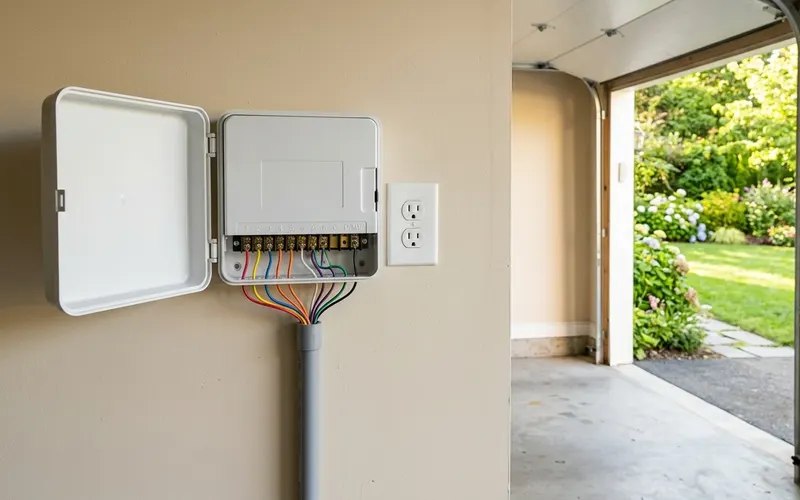
Smart Sprinkler Controllers: Are They Worth It?
A smart sprinkler controller adjusts watering to the weather or soil moisture. It usually pays off if your lawn gets more water than it needs, especially with a utility rebate, but saves little if you already water carefully.
September 17, 2026
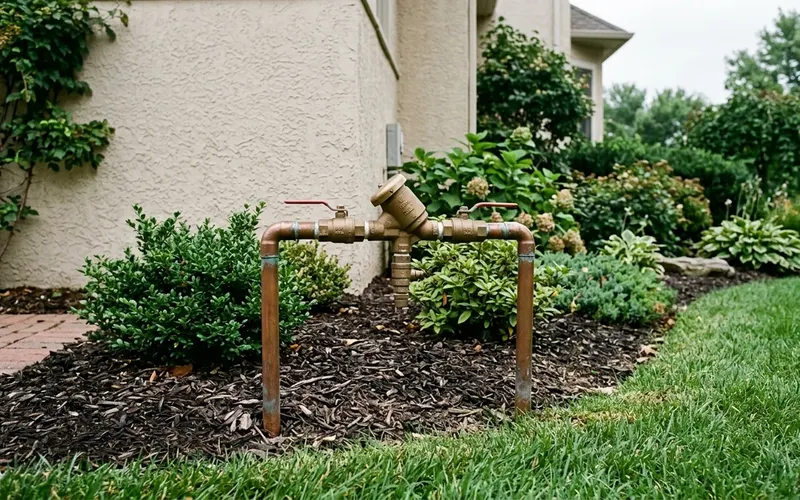
Backflow Testing: What Homeowners Need to Know
A backflow test checks that the device keeping sprinkler water out of your drinking water still works. Many utilities require one every year by a certified tester; a typical test costs about $70–$90, plus any local filing fee.
September 10, 2026
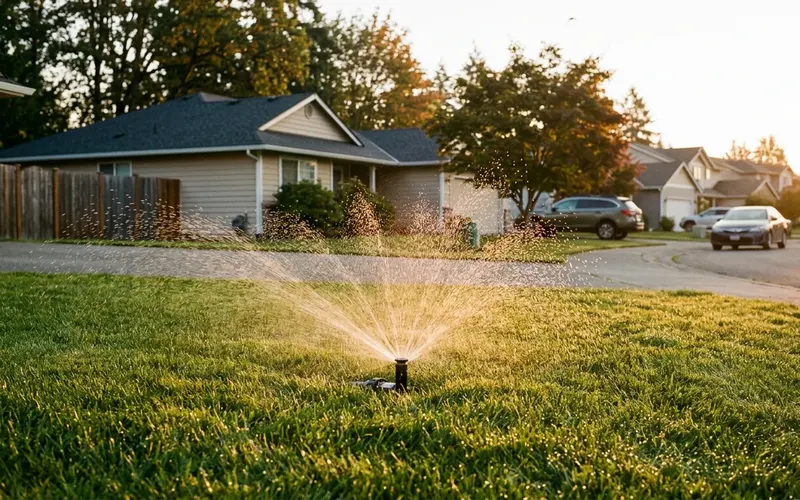
The Best Time to Water Your Lawn (and How Much)
Water your lawn in the early morning, roughly 5–9 a.m., when less is lost to evaporation and grass dries quickly. Most lawns need about 1 inch of water a week, rain included, applied in 1–2 deep waterings rather than daily sprinkles.
September 5, 2026