Smart Sprinkler Controllers: Are They Worth It?
A smart sprinkler controller adjusts watering to the weather or soil moisture. It usually pays off if your lawn gets more water than it needs, especially with a utility rebate, but saves little if you already water carefully.
By LandscapeLookup Editors7 min read
A smart sprinkler controller replaces the clock timer on your in-ground sprinkler system and changes the schedule on its own, using local weather data or a soil moisture sensor. For most homes it's worth it if the lawn currently gets more water than it needs, and a utility rebate can cover much of the price. If you already adjust your timer through the seasons and water carefully, expect smaller savings.
What does a smart sprinkler controller do?
A standard timer runs the same schedule until you change it. EPA WaterSense estimates that more than 28 million US homes have in-ground sprinklers on clock-based controllers, often set for the peak of summer and never adjusted. A smart controller adjusts run times and watering days as conditions change.
There are two main types, according to the University of Florida and EPA:
|
Type |
How it decides |
Good to know |
|---|---|---|
|
Weather-based (ET) controller |
Uses local weather data plus details about your yard (soil, slope, sun, plant type, sprinkler type) to estimate how much water the lawn lost |
UF says Wi-Fi models with phone apps have become increasingly popular |
|
Soil moisture sensor |
A probe buried in the root zone skips scheduled watering when the soil is still moist |
With only one sensor, UF says to bury it in the driest zone |
Both can be a full replacement controller or an add-on device that works with your existing timer, EPA says. And yes, you can run your sprinklers from your phone: Wi-Fi models such as Orbit B-hyve let you start zones, change programs and get alerts from an app.
What the WaterSense label means
WaterSense labeled controllers are independently certified to meet EPA criteria for efficiency and performance. Weather-based models must also be able to accommodate watering restrictions. Use EPA's product search to check a model, because many rebates require the label.
Are smart sprinkler controllers worth it?
They can save a lot of water, but results depend on how much you overwater now. EPA says as much as 50% of residential outdoor water is wasted through overwatering, and that replacing a clock-based controller with a WaterSense labeled one can save an average home up to 15,000 gallons a year. By type, EPA puts weather-based models at nearly 7,600 gallons a year and soil moisture sensors at more than 15,000.
University of Florida research shows how wide the range is. The UF/IFAS summary reports:
- Soil moisture sensors in test plots cut irrigation 35% to 54% in dry weather and 70% to 90% with normal Florida rainfall.
- Florida homes on reclaimed water that added soil moisture sensors used 44% less water over 32 months than homes without them.
- Weather-based controllers in plot studies ranged from 14% more water to 68% less.
- In homes that had been watering heavily, properly installed and programmed weather-based controllers cut use 21% to 31%.
University of California Cooperative Extension adds a reality check in Is a Smart Irrigation Controller for You?. Manufacturers often claim savings of 20% or more (Rachio says most users can expect 20% or more), but UC notes that no maker guarantees savings.
|
A smart controller likely pays off if... |
It may save little if... |
|---|---|
|
You never change the timer after spring |
You already adjust run times through the seasons |
|
Sprinklers run during or after rain |
Your schedule already matches what the plants need |
|
You have clay soil or slopes with runoff |
Coverage is so uneven that some spots are always wet and others dry |
|
Your utility offers a rebate |
You rarely run the system at all |
UC also points out that you can fix overwatering on an ordinary timer by cutting run times or frequency. The smart controller's real advantage is that it keeps making those adjustments all season without you. Uneven coverage is a hardware problem; see sprinkler repair for fixing heads and leaks first.
How much does a smart sprinkler controller cost?
HomeAdvisor puts automatic sprinkler controllers at $10 to $325 on average, with smart and phone-controlled models at the top of that range.
|
Item |
Typical cost |
Source |
|---|---|---|
|
Controller (all types) |
$10 to $325 |
HomeAdvisor |
|
Pro installation, labor only |
$155 to $329 per controller (January 2026) |
|
|
Optional app features |
Free plan plus paid tiers on some brands |
Homewyse's estimate covers labor for a straight swap at an existing outlet, and prices vary by region. Rachio advertises no monthly fees but sells some premium features, and Hunter's Hydrawise app has a free plan and paid subscriptions, so check what's included before you buy. For whole-system pricing, see our sprinkler system cost guide.
Rebates can cover a big share
Many water utilities offer rebates, and EPA's rebate finder lists programs by state. EPA itself doesn't pay rebates, so contact your water provider. Rules vary. For example, Chandler, Arizona pays up to $250, capped at 50% of the controller's cost. It requires a model listed in EPA's product search and warns not to rely on store websites or packaging. Read the terms before you buy; Chandler, for one, asks for an itemized receipt.
Will it work with your sprinkler system?
Most standard in-ground systems can go smart with a controller swap. Check these points first:
- Valve type. Rachio calls 24-volt AC valves the standard for US irrigation systems and says its controllers don't work with battery-powered (DC) or 2-wire systems. If you're unsure what valves you have, it suggests asking an irrigation pro.
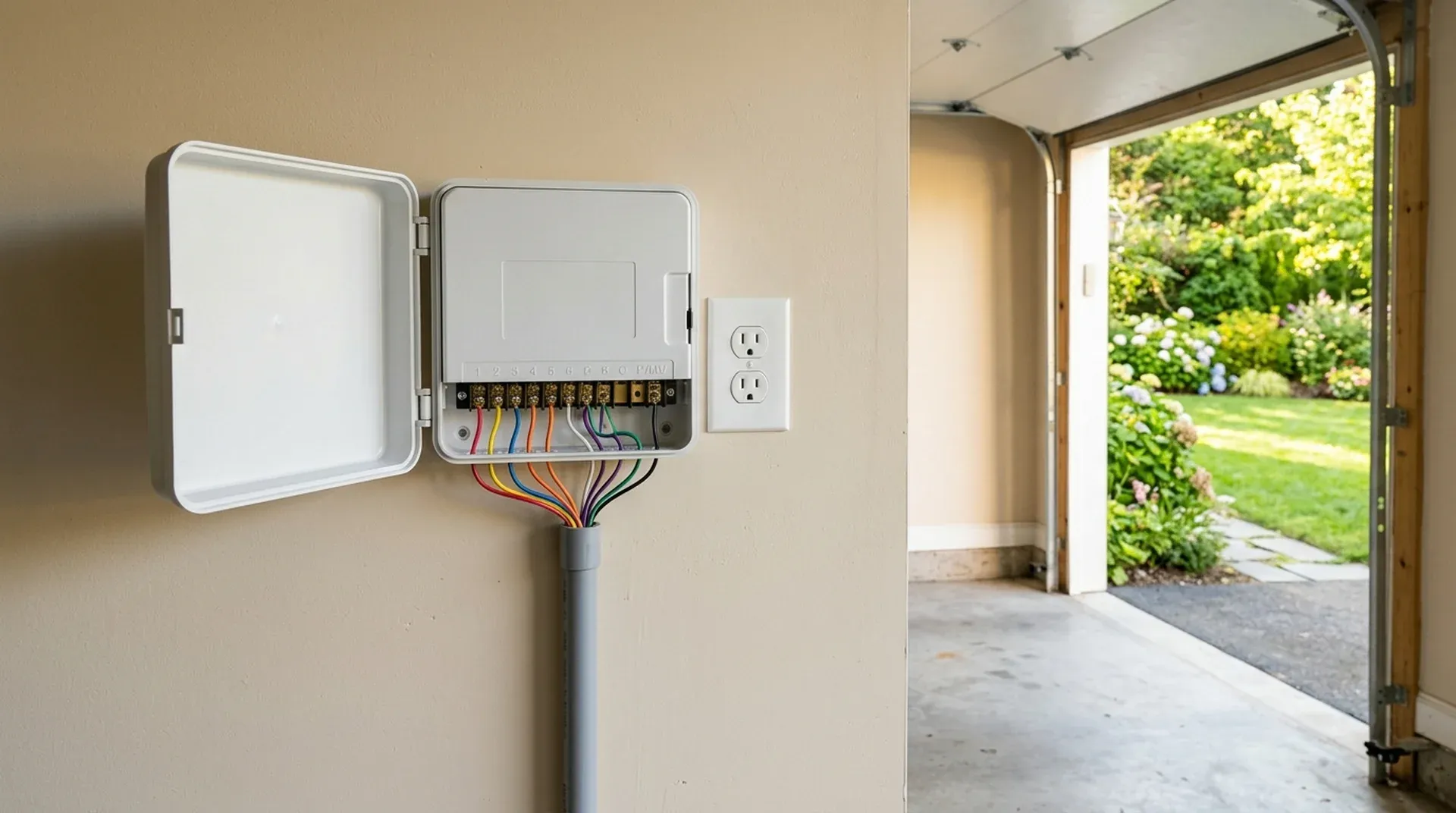
- Zone count. Count the zone wires on your current timer and buy a model with at least that many. An 8-zone controller takes 1 to 8 zone wires.
- Wi-Fi. The controller has to reach your router. Orbit's B-hyve uses 2.4 GHz Wi-Fi, and Rachio says you need strong Wi-Fi where the controller is mounted.
- Indoor or outdoor. Some models aren't weatherproof. Rachio says its controller needs an outdoor enclosure to mount outside.
- Master valve or pump. If your system has one, check the wiring guide. Rachio notes that a pump start relay may need extra parts.
Not ready to replace a working timer? EPA notes that add-on devices can work alongside a clock-based controller. Some brands also sell Wi-Fi upgrades for their own timers: Hunter lists its X2 controller with a WAND module among its Hydrawise-ready models.
What happens if the Wi-Fi goes down
Your lawn still gets watered. Rachio says its controllers keep running saved schedules from internal memory when offline, but weather features such as rain skips stop working until the connection comes back. It sends an alert after 24 hours offline.
How do you install a smart sprinkler controller?
Swapping a plug-in timer is a DIY job: Rachio says most customers finish in 30 minutes or less. The basic steps:
- Test the old system. Rachio's quick start guide says to check every zone and repair any problems before the swap.
- Photograph the wiring inside the old timer so you can match each wire to a terminal later.
- Unplug and remove the old controller, then mount the new one.
- Move the wires over. Common wires are usually labeled C or Com, zone wires go to the numbered terminals, and a master valve wire is often marked M, MV or Pump.
- Connect any rain or soil sensor to the sensor terminals (Rachio's are marked S1 and S2). Rachio says sensors are optional on its controllers.
- Plug it in and set up the app, connecting to Wi-Fi and entering details for each zone.
If your old timer is hardwired into household power instead of plugged into an outlet, hire a licensed electrician for that part. Adding a soil moisture sensor means burying a probe in the root zone, so call 811 before you dig, even for a shallow trench.
Setting it up so it actually saves water
A smart controller is only as good as the information you give it. UC Extension says its accuracy depends on the setup details you enter: plant type, soil, sprinkler precipitation rate and so on. It also says the first schedules need checking and adjusting.
- Enter real numbers. A catch-can test gives you each zone's actual application rate; our guide to the best time to water your lawn walks through it.
- Use cycle and soak on clay and slopes. UC notes smart controllers can automate cycling to prevent runoff.
- Program your local watering rules. Many towns limit watering days or hours. UC says smart controllers can be set to required watering days, and B-hyve lets you mark when you can and cannot water. Check HOA rules too.
- Turn on weather delays. B-hyve, for example, uses local weather to set rain, freeze and wind delays.
- Check the shutoff rules in your state. Florida law requires automatic systems to have technology that stops watering during sufficient moisture, and Texas requires rain or moisture shut-off technology on new automatic systems. UF Extension says a rain sensor, soil moisture sensor controller or ET controller can serve as that shutoff.
In cold climates, the controller doesn't replace fall shutdown. You still need to winterize your sprinkler system before the first hard freeze. For shrub and flower beds, compare drip irrigation vs. sprinklers.
When to call a pro
Hire an irrigation pro if your timer is hardwired, you have a pump or master valve, the wiring doesn't match the labels, or zones aren't working before the swap. A pro can also check coverage and enter accurate zone data, which UC Extension says the controller's accuracy depends on. Any backflow preventer work should go to a licensed pro; see backflow testing for what that involves.
Before you hire:
- Get 2 or 3 written quotes that name the controller model and say whether setup and zone programming are included.
- Ask for photos or references from similar residential installs.
- Check licensing and insurance where your state requires it. Texas, for example, requires a licensed irrigator or technician on site when a system is installed.
- Get the scope and payment schedule in writing, and keep the receipt for any rebate.
You can find irrigation pros near you on LandscapeLookup for free, with no sign-up. Pros are ranked by their Google rating weighted by review count, plus how local they are and their main service, and you contact them directly.
Editorial team
The LandscapeLookup editorial team writes guides to help US homeowners plan yard projects and hire the right pro. Each guide is based on university extension services, government sources such as EPA WaterSense and USDA, manufacturer instructions and published cost guides, and links to them so you can check the details.
Keep reading
Sprinkler Repair: Common Problems and Costs
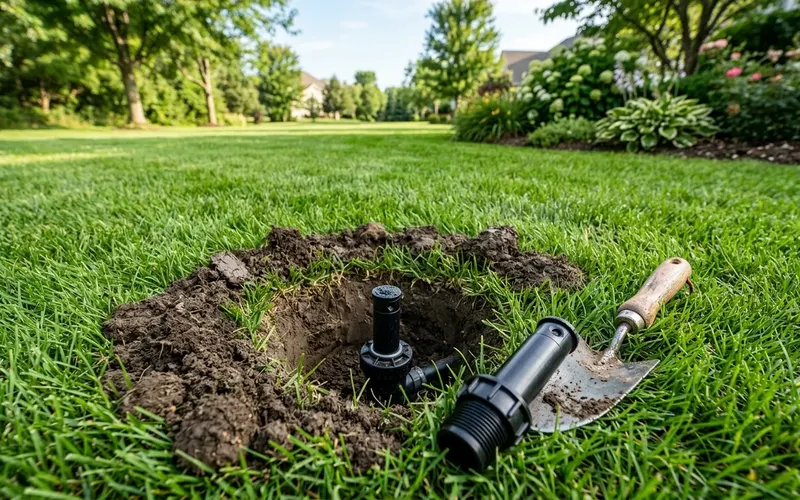
Most sprinkler repairs are small jobs: a broken head, a clogged nozzle, a leaking valve or a cut wire. HomeAdvisor puts a typical pro repair at $137 to $422, and many head and nozzle fixes are easy DIY.
October 4, 2026
Backflow Testing: What Homeowners Need to Know
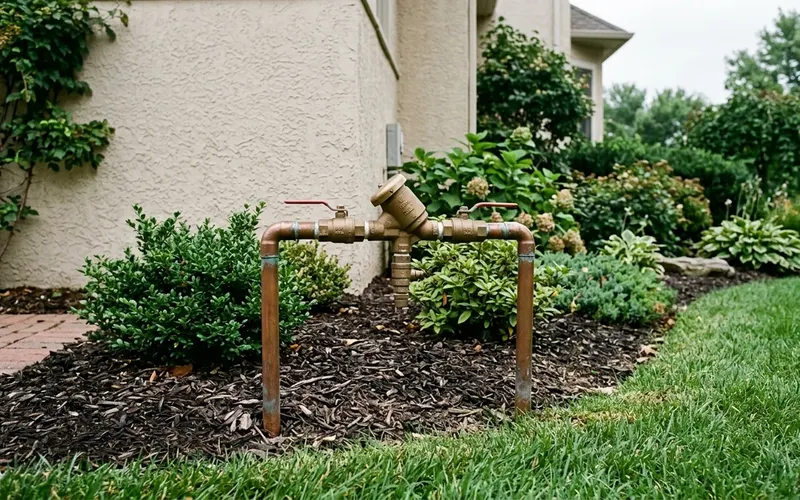
A backflow test checks that the device keeping sprinkler water out of your drinking water still works. Many utilities require one every year by a certified tester; a typical test costs about $70–$90, plus any local filing fee.
September 10, 2026
The Best Time to Water Your Lawn (and How Much)
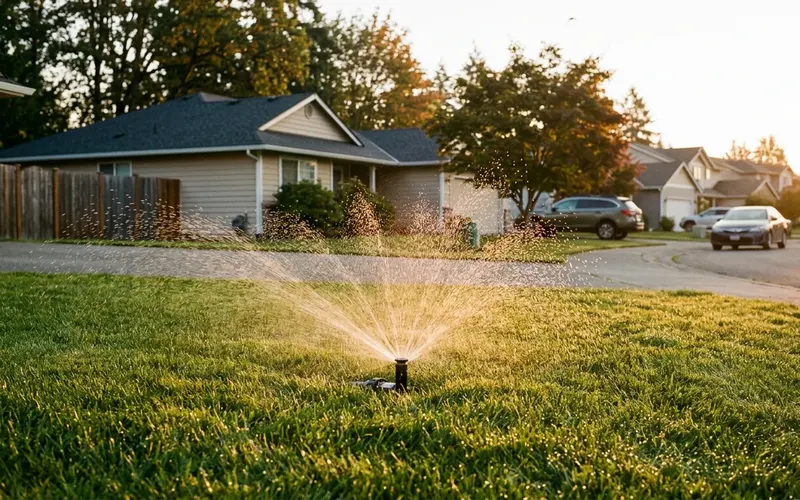
Water your lawn in the early morning, roughly 5–9 a.m., when less is lost to evaporation and grass dries quickly. Most lawns need about 1 inch of water a week, rain included, applied in 1–2 deep waterings rather than daily sprinkles.
September 5, 2026