Backyard Landscaping Ideas
The best backyard ideas start with how you'll use the space: a patio sized for your furniture, shade over part of it, privacy along the edges, layered planting beds and only as much lawn as you play on. Here are ideas by job, plus typical costs.
By LandscapeLookup Editors7 min read
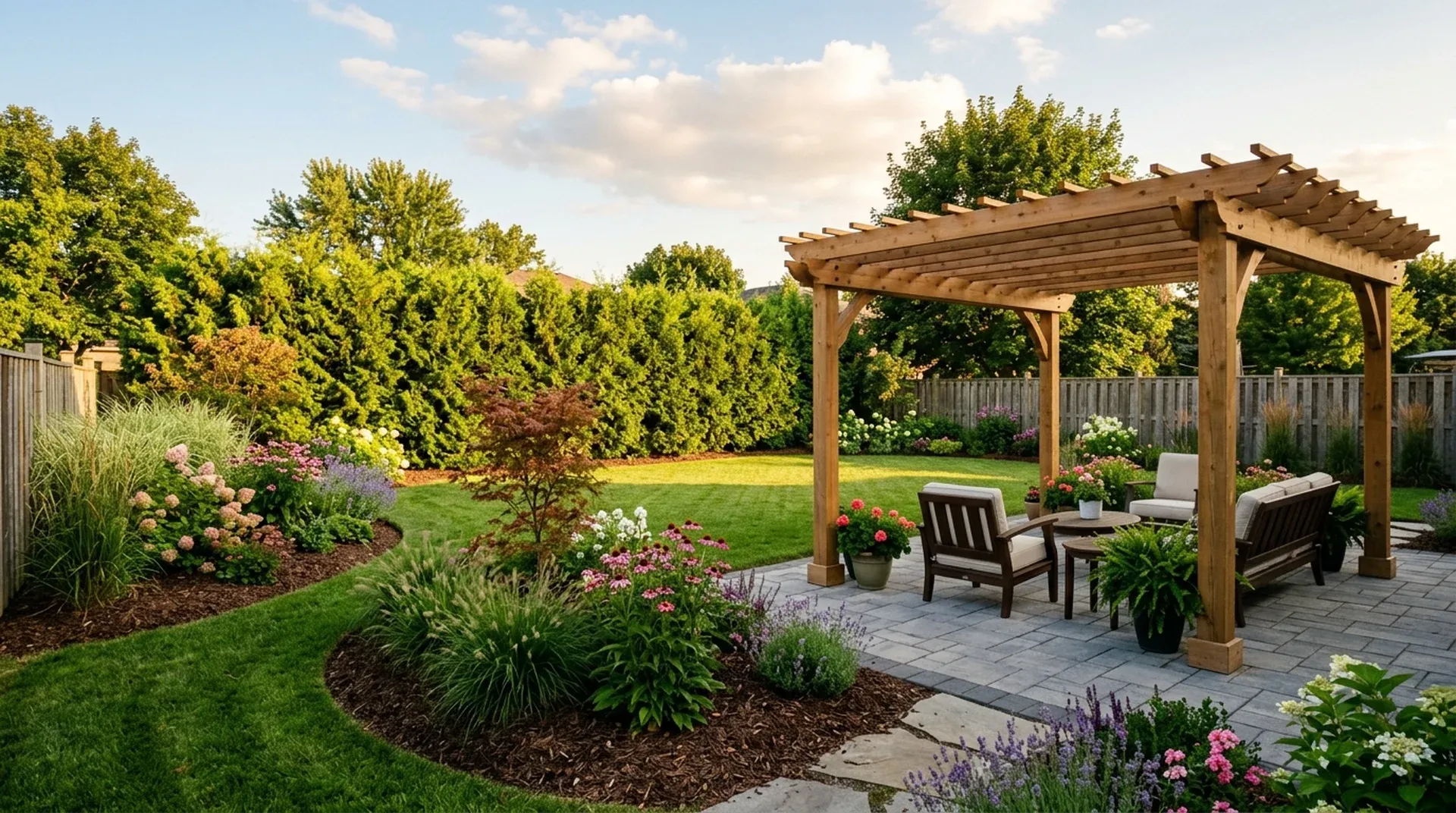
The backyard ideas that work best start with how you'll actually use the space. Give it a patio sized for your furniture, shade over part of it, privacy along the edges, layered planting beds and only as much lawn as you really play on. Below are ideas by the job they do, plus typical costs and budget tips.
Start with how you'll use the backyard
Extension designers treat a yard like a house with rooms. Iowa State University Extension notes that the private, family part of a home landscape is often the backyard. Oklahoma State University lists the outdoor rooms most families want: entertaining, dining, play, a work or storage area, and a garden.
Before you pick materials, sketch your yard. The University of Delaware suggests noting:
- Slopes, and which areas are wet, dry, sunny or shady
- Where water flows after a rain, and where breezes and winter wind come from
- Overhead and underground utilities, such as septic fields
- Good views to keep and bad views to hide
Then draw each room as a loose bubble. Put food prep near the kitchen door and the eating area, and keep trash bins away from where you eat. Delaware's typical sizes help you rough it out:
|
Space |
Typical size |
|---|---|
|
Sitting or eating for 2 |
About 25 sq ft |
|
Seating or dining for 4 to 8 |
64 to 100 sq ft |
|
Grill and food prep |
About 25 sq ft |
|
Swing set play area |
10 x 15 ft |
|
Two trash or recycling bins |
2.5 x 6 ft |
|
Small compost pile |
3 x 3 ft |
Patio, path and lawn ideas
Match the surface to the traffic. Oklahoma State recommends a paver patio, deck or flagstone path for areas with frequent or heavy use. Lawn, ground cover or mulch is fine where use is light.
A few layout ideas from the same publication:
- Make the patio square-ish. The best shape for entertaining is close to a square, or a rectangle with a 2-to-3 ratio. A long, narrow deck along the back of the house is a common mistake, because it's hard for a group to hold a conversation in it.
- Widen the steps. Steps 3 feet wide funnel everyone onto one spot of lawn and wear it out. Steps 12 feet wide spread the traffic.
If your yard slopes, UF/IFAS points out that a deck can work where uneven ground rules out a patio. See deck vs. patio for costs and lifespans.
Keep enough grass for play and gatherings. University of Missouri Extension ranks turf as the highest-maintenance part of a yard and suggests ground covers on steep slopes and in shade where grass struggles. Iowa State adds that lawn corners of 90 degrees or less are hard to mow.
Shade and privacy ideas
Oklahoma State suggests that part of every outdoor entertaining area have some kind of overhead element, such as a tree canopy, arbor, pergola or patio roof. Ideally the patio gets shade in summer and sun in winter, which is what deciduous trees do.
Where you plant shade trees matters. The U.S. Department of Energy says:
- Tall deciduous trees with high, spreading branches go on the south side to shade the roof in summer.
- Trees with lower branches go on the west side, where you need shade from the afternoon sun.
- A 6- to 8-foot deciduous tree planted near the house starts shading windows the first year. A slow grower can take up to 10 years to shade a roof.
Plant far enough from the house that roots, leaves and branches won't damage the foundation, gutters or roof. In cold regions, DOE suggests dense evergreens on the north and northwest sides as a windbreak.
For privacy, Oklahoma State says a fence or tall evergreens should be at least 6 feet tall to block views from next door. It also warns that blocking views in can block good views out, so a mix of low and tall plants or an open fence may suit you better. UF/IFAS suggests a hedge or a vine on a trellis. Our privacy hedge guide covers fast-growing options by region. Check HOA rules and local fence limits first, since a fence can need a permit. LawnStarter puts permit fees for construction work like fences at $50 to $3,000,
Planting ideas: layers and groups
Plant in layers. The Delaware fact sheet works from the biggest plants down:
|
Layer |
Examples |
Typical mature spread |
|---|---|---|
|
Canopy |
Tall shade trees |
About 20 to 25 ft |
|
Middle |
Small trees and shrubs |
About 5 to 15 ft |
|
Ground |
Perennials, small shrubs, ground covers |
About 1 to 5 ft |
Within a bed, Cornell Cooperative Extension layers plants lower to higher from front to back.
What is the 3-5-7 rule?
A common reading is what Cornell calls the "odd numbers rule": group plants in 3s, 5s or 7s and stagger them in triangles instead of straight lines, for a more natural look. Cornell also recommends limiting the number of colors, hardscape materials and plant types so the yard looks unified.
Grouping saves work, too. Delaware notes that plants grown together in groups need less mulching and weeding than plants scattered around the yard. Iowa State suggests using more trees and shrubs than annual and perennial flowers, because they need less care. Missouri Extension recommends 2 to 4 inches of mulch around plants.
Delaware and DOE both favor native plants, which suit local conditions and support wildlife. Your state or local agriculture office can suggest natives for your area.
Water-smart ideas
EPA WaterSense says the average US household uses more water outdoors than for showering and washing clothes combined. Delaware suggests limiting turf and using low-maintenance ground covers instead. In dry regions, follow local watering restrictions, which may limit how often you can irrigate.
If a low spot stays soggy, Delaware suggests a rain garden to let stormwater soak in, and permeable paving instead of solid surfaces. See how to build a rain garden.
Fire, lighting and water features
Check local fire rules before you build a fire pit. Colorado's West Metro Fire Protection District, which follows the International Fire Code, requires a recreational fire pit to sit at least 25 feet from any structure or combustible material, with the fire no more than 3 feet across and 2 feet high, and no fires during a burn ban. A gas fire pit needs a licensed pro. Fixr puts the plumber's gas line hookup alone at $500 to $2,000. Our fire pit ideas guide compares wood and gas.
Lighting stretches the hours you use the yard. LawnStarter puts pro landscape lighting at $2,000 to $4,500. Lawn Love suggests inexpensive string lights as a budget option. See landscape lighting ideas for fixture types.
Fixr lists water fountains at $1,250 to $3,750, and LawnStarter lists ponds at $3,680 to $14,500. For an outdoor kitchen, UF/IFAS notes that bigger builds may need electrical and water lines, so check the building code or hire a licensed contractor.
Call 811 a few business days before you dig for any of these, or for planting trees and setting fence posts. The service is free.
How much backyard landscaping costs
Fixr puts backyard landscaping at about $8,000 to $10,000, compared with $4,000 to $6,000 for a front yard. Backyards cost more because that's where paths, patios, pergolas and ponds usually go. LawnStarter (updated October 2026) puts pro landscaping at $4.50 to $14.50 per square foot overall.
|
Project |
Typical installed cost |
Source |
|---|---|---|
|
New flower bed |
$865 to $3,000 |
LawnStarter |
|
Shrubs |
$25 to $230 each |
LawnStarter |
|
Trees |
$150 to $680 each |
Fixr, LawnStarter |
|
Patio |
$8 to $24 per sq ft |
LawnStarter |
|
Walkway |
$9 to $20 per sq ft |
LawnStarter |
|
Pergola |
$2,100 to $6,000 |
LawnStarter |
|
Fire pit |
$200 to $5,000 |
LawnStarter |
|
Fencing |
$26 to $69 per linear ft |
LawnStarter |
|
Landscape lighting |
$2,000 to $4,500 |
LawnStarter |
|
Pond |
$3,680 to $14,500 |
LawnStarter |
Prices vary a lot by region and site. For yard-size estimates and design fees, see how much landscaping costs.
How to make a backyard look nice for cheap
- Phase it. Iowa State suggests spreading large projects over 3 to 5 years, guided by one overall plan. Lawn Love adds that hardscape usually goes in first, before planting.
- Buy smaller plants. Lawn Love notes that young plants cost less and grow into their space.
- Reuse and go movable. Keep healthy trees, fences and pavers, and choose furniture and containers over built-in seating and planters.
- Seed instead of sod. Lawn Love lists seeding at $0.10 to $0.19 per square foot vs. $0.90 to $1.80 for sod, if you can wait for it to grow in.
- Plant a bed yourself. LawnStarter estimates about $160 for basic tools and about $187 for mulch, flowers, edging and fabric for a DIY flower bed.
Small backyard ideas
Seating for two takes only about 25 square feet, by Delaware's numbers, and square or round spaces work best for gathering. Use a vine on a trellis for privacy (a UF/IFAS idea), keep to a few materials and colors as Cornell advises, and use pots where beds won't fit.
When to call a pro
A designer can turn your bubble sketch into a plan, and a landscaper or hardscaper can build it. Hire licensed pros for:
- Gas fire pits and gas lines
- New electrical circuits or hardwired lighting
- Plumbing for an outdoor kitchen or water feature
- Retaining walls over about 4 feet. The residential code (California's version) requires walls holding back more than 48 inches of soil to be engineered
- Raised or structural decks, and any tree work near power lines
Before you hire:
- Get 2 or 3 written quotes for the same plan, materials and plant sizes.
- Ask for photos of similar backyards they've built nearby.
- Check licensing and insurance where your state requires it.
- Get the scope and payment schedule in writing, including who pulls permits and calls 811.
You can compare local landscapers, hardscaping pros and outdoor living builders on LandscapeLookup for free, with no sign-up. Pros are ranked by Google rating weighted by review count, plus how local they are and their main service, and you contact them directly.
Editorial team
The LandscapeLookup editorial team writes guides to help US homeowners plan yard projects and hire the right pro. Each guide is based on university extension services, government sources such as EPA WaterSense and USDA, manufacturer instructions and published cost guides, and links to them so you can check the details.
Keep reading
How Much Does Artificial Turf Cost?
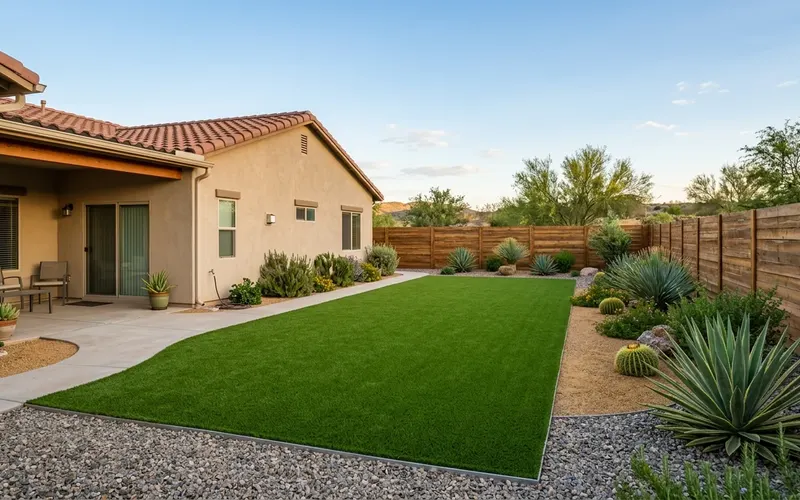
Professional artificial turf installation runs about $5 to $20 per sq ft, with recent cost guide averages running about $13 to $20. A typical 500 sq ft yard costs roughly $2,700 to $10,000, depending on turf quality, prep work and where you live.
October 15, 2026
How to Build a Rain Garden
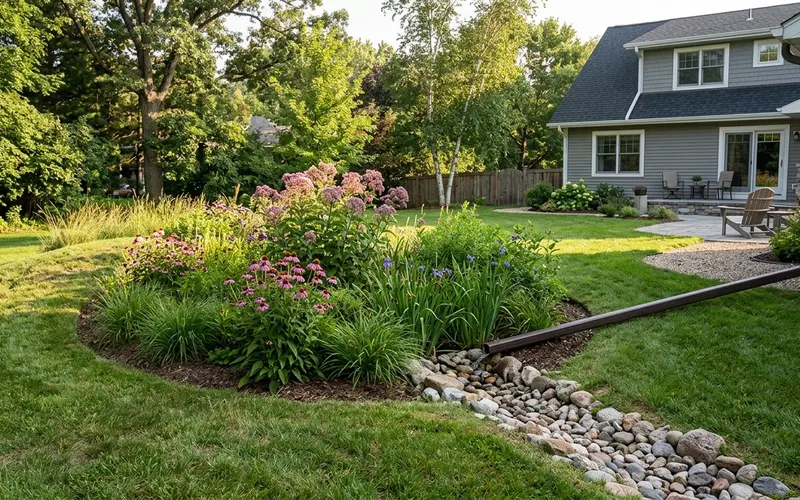
Pick a spot at least 10 feet from the house where runoff flows but water doesn't already pond, dig a level basin 3 to 8 inches deep (usually 100 to 300 sq ft), berm the low side and plant natives that handle wet and dry.
October 13, 2026
Landscape Rock: Types, Costs and Where to Use It
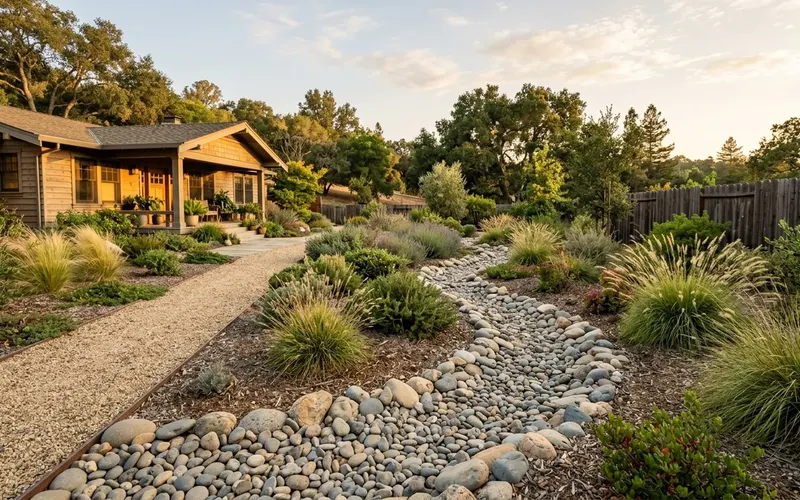
Common landscape rock like pea gravel, crushed stone, river rock and lava rock runs about $10 to $220 per ton in 2026 cost guides. It works best on paths, dry creek beds and in desert or wildfire-prone yards, and less well in most planting beds.
October 11, 2026