Fast-Growing Privacy Trees and Hedges
'Green Giant' arborvitae and Leyland cypress can add about 3 feet a year when young, but the best privacy tree depends on your climate, space and deer. Here are fast picks by region, spacing and what a hedge costs.
By LandscapeLookup Editors8 min read
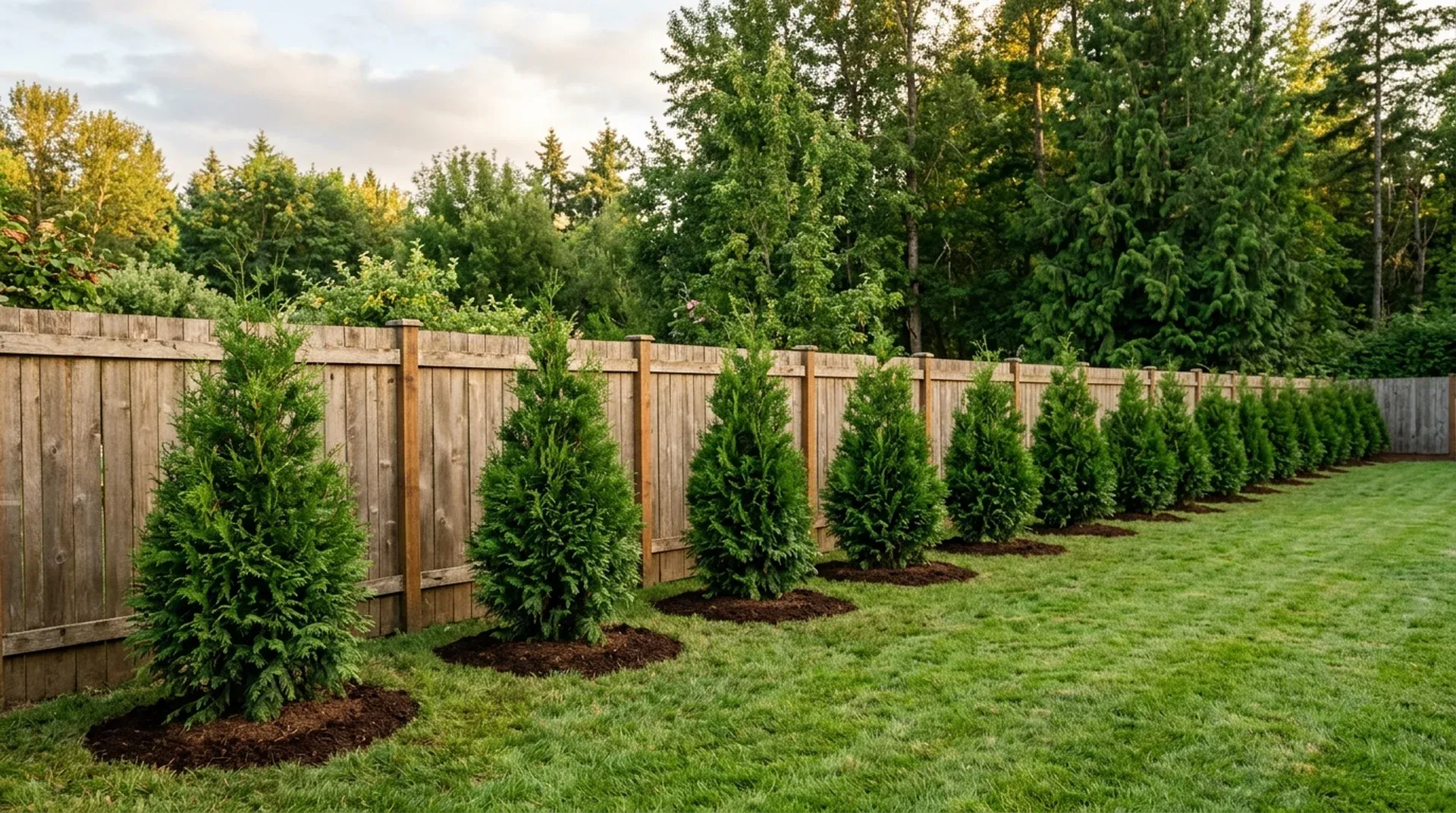
For most US yards, the fastest privacy trees are 'Green Giant' arborvitae and Leyland cypress, which can add about 3 feet a year when young. But the right pick depends on your climate, how much room you have and whether deer roam your yard. Fast evergreen shrubs like 'Nellie R. Stevens' holly and wax myrtle suit the South, while Norway spruce and white pine are rapid growers for cold northern yards.
Even fast plants take years to fill in, so choose for full-grown size, space them correctly and mix species. Here's how.
The fastest privacy trees and hedges
Fast plants still take time. Oregon State Extension says it takes about 4 to 8 years to establish an effective hedge. Oklahoma State says a private backyard needs fencing or evergreens generally at least 6 feet tall.
Growth rates and sizes below come from NC State Extension's plant database.
|
Plant |
Growth |
Mature size (height x width) |
USDA zones |
Watch out for |
|---|---|---|---|---|
|
3 to 4 ft a year in good conditions |
40 to 60 ft x 12 to 18 ft |
5 to 8 |
No salt tolerance; root rot in soggy soil |
|
|
Up to 3 ft a year early on |
60 to 70 ft x 10 to 15 ft |
6 to 10 |
Disease-prone (see below) |
|
|
Rapid |
15 to 30 ft x 8 to 25 ft |
6 to 9 |
Spiny leaves |
|
|
Rapid |
10 to 20 ft x 8 to 10 ft |
6 to 8 |
Weedy west of the Cascades |
|
|
Rapid |
20 to 25 ft x 8 to 10 ft (usually shorter) |
7 to 11 |
Highly flammable |
|
|
Rapid |
40 to 60 ft x 25 to 30 ft |
2 to 7 |
Dislikes hot summers |
|
|
Rapid |
50 to 80 ft x 20 to 40 ft |
3 to 8 |
Salt-sensitive; flammable |
|
|
Medium |
50 to 70 ft x 20 to 30 ft |
5 to 9 |
Needs a wide space |
|
|
Medium |
30 to 40 ft x 10 to 20 ft |
2 to 9 |
Needs full sun |
Low maintenance and deer
If you'd rather not fuss, NC State calls 'Green Giant' a low-maintenance tree that resists most diseases, insects, periodic droughts and deer and needs little or no pruning. It also lists Japanese cedar, eastern redcedar, 'Nellie R. Stevens' holly and wax myrtle as resistant to deer damage.
The popular American arborvitae (the species behind 'Emerald Green') is a different story. NC State rates its growth as slow and warns that deer browsing can be a serious problem.
Can you get privacy right away?
Not with plants alone. Clemson suggests that if you need instant privacy, a fence fronted by shrubs and trees may work better than cramming plants together. Clemson also points out that many screens only need to be 6 to 15 feet tall.
Buying bigger trees helps less than you'd think. Colorado State Extension says a tree with a 1-inch trunk takes 12 to 18 months to establish its roots, and a 4-inch tree takes 4 to 6 years. Bigger stock also costs more.
Another option comes from NC State's Alexander County office: if budget allows, plant Leylands 5 to 8 feet apart, then take out every other tree once they start to grow together.
Best picks for your region
- North and Upper Midwest (zones 2 to 5): Norway spruce, white pine and eastern redcedar all handle the cold. NC State says Norway spruce prefers cool summers and does poorly in southern zone 7. White pine is intolerant of salts, so keep it away from salted roads. 'Green Giant' is rated only down to zone 5.
- Mid-Atlantic and lower Midwest (zones 6 and 7): 'Green Giant', 'Nellie R. Stevens' holly and cherry laurel fit here. Clemson Extension suggests Japanese cedar as a fine tall screen in partly shady areas, and NC State notes cherry laurel grows in full sun to deep shade.
- Southeast and Gulf Coast (zones 8 to 10): Clemson recommends wax myrtle for tough sites with sand, wind and salt, plus tall hollies, viburnums and narrow cultivars of Southern magnolia. NC State says Leyland cypress, with its shallow roots, is poorly adapted to areas with hot summers.
- Pacific Northwest: Oregon State Extension lists Douglas fir and deodar cedar, which it says grows fast. Skip cherry laurel there: NC State says it has escaped cultivation west of the Cascades.
- Dry West and Southwest: Arizona cypress takes heat and drought, but NC State puts its growth at only about 4 to 8 inches a year. In wildfire country, NC State says high-flammability plants such as white pine and wax myrtle shouldn't go in your home's defensible space.
Fast growers to think twice about
Leyland cypress is the classic fast screen, but Southeast extension agents warn against relying on it. Clemson Extension says Seiridium canker, Botryosphaeria dieback and Cercosporidium needle blight are increasingly common and that treating trees this tall is difficult or impossible for most homeowners. UGA Extension says there's no fungicide that eliminates the canker pathogen and gives Leylands an effective lifespan of 15 to 20 years.
UGA suggests 'Green Giant' arborvitae and Arizona cypress as more disease-resistant alternatives. If you do plant Leylands, Clemson says they need full sun, rot in wet soils, and should be pruned only during dry periods.
A few other fast growers are worse choices:
- Chinese privet: NC State says it has become invasive, especially in the eastern and southern USA, and spreads by seed and suckers.
- Callery and 'Bradford' pear: NC State lists it as invasive, relatively short lived and prone to weak crotches that break with age, wind and ice.
The bigger lesson is to mix it up. Clemson recommends a mixed screen of small clusters of three or five plants of different species, so one pest or disease can't wipe out the whole row.
How far apart to plant privacy trees
The plant's mature spread sets the spacing. The Arbor Day Foundation says many evergreens go 6 to 12 feet apart depending on the species, and American arborvitae as close as 3 feet.
|
Plant |
Spacing |
Source |
|---|---|---|
|
American arborvitae |
As close as 3 ft |
Arbor Day Foundation |
|
Many evergreens |
6 to 12 ft |
Arbor Day Foundation |
|
Arizona cypress |
At least 7 ft |
|
|
Leyland cypress |
At least 15 ft |
|
|
Leyland cypress |
10 to 15 ft minimum, 16 to 18 ft better |
Crowding is the most common mistake. Clemson says planting for instant screening leads to overcrowding at maturity, poor air flow and more disease. Two staggered rows (a zigzag) fill in sooner with less crowding, and Oregon State adds that the extra air movement cuts disease.
Before you dig, think about what's around the row:
- Property lines: Branches spread half the mature width on each side of the trunk. A 'Green Giant' grows 12 to 18 feet wide, so a row planted right on the line will reach 6 to 9 feet into your neighbor's yard. Plant far enough in to keep it on your side.
- Overhead lines: Clemson notes 60- to 70-foot trees often end up under utility lines, where a shorter screen would have done the job.
- Buried lines: Contact 811 a few business days before you plant so buried utilities get marked.
- Local rules: Check your HOA and town code. Angi notes that a permit is sometimes required when a hedge functions as a fence or exceeds local height limits.
Planting and first-year care
Colorado State says container trees can go in from spring to fall if you can water them, and late summer or early fall planting works if you keep watering until the ground freezes. K-State's planting steps cover the basics:
- Dig wide, not deep. Make the hole 2 to 3 times the width of the root ball and no deeper than the root flare. On poorly drained soil, Iowa State suggests leaving the top third of the root ball above grade.
- Backfill with the same soil. K-State says amending the backfill doesn't help roots establish.
- Mulch. Spread 2 to 4 inches, kept at least 4 inches from the trunk. See how much mulch you need for the math on a long row.
- Water on schedule. Keep the top 2 to 3 inches of the root ball moist. Colorado State says even drought-tolerant species aren't drought tolerant until their roots establish. A drip line along the row makes this easier (see drip irrigation vs. sprinklers), and check local watering restrictions.
- Go easy on fertilizer. Colorado State says high-nitrogen fertilizer can push top growth at the expense of roots.
Once you start shearing, Clemson says to keep the base of the hedge wider than the top. A hedge that's wider on top shades its lower branches, and they thin out.
What a privacy hedge costs
Angi puts professional hedge installation at $10 to $45 per linear foot in 2026, depending on species, plant size and the site. Its figures by length:
|
Hedge length |
Plant height |
Angi 2026 range |
|---|---|---|
|
20 ft |
3 ft |
$200 to $900 |
|
40 ft |
4 ft |
$500 to $1,800 |
|
60 ft |
5 ft |
$1,000 to $3,000 |
|
80 ft |
6 ft |
$1,800 to $4,500 |
|
100 ft |
6 ft or taller |
$2,500 to $6,000 or more |
By species, Angi lists arborvitae at $15 to $35 per linear foot, laurel at $18 to $30 and holly at $20 to $45. Labor alone runs $50 to $150 an hour or $5 to $15 per linear foot. Urban and coastal markets cost more. For other yard projects, see what landscaping costs and more backyard landscaping ideas.
When to call a pro
Hire a landscaper for long rows, big balled-and-burlapped trees or yards with drainage problems. If you're replacing a failing Leyland screen, a tree service can take the old trees out first (see tree removal costs). Leave any tree work near power lines to a licensed pro.
Before you hire:
- Get 2 or 3 written quotes for the same plants, sizes, spacing and number of rows.
- Ask for photos of screens they planted a few years ago.
- Ask about a plant warranty and what watering it requires from you.
- Check licensing and insurance where your state requires it.
- Get the scope and payment schedule in writing.
You can find landscapers near you or tree care pros on LandscapeLookup for free, with no sign-up. Pros are ranked by Google rating weighted by review count, plus how local they are and their main service, and you contact them directly.
Editorial team
The LandscapeLookup editorial team writes guides to help US homeowners plan yard projects and hire the right pro. Each guide is based on university extension services, government sources such as EPA WaterSense and USDA, manufacturer instructions and published cost guides, and links to them so you can check the details.
Keep reading
How Much Does Artificial Turf Cost?
Professional artificial turf installation runs about $5 to $20 per sq ft, with recent cost guide averages running about $13 to $20. A typical 500 sq ft yard costs roughly $2,700 to $10,000, depending on turf quality, prep work and where you live.
October 15, 2026
How to Build a Rain Garden
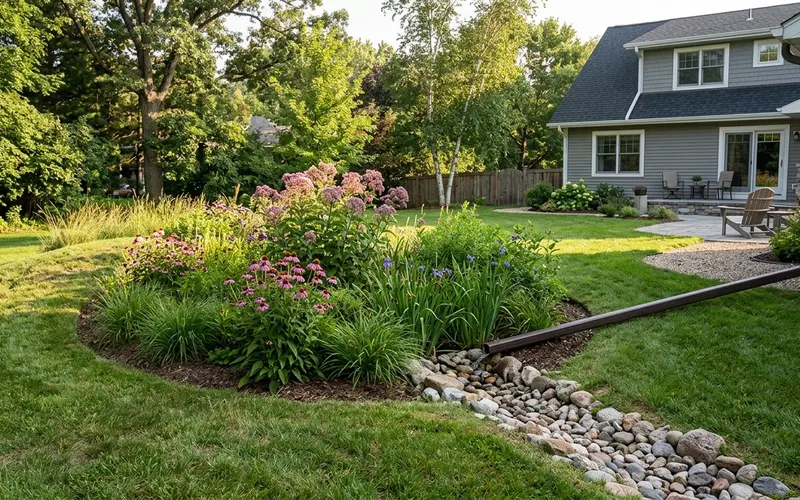
Pick a spot at least 10 feet from the house where runoff flows but water doesn't already pond, dig a level basin 3 to 8 inches deep (usually 100 to 300 sq ft), berm the low side and plant natives that handle wet and dry.
October 13, 2026
Landscape Rock: Types, Costs and Where to Use It
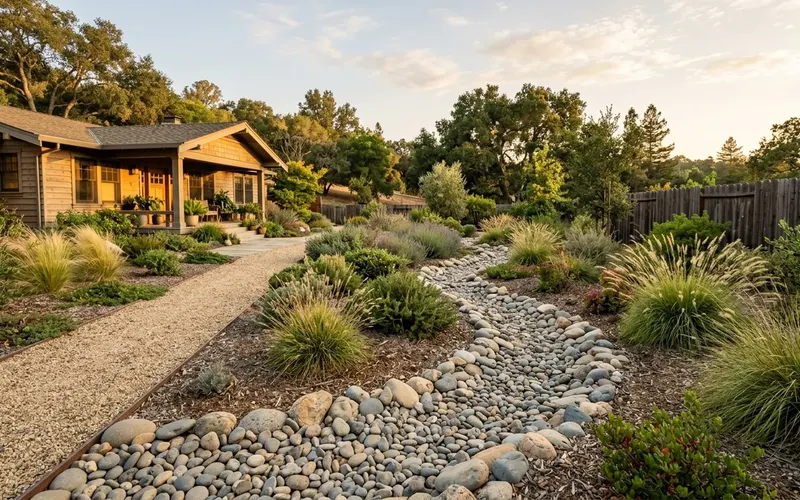
Common landscape rock like pea gravel, crushed stone, river rock and lava rock runs about $10 to $220 per ton in 2026 cost guides. It works best on paths, dry creek beds and in desert or wildfire-prone yards, and less well in most planting beds.
October 11, 2026