Should You Seal Pavers?
Sealing pavers is optional. It resists stains, salt and fading and can deepen color, but pros charge roughly $1.25–$2 per square foot and most sealers need redoing every 2–5 years. If you seal new pavers, wait at least 60 days and until any white efflorescence is gone.
By LandscapeLookup Editors6 min read
You don't have to seal pavers, but it can be worth it. A good sealer helps pavers resist stains from oil, grease, wine and de-icing salts, slows color fading and makes cleanup easier. Combining Bob Vila's 2023 paver and general concrete sealing figures, professional sealing runs roughly $1.25 to $2 per square foot. Most sealers need redoing every 2 to 5 years, though Alliance Gator rates its penetrating natural-look sealer at about 10 years.
If your pavers are new, Gator's Natural Look data sheet says to wait at least 60 days. Also wait until any white haze (efflorescence) is gone.
What sealing actually does
Concrete pavers are porous, so spills and salts soak in. A sealer fills or coats those pores. Alliance Gator describes its penetrating sealer as a breathable barrier that helps keep out water, coffee, wine, de-icing salts, motor oil and grease, and that helps guard against dirt, freeze-thaw cycles and UV rays (Gator Seal Natural Look data sheet).
The Concrete Masonry & Hardscapes Association (formerly ICPI) puts it more modestly: sealers enhance color and make stains easier to remove, but they need reapplying every few years. Sealing is mainly about appearance and easier cleaning. It won't fix pavers that are sinking or shifting; that takes base repair.
Reasons to seal, and reasons to skip it
Sealing makes the most sense if:
- It's a driveway or parking pad where cars drip oil.
- It's under a grill, outdoor kitchen or dining table where grease and food spills happen.
- You live where de-icing salt gets tracked or plowed onto pavers in winter.
- Your pavers sit in strong sun and you want to slow fading.
- You want a darker, richer "wet look" color.
You can reasonably skip it if:
- You like the natural, weathered look of unsealed pavers.
- It's a low-traffic garden path or side yard.
- You'd rather not commit to resealing every few years.
- The surface is around a pool or steps where slipperiness is a concern. Alliance Gator notes its wet-look sealer is slightly slippery, and that applying too much of any sealer can make the surface slippery when wet.
Types of paver sealer
Sealers fall into two broad groups. Penetrating sealers soak into the paver and leave little visible change. Film-forming sealers leave a coating on top that adds shine and deepens color.
|
Sealer type |
Look |
Typical lifespan* |
Slip risk |
|---|---|---|---|
|
Natural look (penetrating, water-based) |
Nearly unchanged, about 5% color enhancement |
About 10 years |
Not slippery |
|
Satin (solvent-based) |
Deeper color, slight shine |
3–5 years |
Less slippery than wet look |
|
Wet look (solvent-based) |
Deep color, high shine |
3–5 years |
Slightly slippery |
|
Hybrid (water-based) |
Original color, clear-coat shine |
2–3 years |
Varies |
Lifespans are from Alliance Gator's sealer FAQ for its own products; climate and traffic affect them, and other brands differ.
Stick with the same chemistry when you reseal. Alliance Gator warns never to apply a water-based sealer over a solvent-based one.
Solvent-based sealer safety
Solvent-based sealers need more care. Alliance Gator's Wet Look data sheet says to wear gloves, eye protection and respiratory protection. Bob Vila notes that solvent-based sealers give off more VOCs (volatile organic compounds) than water-based ones.
Some places cap VOC content. California's air-quality limits, reflected in Los Angeles County's 2026 green building standards, cap concrete and masonry sealers at 100 grams of VOC per liter. Gator's solvent-based Wet Look lists under 400 g/L.
Check the label's VOC figure against your local rules, or ask a pro which sealers are allowed where you live.
When to seal new pavers
Wait. New concrete pavers often develop efflorescence, a white, powdery film of calcium salts that forms as the concrete wets and dries. Unilock says it's purely cosmetic and temporary, and doesn't weaken the pavers. But sealing over it traps it, so the pavers need to be free of efflorescence first.
How long to wait depends on whose guidance you follow:
|
Source |
Recommended wait before sealing |
|---|---|
|
Gator Seal Natural Look data sheet |
At least 60 days after installation for dry-cast concrete pavers |
|
Unilock |
2–3 months, or up to a year, if waiting for efflorescence to fade on its own |
|
Alliance Gator FAQ |
1 year, because efflorescence is unpredictable |
Check your paver manufacturer's recommendation too. If efflorescence lingers, Unilock suggests scrubbing with dish soap, water and a stiff plastic brush, then trying an efflorescence remover. Unilock also says to test the remover in a hidden spot first, because these cleaners are typically acid-based and may slightly change the color.
If you're also re-sanding the joints, do that first. Alliance Gator's sealer data sheet calls for waiting at least 48 hours of dry weather above 41°F after installing polymeric sand before cleaning and sealing. Gator's FAQ suggests about 30 days of fairly dry weather for a fully mature joint, so the longer wait is the safer choice.
How pavers are sealed
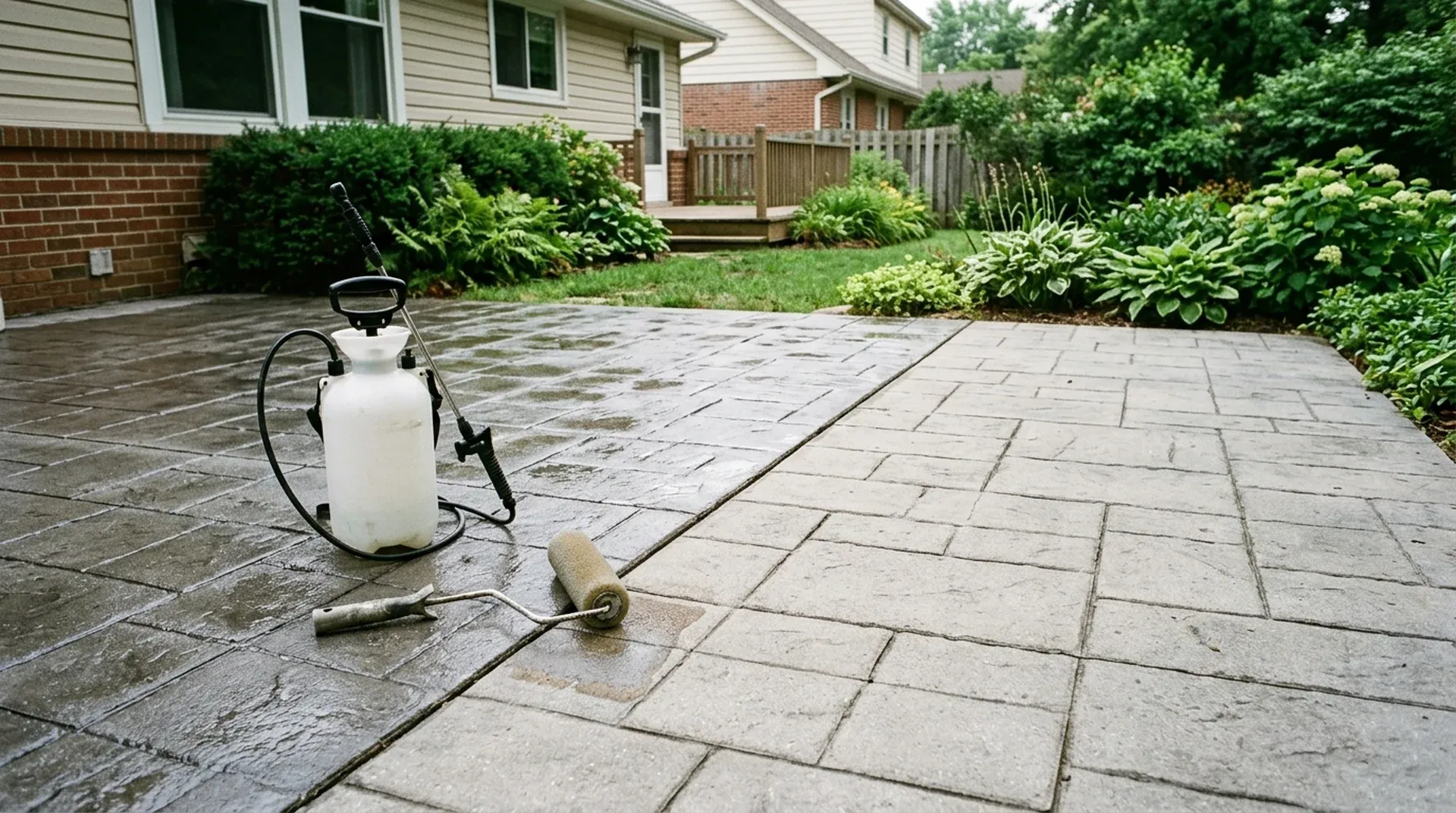
The steps below follow Alliance Gator's instructions for its natural-look sealer. Always follow the label for the product you're using.
- Test first. Seal a hidden 4-square-foot patch to make sure you like the result.
- Clean thoroughly. Remove oil, rust and other stains, and strip any old unknown coating.
- Replace dirty joint sand with polymeric sand and let it harden.
- Remove efflorescence with a paver efflorescence cleaner, then let the surface dry for at least 48 hours with no rain.
- Check the temperature. The air and paver surface should be between 41°F and 85°F, and the pavers should feel cool to the touch. In hot climates, that usually means early morning or a cool day.
- Apply one coat with a low-pressure sprayer in sections of about 60 square feet, then go over it with a foam roller to even it out and pick up excess. Extra coats can make the surface slippery.
- Stay off it for 24 hours. After that, it's ready for foot and vehicle traffic.
Coverage is about 175 square feet per gallon for this product. The Gator FAQ also says to wait for 48 hours of dry weather after rain before sealing, and notes that rain within a few hours after sealing hinders adhesion.
What paver sealing costs
Pavers have to be cleaned before they're sealed, so professional quotes usually bundle the two. Bob Vila's 2023 figures give a range, but only the first is specific to pavers:
- Cleaning and sealing pavers (the only paver-specific figure): about $2 per square foot (Bob Vila).
- Contractor sealing, concrete surfaces in general: $1.25 to $1.75 per square foot (Bob Vila).
- DIY sealing, concrete surfaces in general: $0.20 to $0.75 per square foot.
Prices have likely risen since then and vary by region.
For a whole patio, Lawn Love lists cleaning and resealing at $300 to $500 and power washing alone at $225 to $350.
|
Patio size |
Pro sealing ($1.25–$2/sq ft) |
DIY ($0.20–$0.75/sq ft, general concrete sealing data) |
|---|---|---|
|
200 sq ft |
$250–$400 |
$40–$150 |
|
400 sq ft |
$500–$800 |
$80–$300 |
|
800 sq ft driveway |
$1,000–$1,600 |
$160–$600 |
Simple multiplication of the per-square-foot figures above. Get local quotes for real numbers.
How often to reseal
Alliance Gator says most sealers need reapplying every 2 to 5 years, depending on wear, and doesn't recommend resealing every year. Its natural-look penetrating sealer is the exception, at about 10 years. Bob Vila notes heavy use or extreme weather can shorten the interval. In practice, that means a driveway in a snowy, salted region may need attention sooner than a shaded patio in a mild climate.
Reseal when you see visible wear in the finish. Alliance Gator says its resealer can go over an old coat only if there are no bare spots or flaking; otherwise, clean or strip it first.
When to call a pro
Sealing is DIY-friendly on a small patio, but hire a hardscaping pro for large driveways, pavers with old peeling or milky sealer, heavy efflorescence or stains, or joints that need to be cleaned out and re-sanded first.
- Get 2–3 written quotes that name the sealer brand and type, and say whether cleaning, efflorescence removal and joint sand are included.
- Ask for photos of similar work, ideally a year or more after sealing.
- Check licensing and insurance where your state requires them for hardscape or pressure-washing contractors.
- Get the scope and payment schedule in writing, including what happens if the sealer hazes or turns milky.
If you're still planning your patio, see how much a paver patio costs and how pavers compare with poured and stamped concrete. LandscapeLookup lists local hardscaping pros for free, with no sign-up, and you contact them directly. Find a hardscaping pro near you.
Editorial team
The LandscapeLookup editorial team writes guides to help US homeowners plan yard projects and hire the right pro. Each guide is based on university extension services, government sources such as EPA WaterSense and USDA, manufacturer instructions and published cost guides, and links to them so you can check the details.
Keep reading
Flagstone Patios: Cost and How They're Built
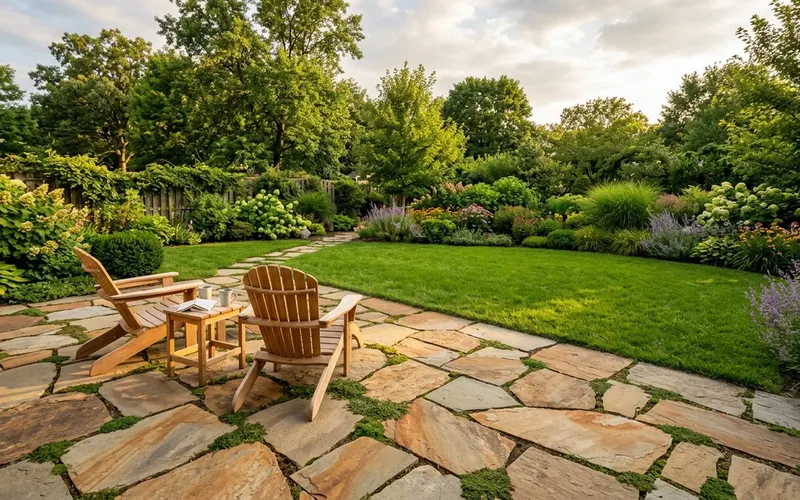
A flagstone patio usually costs $15 to $27 per square foot installed, or about $3,600 on average. Most are dry-laid on compacted gravel and sand; mortared stone on a concrete slab costs more and can crack in freeze-thaw climates.
October 3, 2026
How to Lay Pavers: Base, Sand and Steps
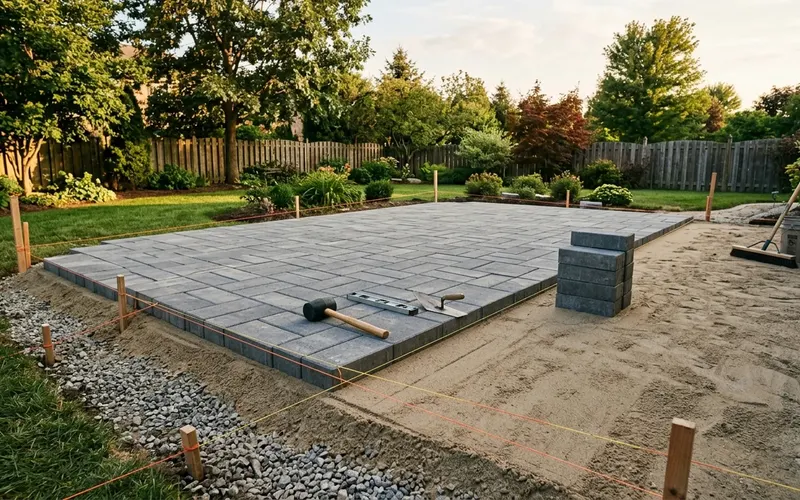
Lay pavers on at least 4 inches of compacted crushed-stone base (more on clay or in freezing climates), then 1 inch of screeded concrete sand. Set the pavers, add edge restraints, compact and sweep in joint sand, with a slope of 1/8 to 1/4 inch per foot.
September 24, 2026
Driveway Costs for Asphalt, Concrete, Pavers and Gravel
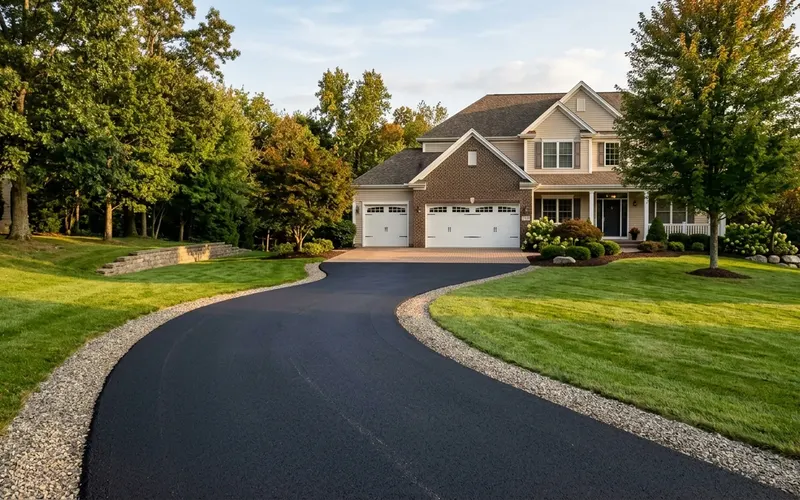
A new asphalt driveway usually costs $7 to $15 per square foot installed, or about $3,100 to $7,400 for a typical job. Gravel costs less, concrete a bit more, and pavers the most.
September 20, 2026