Stamped Concrete Patios: Cost, Pros and Cons
A stamped concrete patio usually costs about $8 to $25 per square foot installed, so a 20 x 20 ft patio often runs $4,000 to $8,000. It looks like stone or brick for less than pavers, but it can crack and needs resealing every 2 to 3 years.
By LandscapeLookup Editors7 min read
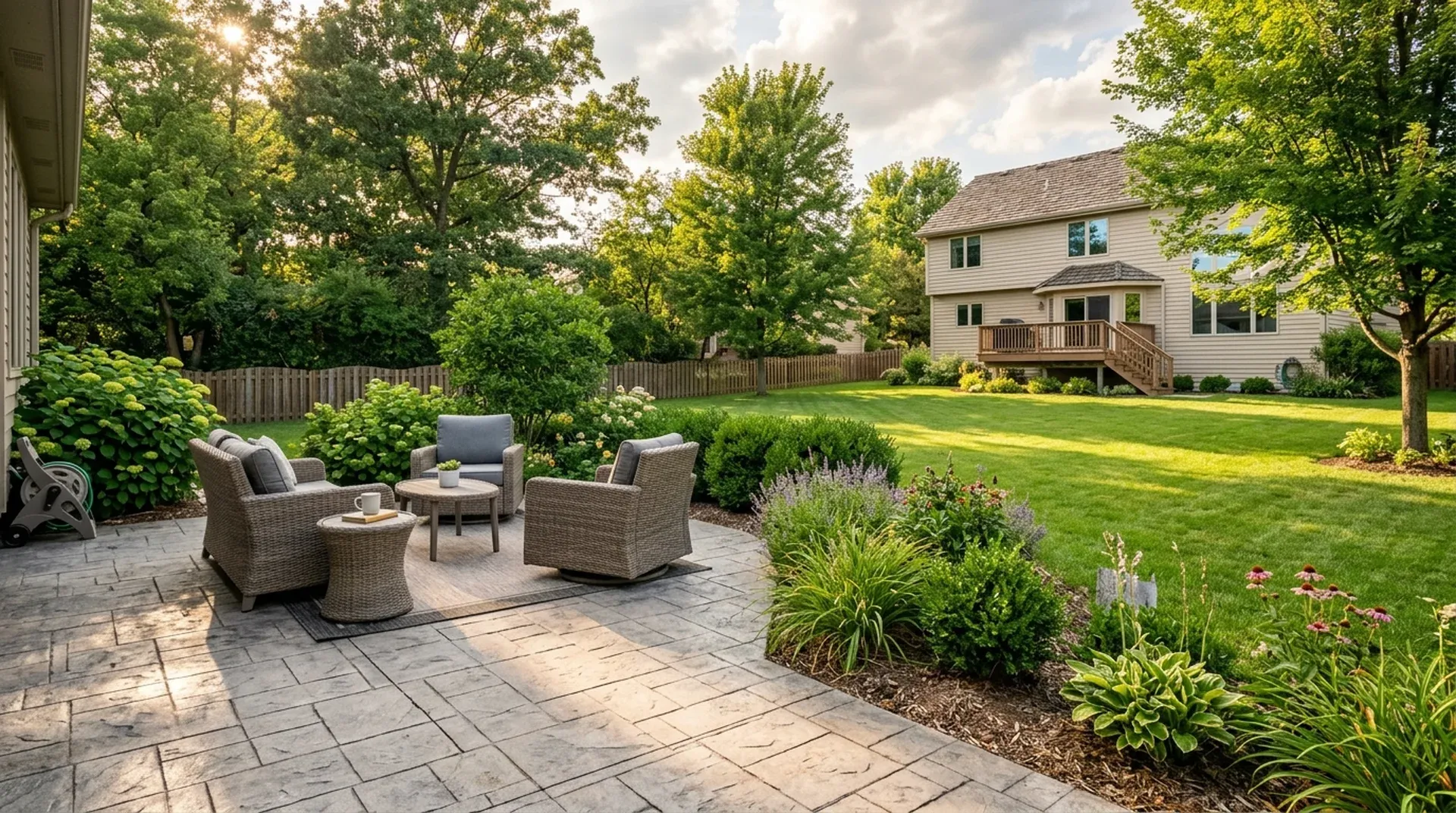
A stamped concrete patio is a poured concrete slab that a crew colors and presses with patterned mats while it's still soft, so it looks like slate, stone, brick or wood. Most national cost guides put it at about $8 to $25 per square foot installed, which means a 20 x 20 ft patio often lands between $4,000 and $8,000. It's usually cheaper than pavers or natural stone, but it can crack like any slab and needs resealing every 2 to 3 years.
How much a stamped concrete patio costs
Prices depend mostly on how detailed the design is, plus local labor and material costs. Cost guides don't agree on exact numbers, so treat these as national ballparks:
|
Cost guide |
Basic (1 pattern, 1 color) |
Mid-range |
Complex or high-end |
|---|---|---|---|
|
Concrete Network (reviewed Jan. 2026) |
$10 to $14 per sq ft |
$14 to $20 |
$20 and up |
|
LawnStarter (updated Dec. 2024) |
$8.50 to $13.25 |
$11.50 to $20.25 |
$18 to $25.25 |
Other guides land in the same general zone. This Old House lists $5 to $15 per square foot, and Lawn Love gives $8 to $25. Concrete Network's own pavers comparison uses a wider $8 to $18, the range in our pavers vs. concrete guide. Mid-range usually means added borders or a second color. High-end means several patterns and colors, often with hand-applied stain accents.
How much a 20 x 20 or 300 sq ft patio costs
|
Patio size |
Basic ($10 to $14) |
Mid-range ($14 to $20) |
High-end ($20+) |
|---|---|---|---|
|
12 x 14 ft (168 sq ft) |
$1,680 to $2,352 |
$2,352 to $3,360 |
$3,360+ |
|
288 sq ft (typical patio) |
$2,880 to $4,032 |
$4,032 to $5,760 |
$5,760+ |
|
15 x 20 ft (300 sq ft) |
$3,000 to $4,200 |
$4,200 to $6,000 |
$6,000+ |
|
20 x 20 ft (400 sq ft) |
$4,000 to $5,600 |
$5,600 to $8,000 |
$8,000+ |
Per-square-foot tiers and the 288 sq ft row are from Concrete Network, which calls 288 sq ft the average patio size. Other rows are simple multiplication.
Concrete Network also notes that smaller jobs often cost more per square foot, and some contractors charge a flat minimum.
What adds to the price
- Design detail. Each extra pattern, color or accent adds labor.
- Reinforcement and thickness. LawnStarter lists wire mesh at about $0.35 per square foot, a vapor barrier at $0.50, going from 4 to 6 inches thick at $0.84, and thickened edges at $1.00 to $1.75.
- Tear-out. Removing an old slab adds about $2 to $6 per square foot, per LawnStarter.
To save, Concrete Network suggests a stamped border around a plain center, one color instead of several, or texture skins, which add stone-like texture without grout lines and go on faster. If you already have a concrete slab, a stamped overlay can go right on top of it instead of a tear-out, according to Brickform, a decorative concrete manufacturer.
How a stamped patio is built
Stamping has to be finished before the concrete sets, so the crew works fast. Here's the usual sequence, based on Concrete Network's installation tips and step-by-step stamping guide:
- Call 811. Digging is involved, so call 811 or use your state's 811 website a few business days ahead. It's free.
- Prep the base. The crew compacts the subgrade, often adds 2 to 4 inches of compacted sub-base, and sets forms with enough slope to shed water. Low spots ("bird baths") are very hard to fix later.
- Add reinforcement. Many slabs get steel bars or welded wire mesh to add strength and help control cracking.
- Pour and color. Color is mixed into the concrete, broadcast on top as a dry-shake color hardener (which makes a denser surface), or both.
- Release and stamp. A release agent keeps the mats from sticking and adds contrast. Stamping starts when a fingertip leaves a clean imprint about 3/16 to 1/4 inch deep.
- Cut joints. Control joints go at least one-quarter of the slab's depth. A good installer can hide them in the pattern's grout lines.
- Cure and seal. Powdered release gets washed off 1 to 3 days later, then a curing compound goes on. The first coat of sealer usually goes on about 28 days later, once the slab has fully cured.
You can usually walk on new concrete after about 24 hours, and it takes about 7 days before it can handle vehicles, per Concrete Network.
Joint spacing matters
The National Ready Mixed Concrete Association (NRMCA) says in its guide to slab joints that cracks can't be prevented entirely, only controlled. It recommends joints no farther apart than 24 to 36 times the slab thickness: about 10 ft for a 4-inch slab, and never more than 15 ft. Panels should be close to square, no more than 1.5 times as long as they are wide. Ask to see the joint layout before the pour.
Can you stamp concrete yourself?
Concrete Network's answer is no. You get one chance to stamp before the concrete sets, it weighs about 150 pounds per cubic foot, and ready-mix companies often charge penalties if the truck waits more than 30 to 60 minutes. A basic set of stamp mats costs $300 to $500, and if the result looks bad, you pay to replace the whole slab. Resealing later is a reasonable DIY job.
Pros and cons of stamped concrete
Pros
- High-end look for less. Concrete Network says stamped concrete is competitive with or often cheaper than natural stone, flagstone, brick or pavers, because pouring and stamping takes less labor than setting units by hand.
- No joints to weed. Paver joints may need new sand every 2 or 3 years; a stamped slab has no sand joints at all.
- Custom color. Stains, color hardeners and antiquing can make it look close to real stone.
- Long life. Concrete Network gives 30+ years with proper maintenance. LawnStarter says up to 25 years or more, depending on installation and upkeep.
Cons
- Cracking. Brickform says a stamped patio is no more likely to crack than plain concrete, and hairline cracks can be repaired. But Concrete Network notes that a cracked slab can't be patched invisibly, and major damage can mean replacing the entire slab.
- Slippery when wet. Brickform says it's really the sealer, not the concrete, that gets slick. Concrete Network says that's especially true with a high-gloss sealer. A non-slip additive, a matte finish or a non-film-forming sealer helps, which matters around pools.
- Ongoing sealing. Skip it and the color fades.
- Uneven texture. A contractor quoted by Concrete Network warns that very deep textures can make patio furniture wobble.
Is stamped concrete cheaper than pavers?
Usually a little, but not always. Concrete Network says the two are often very close in price, so get bids for both. Pavers win on repairs, since damaged units can be lifted and reset with no visible patch, and you can use them right after installation. Stamped concrete wins on weed-free joints and color control. For the full comparison, see pavers vs. concrete and how much a paver patio costs. If you want real stone, see our flagstone patio guide.
Sealing and maintenance
Routine care is simple. Sweep, then wash with a hose, a push broom and a little mild detergent. If you use a pressure washer, keep the pressure moderate so you don't damage the sealer or texture (Concrete Network).
Reseal every 2 to 3 years, depending on your weather, says the same guide. Its sealing guide gives a wider 2 to 5 years depending on traffic, climate and sealer, and This Old House says every 1 to 3 years. A quick check: sprinkle water on the patio. If it beads, the sealer is still working. If it soaks in and darkens the surface, it's time.
When you reseal:
- Let the surface dry for about 24 hours first. Sealer over damp concrete can turn cloudy or peel.
- Use an exterior-grade sealer. Acrylics are the most common choice for stamped concrete.
- Apply 2 thin coats rather than 1 thick one, and add an anti-skid additive if the patio gets wet often.
- Stay off it for at least 12 hours, or as long as the product label says.
Sealer also helps keep the color from fading in strong sun.
How to protect it in cold climates
Freeze-thaw cycles and deicers cause scaling (flaking of the surface). The NRMCA's guide to scaling recommends air-entrained concrete with about 6% air and 4,000 psi strength for exterior slabs exposed to freezing and deicers. It also says to:
- Skip deicers the first winter, then use them in moderation.
- Stick to rock salt or calcium chloride. Never use ammonium sulfate, ammonium nitrate or magnesium-based deicers.
- Be cautious about pouring in late fall, when fresh concrete could freeze while it's still saturated.
Permits, HOA rules and drainage
Ask your city or county whether a patio needs a permit, and check HOA rules on materials and colors before you sign. Plan drainage early too: Concrete Network's content director says her low-set stamped patio floods in heavy rain. If your yard already holds water, read up on yard drainage solutions first.
When to call a pro
Stamped concrete is a job for an experienced decorative concrete contractor, and the details are set on the day of the pour.
- Get 2 or 3 written quotes listing slab thickness, base depth, reinforcement, joint layout, color method, pattern and sealer type.
- Ask for photos of similar stamped jobs, ideally a few years old, and which products they use, as Brickform suggests.
- Check licensing and insurance where your state requires them for concrete contractors.
- Get the scope and payment schedule in writing. Concrete Network says deposits typically run 10% to 33%, and asking for more than 50% upfront is a red flag. Some states cap deposits; in California it's $1,000 or 10% of the price, whichever is less, according to the Contractors State License Board.
LandscapeLookup lists local pros for free, with no sign-up, and you contact them directly. Find a hardscaping pro near you, or browse outdoor living pros if the patio is part of a bigger project.
Editorial team
The LandscapeLookup editorial team writes guides to help US homeowners plan yard projects and hire the right pro. Each guide is based on university extension services, government sources such as EPA WaterSense and USDA, manufacturer instructions and published cost guides, and links to them so you can check the details.
Keep reading
Flagstone Patios: Cost and How They're Built
A flagstone patio usually costs $15 to $27 per square foot installed, or about $3,600 on average. Most are dry-laid on compacted gravel and sand; mortared stone on a concrete slab costs more and can crack in freeze-thaw climates.
October 3, 2026
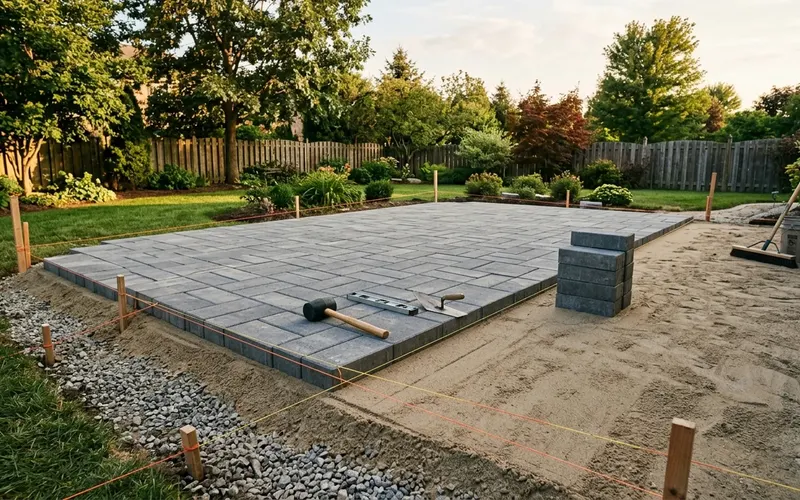
How to Lay Pavers: Base, Sand and Steps
Lay pavers on at least 4 inches of compacted crushed-stone base (more on clay or in freezing climates), then 1 inch of screeded concrete sand. Set the pavers, add edge restraints, compact and sweep in joint sand, with a slope of 1/8 to 1/4 inch per foot.
September 24, 2026
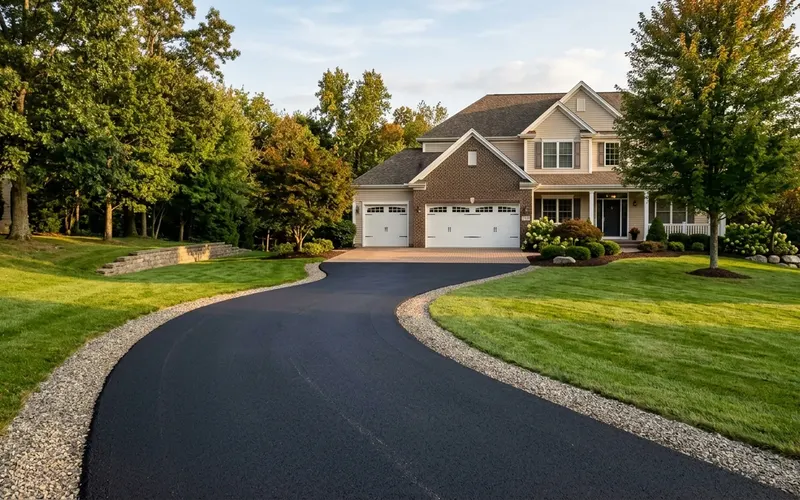
Driveway Costs for Asphalt, Concrete, Pavers and Gravel
A new asphalt driveway usually costs $7 to $15 per square foot installed, or about $3,100 to $7,400 for a typical job. Gravel costs less, concrete a bit more, and pavers the most.
September 20, 2026