How Much Mulch Do I Need?
Multiply your bed's square footage by the depth in inches, then divide by 324 to get cubic yards. At a typical 2 to 3 inches, 1 cubic yard covers about 108 to 162 square feet, or about 13.5 bags of 2 cubic feet each.
By LandscapeLookup Editors7 min read
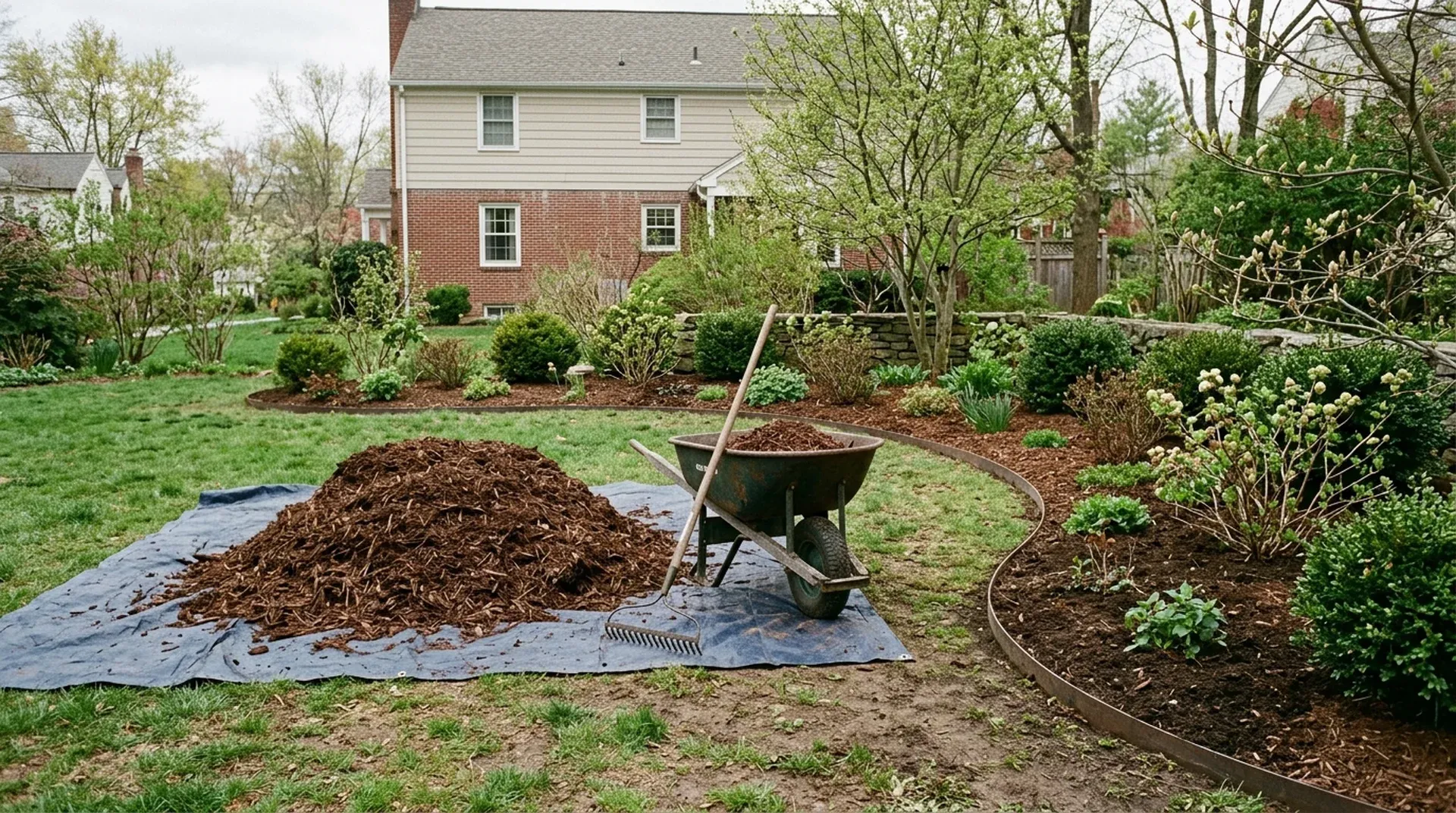
To figure out how much mulch you need, multiply the area in square feet by the depth in inches, then divide by 324. The answer is cubic yards. At the 2 to 3 inches most beds need, 1 cubic yard covers about 108 to 162 square feet. A 10-by-20-foot bed mulched 3 inches deep takes just under 2 yards.
The mulch formula
Bulk mulch is sold by the cubic yard, and a cubic yard is 27 cubic feet. Texas A&M AgriLife Extension writes the formula like this:
Cubic yards = (length in feet × width in feet × depth in inches ÷ 12) ÷ 27
The shortcut is the same math in one step: square feet × depth in inches ÷ 324. (The 324 is 27 cubic feet times 12 inches per foot.)
Worked example
Say you have a 10-by-10-foot bed and want 3 inches of mulch:
- Area: 10 × 10 = 100 square feet
- Multiply by depth: 100 × 3 = 300
- Divide by 324: 300 ÷ 324 = 0.93 cubic yards
Texas A&M rounds that up to 1 yard. It suggests rounding up to the nearest whole or half yard, depending on how your supplier sells it.
Odd-shaped beds
Break curved or irregular beds into simple shapes, find each area, and add them up:
- Rectangle: length × width
- Circle (like a ring around a tree): 3.14 × radius × radius
- Triangle: base × height ÷ 2
For a mulch ring around a tree, subtract the small circle at the trunk that you'll leave bare.
Mulch coverage chart
This is how far 1 cubic yard goes at common depths. The 2- and 3-inch figures match the coverage LawnStarter lists.
|
Depth |
1 cubic yard covers |
Area per 2 cu ft bag |
Area per 3 cu ft bag |
|---|---|---|---|
|
1 inch |
324 sq ft |
24 sq ft |
36 sq ft |
|
2 inches |
162 sq ft |
12 sq ft |
18 sq ft |
|
3 inches |
108 sq ft |
8 sq ft |
12 sq ft |
|
4 inches |
81 sq ft |
6 sq ft |
9 sq ft |
Quick answers for common bed sizes
These are the formula's results for a few common sizes, with bag counts for 2 cu ft bags, rounded up:
|
Bed size |
At 2 inches deep |
At 3 inches deep |
|---|---|---|
|
100 sq ft |
0.6 cu yd (9 bags) |
0.9 cu yd (13 bags) |
|
200 sq ft |
1.2 cu yd (17 bags) |
1.9 cu yd (25 bags) |
|
500 sq ft |
3.1 cu yd (42 bags) |
4.6 cu yd (63 bags) |
Working backward, 25 bags of 2 cubic feet hold 50 cubic feet. That covers about 300 square feet at 2 inches, or 200 square feet at 3 inches.
Converting yards to bags
Bagged mulch is sold by the cubic foot, most often in 2- or 3-cubic-foot bags, per Iowa State Extension. Multiply the cubic yards you need by 27 to get cubic feet, then divide by the bag size and round up. Texas A&M's approximate bag counts per cubic yard, plus the 3 cu ft size (27 ÷ 3):
|
Bag size |
Bags per cubic yard |
|---|---|
|
1 cu ft |
27 |
|
1.25 cu ft |
22 |
|
2 cu ft |
14 (13.5 exactly) |
|
3 cu ft |
9 |
How deep to spread mulch, and when
The right depth depends on what you're mulching. Mississippi State Extension breaks it down by plant type:
|
What you're mulching |
Depth |
|---|---|
|
Annual bedding plants |
1–2 inches |
|
Shrubs and roses |
2–3 inches |
|
Trees |
3–4 inches |
UF/IFAS recommends about 3 inches for most landscape plants and warns against going deeper. For trees, that's the low end of Mississippi State's 3 to 4 inches. UF/IFAS says too much mulch can keep rain and irrigation from reaching roots. Illinois Extension recommends 2 to 3 inches and notes fresh mulch looks deeper at first and settles over time.
Keep it off trunks and stems
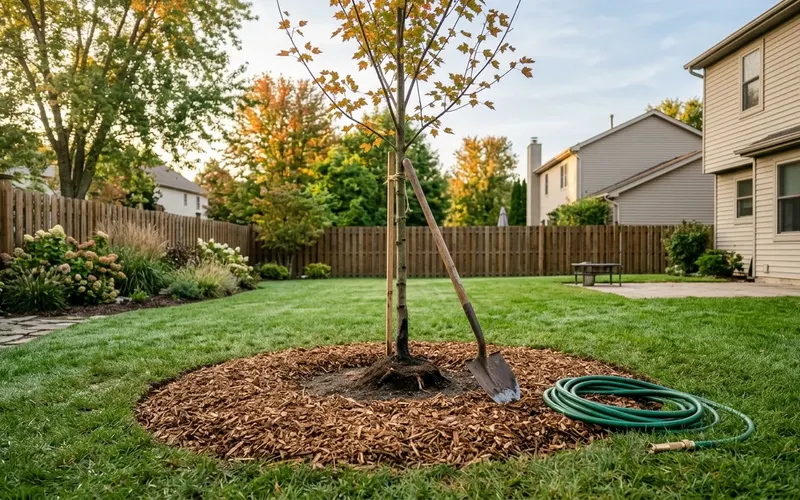
Don't pile mulch against trunks in a "volcano." UF/IFAS says this holds moisture against the bark, encourages rot and gives rodents a place to chew.
UF/IFAS recommends keeping mulch about 1 foot back from large trees and a couple of inches from smaller plants. EPA WaterSense likewise advises leaving a few inches of space between organic mulch and the base of trees and woody plants. For trees, UF/IFAS suggests a mulched area at least 8 feet across, ideally out to the drip line.
UF/IFAS also recommends leaving mulch off the strip along curbs, sidewalks and water's edges, where nutrients from organic mulch can wash into storm drains and waterways.
Before you spread: weeds, fabric and timing
- Mulch can go straight on the soil. Weed the bed first. UNH Extension says organic mulch works best on a bed that's been thoroughly weeded. NC State Extension also suggests watering the soil before you spread.
- Skip fabric under bark or wood chips. UNH says organic mulch alone is the best weed control for almost all shrub and flower beds. Any mulch or soil that collects on top of fabric can grow weeds anyway. Under rock, UF/IFAS does recommend fabric, so the stones don't sink into sandy soil.
- Don't mulch too early in spring. NC State Extension suggests waiting until the soil has warmed and your last frost has passed, since early mulch slows soil warming. That date depends on where you live.
Topping up existing beds
Most beds don't need a full new layer every year. Illinois Extension cautions against top-dressing on autopilot, because mulch that builds up too deep can lead to root rot. Instead:
- Measure what's there. Push a trowel into the bed and check the depth in a few spots.
- Top up only when it's thin. UF/IFAS suggests replenishing when the layer drops below 2 inches.
- Calculate just the difference. If you have 1.5 inches and want 3, figure your order at 1.5 inches.
- Rake, don't replace. UF/IFAS suggests lightly raking older mulch to refresh it, rather than stripping it out, which can damage roots near the surface. Illinois Extension notes that thick layers of fine mulch can mat down and block water and air.
Bulk vs. bagged: what mulch costs
LawnStarter's mulch cost guide gives these 2026 figures:
- Bulk mulch: $30 to $135 per cubic yard, depending on type. Buying more yards at once can get you a 15% to 30% discount.
- Bagged mulch: $3.25 to $6.50 per 2-cubic-foot bag. LawnStarter says a cubic yard's worth of bags can cost 35% more than bulk.
- Delivery: $70 to $140 on average, which you can skip if you haul it yourself
- Professional installation: LawnStarter's average installed cost is $77 to $94 per cubic yard, including delivery and labor. Premium types such as cedar ($100) and cypress ($110) cost more.
For one or two small beds, bags are easier to handle. For larger jobs, run the numbers: at 13.5 bags per yard, bag prices add up quickly, so compare that with bulk plus delivery. Prices vary by region and supplier, so call a local landscape supply yard for current rates.
Mulch vs. rock
Rock lasts longer, but it does a different job than organic mulch. This comparison draws on UF/IFAS, EPA and LawnStarter cost data (LawnStarter's per-type prices include installation):
|
|
Organic mulch (bark, wood chips, pine straw) |
Rock or gravel |
|---|---|---|
|
Installed cost per cubic yard (LawnStarter) |
About $20–$110 (pine straw $20–$55, bark $30–$100, wood chips $30–$110) |
$50–$180 (stone and gravel) |
|
How long it lasts |
Breaks down; needs topping up |
Very long-lasting |
|
Soil benefits |
Adds organic matter as it decays |
None |
|
Weed control |
Good |
Poor, per UF/IFAS |
|
Soil temperature |
Moderates it |
Radiates heat in sun |
|
Best use (UF/IFAS) |
Planting beds, tree rings |
Paths, dry creek beds, under downspouts |
University of Missouri Extension notes that organic mulches improve the soil as they break down, though mulched plants may need a little extra nitrogen. If you buy hardwood mulch, UF/IFAS suggests looking for Mulch and Soil Council certification to avoid wood treated with CCA preservatives.
Matching mulch to your climate and site
- Pine straw comes from managed pine forests, per UF/IFAS. The needles knit together, so it's less likely to wash away. It's among the cheapest mulches, but it breaks down quickly and needs topping up more often.
- Rock in hot, dry yards can scorch plants that aren't desert-adapted when it sits in full sun, per EPA. Organic mulch is the safer choice around those plants. Rock does work well in dry creek beds and under downspouts; see our yard drainage solutions for those.
For more on choosing materials in a water-wise yard, see our xeriscaping guide.
When to call a pro
Spreading mulch is one of the easiest landscaping jobs to do yourself. A pro makes sense for large properties, steep slopes, removing old built-up mulch or rock, or when you're mulching as part of new beds. If you hire:
- Get 2 or 3 written quotes that list the mulch type, depth and total cubic yards.
- Ask for photos of similar work, so you can see how they handle edges and tree rings.
- Check licensing and insurance where your state requires it.
- Get the scope and payment schedule in writing, including removal of old mulch if needed.
- Contact 811 before installing edging or digging new beds. It's the free national before-you-dig service; request marking a few business days ahead.
Mulching is often bundled with bed cleanup and planting. Our landscaping cost guide and low-maintenance front yard ideas can help you plan the bigger picture. When you're ready, compare local landscapers on LandscapeLookup. It's free, with no sign-up.
Editorial team
The LandscapeLookup editorial team writes guides to help US homeowners plan yard projects and hire the right pro. Each guide is based on university extension services, government sources such as EPA WaterSense and USDA, manufacturer instructions and published cost guides, and links to them so you can check the details.
Keep reading
How Much Does Artificial Turf Cost?
Professional artificial turf installation runs about $5 to $20 per sq ft, with recent cost guide averages running about $13 to $20. A typical 500 sq ft yard costs roughly $2,700 to $10,000, depending on turf quality, prep work and where you live.
October 15, 2026
How to Build a Rain Garden
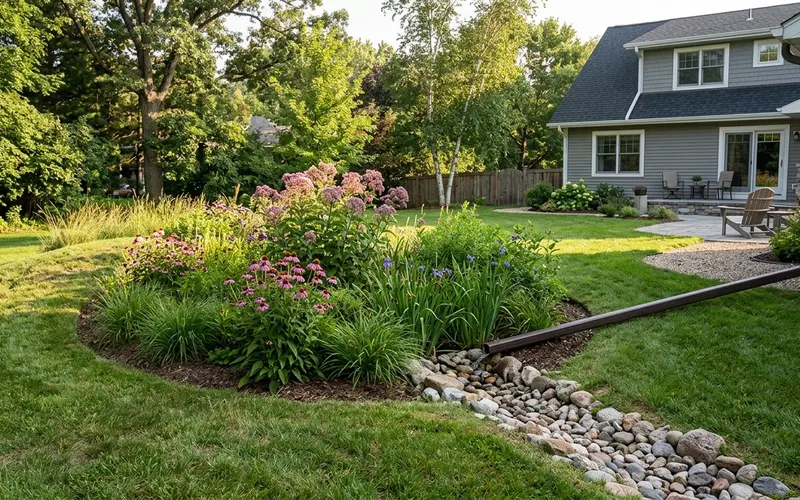
Pick a spot at least 10 feet from the house where runoff flows but water doesn't already pond, dig a level basin 3 to 8 inches deep (usually 100 to 300 sq ft), berm the low side and plant natives that handle wet and dry.
October 13, 2026
Landscape Rock: Types, Costs and Where to Use It
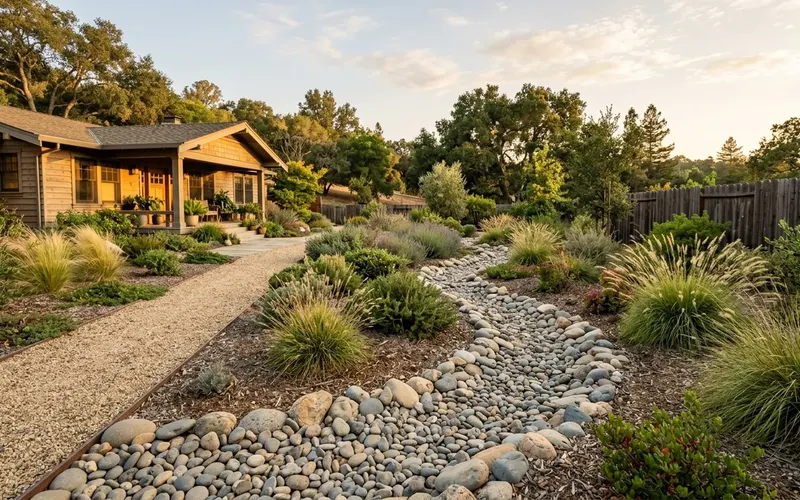
Common landscape rock like pea gravel, crushed stone, river rock and lava rock runs about $10 to $220 per ton in 2026 cost guides. It works best on paths, dry creek beds and in desert or wildfire-prone yards, and less well in most planting beds.
October 11, 2026