Low-Maintenance Front Yard Landscaping Ideas
The easiest front yards have less lawn, plants grouped into mulched beds, and shrubs chosen for your climate and their full-grown size. These ideas cut mowing, watering and pruning without leaving the yard bare.
By LandscapeLookup Editors5 min read
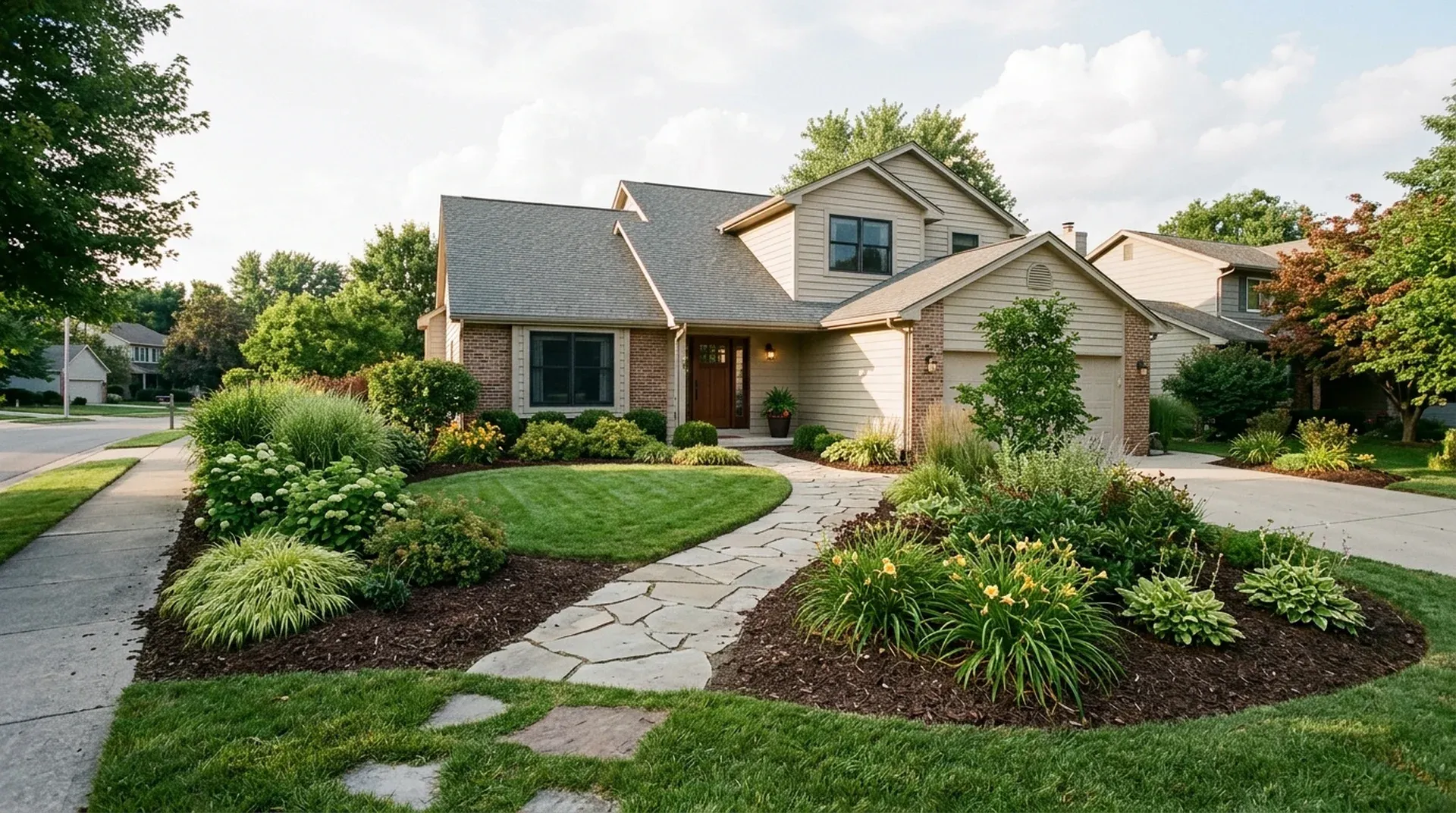
A low-maintenance front yard has less lawn, plants massed in mulched beds, and shrubs and trees picked for your climate and their full-grown size. University of Missouri Extension ranks turf as the most demanding part of a landscape. Flowers come next, then ground covers, and shrubs and trees need the least care. The ideas below use that order to cut mowing, watering and pruning without leaving your yard looking bare.
Shrink the lawn to the part you use
Lawn is usually the biggest chore in a front yard. The Missouri guide suggests keeping enough grass for play or gathering and converting the rest to lower-maintenance plantings. EPA WaterSense gives the same advice: put turf only where it serves a practical purpose.
|
Planting type |
Relative upkeep |
|---|---|
|
Lawn (turf) |
Highest |
|
Flowers |
High |
|
Ground covers |
Slightly less than flowers |
|
Shrubs and trees |
Lowest |
Good places to replace grass first:
- Under trees. Grass often thins out there because of shade and root competition. UGA recommends a mulched natural area there. It should cover at least half the drip line of a large tree, and all of it for a small tree.
- Steep slopes and deep shade. Ground covers are often better than turf where mowing is hard or grass won't grow well.
- Narrow strips and odd shapes. Texas A&M notes that long, narrow or oddly shaped lawn areas are hard to water efficiently and suggests keeping grass in blocky, squarish areas.
Before you remove much lawn, check your HOA rules on front-yard plantings, gravel and how much turf you must keep.
Pick a lower-maintenance grass for your region
If you keep some lawn, the grass type matters as much as the size. Choose one that's adapted to your climate:
|
Region |
Lower-maintenance option |
Why |
Source |
|---|---|---|---|
|
North (cool-season) |
Fine fescues |
Persist with minimal maintenance and fertilizer; tolerate shade better than many cool-season grasses |
|
|
Transition zone (mid-South, lower Midwest) |
Turf-type tall fescue |
Deep-rooted with good drought tolerance, and good shade tolerance in the South |
|
|
Southeast (warm-season) |
Centipede grass |
Needs less frequent mowing and fertilizing than Bermuda or St. Augustine |
|
|
Dry West and Plains |
Buffalograss, blue grama |
Water-conserving grasses for low-rainfall areas |
For fine fescues, Purdue recommends mowing at 2.5 to 4 inches and only 0.5 to 2 pounds of nitrogen per 1,000 square feet a year, mostly in fall. They can even be left as "no mow" areas, though summer heat hurts them in warmer areas. In the South, UGA notes that Bermuda and centipede both struggle in heavy shade.
Group plants into wide, mulched beds
Scattered plants take more work than plants massed together. The Missouri guide points out that edging and trimming around single shrubs takes time. A flaw on one lone plant also stands out, while the same problem in a group is easier to overlook.
Its layout rules:
- Keep beds reachable. If you can only reach a bed from one side, make it no more than 3 feet deep. Beds you can reach from both sides can be 4 or 5 feet wide. Add stepping stones through anything wider.
- Group plants with similar needs. It's hard to give the right water and light to plants with different needs if they're mixed together. EPA calls these groupings "hydrozones" and recommends keeping turf and shrubs in separate zones.
- Mulch every bed. Use 2 to 4 inches of mulch to limit weeds and hold moisture. UF/IFAS suggests about 3 inches, kept about 1 foot back from large tree trunks. Mulched rings also keep mowers and string trimmers from nicking trunks.
Three simple front yard layouts
These combine the rules above into easy starting points:
- Foundation bed plus a lawn panel. Run a bed along the front of the house, about 3 feet deep if you can only reach it from the lawn side. Keep the remaining grass as one blocky rectangle that's easy to mow and water.
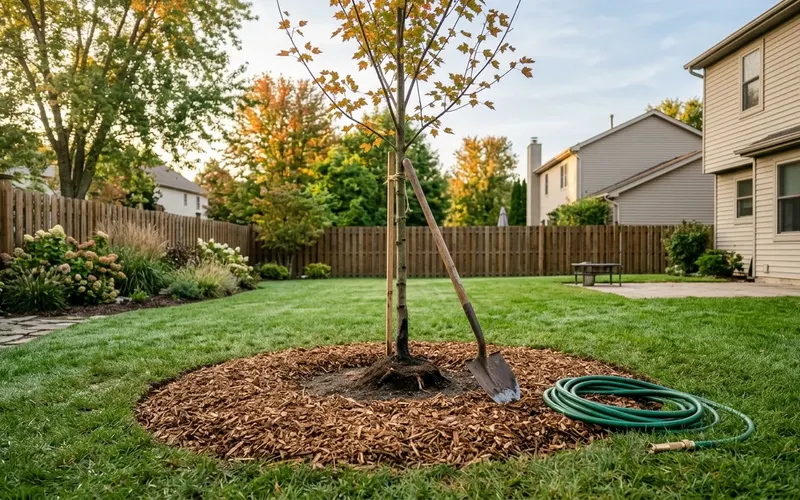
- Tree island. Replace the grass under a front-yard tree with a mulched bed of ground covers and shrubs, sized to UGA's drip-line guidance.
- Walkway borders. Plant low beds on both sides of the front walk, 4 to 5 feet wide if you can reach them from both sides. Set edging flush with the ground so the mower rides over it.
Our guide on how much mulch you need covers depth and how many bags or yards to buy.
Choose plants that fit the spot
The fastest way to create work is a plant that's wrong for its spot or outgrows it. Missouri Extension's advice:
- Plan for mature size. Leave enough room for each plant to reach full size without constant pruning.
- Look for easy-care traits. The ideal plant has a moderate growth rate, few pest problems and no messy fruit, pods or shedding branches.
- Match sun and moisture. Use sun-loving plants in exposed spots and shade-tolerant ones under trees. Native plants are adapted to local climate extremes and often resist regional pests.
- Don't overdo variety. Use several kinds of plants for texture and color, but too much variety looks busy.
To find natives for your state, the Lady Bird Johnson Wildflower Center database lets you filter by state, light and soil moisture. Our xeriscaping guide lists a few drought-tolerant examples by region from extension sources.
Design edges and paths for easy mowing
Edges are where a lot of weekend time goes. The Missouri guide recommends avoiding sharp corners and narrow strips that mowers can't reach. It also suggests keeping the edges of walks and patios low and flat so a mower can ride over them. That eliminates most hand edging. It counts hard surfaces such as patios and decks as relatively low maintenance, too.
Gravel and rock work best in the right spots: UF/IFAS suggests limiting them to pathways, dry creek beds and areas under downspouts, since rock doesn't feed the soil or suppress weeds well. EPA also warns that rock mulch in full sun radiates heat and can scorch plants that aren't adapted to dry conditions.
Water less, and more precisely
New plantings need regular water until they're established. The Missouri guide says that typically takes one or two full growing seasons. After that, many well-chosen shrubs and ground covers need far less.
If you have an irrigation system, two upgrades help:
- A smart controller. EPA says a WaterSense labeled controller can cut an average home's irrigation water use by up to 30%.
- Regular maintenance. EPA estimates a poorly maintained automatic system can waste up to 25,000 gallons a year.
For beds, consider drip lines: Texas A&M calls drip irrigation more efficient than sprinkler irrigation. See drip irrigation vs. sprinklers. In dry regions, a full xeriscape takes these ideas further. Follow any local watering restrictions while new plants establish.
When to call a pro
A landscaper can handle lawn removal, bed layout, soil prep and planting, and a designer can help if you want a plan before you start. When you hire:
- Get 2 or 3 written quotes for the same plant list and bed layout.
- Ask for photos of similar work, ideally low-maintenance front yards in your area.
- Check licensing and insurance where your state requires it.
- Get the scope and payment schedule in writing, including plant sizes, mulch depth and any plant warranty.
- Contact 811 before digging new beds or setting edging. It's the free national before-you-dig service; request marking a few business days ahead.
For a rough budget, see how much landscaping costs. When you're ready, compare local landscapers on LandscapeLookup. It's free, with no sign-up, and you contact pros directly.
Editorial team
The LandscapeLookup editorial team writes guides to help US homeowners plan yard projects and hire the right pro. Each guide is based on university extension services, government sources such as EPA WaterSense and USDA, manufacturer instructions and published cost guides, and links to them so you can check the details.
Keep reading
How Much Does Artificial Turf Cost?
Professional artificial turf installation runs about $5 to $20 per sq ft, with recent cost guide averages running about $13 to $20. A typical 500 sq ft yard costs roughly $2,700 to $10,000, depending on turf quality, prep work and where you live.
October 15, 2026
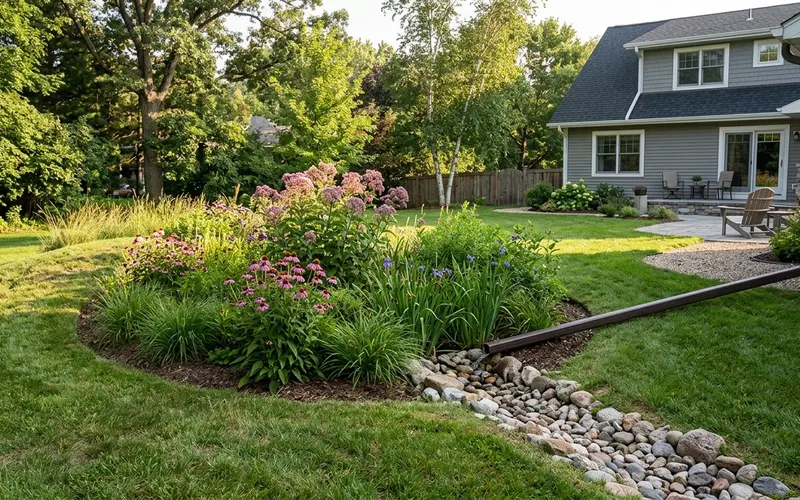
How to Build a Rain Garden
Pick a spot at least 10 feet from the house where runoff flows but water doesn't already pond, dig a level basin 3 to 8 inches deep (usually 100 to 300 sq ft), berm the low side and plant natives that handle wet and dry.
October 13, 2026
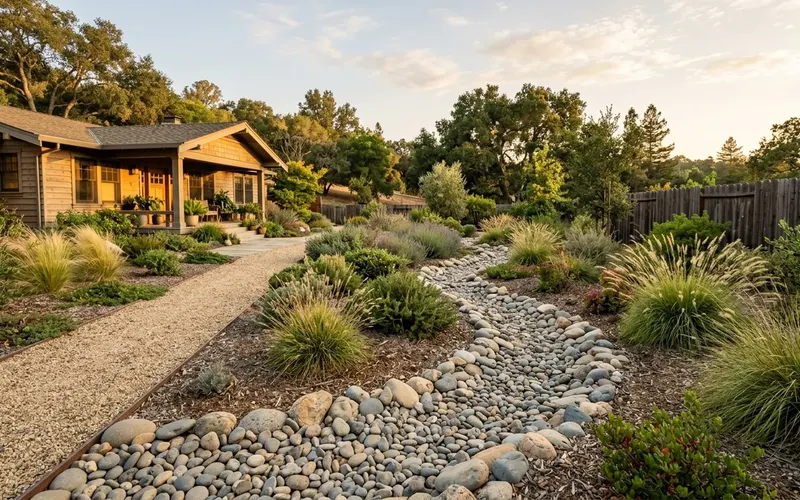
Landscape Rock: Types, Costs and Where to Use It
Common landscape rock like pea gravel, crushed stone, river rock and lava rock runs about $10 to $220 per ton in 2026 cost guides. It works best on paths, dry creek beds and in desert or wildfire-prone yards, and less well in most planting beds.
October 11, 2026