
How Much Does Lawn Care Cost?
Professional lawn mowing typically costs about $44 to $71 per visit, and monthly lawn care plans run about $100 to $500 across the major cost guides, depending on lawn size, services and where you live. Here's what each service costs and what drives the price.
By LandscapeLookup Editors5 min read
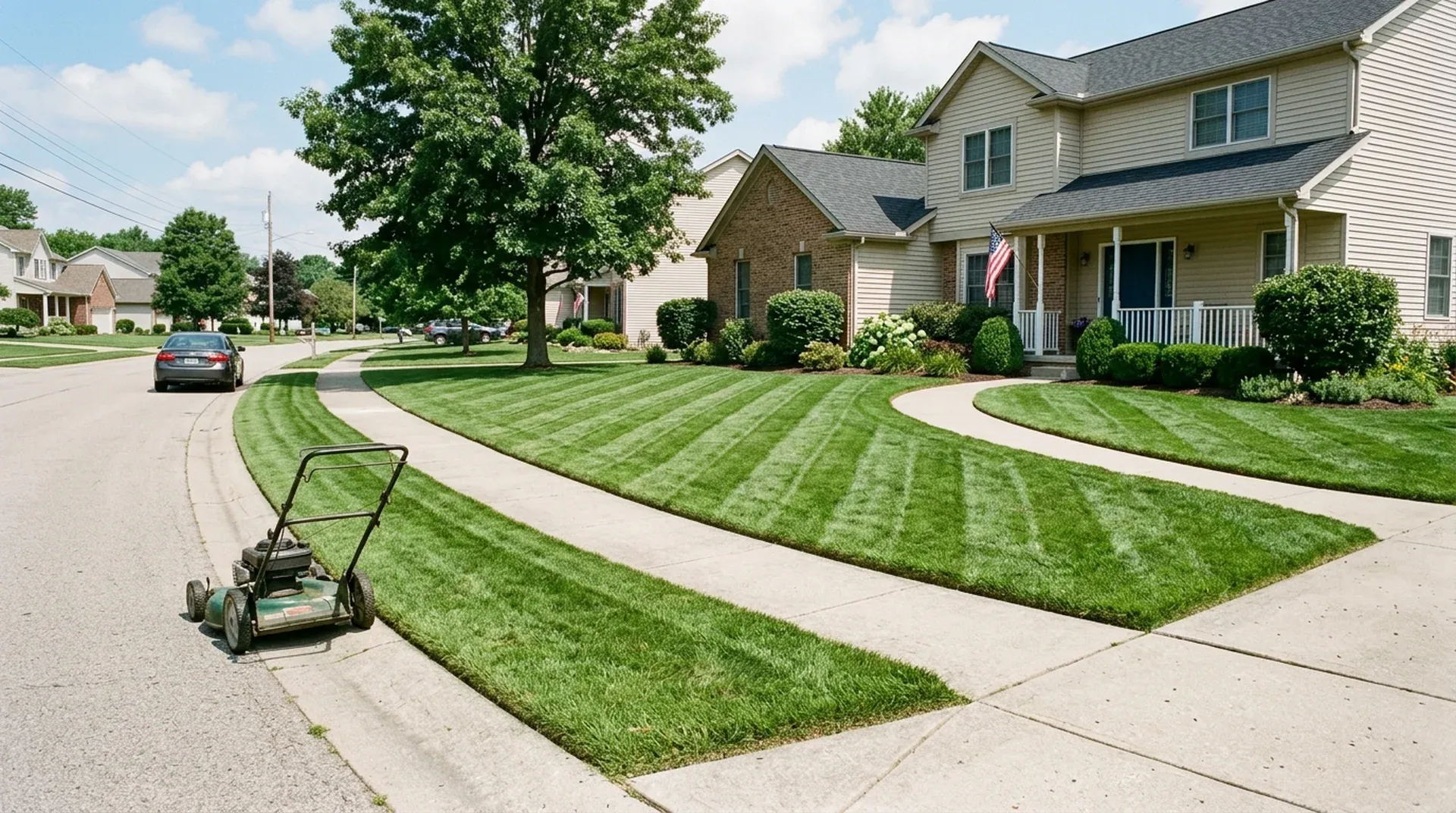
Professional lawn mowing typically costs about $44 to $71 per visit, with a national average around $57, according to LawnStarter. Monthly plans that bundle mowing with other services run about $100 to $500 across the three cost guides below. One-off jobs like aeration, fertilization or leaf cleanup add $50 to several hundred dollars each.
Your price depends mostly on lawn size, how often you want service, and where you live, since labor costs and the length of the mowing season vary a lot across the country. Here's what each service costs and how to compare quotes.
Lawn care prices at a glance
Cost guides don't agree exactly, so the table shows ranges from three of them. Treat these as national ballparks. Keep in mind that all three publishers connect homeowners with lawn care pros, so they have a stake in the topic.
|
Service |
LawnStarter |
Lawn Love |
HomeAdvisor |
|---|---|---|---|
|
Mowing (per visit) |
$44–$71 |
$43–$69 |
$50–$205 |
|
Fertilization |
$67–$405 |
$103–$343 |
$71–$380 |
|
Weed control |
$50–$210 |
$65–$120 |
$35–$400 |
|
Aeration |
$107–$202 |
$104–$195 |
$75–$200 |
|
Dethatching |
$65–$165 |
$65–$160 |
$160–$225 |
|
Leaf removal |
$107–$435 |
$165–$485 |
$300–$600 |
|
Monthly maintenance plan |
$100–$410 |
$125–$500 |
$100–$300 |
Sources: LawnStarter mowing, LawnStarter lawn care, Lawn Love, HomeAdvisor. Lawn Love's aeration and dethatching figures come from its dedicated aeration and dethatching cost pages. Ranges are as checked in October 2026, and actual prices vary by region.
HomeAdvisor's headline mowing range is much wider, though its own FAQ gives $30 to $80 per visit for professional mowing. For a typical suburban yard, the LawnStarter and Lawn Love figures may be a closer guide.
Lawn mowing cost by yard size
Mowing is the service most people buy, and size is the biggest factor. LawnStarter's 2026 data breaks it down like this:
|
Lawn size |
Cost per mow |
|---|---|
|
Up to 1/4 acre |
$41–$61 |
|
1/4 to 1/2 acre |
$49–$69 |
|
1/2 to 1 acre |
$59–$114 |
|
1 to 2 acres |
$99–$264 |
|
Over 2 acres |
$278–$449 |
Source: LawnStarter.
A few other pricing patterns to know:
- Minimum fees. LawnStarter says the average minimum is about $30 for lawns under 5,000 sq ft, since the crew still has to drive to you.
- Hourly or per square foot. LawnStarter says most pros charge $32 to $68 per hour or $0.01 to $0.06 per square foot.
- Long-grass fees. LawnStarter says most companies add a fee once grass is over 6 to 12 inches. The first cut of the season or one after a vacation may cost more.
Yearly cost depends on where you live
A Minnesota lawn and a Florida lawn might cost about the same per cut, but the Florida lawn gets cut for many more weeks a year. LawnStarter's rough regional estimates for weekly mowing:
|
Region |
Mowing season |
Weekly cost |
Estimated yearly total |
|---|---|---|---|
|
Northeast |
~24 weeks |
$48–$75 |
$1,152–$1,800 |
|
Midwest |
~26 weeks |
$47–$67 |
$1,222–$1,742 |
|
West/Northwest |
~34 weeks |
$43–$69 |
$1,462–$2,346 |
|
Southeast |
~45 weeks |
$44–$68 |
$1,980–$3,060 |
|
Southwest |
~46 weeks |
$41–$62 |
$1,886–$2,852 |
Source: LawnStarter.
LawnStarter also notes that labor costs are generally higher in urban and suburban areas than in rural ones. Prices also vary between metros. Lawn Love's aeration data, for example, runs $120 to $229 in Boston and $94 to $174 in Biloxi, Mississippi.
For context on labor, the Bureau of Labor Statistics puts median pay for grounds maintenance workers at $19.27 an hour in May 2025. Lawn Love notes that wages, insurance and fuel costs all push prices up in big metro areas.
Fertilization, weed control and seasonal services
Beyond mowing, most lawn care spending goes to a handful of seasonal jobs. Each one has its own timing, which affects when you'll pay for it.
Fertilization and weed control
A single fertilizer application runs roughly $67 to $405 depending on lawn size, per LawnStarter, and weed control about $50 to $210. How many feedings you need depends on your grass: cool-season lawns get most of their feeding in fall, while warm-season lawns are fed through summer. Our guide on when to fertilize your lawn has a schedule by grass type, which helps you judge whether a company's schedule lines up with what your lawn needs.
Aeration and overseeding
Lawn Love puts aeration at about $104 to $195 nationally, with core aeration at $95 to $230 and about $115 to $190 for a 1/4-acre lawn. LawnStarter's range is $107 to $202. Add overseeding and LawnStarter's estimate becomes $0.07 to $0.23 per square foot, or about $350 to $1,150 for a 5,000 sq ft lawn. See when to aerate your lawn and overseeding a lawn for timing.
Dethatching
Professional dethatching runs about $65 to $160 per Lawn Love, $65 to $165 per LawnStarter and $160 to $225 per HomeAdvisor. Many lawns don't need it every year, so check your thatch depth before you pay for it; our guide to dethatching shows how.
Cleanups and leaf removal
HomeAdvisor lists spring and fall cleanups at $190 to $1,000 and leaf removal at $300 to $600, while LawnStarter and Lawn Love put leaf removal lower.
What drives your price
When two quotes for the same yard are far apart, one of these is usually why:
- Lawn size. The biggest factor for mowing and every per-square-foot service.
- Terrain and obstacles. LawnStarter notes that slopes, garden beds, trees and shrubs take longer to mow around.
- Grass height and growing season. Faster-growing grass and longer seasons mean more visits.
- Recurring service. LawnStarter and Lawn Love both say recurring plans and packages can cost less than one-time visits.
- Location. Labor rates are higher in high-cost metro areas.
- What's included. Ask whether edging, trimming, blowing off hard surfaces and bagging clippings are part of the price, or extra.
When to call a pro
Hiring out lawn care makes sense when your weekends are short, your yard is large or hilly, or you want seasonal jobs like aeration and fertilizing done at the right time without renting equipment.
How to compare quotes:
- Get 2 or 3 written quotes for the same scope: mowing frequency, edging and trimming, clippings, and any seasonal services.
- Ask about the contract. Is it per visit, monthly or seasonal? What happens in weeks it doesn't need mowing, or during a drought when your city restricts watering and the grass slows down?
- Ask for photos or references from nearby yards they maintain.
- Check licensing and insurance where your state requires it, and ask about a pesticide applicator license if weed control is included.
- Get the scope and payment schedule in writing, including any long-grass or cancellation fees.
You can find lawn care pros near you on LandscapeLookup for free, with no sign-up. Pros are ranked by their Google rating weighted by review count, plus how local they are and their main service, and you contact them directly.
Editorial team
The LandscapeLookup editorial team writes guides to help US homeowners plan yard projects and hire the right pro. Each guide is based on university extension services, government sources such as EPA WaterSense and USDA, manufacturer instructions and published cost guides, and links to them so you can check the details.
Keep reading

Types of Grass for Lawns, by Region
Lawn grasses are cool-season (Kentucky bluegrass, tall fescue, perennial ryegrass, fine fescue) for the North or warm-season (Bermuda, zoysia, St. Augustine, centipede, bahia, buffalograss) for the South. Pick by region first, then by sun, traffic and water.
October 28, 2026
When to Apply Pre-Emergent for Crabgrass
Apply crabgrass pre-emergent in spring, a week or two before the soil holds about 55°F for several days in a row, then water it in. That ranges from mid-February in the Florida Panhandle to mid-April through early May in places like Nebraska.
October 14, 2026
How to Test Your Lawn Soil (and When to Add Lime)
Mix 10 or more small soil cores from your lawn, send about 2 cups to your state's extension lab, and add lime only if the report says your pH is too low, in spring or fall, at no more than 50 lb per 1,000 sq ft at a time.
October 12, 2026