When to Apply Pre-Emergent for Crabgrass
Apply crabgrass pre-emergent in spring, a week or two before the soil holds about 55°F for several days in a row, then water it in. That ranges from mid-February in the Florida Panhandle to mid-April through early May in places like Nebraska.
By LandscapeLookup Editors7 min read
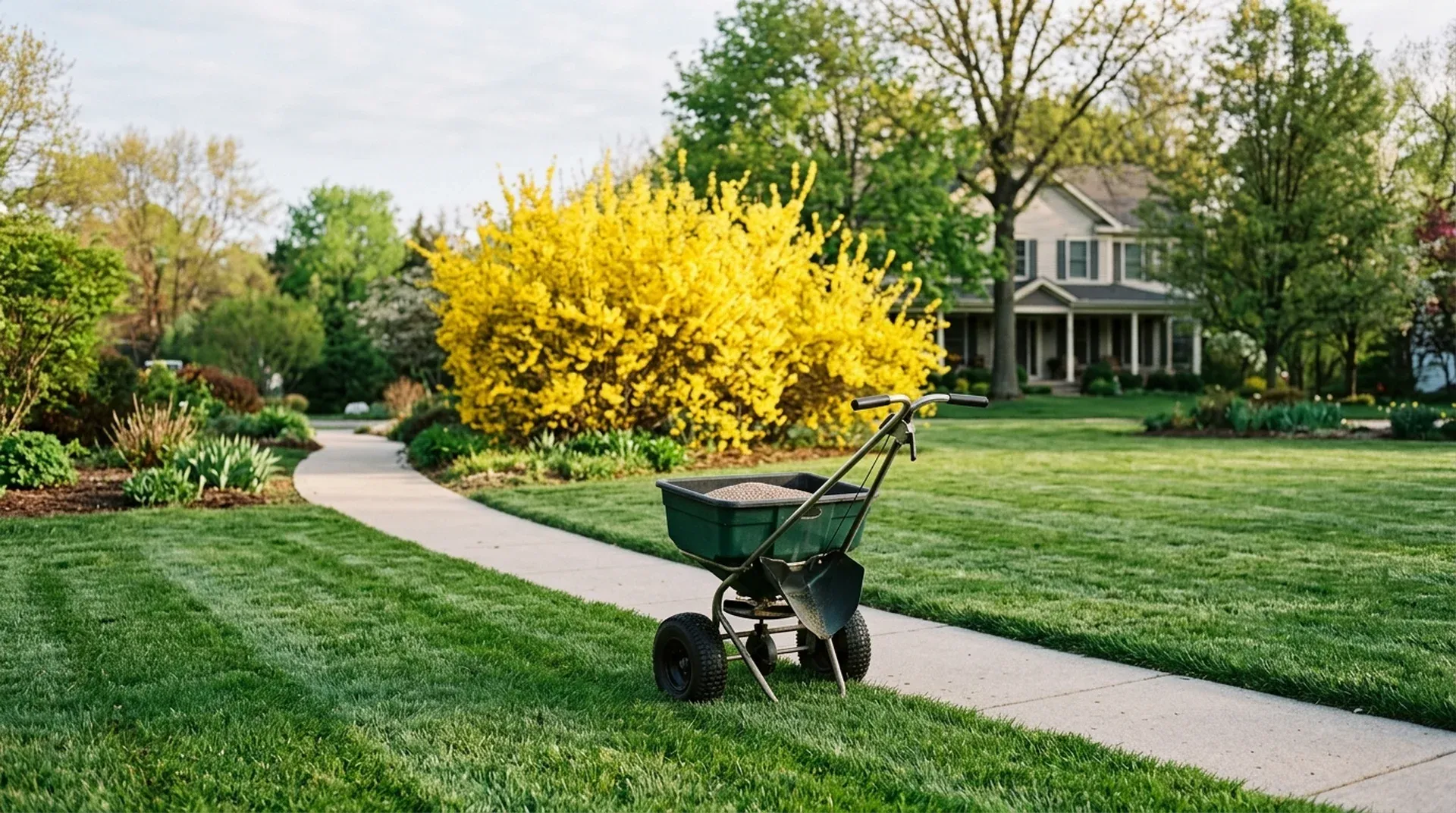
Apply crabgrass pre-emergent in spring, about a week or two before the soil holds 55°F for several days in a row, and water it in with about 1/2 inch of water. On the calendar, that's mid-February to mid-March in the Florida Panhandle and western North Carolina, early April in central Illinois, and mid-April to early May in places like Nebraska.
Timing is everything with this product. Too late and the crabgrass has already sprouted; too early and the barrier wears off before summer is over. Here's how to get it right for your area.
What pre-emergent does (and what it can't do)
A pre-emergent herbicide is a weed preventer. It forms a barrier in the top layer of soil that kills weed seedlings as they sprout. NC State Extension notes that these products have no effect on the seeds themselves, and they only work if rain or irrigation moves them into the soil before the weeds germinate.
That has two practical results:
- It won't kill weeds you can already see. North Dakota State says most pre-emergents won't give effective control after germination.
- It stops grass seed too. The product can't tell crabgrass seed from the bluegrass or fescue seed you just spread.
Crabgrass is a summer annual, so it dies at the first frost and comes back from seed every spring. Those seeds add up fast: UC IPM says a single large crabgrass plant can make more than 100,000 seeds, which stay viable in the soil for at least 3 years. That's why UC IPM stresses controlling crabgrass before it sets seed.
When to apply pre-emergent for crabgrass
Soil temperature is the trigger
Crabgrass sprouts once the soil warms, not on a set date. Extension services describe the trigger a little differently:
- Nebraska: 55°F at a 4-inch depth for several days.
- North Dakota: an average of 55°F at 2 inches for 3 to 5 days, with most seeds germinating between 60°F and 70°F.
- Illinois: soil above 55°F to 60°F for 7 to 10 days. Illinois advises applying a week or two before that, since the product takes time to move into the soil.
Texas A&M AgriLife says a soil probe, even a probe-type meat thermometer, can help you judge timing. Some states, including Nebraska and North Dakota, post soil temperature reports online.
Typical spring timing by region
These are local examples from extension offices. Use the one closest to your climate, then fine-tune with soil temperature.
|
Area |
When to apply pre-emergent |
Source |
|---|---|---|
|
Florida Panhandle |
Mid-February to March 1, once daytime highs reach 65°F to 70°F for 4 to 5 days |
|
|
Western North Carolina |
Mid-February through mid-March |
|
|
California Central Valley and Central Coast |
A few weeks before crabgrass sprouts in early February to mid-March |
|
|
Central Illinois |
Early April |
|
|
Eastern Nebraska |
April 15 to the first week of May |
Plants can help too. In Connecticut, UConn says crabgrass usually sprouts after forsythia bloom and before lilac or dogwood bloom. In the Florida Panhandle, UF ties the window to azaleas and dogwoods blooming.
Why early isn't always better
Light and soil microbes start breaking the herbicide down the day it goes on. Nebraska Extension warns that applying too early shortens how long it works while weeds are actually sprouting. NC State says most pre-emergents last 8 to 12 weeks, though some last longer.
That's why lawn companies that start early often use prodiamine, which Nebraska says has a 16-week residual. With shorter-lived products, plan a second application if the label allows it: Nebraska suggests about mid-June, and UF suggests 6 to 9 weeks after the first.
Fall pre-emergent for winter weeds
Spring pre-emergent targets summer weeds like crabgrass. A fall application targets winter annuals, which sprout as the soil cools. Texas A&M AgriLife lists annual bluegrass, rescuegrass, henbit, chickweed, Carolina geranium and lawn burweed among them.
AgriLife recommends starting the fall application when soil cools to about 70°F, which falls in September or October in Texas. For Texas lawns, it generally recommends at least one application in spring and one in fall.
In cool-season lawns, think twice. Purdue says late summer to early fall is the best time to seed bluegrass, ryegrass and fescue, and a fall pre-emergent would block that seed. If you plan to seed, skip it.
How to apply pre-emergent the right way
- Make sure you need it. UF points out that if your lawn hasn't had a summer weed problem, there's probably no need to apply one. UConn suggests treating only areas where crabgrass keeps coming back, not always the whole lawn.
- Aerate first. If you're aerating in spring, K-State says to do it before applying crabgrass preventers. See when to aerate your lawn for timing.
- Pick the active ingredient. Check the front of the bag. Common homeowner options are below.
- Spread evenly at the label rate. UC IPM says the keys are timing, uniform application and uniform watering. AgriLife recommends granular products for homeowners because they're easier to apply.
- Water it in. NDSU says granules need 1/2 inch of water to dissolve and form the barrier. AgriLife says 1/4 to 1/2 inch, and suggests a sprinkler rather than counting on rain. If your town limits watering days, plan around them.
Common pre-emergent ingredients
|
Active ingredient |
Good to know |
|---|---|
|
Prodiamine |
Long residual (about 16 weeks per Nebraska); kills only tiny one-leaf seedlings |
|
Pendimethalin |
In many homeowner crabgrass preventers; kills only tiny one-leaf seedlings |
|
Dithiopyr |
Also kills young crabgrass at the 1 to 3 leaf stage, handy if you're a bit late |
|
Siduron or mesotrione |
Can go down at the time of seeding |
|
Corn gluten meal |
Organic option; ineffective where weed pressure is high, per Maryland |
The prodiamine and pendimethalin notes come from Nebraska Extension, which says they control one-leaf crabgrass only when watered in right away. Corn gluten meal is also a fertilizer: UConn says an effective rate equals 2 pounds of nitrogen per 1,000 sq ft. The University of Maryland notes that's well over Maryland's legal limit of 0.9 pound per application, and it says results against crabgrass are mixed.
Follow the label and local rules
The EPA says pesticide labels are legally enforceable: the label is the law. The label sets the maximum rate, how often you can reapply and how long to wait before seeding, so more product is never better. Some states and towns go further. The Town of Chevy Chase, Maryland, for example, prohibits synthetic pesticides for cosmetic use on lawns. Check your state and local rules before you buy.
Pre-emergent, fertilizer and seeding
Fertilizer first or pre-emergent first? For cool-season lawns, pre-emergent goes first. Illinois Extension says crabgrass control belongs in early spring, while fertilizer is better after the spring growth flush, usually mid-May in central Illinois. That timing gap is the main problem with weed and feed products. See when to fertilize your lawn for a full schedule.
Seeding and pre-emergent don't mix. Purdue says not to use pre-emergents (except siduron) at spring seeding, and to wait until new grass has been mowed 4 to 8 times, depending on the product. Going the other way, UF says most products delay reseeding by 6 to 16 weeks and should only go on lawns established for at least a year. If thin spots are the real problem, overseeding may do more than any herbicide.
Already have crabgrass?
Missed the window? UC IPM says dithiopyr and a few other pre-emergents have some effect on seedlings with fewer than 5 leaves, but not on established plants. Once crabgrass is bigger, you need a post-emergent herbicide. UConn says these work best at the 2 to 4 leaf stage, before the plants tiller. Quinclorac is sold in ready-to-use sprays for homeowners, but UC IPM says it gives only partial control, and some crabgrass has become resistant to it.
The longer-term fix is a thicker lawn. Nebraska research found that raising Kentucky bluegrass from 1.5 to 2.5 inches cut crabgrass from 80% to less than 15%. UConn recommends mowing at 2.5 to 3 inches. Water deeply and less often, too: UC IPM says crabgrass thrives in overwatered lawns.
When to call a pro
A lawn care company is worth it if you'd rather not handle herbicides, have a large lawn, or keep missing the window. AgriLife also suggests calling a pro if you're not comfortable handling or applying chemical products.
As of October 2026, LawnStarter puts a professional pre-emergent application at $60 to $150, with general weed control at $50 to $210. Prices vary by region and lawn size. See how much lawn care costs to compare full programs.
Before you hire:
- Get 2 or 3 written quotes that name the active ingredient, the rate and how many applications.
- Ask whether the price includes fertilizer. Illinois Extension suggests asking your lawn company to leave the fertilizer out of the spring pre-emergent visit.
- Tell them if you plan to seed so they can pick a seeding-safe product or skip that area.
- Check pesticide applicator licensing and insurance where your state requires it.
- Get the schedule and payment terms in writing.
You can find lawn care pros near you on LandscapeLookup for free, with no sign-up. Pros are ranked by Google rating weighted by review count, plus how local they are and their main service, and you contact them directly.
Editorial team
The LandscapeLookup editorial team writes guides to help US homeowners plan yard projects and hire the right pro. Each guide is based on university extension services, government sources such as EPA WaterSense and USDA, manufacturer instructions and published cost guides, and links to them so you can check the details.
Keep reading
Types of Grass for Lawns, by Region
Lawn grasses are cool-season (Kentucky bluegrass, tall fescue, perennial ryegrass, fine fescue) for the North or warm-season (Bermuda, zoysia, St. Augustine, centipede, bahia, buffalograss) for the South. Pick by region first, then by sun, traffic and water.
October 28, 2026
How to Test Your Lawn Soil (and When to Add Lime)
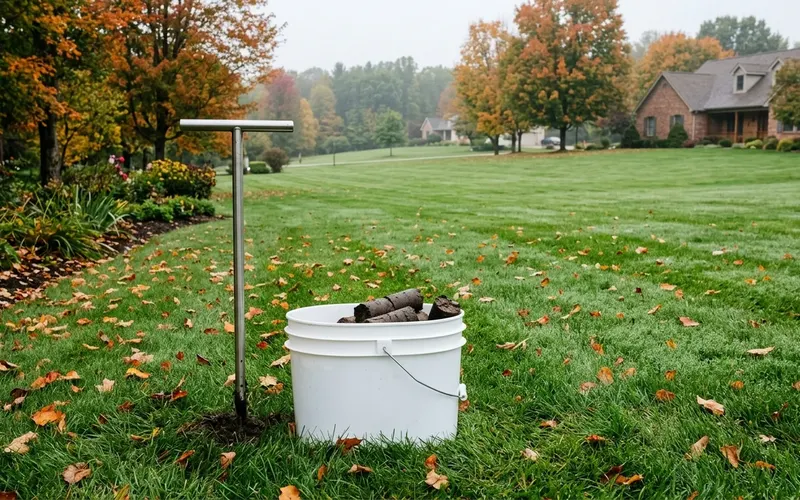
Mix 10 or more small soil cores from your lawn, send about 2 cups to your state's extension lab, and add lime only if the report says your pH is too low, in spring or fall, at no more than 50 lb per 1,000 sq ft at a time.
October 12, 2026
Topdressing and Leveling a Lawn
Topdressing means spreading a thin layer of compost, topsoil or sand, no more than 1/2 inch at a time, over a growing lawn to improve the soil or fill shallow low spots. Match the material to your soil and keep the grass blades showing.
October 10, 2026