When to Fertilize Your Lawn
Fertilize cool-season grass mainly in fall (September through November), with an optional light feeding in late spring. Fertilize warm-season grass from late spring through summer, once it has fully greened up and the soil is about 65°F.
By LandscapeLookup Editors6 min read
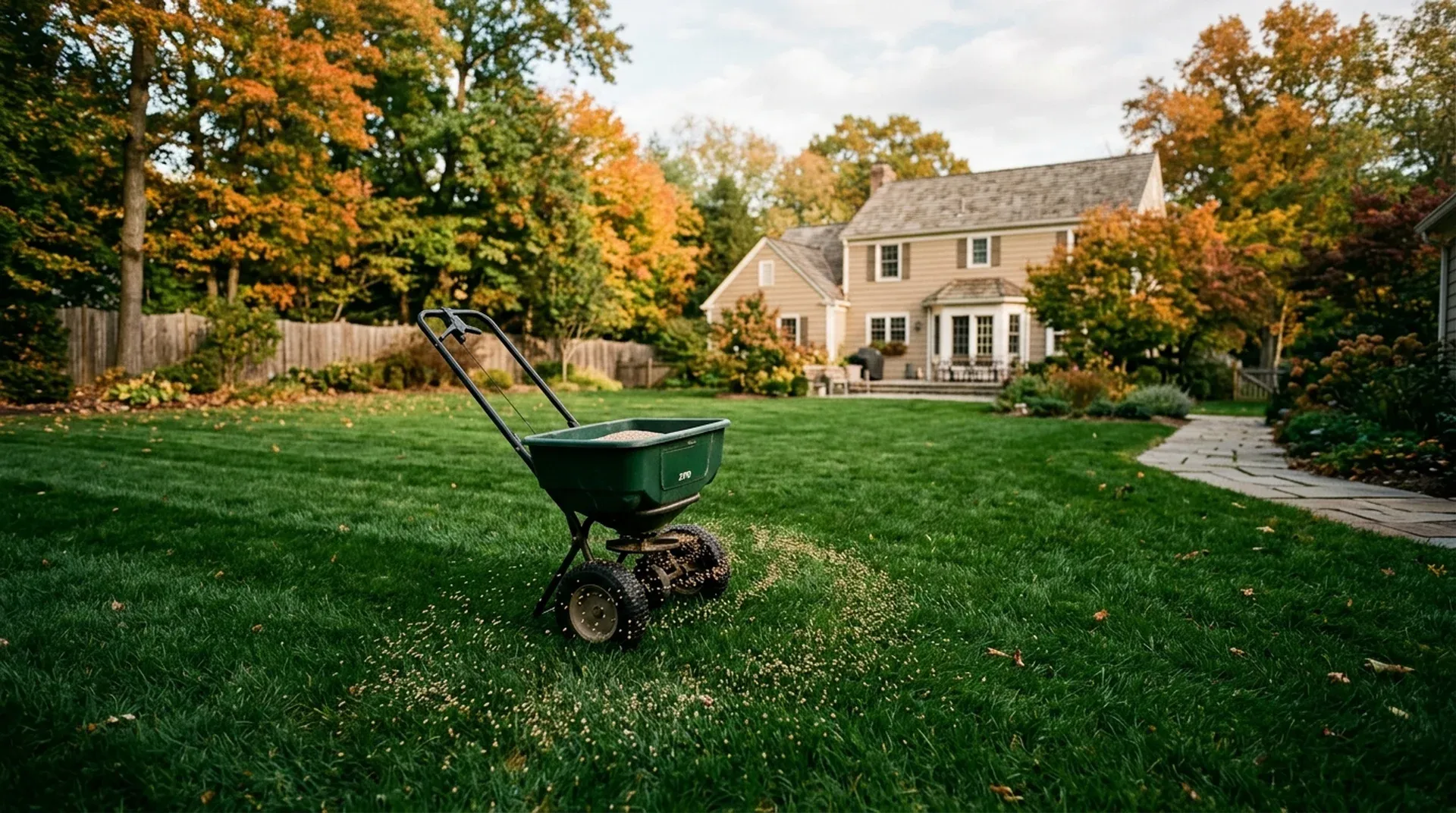
If you have cool-season grass (Kentucky bluegrass, tall fescue, perennial ryegrass or fine fescue), fertilize mainly in fall, from about September through November. A light feeding in late spring is optional. If you have warm-season grass (Bermuda, zoysia, St. Augustine or centipede), fertilize from late spring through summer, after the lawn has fully greened up and the soil has warmed to about 65°F.
Timing matters as much as the product. Feeding at the wrong time can push leafy growth the lawn can't support, and extra nitrogen can run off into streams, which is why some states limit how much you apply. Here's a schedule by grass type, plus how much to use and the local rules to check first.
Lawn fertilizer schedule at a glance
|
Grass type |
Main feeding |
Optional |
Skip |
|---|---|---|---|
|
Cool-season (bluegrass, tall fescue, ryegrass, fine fescue) |
September, October, November |
Light feeding mid-May to mid-June |
Mid-June to mid-August; early spring |
|
Warm-season (Bermuda, St. Augustine, zoysia, centipede) |
May through July |
April (after green-up) and August |
While dormant (brown); fall and winter |
This summary follows Virginia Tech's cool-season schedule and warm-season schedule. Shift the dates a few weeks for your climate: earlier in the Deep South, later in the North.
Not sure which grass you have? As a rough rule, most lawns in the northern half of the country are cool-season and most in the South are warm-season. The transition zone in between can have either. Your county extension office can usually help you identify it.
Cool-season lawns: fall is the main event
For cool-season grass, fall feeding does the most good. University of Illinois Extension says the ideal timeframe to fertilize a cool-season lawn is late summer into early fall. Extension services agree on the season but not on how much to put down at once.
- Kansas State University: 1 to 1.5 lb of quick-release nitrogen per 1,000 sq ft in September, then about 1 lb in November.
- Virginia Tech: no more than 0.7 lb of quick-release nitrogen per 1,000 sq ft per feeding, to protect water quality. It spreads the fall total over September, October and November.
Follow your own state's extension numbers. If you're unsure, smaller split doses mean less runoff. Here's Virginia Tech's quick-release schedule:
|
Maintenance level |
Sept |
Oct |
Nov |
Mid-May to mid-June |
Yearly total |
|---|---|---|---|---|---|
|
Low |
0 |
0.7 |
0 |
0–0.7 |
0.7–1.4 lb N |
|
Medium |
0.7 |
0.7 |
0 |
0–0.7 |
1.4–2.1 lb N |
|
High |
0.7 |
0.7 |
0.7 |
0–0.7 |
2.1–2.8 lb N |
All amounts are pounds of nitrogen per 1,000 sq ft, from Virginia Tech. Space applications about 4 weeks apart. Fine fescues need less, about 1 to 2 lb a year.
What about spring?
Notice what's missing: early spring and midsummer. Virginia Tech treats the late-spring feeding as optional, mainly for lawns that weren't fed the previous fall or new lawns still filling in.
Illinois Extension recommends fertilizing later in spring as temperatures warm, usually by mid-May in central Illinois, rather than in early spring. Illinois explains that in early spring the lawn is putting energy into roots. Nitrogen at that point pushes leafy growth instead, which can leave the lawn less able to handle a hot, dry summer.
Pair it with other fall jobs
Fall is when cool-season lawns get their most important work, and the jobs stack well. Aerate first so fertilizer and seed reach the root zone (see when to aerate your lawn), deal with thick thatch if you have it (see dethatching), then seed and feed.
Warm-season lawns: feed while it's hot
Warm-season grass grows in summer, so that's when it uses fertilizer. University of Georgia Extension says to fertilize once soil temperatures 4 inches down are at or above 65°F. Virginia Tech says to start after the turf has fully greened up.
Different warm-season grasses want very different amounts. UGA's annual nitrogen recommendations:
|
Grass |
Nitrogen per 1,000 sq ft per year |
|---|---|
|
Centipedegrass |
1–2 lb |
|
Zoysiagrass |
2–3 lb |
|
Bermudagrass |
2–4 lb |
|
St. Augustinegrass |
2–4 lb |
Split the total into several smaller feedings. UGA's example: four applications of 1 lb of nitrogen for Bermuda instead of one 4 lb application. Virginia Tech's warm-season programs run from April or May through July or mid-August, with feedings about 4 weeks apart.
If you overseed Bermuda with ryegrass for winter color, Virginia Tech allows a small extra feeding in fall for the ryegrass. Otherwise, let warm-season lawns go into dormancy unfed.
How much fertilizer to apply
Recommendations are in pounds of nitrogen (N) per 1,000 sq ft, not pounds of product. The first number on the bag is the nitrogen percentage. To convert:
Pounds of product per 1,000 sq ft = pounds of N you want ÷ (first number ÷ 100)
Say you want 0.7 lb of N and the bag says 24-0-11. Divide 0.7 by 0.24. That's about 2.9 lb of product per 1,000 sq ft.
Virginia Tech's per-feeding limits, in pounds of N per 1,000 sq ft:
|
Fertilizer type |
Cool-season grass |
Warm-season grass |
|---|---|---|
|
Quick-release (water-soluble) |
||
|
Slow-release (15% or more slow-release N) |
0.9 lb |
1 lb |
Slow-release products can go a little higher because they release nitrogen over time. Penn State also recommends slow-release nitrogen.
Get a soil test for phosphorus and potassium
Penn State says most lawns benefit from nitrogen every year. Phosphorus and potassium depend on your soil. Penn State and Virginia Tech both say to base those on a soil test, and to use a phosphorus-free fertilizer (middle number 0) if your soil already has enough. A soil test is cheap (UGA's lab charges about $8 in Georgia), so check your state's extension lab for its fee.
Crabgrass preventer and weed-and-feed
In spring, the product that matters most for cool-season lawns is often crabgrass preventer, not fertilizer. Illinois Extension says crabgrass sprouts once soil stays above 55°F to 60°F for 7 to 10 days. It advises putting the preventer down about a week or two before that, since it takes time to move into the soil.
That's why Illinois calls weed-and-feed "a product of convenience": the right time for crabgrass control is earlier than the right time to fertilize. Its advice is to use a crabgrass product without fertilizer, then feed later in spring. Also skip crabgrass preventer anywhere you plan to seed, since it stops grass seed too. See overseeding a lawn for safe timing.
Check local fertilizer rules first
Fertilizer runoff is a water-quality problem, and some places regulate it:
- Summer blackouts in Florida. Hillsborough County, for example, makes it illegal to apply fertilizer containing nitrogen or phosphorus from June 1 through September 30. It also requires nitrogen to be at least 50% slow-release and bans spreading within 10 feet of water. Other Florida counties and cities have their own ordinances, with their own dates, so check yours.
- Phosphorus limits. Minnesota bans phosphorus fertilizer on lawns unless a soil test shows a need or you're establishing a new lawn. Look for a 0 as the middle number on the bag.
- Hard surfaces. Minnesota requires you to clean up fertilizer spilled on sidewalks, driveways and streets, and Virginia Tech recommends sweeping any that lands on pavement back onto the lawn.
If you're in an HOA, check its rules as well. Your county extension office or city stormwater department can tell you what applies where you live.
When to call a pro
Fertilizing is a manageable DIY job, but a lawn care company can help if you don't know your grass type, want a soil test interpreted, or live somewhere with strict fertilizer rules.
Before you hire:
- Get 2 or 3 written quotes that list each visit, what's applied (and how much nitrogen), and whether weed control is included.
- Ask whether they soil test and how they adjust phosphorus.
- Ask how they follow local blackout periods if you live in an area that has them.
- Check licensing and insurance where your state requires it, including a pesticide applicator license if they'll apply weed control.
- Get the visit schedule and payment terms in writing.
For typical prices, see how much lawn care costs. You can find lawn care pros near you on LandscapeLookup for free, with no sign-up, and contact them directly.
Editorial team
The LandscapeLookup editorial team writes guides to help US homeowners plan yard projects and hire the right pro. Each guide is based on university extension services, government sources such as EPA WaterSense and USDA, manufacturer instructions and published cost guides, and links to them so you can check the details.
Keep reading
Types of Grass for Lawns, by Region
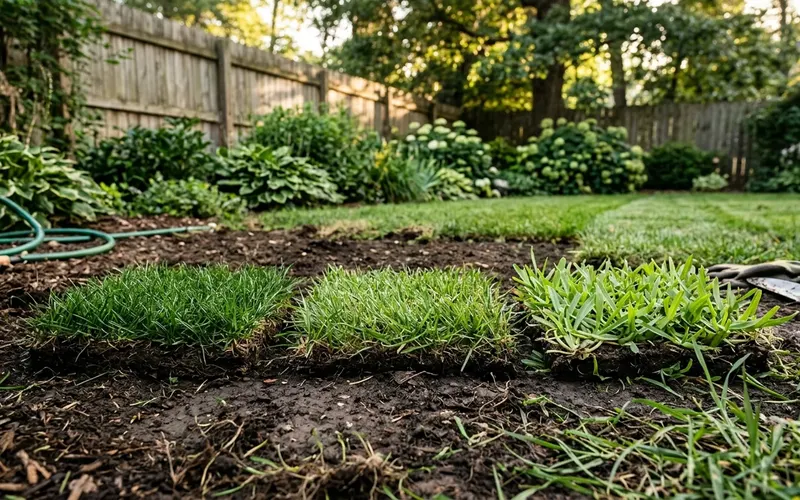
Lawn grasses are cool-season (Kentucky bluegrass, tall fescue, perennial ryegrass, fine fescue) for the North or warm-season (Bermuda, zoysia, St. Augustine, centipede, bahia, buffalograss) for the South. Pick by region first, then by sun, traffic and water.
October 28, 2026
When to Apply Pre-Emergent for Crabgrass
Apply crabgrass pre-emergent in spring, a week or two before the soil holds about 55°F for several days in a row, then water it in. That ranges from mid-February in the Florida Panhandle to mid-April through early May in places like Nebraska.
October 14, 2026
How to Test Your Lawn Soil (and When to Add Lime)
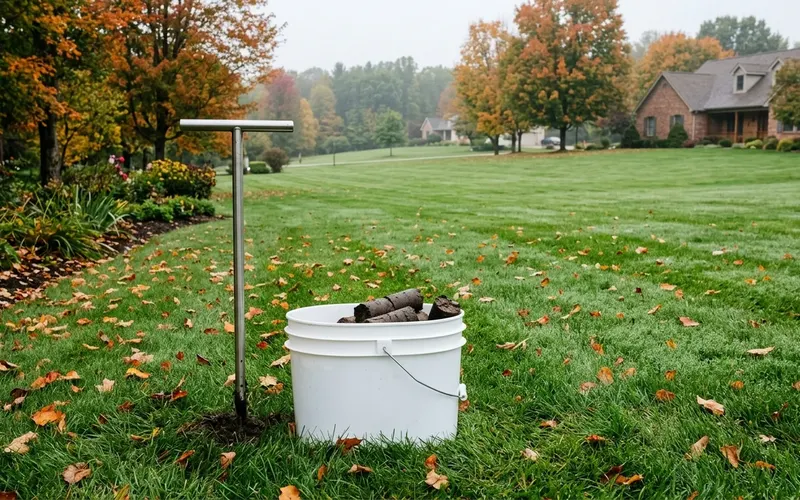
Mix 10 or more small soil cores from your lawn, send about 2 cups to your state's extension lab, and add lime only if the report says your pH is too low, in spring or fall, at no more than 50 lb per 1,000 sq ft at a time.
October 12, 2026