

Pavers vs. Concrete: Which Patio Is Right for You?
Poured concrete is cheaper up front, at roughly $4–$10 per square foot versus $8–$25 for pavers. Pavers cost more but are made two to three times stronger, handle ground movement better and can be lifted and reset instead of patched. Stamped concrete sits in between.
By LandscapeLookup Editors6 min read
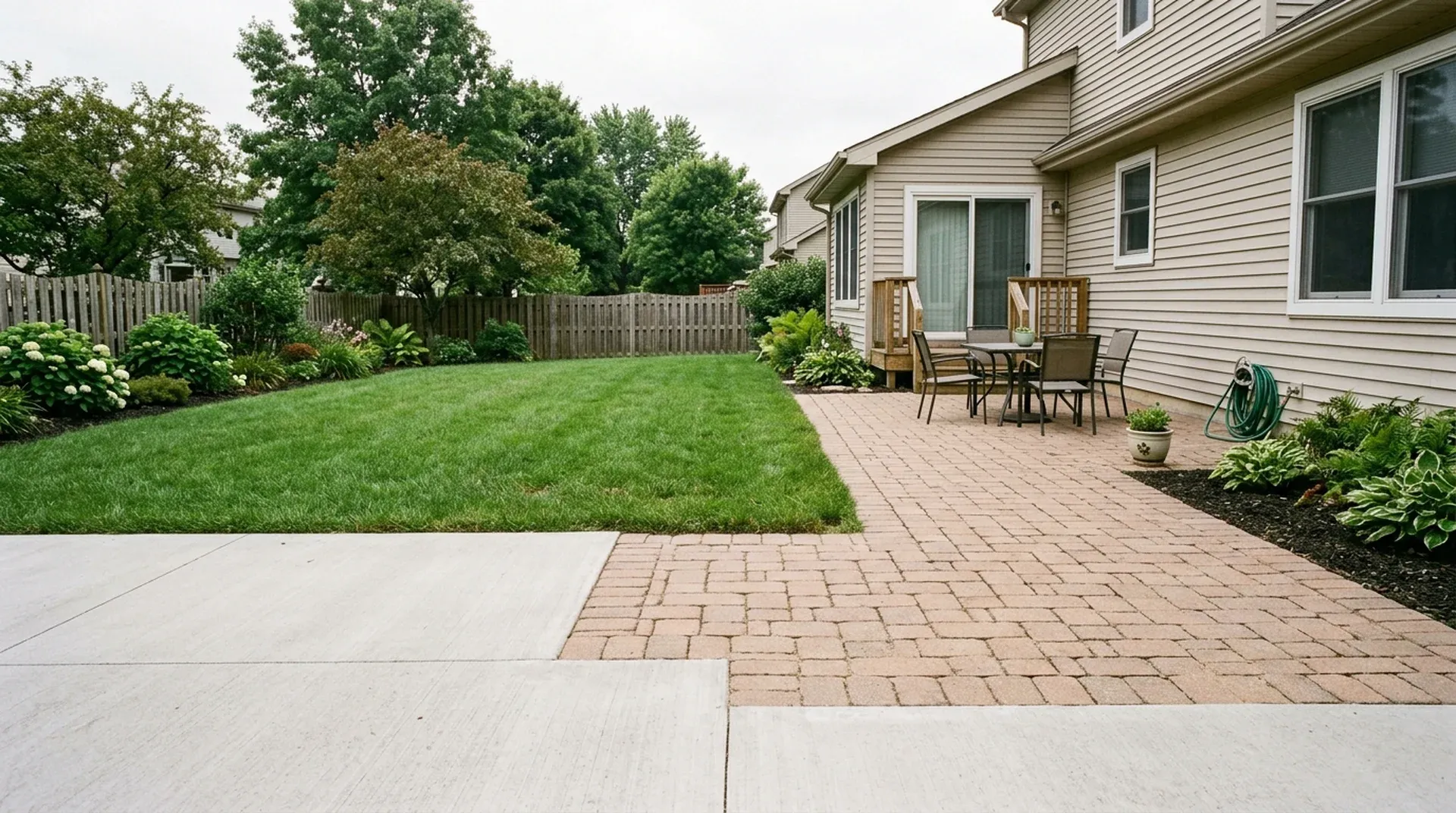
If upfront cost matters most, poured concrete wins: Lawn Love puts a plain concrete patio at about $4 to $10 per square foot, versus $8 to $25 for pavers. Pavers cost more, but the Concrete Masonry & Hardscapes Association says they're made two to three times stronger than typical poured concrete. They also flex with the ground instead of cracking, and can be pulled up and reset when something goes wrong.
Cost comparison
Here's how the three most common patio surfaces compare on installed price. Stamped concrete lands in the middle on price and looks, with its own maintenance trade-offs. Costs vary by region, so treat these as national ballparks.
|
Surface |
Installed cost per sq ft |
200 sq ft patio (approx.) |
|---|---|---|
|
Plain poured concrete |
$4–$10 |
$800–$2,000 |
|
Stamped concrete |
$8–$18 |
$1,600–$3,600 |
|
Concrete pavers |
$8–$25 |
$1,600–$5,000 |
Plain concrete from Lawn Love; stamped concrete from Concrete Network; pavers from This Old House, which matches Lawn Love's patio guide. The 200 sq ft column is simple multiplication.
Sources disagree most on stamped concrete. This Old House lists it at $5 to $15 per square foot, while Lawn Love's patio guide goes as high as $25. Concrete Network notes the two are often "very close in price," and that installers can find a patterned pour cheaper than setting pavers by hand.
For a whole project, Lawn Love puts the average professionally installed concrete patio at $2,925 (typical range $1,580 to $4,465). This Old House puts the average paver patio at about $3,800. For a full breakdown of paver pricing by size and material, see how much a paver patio costs.
If you're replacing an old slab, budget for removal too. Lawn Love lists tearing out an old concrete patio at $2 to $6 per square foot.
Strength and cracking
Pavers and poured slabs are both concrete, but they're made differently. Pavers are factory-made and cured under controlled temperature and humidity, per the CMHA. Pavers that meet the ASTM C936 standard must average at least 8,000 psi in compressive strength, with no single unit under 7,200 psi, according to the CMHA (the group formerly known as ICPI).
Concrete Network's summary of the standard adds a 5% cap on water absorption. Pavers must also pass a standardized freeze-thaw durability test. The current method, ASTM C1645, soaks pavers in salt water through up to 49 freeze-thaw cycles and measures how much material flakes off, according to Interlock Design, the ICPI's magazine.
For comparison, the residential building code sets a much lower minimum for comparable exterior slabs. Porch and carport slabs exposed to the weather need 2,500 to 3,500 psi, depending on local weathering (IRC Table R402.2, shown in California's version).
A poured slab is one rigid piece. The CMHA calls cracking in poured concrete "practically inevitable," and This Old House agrees that cracks can form over time even with regular upkeep.
A paver patio is a flexible system. Hundreds of joints let it move slightly with the soil instead of breaking. That matters most in two situations:
- Cold-winter regions, where freeze-thaw cycles worsen cracking and spalling in slabs, per the CMHA.
- Soils that move with the seasons, such as expansive clay that swells when wet and shrinks when dry. The CMHA describes pavers as semi-flexible, so they ride out that movement better than a rigid slab.
Repairs and long-term upkeep
Pavers
If a section of pavers sinks or a tree root lifts it, a crew can pull up the pavers, fix and recompact the base, and set the same pavers back down. The CMHA describes the result as a nearly seamless repair. A single stained or chipped paver can be swapped out.
The ongoing chore is the joints. Concrete Network says paver joints may need fresh sand every 2 or 3 years to keep weeds out, depending on weather, and that polymeric sand can reduce that maintenance.
Poured and stamped concrete
Concrete repairs usually mean cutting out the damaged section, pouring new concrete and waiting for it to cure, often leaving a patch that doesn't match, according to the CMHA. Concrete Network calls stamped concrete repairs "complex and potentially costly," because matching the color and pattern is hard.
Concrete also needs sealing. This Old House recommends resealing a concrete patio every 1 to 3 years and notes that stained and stamped surfaces need sealing to keep their color and pattern from fading. Lawn Love gives a longer 3- to 5-year interval for plain slabs. Pavers can be sealed too, but it's optional; see whether you should seal pavers.
Lifespan
Both can last decades when they're installed well. Concrete Network lists 30+ years for both stamped concrete and pavers with proper maintenance, and Lawn Love gives 30+ years for a well-maintained concrete patio. For driveways, where loads are heavier, Fixr puts pavers at 25 to 50 years versus 20 to 40 years for concrete.
The base underneath matters as much as the surface. Concrete Network notes that both need a well-compacted, properly graded subgrade, and that slabs crack when freeze-thaw cycles or tree roots shift the subbase. This Old House calls skimping on the base one of the most common reasons a paver patio shifts and settles.
Side-by-side summary
|
Factor |
Poured concrete |
Stamped concrete |
Pavers |
|---|---|---|---|
|
Upfront cost |
Lowest |
Middle |
Highest |
|
Cracking risk |
High over time |
High over time |
Low; joints absorb movement |
|
Repairs |
Patch or replace |
Hard to match |
Lift and reset |
|
Routine upkeep |
Clean, reseal |
Clean, reseal regularly |
Clean, top up joint sand |
|
Ready to use |
About 24 hours for foot traffic, 7 days for cars |
Same |
Right after installation |
|
Design options |
Limited |
Many patterns and colors |
Many shapes, colors and layouts |
Cure times from Concrete Network.
Which should you choose?
If you're still deciding whether you want a patio at all, our guide to deck vs. patio covers that choice.
Choose poured concrete if you want the lowest cost, a simple shape and a smooth surface for furniture, and you live where the soil is stable and winters are mild.
Choose stamped concrete if you want the look of stone or brick for less than pavers and you're willing to reseal on schedule.
Choose pavers if you plan to stay in the house a long time, you're in a freeze-thaw or clay-soil area, or you want the option of easy repairs. Pavers also make sense if you might add a fire pit, walkway or wall later, since sections can be removed and re-laid.
Whichever you pick, call 811 a few business days before anyone digs. The service is free and covers every digging project (811 Before You Dig).
Ask your city about permits, too. Bob Vila says paver patios generally don't need one unless the job involves major excavation or grading. Driveways are different: Fixr says most communities require a license to pave a driveway that extends to the street, with fees of $50 to $600. If you have an HOA, check its rules on patio materials and colors before you sign a contract.
When to call a pro
Both surfaces depend on prep you can't see once the job is done, so the installer matters more than the material.
- Get 2–3 written quotes that spell out base depth, slab thickness or paver type, reinforcement, joints and sealing.
- Ask for photos of similar work, especially patios that are a few years old, so you can see how they've held up.
- Check licensing and insurance where your state requires them for concrete or hardscape contractors.
- Get the scope and payment schedule in writing, including demolition, haul-away and any warranty on cracking or settling.
LandscapeLookup lists local hardscaping pros for free, with no sign-up. You contact them directly. Find a hardscaping pro near you.
Editorial team
The LandscapeLookup editorial team writes guides to help US homeowners plan yard projects and hire the right pro. Each guide is based on university extension services, government sources such as EPA WaterSense and USDA, manufacturer instructions and published cost guides, and links to them so you can check the details.
Keep reading
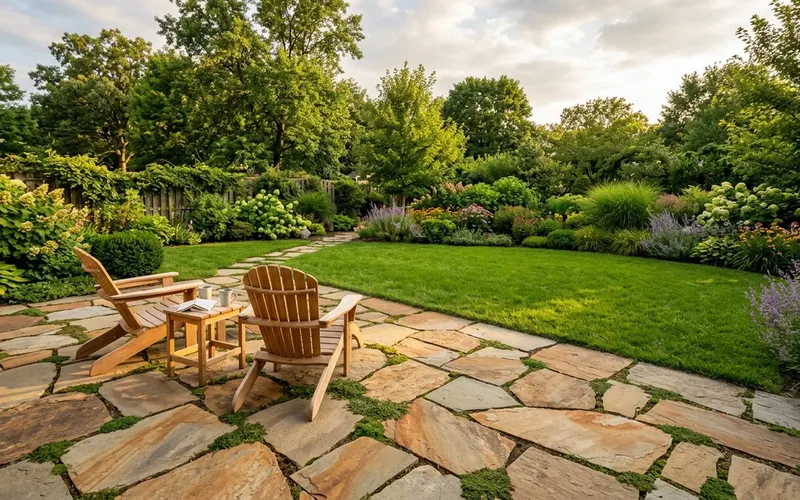
Flagstone Patios: Cost and How They're Built
A flagstone patio usually costs $15 to $27 per square foot installed, or about $3,600 on average. Most are dry-laid on compacted gravel and sand; mortared stone on a concrete slab costs more and can crack in freeze-thaw climates.
October 3, 2026
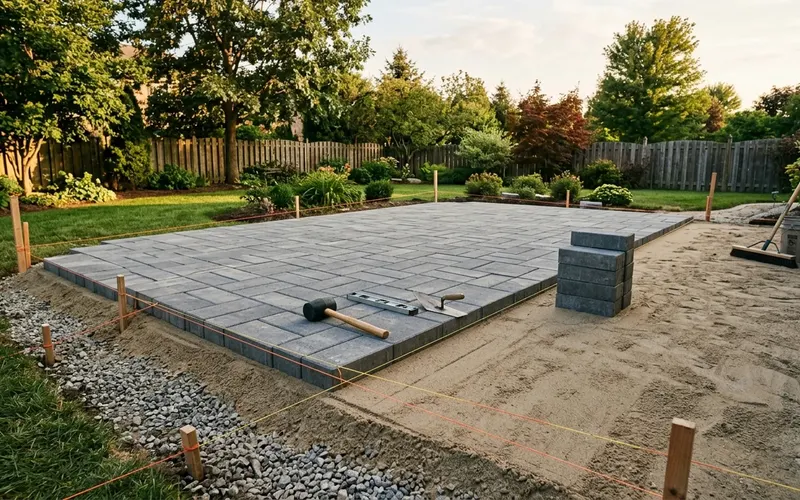
How to Lay Pavers: Base, Sand and Steps
Lay pavers on at least 4 inches of compacted crushed-stone base (more on clay or in freezing climates), then 1 inch of screeded concrete sand. Set the pavers, add edge restraints, compact and sweep in joint sand, with a slope of 1/8 to 1/4 inch per foot.
September 24, 2026
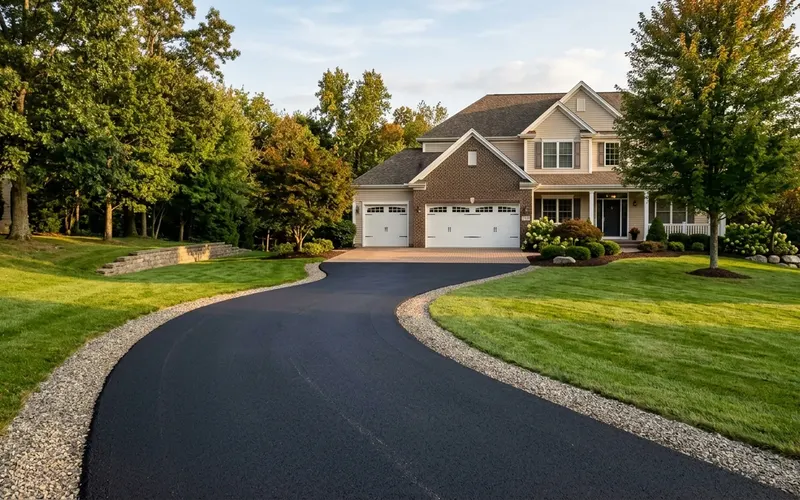
Driveway Costs for Asphalt, Concrete, Pavers and Gravel
A new asphalt driveway usually costs $7 to $15 per square foot installed, or about $3,100 to $7,400 for a typical job. Gravel costs less, concrete a bit more, and pavers the most.
September 20, 2026