Hydroseeding vs. Sod vs. Seed: Cost and Results
Hydroseeding sprays seed, mulch, fertilizer and water onto bare soil for about $0.07 to $0.21 per sq ft, far less than sod at about $1.65 installed. Sod is usable in weeks; hydroseed and plain seed take a season to mature.
By LandscapeLookup Editors7 min read
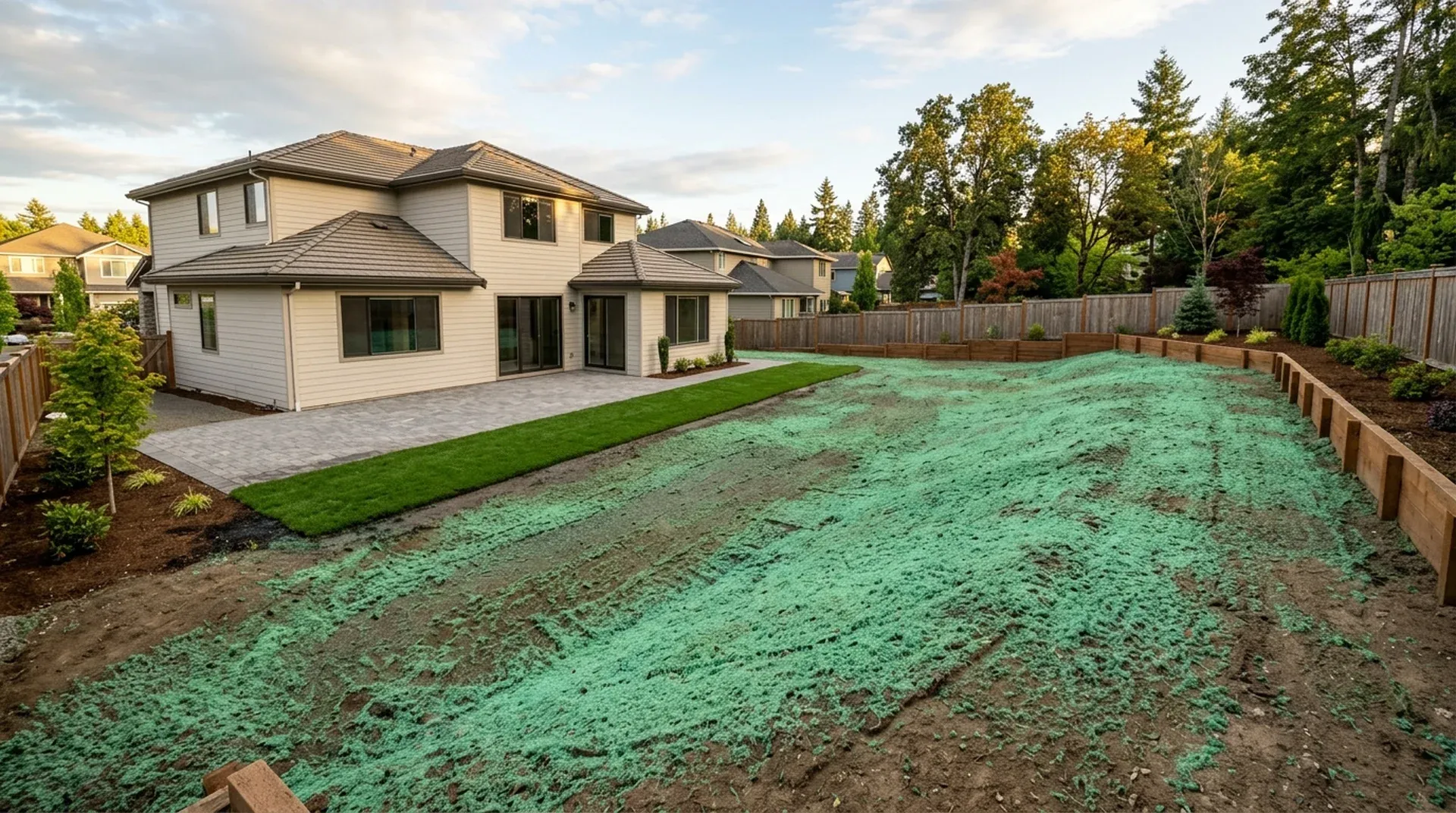
Hydroseeding is a way to plant a new lawn by spraying a slurry of grass seed, water, fertilizer and wood or paper mulch onto bare, prepared soil. A pro typically charges about $0.07 to $0.21 per sq ft, compared with roughly $1.65 per sq ft for installed sod. The catch is time. Sod is a usable lawn in about a month, while hydroseed and plain seed need weeks to fill in and most of a season to mature.
Here's how the three methods compare on cost, speed and risk, and which one fits your yard.
How hydroseeding works
A hydroseeding crew mixes seed, mulch, fertilizer and often a green dye in a tank, then sprays it evenly over graded soil. A 2005 evaluation prepared for the EPA describes the slurry as cellulose or wood mulch, seed, green dye and fertilizer. The dye shows the crew where they've already sprayed. A tackifier (a binding agent) can be added so the mix resists erosion, according to University of Tennessee Extension.
The mulch is what sets it apart from seed you spread yourself. It holds moisture around the seed, so Washington State University Extension says hydroseeded lawns come up quickly and need watering less often than hand-seeded ones. Purdue calls blown-on hydromulch an ideal method for mulching new seed.
Hydroseeding is for bare soil (a new build, a regraded yard or a full renovation). LawnStarter says spraying it over an existing lawn isn't recommended, since the old grass and weeds block seed-to-soil contact. To thicken grass you already have, see our guide to overseeding a lawn.
Hydroseeding vs. sod vs. seed at a glance
|
|
Hydroseeding |
Sod |
Seed (spread by hand or spreader) |
|---|---|---|---|
|
Pro cost per sq ft |
$0.07 to $0.21 |
About $1.65 installed |
$0.09 to $0.15 |
|
Ready for normal use |
Light traffic only for 2 to 4 months |
3 to 4 weeks |
Nearly a full season to mature |
|
Grass choice |
Installer's blend (some custom mix) |
Limited |
Widest |
|
Weeds |
Herbicide often needed |
Relatively weed-free |
Weed pressure greater |
|
Slopes |
Good, mulch resists washout |
Good once staked and rooted |
Needs mulch or an erosion blanket |
|
DIY? |
Typically not |
Possible, heavy work |
Yes |
Costs are national averages from LawnStarter's hydroseeding, sod and seeding guides (2026). Traffic, weed and grass-choice notes come from the EPA evaluation, University of Minnesota Extension and WSU Extension.
The short version: sod buys you time, seed saves you money, and hydroseeding sits in between. It costs about what professional seeding does and covers big or sloped areas fast.
How much does hydroseeding cost?
Two national cost guides put professional hydroseeding in the same range. Both publishers run lawn service marketplaces, and prices vary by region, slope and soil condition.
|
Source (2026) |
Price |
|---|---|
|
LawnStarter, per sq ft |
$0.07 to $0.21 |
|
LawnStarter, per acre |
$2,136 to $4,897 |
|
LawnStarter, 5,000 sq ft lawn |
$350 to $1,050 |
|
Lawn Love, per sq ft |
$0.10 to $0.19 |
|
Lawn Love, 1/4-acre lawn |
$1,089 to $2,069 |
For comparison, LawnStarter puts sod at about $0.60 per sq ft for the sod alone and $1.65 installed. That works out to about $3,300 for a 2,000 sq ft yard. Our sod cost guide covers sod pricing in detail.
Why small jobs cost more than the math suggests
How much does it cost to hydroseed 500 sq ft? On paper, $35 to $105. In practice, LawnStarter says most companies charge a minimum of $300 to $500 no matter how small the job. For a small patch, seeding by hand is usually the better deal.
Slopes add cost too. LawnStarter says that on slopes over 20 degrees, expect the per-square-foot price to double, or pay $700 to $2,500 to regrade first.
Can you hydroseed it yourself?
You can, but WSU Extension calls hydroseeding typically not DIY. LawnStarter lists hydroseeder rental at $220 to $463 a day, and Lawn Love estimates a DIY job at $398 to $725 in equipment and materials. Lawn Love also warns that an uneven spray can leave patchy growth or wash away.
If you're doing it yourself, plain seed is the cheapest option. Michigan State says traditional seeding costs less than hydroseeding if the homeowner does the work. LawnStarter puts DIY seeding tools and materials at $149 to $449.
How long does hydroseed take to grow?
Hydroseed germinates as fast as the seed in the mix. University of Tennessee Extension gives these germination times:
|
Grass in the mix |
Days to germinate |
|---|---|
|
Perennial ryegrass |
3 to 7 |
|
Tall fescue |
6 to 12 |
|
Kentucky bluegrass |
14 to 21 |
|
Bermudagrass (hulled) |
10 to 20 |
|
Zoysia japonica |
10 to 14 |
Source: UT Extension W160-B. If your mix is a blend, expect the ryegrass to sprout first and the bluegrass to follow.
Being green isn't the same as being ready for use. LawnStarter says to wait at least 4 to 6 weeks before walking on hydroseed. The EPA evaluation suggests keeping traffic light for 2 to 4 months, with normal use after the first year. Sod handles normal traffic in 3 to 4 weeks. That's the same timeline as regular seed: Minnesota Extension says seeded lawns take nearly a full season to become mature and durable. If you have dogs or kids who need the yard next month, sod is the safer pick.
Is there a downside to hydroseeding?
- Seed doesn't sit in the soil. Michigan State notes the seed lacks complete contact with the soil and may dry out and die if watering lapses.
- Weeds. The EPA evaluation found herbicides are often needed after hydroseeding until the grass fills in, while sod needs little or none.
- Heavy rain. The same report says sod handles downpours better, and freshly hydroseeded soil can wash onto sidewalks.
- Narrow planting season. WSU limits seeding and hydroseeding mainly to late summer and early fall, or mid-spring once soil reaches 50°F. Sod can go down any time during the growing season.
- Less say over the grass. WSU says hydroseed and sod use a pre-selected blend, though some companies will custom mix your seed. Seeding yourself gives you the widest choice.
Warm-season grasses change the math
In the South, the grass you want may decide for you. UF/IFAS lists St. Augustinegrass as established by sod or plugs only. Bahiagrass and centipede can be seeded, while Bermuda and zoysia are mostly planted as sod, sprigs or plugs, with some seed. UF says the best time to seed warm-season grass is often spring and summer. Hydroseeding works for warm-season grasses sold as seed, but not for St. Augustine.
On steep banks, hydroseeding is hard to beat. UT Extension says hydromulching is especially effective on slopes too steep for conventional planters.
Getting a hydroseeded lawn to take
- Test and prep the soil. Prep is the same for seed, sod and hydroseed. Minnesota Extension says to start with a soil test and amend as it suggests; see our guide to testing your lawn soil. WSU suggests working the soil 6 to 8 inches deep and tilling in a 2 to 4 inch layer of organic matter. Then grade for at least a 2 inch drop every 100 feet away from the house. If water already pools in your yard, fix the drainage first.
- Call 811 before tilling or grading. It's the free national before-you-dig service, and utilities need a few business days to mark lines.
- Put prep in the contract. WSU's advice: make sure proper soil preparation is part of the contract with the hydroseeding company. WSU also notes that lawns never develop to their full potential in poor subsoil.
- Water on your installer's schedule. Contractor guidance in the EPA report: no water for the first 24 hours so the mulch bonds. After that, 3 to 5 light waterings a day keep the soil moist for about a month, without runoff. Check your town's watering rules before you book, and see the best time to water your lawn for the switch to deep, less frequent watering later.
- Go easy on weed killers. Purdue says siduron is the only pre-emergent you can use at seeding. Wait until the new grass has been mowed 4 to 8 times before using others. Follow every label. Some states also restrict lawn fertilizer: Minnesota limits phosphorus but makes an exception for establishing a new lawn by seed or sod.
When to call a pro
Hire a hydroseeding or lawn care company for anything bigger than a patch or for slopes. A pro also makes sense when the yard needs grading and new topsoil first. Book early, since the fall seeding window for cool-season grass is short. If you're on the fence between hydroseed and sod, ask for both prices on the same prep work.
Before you hire:
- Get 2 or 3 written quotes that list the seed blend, mulch type, square footage, any minimum charge, and exactly what soil prep is included.
- Ask for photos of similar jobs and how they look a few months later.
- Ask what happens if it doesn't take, such as a reseed policy for bare spots, and what watering they expect from you.
- Check licensing and insurance where your state requires it, especially if they'll apply herbicide.
- Get the scope, start date and payment schedule in writing.
You can find lawn care pros or landscaping companies near you on LandscapeLookup for free, with no sign-up. Pros are ranked by Google rating weighted by review count, plus how local they are and their main service, and you contact them directly.
Editorial team
The LandscapeLookup editorial team writes guides to help US homeowners plan yard projects and hire the right pro. Each guide is based on university extension services, government sources such as EPA WaterSense and USDA, manufacturer instructions and published cost guides, and links to them so you can check the details.
Keep reading
Types of Grass for Lawns, by Region
Lawn grasses are cool-season (Kentucky bluegrass, tall fescue, perennial ryegrass, fine fescue) for the North or warm-season (Bermuda, zoysia, St. Augustine, centipede, bahia, buffalograss) for the South. Pick by region first, then by sun, traffic and water.
October 28, 2026
When to Apply Pre-Emergent for Crabgrass
Apply crabgrass pre-emergent in spring, a week or two before the soil holds about 55°F for several days in a row, then water it in. That ranges from mid-February in the Florida Panhandle to mid-April through early May in places like Nebraska.
October 14, 2026
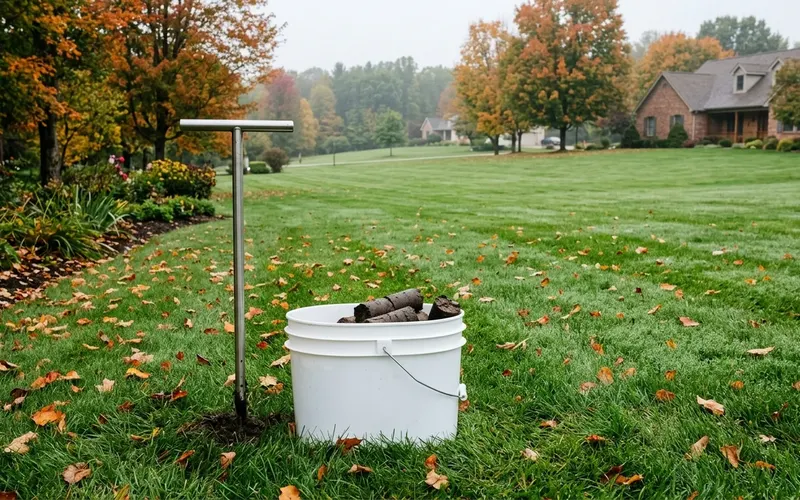
How to Test Your Lawn Soil (and When to Add Lime)
Mix 10 or more small soil cores from your lawn, send about 2 cups to your state's extension lab, and add lime only if the report says your pH is too low, in spring or fall, at no more than 50 lb per 1,000 sq ft at a time.
October 12, 2026