Landscape Edging Types and How to Choose
Pick edging by the job: steel or aluminum for a long-lasting line that keeps grass out, plastic for cheap DIY curves, brick or stone for a decorative mowing strip, or a free spade-cut edge. Bury it about 4 inches for bluegrass and at least 6 for Bermudagrass.
By LandscapeLookup Editors7 min read
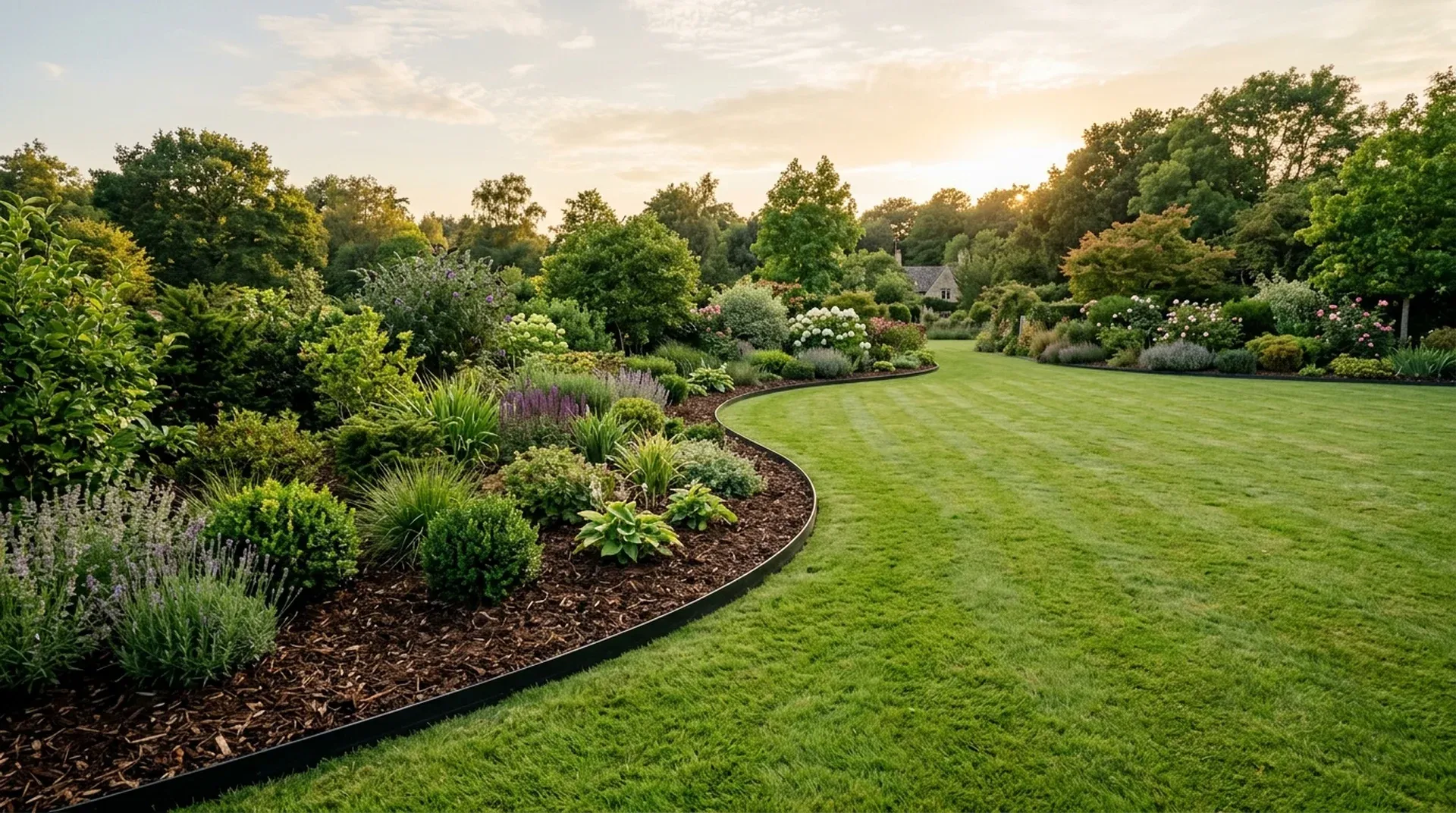
The best landscape edging depends on the job. Steel or aluminum gives you a long-lasting, discreet line that keeps grass out of beds. Plastic is the cheap, easy choice for curvy DIY borders, and brick, pavers or stone make a decorative strip you can mow over. If you'd rather not buy anything, a spade-cut edge works too.
Whatever you choose, set it deep enough for your grass. Roughly 4 inches holds back Kentucky bluegrass, while Bermudagrass calls for edging at least 6 inches into the soil.
Do you need landscape edging?
You don't strictly need it, but it saves work. LSU AgCenter lists the main jobs a solid edge does:
- Keeps grass out of beds, which is the big one.
- Holds mulch in place so rain doesn't wash it (and fertilizer) onto the lawn or into drains.
- Gives your string trimmer a backstop, so you can trim right up to the bed without damage or mess.
University of Illinois Extension adds that good edging should blend in, cut down on hand trimming and contain mulch. For more ways to cut yard chores, see our low-maintenance front yard ideas.
Types of landscape edging compared
How the common materials compare:
|
Edging |
Looks |
Holds up |
Best for |
Watch out for |
|---|---|---|---|---|
|
Spade-cut (no material) |
Natural, crisp |
Needs recutting |
Tight budgets, cool-season lawns |
Touch-ups once or twice a year |
|
Plastic |
Visible rolled top |
Poor durability |
DIY curves, low-traffic beds |
Heaving, sinking, artificial look |
|
Steel |
Thin, discreet |
Long |
Sharp lines, driveway edges |
Cost, rust, sharp top edge |
|
Aluminum |
Thin, comes in colors |
Long, rust-resistant |
Curves and straight runs |
Plain silver can look out of place |
|
Brick, pavers, stone |
Decorative |
Better on a sand or concrete base |
Mow strips, paver walks |
Labor; units must be thick enough to stop grass |
|
Poured concrete curb |
Continuous, solid |
Long |
High-traffic and urban yards |
Needs a contractor's machine |
|
Wood timbers |
Rustic |
Fair; lumber can warp |
Informal beds, mowing edges |
Splitting, old railroad ties |
Spade-cut edge (how to edge a lawn by hand)
The cheapest edge is a trench you cut yourself. Illinois Extension describes the method:
- Cut straight down along the bed line with a sharp spade.
- Pull out the soil and grass on the bed side, leaving a small "cliff" at the lawn edge.
- Recut it as the grass creeps back.
A strip 4 inches deep and wide can easily contain bluegrass, though it's hard work and needs touching up once or twice a year. You can also fill the trench with steel, brick, stone or plastic later.
Plastic
Plastic is the most common homeowner choice because it's cheap and easy to install. Illinois Extension warns that it has poor durability and an artificial look and often won't stay in the ground. If you go with plastic, choose a round-top style, which sinks less than flat strips.
Metal: steel and aluminum
Illinois Extension calls metal the longest-lasting edging. Steel is pricier and harder to install, but it's the pick where you need side strength, such as along a driveway. Aluminum is easier to work with.
Permaloc, an edging maker, notes that aluminum resists rust and comes in black, bronze or green, while steel can rust over time. Permaloc also advises against steel where young children play, since the top edge can hurt if someone falls on it.
Brick, pavers and stone
Masonry makes a decorative border, and LSU notes that brick pairs well with paver walkways. Illinois Extension says to use well-fired brick, and stone at least 3 inches thick and 4 inches wide to stop grass. Master Mark notes that flat concrete bricks make a good mow strip because they remove the need for trimming.
Poured concrete curbing
Continuous concrete curbing is poured by special machines, and Illinois Extension notes that polyolefin fibers in the mix help it resist cracking. LSU calls concrete a long-lasting border for high-traffic areas. This one is a contractor job, since it needs the machine.
Wood, rubber and no-dig kits
Landscape timbers stay in place and make a nice mowing edge, but skip old railroad ties coated with chemicals that are toxic to plants. Master Mark says even treated lumber tends to warp and split, and rubber doesn't hold up as well in harsh sun.
No-dig kits sit on top of the ground, so they're among the cheapest and easiest to install. The trade-off: grass can grow right under them. Edge Right, a metal edging maker, points out that this is especially true of Bermudagrass.
How to choose the right edging
Start with the job you need done, then pick a material:
- Keeping grass out of beds: in-ground steel, aluminum or heavy plastic, set to the depth your grass needs (next section).
- Holding mulch or rock in place: almost anything works. Manufacturer Master Mark says mulch edging often sits 2 inches above ground and 4 inches below. For gravel beds, see our guide to landscape rock.
- Cutting trimming time: a flat mow strip of brick, pavers or concrete. Missouri Extension recommends edges low and flat so a mower can ride over them.
- Paver patios and walks: you need a true edge restraint, not garden edging. Unilock says restraints keep pavers from shifting sideways and are needed everywhere except against a fixed structure like a foundation or wall. Our guide on how to lay pavers covers the base and edging.
- Tight curves: plastic, aluminum or flexible steel. Avoid sharp corners and narrow strips, which Missouri Extension says mowers can't reach.
- Poor drainage: LSU suggests drilling holes in the edging so water can drain out of the bed.
How deep should landscape edging be?
Depth depends mostly on your grass. Grasses that spread by underground runners (rhizomes) can tunnel under shallow edging.
|
Grass or use |
Suggested depth |
Source |
|---|---|---|
|
Kentucky bluegrass (cool-season) |
About 4 inches (hand-cut edge) |
|
|
Bermudagrass (warm-season) |
At least 6 inches into the soil |
|
|
Mulch beds |
Often 4 inches below, 2 inches above |
Even 6 inches isn't a guarantee against Bermudagrass. UC IPM says its rhizomes usually grow 1 to 6 inches deep, but can run deeper in tilled or sandy soil and under sidewalks.
Bermudagrass is a warm-season grass, so this matters most in warmer regions: check the bed side of the edging for runners and pull them early. In cold climates, frost heave is the other common problem. Illinois Extension says grooved or lip-style edging and steel stakes stop most of it.
How to install edging
These steps combine Permaloc and Master Mark guidance; your product's own instructions win where they differ.
- Call 811 first. Any trenching counts as digging. 811 is free; contact it a few business days ahead so utility lines get marked.
- Lay out the line. Use a rope or garden hose for curves. Buy about 10% extra: Master Mark suggests multiplying your running feet by 1.1.
- Dig the trench. Permaloc suggests digging about 1 inch deeper than the edging and removing roots and stones.
- Set and stake it. Aim for the top about 1/2 inch above grade. Permaloc suggests leaving each stake about 2 inches undriven until the line looks right. For coiled plastic, Master Mark recommends letting the coil warm in the sun first and staking at least every 4 feet, plus each end and through curves.
- Backfill and settle. Pack soil against the lawn side, then water both sides so the soil settles, adding more if needed.
- Fill the bed. Add mulch or rock. Our guide to how much mulch you need shows how much to order.
What landscape edging costs
Installed edging usually runs $3.50 to $8.80 per linear foot, according to LawnStarter (updated December 2025). That's about $350 to $880 for 100 feet. Lawn Love (updated October 2026) gives a wider $2 to $11.50 per linear foot. It puts the national average near $1,170 for a typical job of about 180 feet.
Material alone, before labor, per linear foot:
|
Material |
LawnStarter |
Lawn Love |
|---|---|---|
|
Plastic |
$1 to $3.50 |
$0.50 to $3.25 |
|
Rubber |
$1.50 to $4 |
$2.25 to $4.25 |
|
Brick |
$2.50 to $6.50 |
$2 to $4 |
|
Wood |
$2.50 to $7 |
$2.90 to $8 |
|
Precast concrete |
$3 to $5.50 |
$2 to $3.50 |
|
Poured concrete |
$3 to $8 |
$3 to $8 |
|
Stone |
$3 to $21.50 |
$2.50 to $10 |
|
Metal or steel |
$5 to $11 (metal) |
$1.70 to $4.70 (steel) |
|
Granite |
Not listed |
$15.50 to $24.50 |
Both guides put labor at about $1.50 to $10 per linear foot. Location matters: LawnStarter's installed range runs from $3.10 to $7.50 per foot in Dothan, Alabama, to $4.20 to $11.20 in New York City. For edging as part of a bigger project, see what landscaping costs.
When to call a pro
Plastic or metal edging is a common DIY job. Hire a landscaper or hardscaper for poured concrete curbing, long runs of brick or stone, paver edge restraints, or yards with slopes and drainage problems. If your edging has to hold back soil on a slope, you're really building a retaining wall. Walls over about 4 feet call for a licensed pro; see our retaining wall cost guide.
Before you hire:
- Get 2 or 3 written quotes that list the material, the linear footage, the depth and how the edging is anchored.
- Ask for photos of similar work, ideally a few years old.
- Check licensing and insurance where your state requires it.
- Ask who calls 811 and who pays if a sprinkler line gets cut.
- Get the scope and payment schedule in writing, and check HOA rules if you're changing a front-yard border.
You can find landscaping pros or hardscaping pros near you on LandscapeLookup for free, with no sign-up. Pros are ranked by their Google rating weighted by review count, plus how local they are and their main service, and you contact them directly.
Editorial team
The LandscapeLookup editorial team writes guides to help US homeowners plan yard projects and hire the right pro. Each guide is based on university extension services, government sources such as EPA WaterSense and USDA, manufacturer instructions and published cost guides, and links to them so you can check the details.
Keep reading
How Much Does Artificial Turf Cost?
Professional artificial turf installation runs about $5 to $20 per sq ft, with recent cost guide averages running about $13 to $20. A typical 500 sq ft yard costs roughly $2,700 to $10,000, depending on turf quality, prep work and where you live.
October 15, 2026
How to Build a Rain Garden
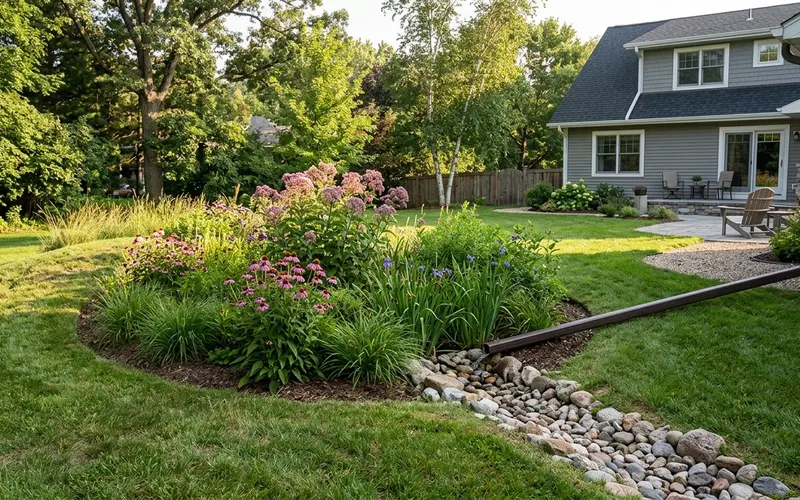
Pick a spot at least 10 feet from the house where runoff flows but water doesn't already pond, dig a level basin 3 to 8 inches deep (usually 100 to 300 sq ft), berm the low side and plant natives that handle wet and dry.
October 13, 2026
Landscape Rock: Types, Costs and Where to Use It
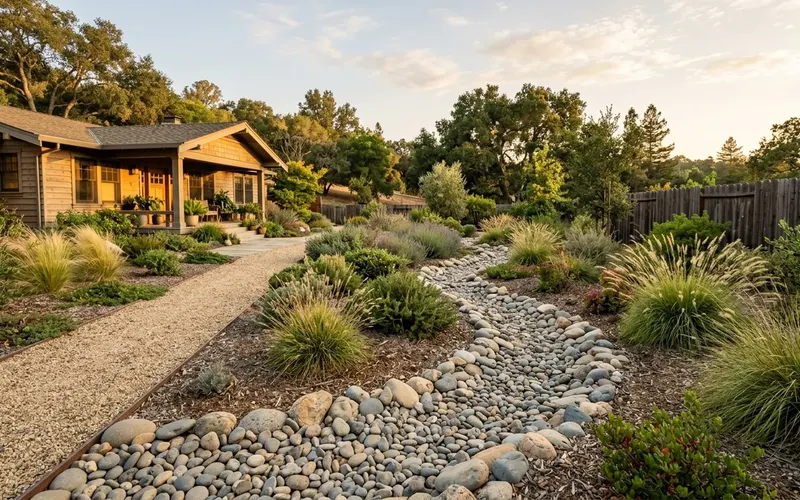
Common landscape rock like pea gravel, crushed stone, river rock and lava rock runs about $10 to $220 per ton in 2026 cost guides. It works best on paths, dry creek beds and in desert or wildfire-prone yards, and less well in most planting beds.
October 11, 2026