Ground Cover Plants That Can Replace Grass
Most ground covers can't handle foot traffic the way grass does, so use clover or a flowering bee lawn where you walk, and plants like sedges, junipers or pachysandra on slopes, in shade and in strips you never step on.
By LandscapeLookup Editors7 min read
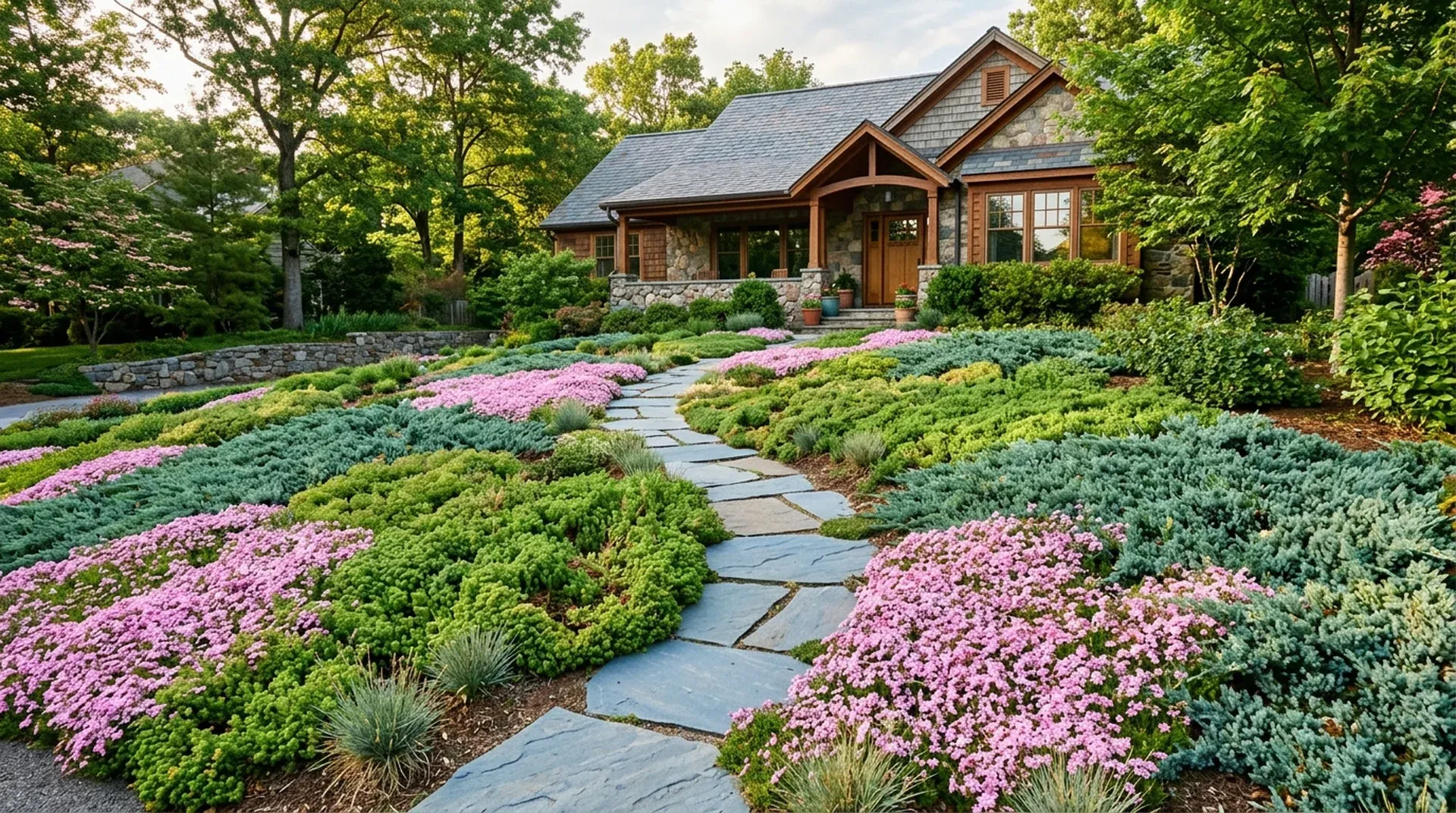
Ground cover plants can replace grass, but mostly in the places you don't walk. Extension services agree that most ground covers can't handle foot traffic like turf. So the best swaps are slopes, shade, narrow strips and spots under trees. Where you walk and play, your best bet is clover or a flowering "bee lawn" mixed into low-input grass.
Here's how to pick the right plant for your spot, which popular ones to avoid, and how to make the switch.
Can ground cover really replace your lawn?
Only partly. Clemson Extension puts it plainly: unlike grass, most groundcover plants cannot be walked on. Virginia Cooperative Extension agrees that most groundcover species are intolerant of foot traffic. And the University of Minnesota says not many plants besides turfgrass can take being mowed short and stepped on.
So split your yard by how you use it:
- Spots you walk on often: keep some grass, or plan a path. Colorado State suggests a patio, flagstone path or sidewalk for heavily traveled areas. Its ground cover fact sheet says to install a walkway before planting wherever you expect traffic.
- Spots grass hates: Clemson says ground covers are used most on steep slopes, in shade, over shallow tree roots, and in very wet or very dry spots.
- Strips too small to mow: Maryland Extension suggests ground covers for areas too awkwardly shaped or too small to mow.
Ground covers you can walk on
A few low lawn alternatives handle light use. Virginia Extension lists walk-on ground covers using a grower's traffic ratings. Light means 1 or 2 trips a week, moderate means 1 or 2 a day, and heavy means 3 or more a day.
|
Option |
Traffic it takes |
Watch out for |
|---|---|---|
|
Fine fescue bee lawn with white clover and self-heal |
Light to moderate (Minnesota) |
Needs sun to part sun, not deep shade |
|
Microclover mixed into grass |
Not rated |
Struggles in heat, drought and shade, and dies back in winter (Illinois) |
|
Bronze Dutch clover, golden creeping speedwell |
Moderate (Virginia) |
Rated for about 1 or 2 trips a day |
|
Creeping thyme |
Low (Nebraska) |
Sunny spots; good between pavers |
Minnesota's bee lawn research is a good model for cool-season lawns in the North. It pairs fine fescues with white clover and self-heal, and you can still use it like a regular lawn. You mow it at 3 inches or more every 2 to 3 weeks. The same page no longer recommends creeping thyme for bee lawn mixes. It also warns that white clover varieties bred for southern states won't do well in the Midwest, so buy seed suited to your region.
What are the best ground cover plants for your site?
Start with your site, not the plant. Maryland Extension says success is more likely when you choose plants that suit the current site conditions instead of changing the site. Full sun means 6 or more hours of direct summer sun.
|
Site |
Good choices |
Source |
|---|---|---|
|
Hot, dry, full sun |
Creeping juniper, stonecrop (sedum), hens-and-chicks, creeping phlox |
|
|
Dry shade |
Pennsylvania sedge, wild ginger, barrenwort (epimedium), green-and-gold |
|
|
Shade, well-drained soil |
Foamflower, wild geranium, hosta, sweet woodruff |
|
|
Under trees, among roots |
Pachysandra (the native Allegheny type where Japanese pachysandra is invasive), barrenwort |
|
|
Wet, sunny spots |
Blue flag iris, marsh marigold, blue mistflower |
|
|
Seaside or road salt |
Shore juniper |
Check your climate, too. Virginia Extension rates shore juniper for zones 6 to 9 and creeping juniper for zones 4 to 9. Clemson says pachysandra does best in the Midlands and Upstate of South Carolina. In desert yards, Arizona Extension says a dense ground cover is nearly impossible without supplemental irrigation, even with drought-tolerant plants. For whole-yard water savings, see our guide to xeriscaping.
Low-water grass is another option
Want something that still looks and acts like lawn? Colorado State notes that Kentucky bluegrass needs about 1.5 inches of extra water a week above 85°F. It suggests buffalo grass or turf-type tall fescue instead. Tall fescue also stands up to kids playing.
Which ground covers choke out weeds?
Dense, taller, evergreen ground covers block weeds best. Virginia Extension explains that ground covers 1 foot or shorter are generally more prone to weed infestation because more light reaches the soil. Plants that die back in winter also let weeds in more easily. Clemson says pachysandra effectively crowds out many weeds.
But no ground cover fights established weeds well at first. Clemson says to clear perennial weeds before planting since most cannot compete against established weeds.
Fast growth helps, with a catch. Virginia Extension says areas larger than about 100 square feet need plants that fill in quickly. But Colorado State warns that some ground covers grow so fast they can become invasive.
Which popular ground covers should you avoid?
Several widely grown ground covers escape into woods and natural areas. Clemson specifically warns against ivy and periwinkle, and Virginia Extension notes that English ivy is a problem especially in the Pacific Northwest.
Maryland Extension says these can be invasive in Maryland:
- English ivy and wintercreeper euonymus
- Periwinkle (Vinca minor and Vinca major)
- Japanese pachysandra and bugleweed (ajuga)
- Creeping Jenny and creeping Charlie (ground ivy)
- Bishop's goutweed, yellow archangel and chameleon plant
- Creeping lilyturf and European lily-of-the-valley
Invasive status varies by state, and Maryland, for one, regulates the sale of some of these plants. Before you buy a non-native ground cover, check your state's invasive plant list or ask your county extension office. If you plant a spreader anyway, Maryland suggests garden bed edging along the lawn to keep it out of the turf. Our guide to landscape edging covers the options.
How to replace grass with ground cover
- Call 811 first. If you'll dig, till or rent a sod cutter, contact 811 a few business days ahead so buried lines get marked.
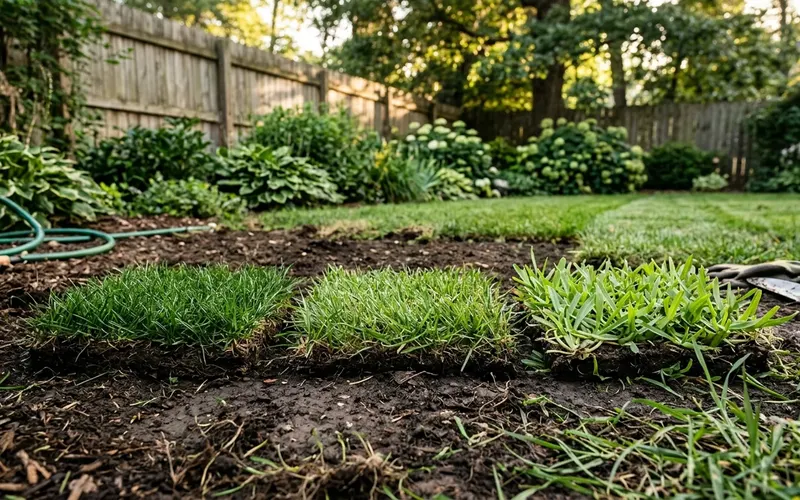
- Remove the grass. Maryland says it's simplest to remove the sod before planting rather than tucking plants into lawn. Minnesota lists solarizing under clear plastic for about a month in warm weather, cutting sod, or herbicide. If you use herbicide, follow the label, and know that some states and towns restrict lawn pesticides. LawnStarter puts pro grass removal at $0.60 to $1.20 per square foot, or $600 to $1,200 for 1,000 square feet. Prices run higher where the cost of living is higher.
- Prep the soil. Clemson calls poor soil prep a frequent cause of failure. It recommends working the soil 8 to 10 inches deep and mixing in a 2-inch layer of compost, guided by a soil test.
- Plant in fall or early spring. Clemson favors fall planting for cooler temperatures and natural rain. Arizona recommends mid-fall or early spring so roots grow before summer heat.
- Space for coverage in about 3 seasons. Clemson suggests spacing so the bed fills in by the end of the third growing season, in staggered rows. Spacing depends on the plant: Illinois spaces ajuga 8 to 12 inches apart. Closer spacing covers faster but costs more, as Virginia Extension notes, and Maryland says small plugs are relatively cheap per plant in bulk.
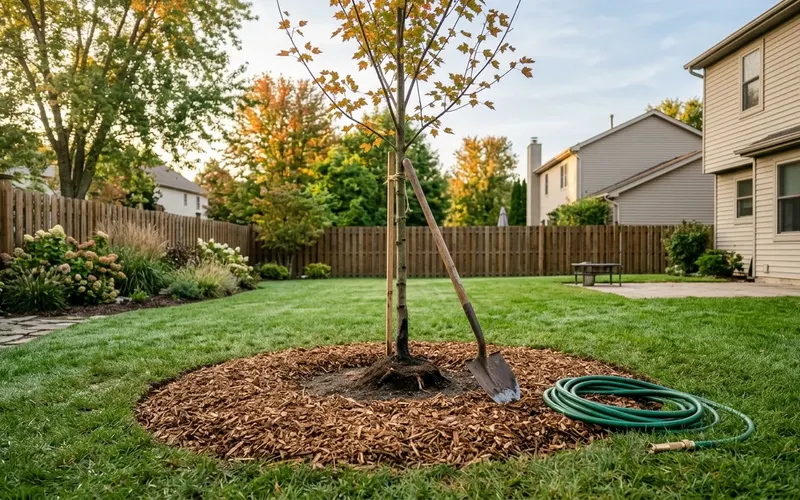
- Mulch and water. Clemson recommends 2 inches of mulch until plants fill in, plus coarse netting on slopes. Maryland says to water when the soil a few inches down is mostly dry, then skip mulch once plants establish so they can spread. Follow any local watering restrictions. Our guide on how much mulch you need does the math.
Use this table to estimate how many plants to buy:
|
Spacing |
Plants per sq ft |
Plants for 100 sq ft |
|---|---|---|
|
6 inches |
4 |
400 |
|
8 inches |
2.25 |
225 |
|
12 inches |
1 |
100 |
|
18 inches |
0.44 |
44 |
What to expect after planting
Be patient. Clemson says it may take up to two years to establish a ground cover area. Colorado State adds that all ground cover plantings require maintenance, though evergreens like creeping juniper need little. Arizona Extension warns that many beds develop bare spots within two to four years and may need replanting. Once established, Maryland says well-suited plantings tend to be low maintenance compared with lawn. For more ways to cut yard work, see our low-maintenance front yard ideas.
When to call a pro
A landscaper is worth it for large areas and steep slopes. It also makes sense when lawn removal, grading and soil prep add up to more than a weekend's work. Before you remove much lawn, check your HOA rules on lawn area and plantings. Also ask your water utility whether it offers lawn replacement rebates and what it requires before you start. Our xeriscaping guide explains how rebates work.
Before you hire:
- Get 2 or 3 written quotes that list grass removal method, soil prep, plant species, pot size and spacing.
- Ask for photos of similar plantings that are a few years old, not just freshly planted.
- Check licensing and insurance where your state requires it.
- Get the scope, plant warranty and payment schedule in writing.
You can find landscaping pros near you on LandscapeLookup for free, with no sign-up. Pros are ranked by Google rating weighted by review count, plus how local they are and their main service, and you contact them directly. If you're keeping part of the lawn, you can also find lawn care pros.
Editorial team
The LandscapeLookup editorial team writes guides to help US homeowners plan yard projects and hire the right pro. Each guide is based on university extension services, government sources such as EPA WaterSense and USDA, manufacturer instructions and published cost guides, and links to them so you can check the details.
Keep reading
How Much Does Artificial Turf Cost?
Professional artificial turf installation runs about $5 to $20 per sq ft, with recent cost guide averages running about $13 to $20. A typical 500 sq ft yard costs roughly $2,700 to $10,000, depending on turf quality, prep work and where you live.
October 15, 2026
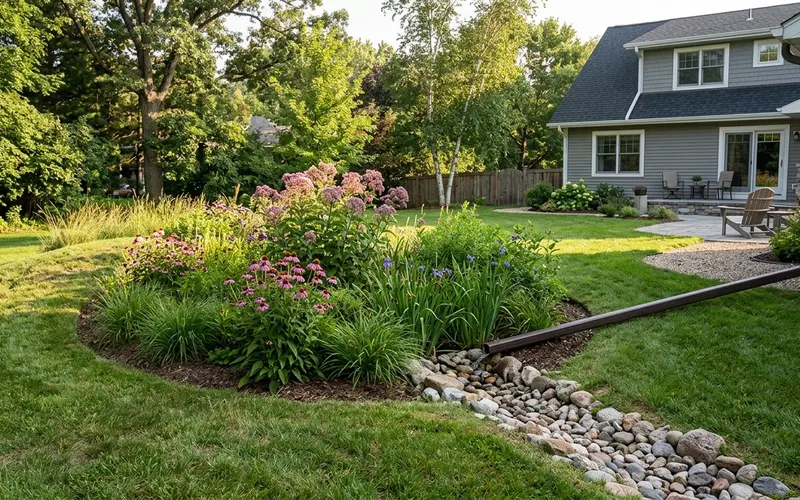
How to Build a Rain Garden
Pick a spot at least 10 feet from the house where runoff flows but water doesn't already pond, dig a level basin 3 to 8 inches deep (usually 100 to 300 sq ft), berm the low side and plant natives that handle wet and dry.
October 13, 2026
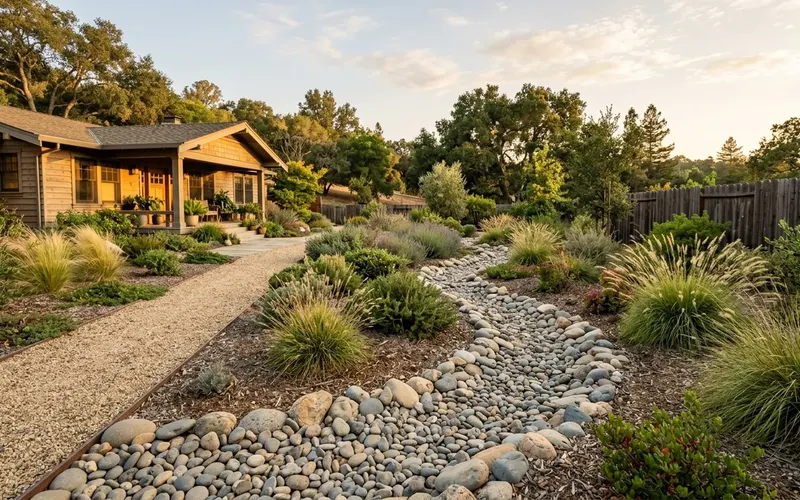
Landscape Rock: Types, Costs and Where to Use It
Common landscape rock like pea gravel, crushed stone, river rock and lava rock runs about $10 to $220 per ton in 2026 cost guides. It works best on paths, dry creek beds and in desert or wildfire-prone yards, and less well in most planting beds.
October 11, 2026