
62 landscape pros in Clearwater, FL, with an average Google rating of 4.7. Listings are ranked by rating weighted by review volume, so a 4.9 from hundreds of customers ranks above a 5.0 from three.
62 pros, ranked by rating and review volume












Local guide
Clearwater requires a permit to remove most trees 4 inches or more in diameter, assigns its own watering days, runs a reclaimed water system and makes contractors haul away their own yard debris. Fertilizer follows Pinellas County's rules. For zones, statewide grasses and licensing, see the Florida guide.
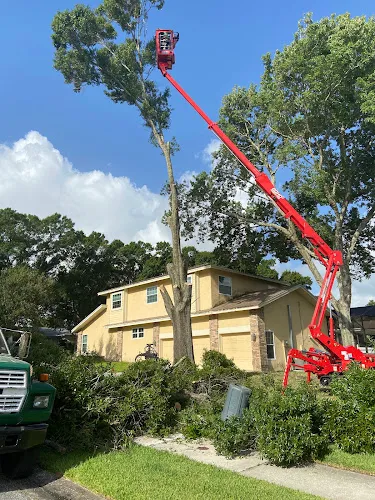
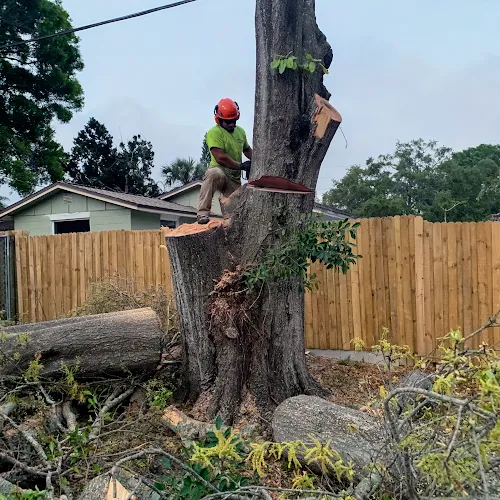
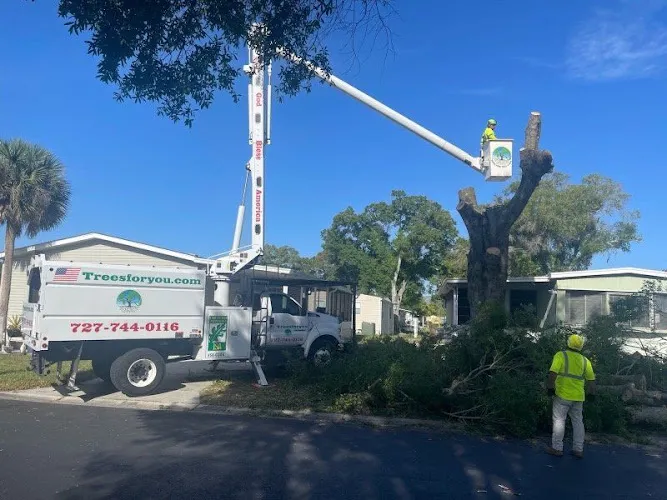
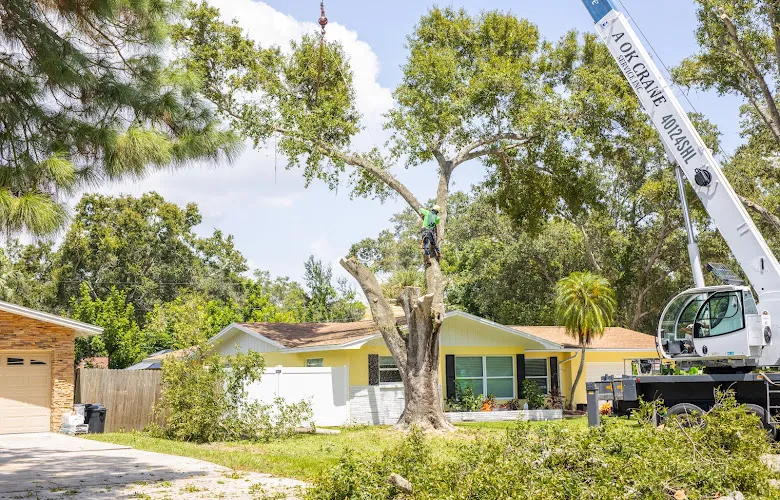
Clearwater's tree removal page says a permit is required to remove any protected tree, and the threshold is low:
The application checklist sets the process. First confirm you're in the city: the Pinellas County Property Appraiser's tax district should read Clearwater, CW, CWD or CWDO. The fee is $15 for one to five trees plus $3 for each additional tree, a city arborist inspects within 1 to 3 business days, and approved trees must come down within six months. The city recommends an ISA certified arborist and an insured contractor, who can pull the permit; a homeowner can apply too, with proof of residency, but takes on more liability. Tree services apply online and need a city Business Tax Receipt. Questions: (727) 562-4567 or [email protected].
If you remove a tree under the state's dangerous-tree exemption instead, Solid Waste staff may ask for the arborist's letter before hauling the debris.
In the right-of-way, Public Works works with certified arborists to assess trees and prioritize maintenance, and you can report a problem tree online.
The City of Clearwater points residents to Pinellas County's seasonal restrictions. The county ordinance bans nitrogen and phosphorus on lawns and landscapes from June 1 through September 30, and retailers can't sell them then either. Year-round, it requires a soil test before any phosphorus, at least 50 percent slow-release nitrogen in granular products, and a 10-foot fertilizer-free zone from water bodies, seawalls and wetlands. It also bans fertilizing during storm or flood watches and warnings, or when 2 inches of rain or more is forecast within 24 hours.
Clearwater sets its own watering days, not the district's address-digit schedule. Under a Modified Phase III water shortage order from the Southwest Florida Water Management District, for example:
Days and hours change when the district's orders change, so check with the city's water conservation hotline, (727) 562-4960, option 7.
Several neighborhoods are on the city's reclaimed water system, which can run any day but not between 10 a.m. and 4 p.m. Call Utility Customer Service at (727) 562-4600 to check availability; if your street isn't served, there's a petition form to request it. The county notes that reclaimed water already contains nutrients, so cut fertilizer accordingly.
The city collects yard waste weekly on your trash day, but only what the property owner cut and gathered. Debris from a tree service or landscaper must be removed by that company. Your own limbs go out in 4-foot lengths, no more than 24 hours before pickup.
On Gulf beach lots seaward of the state's coastal construction control line, the Florida Department of Environmental Protection says native dune plants such as sea oats and seagrapes can't be cut down or damaged without a CCCL permit. Normal trimming that doesn't harm them, and work on ornamental or non-native plants, doesn't need one.
After salty or brackish flooding, UF/IFAS Pinellas Extension advises flushing the root zone with fresh water, rinsing foliage and waiting for new growth before pruning. On flood-prone sites, choose plants that tolerate flooding or salt.
The UF/IFAS Pinellas County Extension office is at 12520 Ulmerton Rd. in Largo, (727) 582-2100. Its plant help desk takes emailed questions and photos at [email protected]. Soil tests aren't run locally: samples are mailed to the UF/IFAS lab. Master Gardener volunteers hold a plant clinic on the second Saturday of each month at Folly Farms in nearby Safety Harbor. See also how to test your lawn soil.
Quotes vary with lot size, access and the work. These national ranges from our cost guides are a starting point:
Usually, yes. The City of Clearwater requires a permit to remove any protected tree, which means any nonhazardous tree 4 inches or more in diameter at breast height, or a palm with 10 feet of clear, straight trunk. The fee is $15 for one to five trees plus $3 for each additional tree, and a city arborist inspects within 1 to 3 business days.
The city recommends hiring an ISA certified arborist and an insured contractor, who can get the permit directly; tree services need a city Business Tax Receipt to apply online. A homeowner can also apply, with proof of residency at the address, but takes on more liability. Once approved, the tree has to come down within six months.
No. Clearwater collects yard waste only when the property owner cut and gathered it, and debris from a tree trimming company or landscaper must be removed by that company. If a tree was removed without a city permit under the state's dangerous-tree exemption, Solid Waste staff may ask for the arborist's letter before picking up the debris.
Clearwater assigns its own watering days by address: even-numbered addresses on Wednesday, and odd, mixed or no addresses on Thursday. Hours depend on the Southwest Florida Water Management District's orders; under a Modified Phase III order, for example, sprinklers could run only from midnight to 4 a.m. or from 8 p.m. to midnight. The city's water conservation hotline, (727) 562-4960, option 7, has the current rules.
Several Clearwater neighborhoods are on the city's reclaimed water system, which can be used any day of the week but not between 10 a.m. and 4 p.m. Call Utility Customer Service at (727) 562-4600 to see whether your street is served; if it isn't, the city has a petition form to request service. Reclaimed water already contains nutrients, so Pinellas County advises cutting back on fertilizer.
Clearwater follows Pinellas County's seasonal restrictions, which ban fertilizer containing nitrogen or phosphorus on lawns and landscapes from June 1 through September 30. Year-round, phosphorus needs a soil test showing a deficiency, and no fertilizer can go within 10 feet of a water body, seawall or wetland.
Other cities in Florida
More landscape pros in the area
Guides
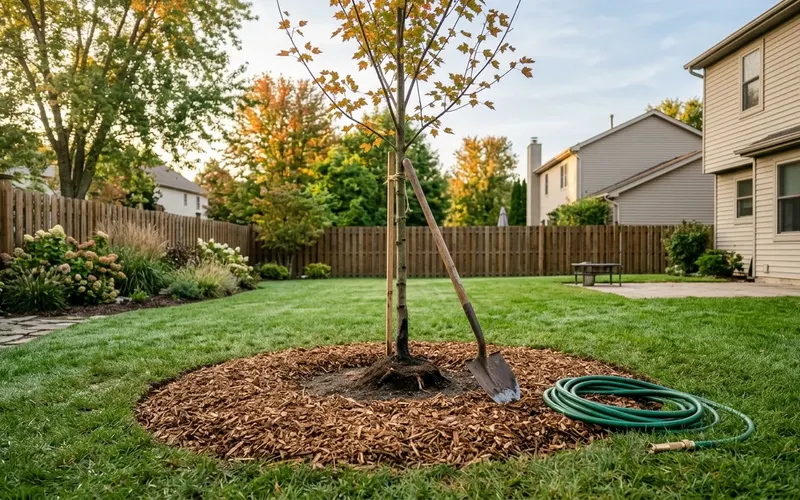
Plant in fall after leaf drop or in early spring before bud break. Dig a hole 2 to 3 times wider than the root ball but no deeper, set the root flare at or just above grade, backfill with the soil you dug out, water well and mulch 2 to 3 inches deep without touching the trunk.
October 30, 2026
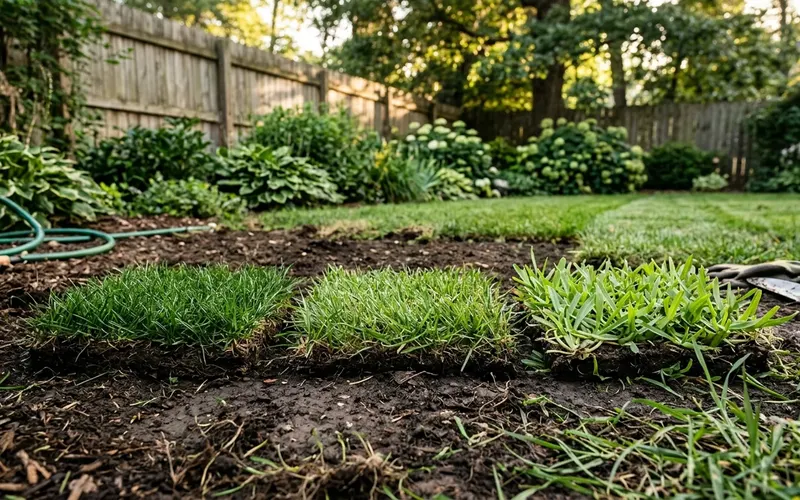
Lawn grasses are cool-season (Kentucky bluegrass, tall fescue, perennial ryegrass, fine fescue) for the North or warm-season (Bermuda, zoysia, St. Augustine, centipede, bahia, buffalograss) for the South. Pick by region first, then by sun, traffic and water.
October 28, 2026
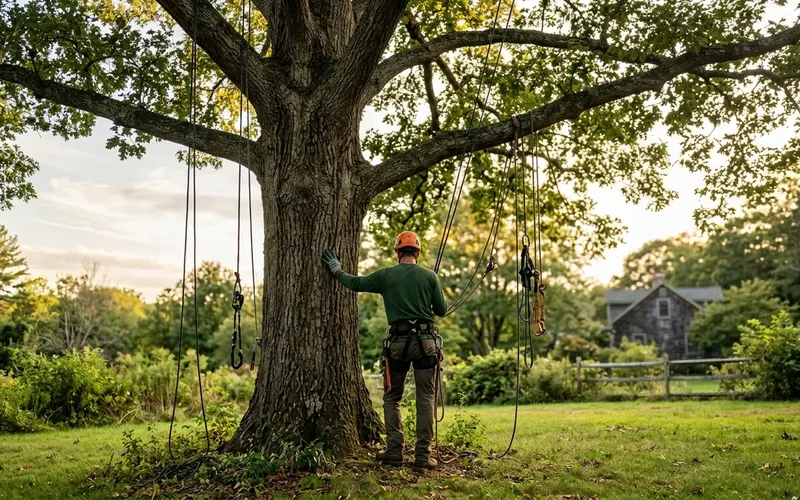
An ISA Certified Arborist has at least 3 years of tree care experience, passed a 200-question exam and keeps up with continuing education. Hire one for large-tree pruning, risk checks, removal decisions and sick trees.
October 26, 2026
For landscape pros
Claim your free listing to keep your details right, add photos and earn the Verified badge. Not listed yet? Add your business.