
309 landscape pros in Jacksonville, FL, with an average Google rating of 4.7. Listings are ranked by rating weighted by review volume, so a 4.9 from hundreds of customers ranks above a 5.0 from three.
309 pros, ranked by rating and review volume













Local guide
Jacksonville sits in Duval County, inside the St. Johns River Water Management District, and the city adds its own rules for watering, fertilizer and trees. This guide covers those rules, freezes, salt near the Beaches and local help. For the statewide picture, see the Florida guide.
The city's irrigation and fertilizer page lists the Duval County schedule by address:
A declared water shortage replaces this schedule with stricter rules. Under the district's Phase III restrictions, lawns can be watered one day a week and never between 8 a.m. and 6 p.m.
Reclaimed water and well users follow the same schedule, private wells can't be used for landscape irrigation where reclaimed water is available, and all but the oldest automatic sprinkler systems need a working rain sensor or shutoff switch. Nocatee residents follow a separate zone-based schedule.
The city's fertilizer ordinance covers homeowners as well as lawn care businesses. Its posted rules set no summer blackout months. Instead:
Jacksonville's Urban Forestry FAQ says the right-of-way is typically the area between the street and the back of the sidewalk. Removal requests go through 630-CITY, and the city removes a tree only after a risk assessment. If a request is denied, the homeowner can apply for a permit through the Building Inspection Division and pay for the work. The city's tree protection code requires a permit to trim, remove or disturb the roots of any tree in a public right-of-way.
On private property, the code exempts trees on a lot with an occupied single-family home or mobile home, if the lot can't be further subdivided. Claiming the exemption can still call for a permit, a fee and proof the lot qualifies, so ask the Building Inspection Division first. Under section 163.045 of the Florida Statutes, no permit, fee or replanting can be required to remove a tree from a single-family lot when an ISA certified arborist or Florida-licensed landscape architect documents that it poses an unacceptable risk.
Jacksonville Beach has its own rules: it protects any tree six inches or more in diameter unless the species is listed as unprotected, and removal takes an application to the city.
Hard freezes reach Jacksonville: after one, UF/IFAS Duval County Extension wrote that local landscapes and lawns turned brown almost overnight. Its late-fall advice: don't prune evergreen shrubs and trees in fall or winter, because new tender growth can be damaged by freezes, and leave frozen-back tropical plants until spring, since the dead stems protect the crown.
UF/IFAS Gardening Solutions says plants within about one-eighth of a mile of a saltwater coast should be at least somewhat salt tolerant. It names live oak and southern red cedar as safe trees, cabbage palm and saw palmetto among the best palms, and beach sunflower and gaillardia for groundcover and flowers.
The UF/IFAS Duval County Extension office is at 1010 N. McDuff Avenue (904-255-7450). It tests soil pH for Duval County residents, with results in about 14 days; nutrient tests go to the UF lab in Gainesville. Master Gardener volunteers answer questions called in to the office and hold plant clinics at local nurseries, and volunteers will review your yard for Florida-Friendly Yard Recognition. See also how to test your lawn soil.
Quotes vary with lot size, access and the work. These national ranges from our cost guides are a starting point:
Duval County follows the St. Johns River Water Management District schedule, based on your address. During daylight saving time, odd-numbered or unnumbered homes water on Wednesday and Saturday and even-numbered homes on Thursday and Sunday; during Eastern Standard Time it drops to Saturday for odd and Sunday for even addresses. During a declared water shortage, stricter rules replace this schedule, such as one day a week and no watering between 8 a.m. and 6 p.m. under Phase III, so check the city or district before setting a timer.
The City of Jacksonville's posted fertilizer rules set no summer blackout months. Instead, they ban fertilizing during a flood watch or warning, a tropical storm watch or warning, a hurricane's three-day cone of uncertainty, or when heavy rain is expected. The rules also cap nitrogen and phosphorus per application and require fertilizer-free buffers next to ponds, wetlands, canals and seawalls.
The city's tree protection code exempts trees on a lot with an occupied single-family home or mobile home that can't be further subdivided, but where an exemption is claimed, the code calls for an exemption permit, a fee and proof the lot qualifies, so check with the Building Inspection Division first. Trimming or removing a tree in the public right-of-way needs a city permit. Florida law also bars local permits or fees for removing a tree on a single-family lot when an ISA certified arborist or licensed landscape architect documents that it poses an unacceptable risk.
The strip between the street and the back of the sidewalk is typically part of the city right-of-way. Request a removal through 630-CITY; the city removes trees only after a risk assessment, and trimming or removing a right-of-way tree yourself needs a city permit. If the request is denied, you can apply for a permit through the Building Inspection Division and pay for the work yourself.
UF/IFAS Duval County Extension advises leaving frozen-back tropical plants alone until spring, because the dead stems protect the crown. It also says not to prune evergreen shrubs and trees in fall or winter, since the new tender growth that pruning can trigger may be damaged by a freeze.
The UF/IFAS Duval County Extension office at 1010 N. McDuff Avenue tests soil pH for Duval County residents, with results in about 14 days. Nutrient tests are sent to the UF soil testing lab in Gainesville. You can reach the office at 904-255-7450.
Other cities in Florida
More landscape pros in the area
Guides
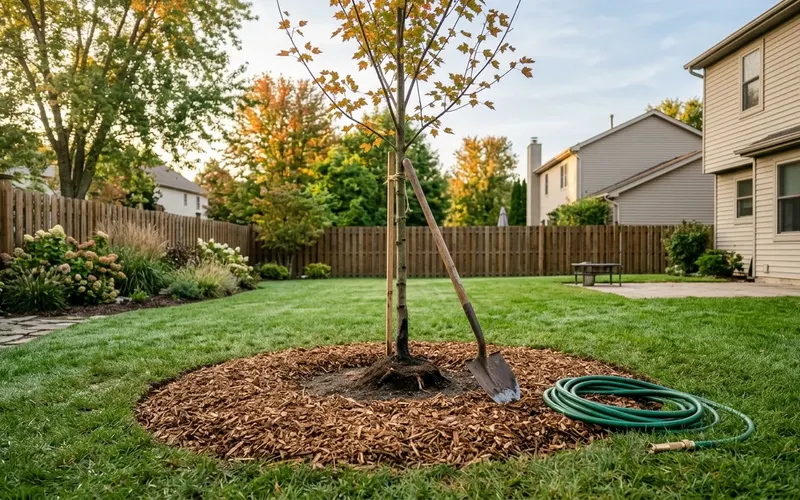
Plant in fall after leaf drop or in early spring before bud break. Dig a hole 2 to 3 times wider than the root ball but no deeper, set the root flare at or just above grade, backfill with the soil you dug out, water well and mulch 2 to 3 inches deep without touching the trunk.
October 30, 2026
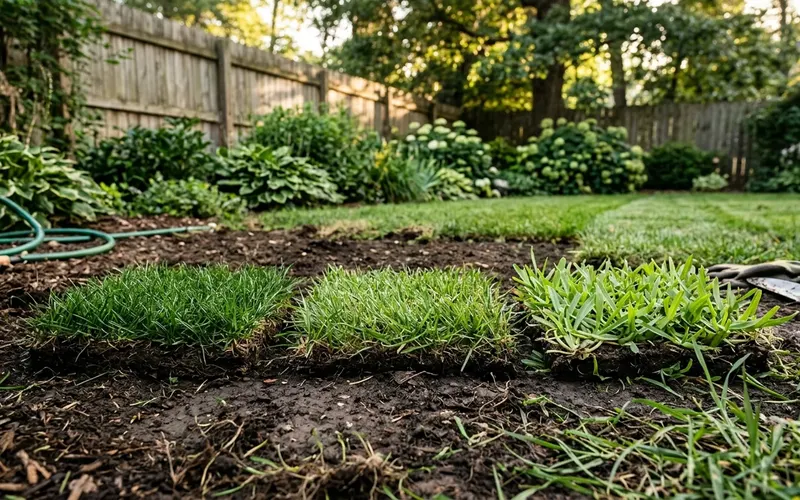
Lawn grasses are cool-season (Kentucky bluegrass, tall fescue, perennial ryegrass, fine fescue) for the North or warm-season (Bermuda, zoysia, St. Augustine, centipede, bahia, buffalograss) for the South. Pick by region first, then by sun, traffic and water.
October 28, 2026
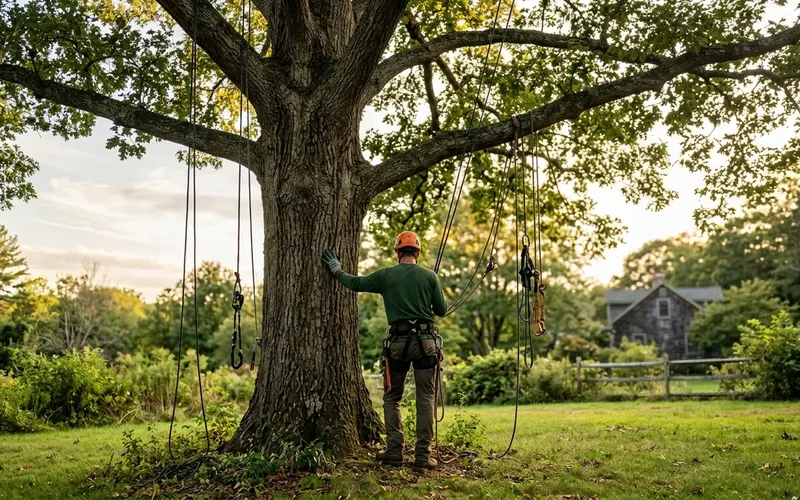
An ISA Certified Arborist has at least 3 years of tree care experience, passed a 200-question exam and keeps up with continuing education. Hire one for large-tree pruning, risk checks, removal decisions and sick trees.
October 26, 2026
For landscape pros
Claim your free listing to keep your details right, add photos and earn the Verified badge. Not listed yet? Add your business.