
76 landscape pros in St. Augustine, FL, with an average Google rating of 4.7. Listings are ranked by rating weighted by review volume, so a 4.9 from hundreds of customers ranks above a 5.0 from three.
76 pros, ranked by rating and review volume













Local guide
St. Augustine has five local Historic Preservation zoning districts (HP-1 to HP-5) and, as the city's property owner guide puts it, an abundance of archaeological resources. Both affect yard work: tree removal, fences and even digging can need city review. For statewide grasses, soils and licensing, see the Florida guide.
The city's tree removal page says Section 25-56 of the City Code requires a permit from the Planning and Building Department before removing a tree 3 inches or more in diameter at breast height. Questions go to 904-825-1066.
One exception: under section 163.045 of the Florida Statutes, a local government can't require a permit, fee or replanting to prune or remove a tree at a single-family home if the owner has a signed assessment from an ISA certified arborist or a Florida licensed landscape architect showing the tree poses an unacceptable risk.
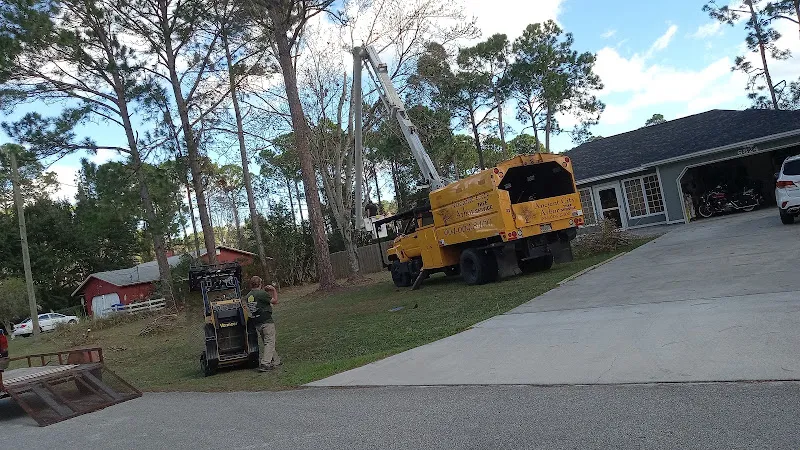
For a tree in the city right-of-way, the city's right-of-way FAQ says the owner first gets the tree removal permit, then the tree company needs a separate right-of-way permit from Public Works; the owner pays for the work. Owners are also responsible for repairing the sidewalk in front of their property, which takes a licensed, insured contractor and a right-of-way permit.
The city's HARB applications page says most work in the HP districts needs a Certificate of Appropriateness from the Historic Architectural Review Board before a building permit is issued. Staff are at [email protected].
Applications are reviewed against the city's Architectural Guidelines for Historic Preservation, which say:
The city has 18 archaeological zones. Its archaeology review page says a project needs review if it is tied to a building or right-of-way permit, is in a zone, disturbs the ground more than 3 inches deep and covers 100 square feet or more. Zone maps are approximate, so call Planning and Building at 904-825-1065 to check your lot.
The St. Johns River Water Management District sets these watering days when no shortage is declared:
|
|
Daylight saving time |
Eastern Standard Time |
|---|---|---|
|
Odd-numbered or no address |
Wednesday and Saturday |
Saturday |
|
Even-numbered address |
Thursday and Sunday |
Sunday |
|
Nonresidential |
Tuesday and Friday |
Tuesday |
In a drought the district can tighten this: under its Phase III extreme water shortage, which has covered portions of St. Johns County, irrigation is limited to one day a week (the Eastern Standard Time days) and banned between 8 a.m. and 6 p.m. Check the district's page before setting a timer.
The city's fertilizer page says City Code Section 11-2 applies to everyone who fertilizes in the city, homeowners included. No fertilizer with nitrogen or phosphorus during a flood, tropical storm or hurricane watch or warning, or when 2 inches or more of rain is likely within 24 hours, and none within 10 feet of ponds, waterways or wetlands (3 feet with a deflector shield or drop spreader). Landscaping and lawn care businesses need at least one employee with a Green Industries Best Management Practices certificate.
UF/IFAS Extension's coastal landscapes page says plants within about one-eighth of a mile of saltwater should be at least somewhat salt tolerant, and suggests fences, sturdy shrubs or groups of trees as windbreaks.
The UF/IFAS St. Johns County Extension office is at 3125 Agricultural Center Drive, St. Augustine (904-209-0430). Master Gardener volunteers there test soil pH free for county residents (up to three samples of 1 to 2 cups each) and take plant problem photos at [email protected]. See also how to test your lawn soil.
Quotes vary with lot size, access and permits. These national ranges from our cost guides are a starting point:
Usually, yes. Section 25-56 of the City Code requires a permit from the Planning and Building Department before removing a tree 3 inches or more in diameter at breast height, and southern red cedars need a permit once they are taller than 2 feet. An approved removal must be replaced with two similar trees on the site, or the applicant may be allowed to pay $300 per replacement tree into the city's Tree Mitigation Fund. Under state law, a single-family homeowner with a signed assessment from an ISA certified arborist or Florida licensed landscape architect showing the tree poses an unacceptable risk doesn't need a permit.
The property owner first gets a tree removal permit from the Planning and Building Department. The tree company then needs a separate right-of-way permit from Public Works. The property owner pays for the removal.
Most work in the city's five Historic Preservation zoning districts (HP-1 to HP-5) needs a Certificate of Appropriateness from the Historic Architectural Review Board before a building permit is issued. The city's Architectural Guidelines for Historic Preservation say cinder block walls and chain link, wire, rough cedar and post and rail fences are not appropriate. Modern vertical board privacy fences are generally appropriate only on side and rear elevations.
It depends on the project. The city reviews work that is tied to a building or right-of-way permit, sits in one of its 18 archaeological zones, disturbs the ground more than 3 inches deep and covers 100 square feet or more. Zone maps are approximate, so call the Planning and Building Department to check your lot.
Under the St. Johns River Water Management District's standard schedule, homes with odd-numbered or no addresses water on Wednesday and Saturday during daylight saving time, and even-numbered addresses on Thursday and Sunday. During Eastern Standard Time it drops to Saturday for odd or no addresses and Sunday for even addresses. When the district declares a Phase III extreme water shortage, as it has for portions of St. Johns County, irrigation is limited to one day a week and banned between 8 a.m. and 6 p.m.
City Code Section 11-2 applies to everyone who fertilizes in the city, including homeowners. Fertilizer with nitrogen or phosphorus can't be applied during a flood, tropical storm or hurricane watch or warning, or when 2 inches or more of rain is likely within 24 hours. Keep it at least 10 feet from ponds, waterways and wetlands, or 3 feet with a deflector shield or drop spreader.
Other cities in Florida
More landscape pros in the area
Guides

Plant in fall after leaf drop or in early spring before bud break. Dig a hole 2 to 3 times wider than the root ball but no deeper, set the root flare at or just above grade, backfill with the soil you dug out, water well and mulch 2 to 3 inches deep without touching the trunk.
October 30, 2026

Lawn grasses are cool-season (Kentucky bluegrass, tall fescue, perennial ryegrass, fine fescue) for the North or warm-season (Bermuda, zoysia, St. Augustine, centipede, bahia, buffalograss) for the South. Pick by region first, then by sun, traffic and water.
October 28, 2026
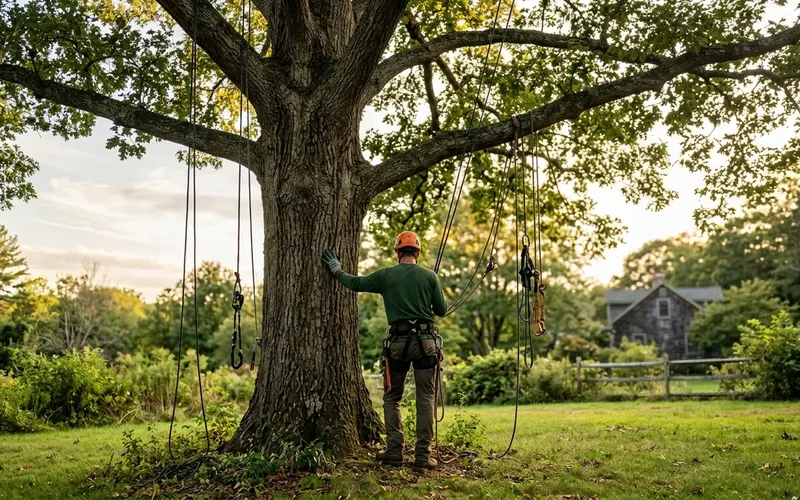
An ISA Certified Arborist has at least 3 years of tree care experience, passed a 200-question exam and keeps up with continuing education. Hire one for large-tree pruning, risk checks, removal decisions and sick trees.
October 26, 2026
For landscape pros
Claim your free listing to keep your details right, add photos and earn the Verified badge. Not listed yet? Add your business.