
70 landscape pros in Lakeland, FL, with an average Google rating of 4.7. Listings are ranked by rating weighted by review volume, so a 4.9 from hundreds of customers ranks above a 5.0 from three.
70 pros, ranked by rating and review volume








Local guide
Lakeland yard work answers to the city for trees, watering and shorelines, and to Polk County for fertilizer. With dozens of lakes in town, most of those rules come back to keeping runoff out of the water. For zones, statewide grasses and licensing, see the Florida guide.
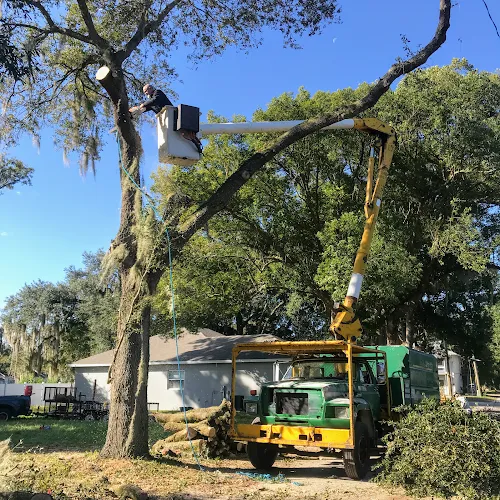
The city's urban forest page points owners to a Tree Removal Permit Application to remove a tree from residential or commercial property, whether it's dead, diseased, damaged or coming out for construction. Applications go through the Building Inspection Division (863.834.6012), which can confirm whether your tree needs one. The detailed standards are in Article 4.5 of the city's Land Development Code.
Under section 163.045 of the Florida Statutes, the owner of a single-family home who has a signed risk assessment from an ISA certified arborist or Florida-licensed landscape architect showing a tree poses an unacceptable risk needs no local permit to remove or prune it.
The city manages more than 56,000 street and park trees; private trees aren't its responsibility. Report downed limbs or trees on public property to the tree crew, [email protected] or 863.834.2233 (weekdays, 7 a.m. to 3:30 p.m.).
Polk County's fertilizer ordinance applies to unincorporated areas and to cities that hadn't adopted their own ordinance, and UF/IFAS's fertilizer ordinance map lists no municipal ordinance for Lakeland. UF/IFAS Extension Polk County's residents' guide sums up the rules:
The guide lists no summer blackout period like the ones in Tampa or Orlando. See also when to fertilize your lawn.
There are 38 named lakes within city limits, plus many smaller ones, and Lakeland's storm drains discharge directly to a lake, pond, creek or wetland, not to a treatment plant.
For lakefront lots, the city's lakeshore guidance says shoreline projects need city permits, docks and seawalls need building permits, and other agencies may require their own. All aquatic plant management is regulated by the Florida Fish and Wildlife Conservation Commission (FWC). The city encourages keeping native aquatic plants, and unpermitted work can mean restoration requirements and significant fines. Call the Lakes and Stormwater Division at 863-834-3300 before clearing a shoreline.
In normal times, Lakeland's year-round schedule allows lawn watering up to twice a week, before 10 a.m. or after 4 p.m.:
Hand watering and micro-irrigation of plants other than lawns can be done any day, at any time.
When the Southwest Florida Water Management District issues a water shortage order, the city tightens this. Under its Phase III order, for example, lawns could be watered once a week by the last digit of the address (0 or 1 Monday, through 8 or 9 Friday), and properties under an acre could use only one window: before 4 a.m. or after 8 p.m. Automatic systems need a working rain shut-off device, and violations can bring penalties up to $500. For current rules, check that page or call (863) 834-6193.
The city's rebates page lists a free sprinkler check-up for customers averaging at least 14,000 gallons a month with 12 months of history, and a rebate for switching to a WaterSense-labeled smart controller (email [email protected]). See drip irrigation vs. sprinklers.
UF/IFAS Extension Polk County says plant-damaging cold reaches the area every couple of years. Use frost cloth and bring containers inside. Leave damaged foliage until around the first of March, since it protects roots from another frost, then cut stems back to green.
The UF/IFAS Extension Polk County office is at 1702 Highway 17 South in Bartow, (863) 519-1041. Its Plant Clinic is staffed during business hours (call or text (863) 519-1057, or email [email protected]) and offers soil pH testing for a small fee. See also how to test your lawn soil.
These national ranges from our cost guides are a starting point; Lakeland quotes vary with lot size and access:
Lakeland has a Tree Removal Permit Application for removing a tree from residential or commercial property, including dead, diseased or damaged trees and trees removed for construction. Applications go through the city's Building Inspection Division, which you can reach at 863.834.6012 to confirm whether your tree needs one. Under state law, a single-family homeowner with a signed risk assessment from an ISA certified arborist or Florida-licensed landscape architect showing the tree poses an unacceptable risk needs no local permit.
Polk County's fertilizer ordinance applies in cities that haven't adopted their own, and UF/IFAS lists no city ordinance for Lakeland. The county bans fertilizer within 10 feet of any waterbody or wetland and limits nitrogen to 1 pound of slow-release or 0.5 pound of water-soluble nitrogen per 1,000 square feet per application. It also bars nitrogen or phosphorus during severe weather, when more than 2 inches of rain is likely within 24 hours, and for 30 days after new sod or seed.
In normal times, even addresses may water lawns on Thursday and/or Sunday and odd addresses on Wednesday and/or Saturday, before 10 a.m. or after 4 p.m. When the Southwest Florida Water Management District declares a water shortage, the city can drop to one day a week with shorter hours, so check the city's irrigation page or call (863) 834-6193 for the current rules. Hand watering of plants other than lawns is allowed any day.
The city requires permits for shoreline projects, and building permits for docks and seawalls. All aquatic plant management is regulated by the Florida Fish and Wildlife Conservation Commission, and other agencies may require their own permits. Call the city's Lakes and Stormwater Division at 863-834-3300 before starting, since unpermitted work can lead to restoration requirements and fines.
Lakeland Water Utilities offers a free sprinkler system check-up for customers who average at least 14,000 gallons a month and have 12 months of usage history at the address. It also has a rebate for replacing a standard controller with a WaterSense-labeled smart controller. Email [email protected] or call (863) 834-6193 for details.
UF/IFAS Extension Polk County, at 1702 Highway 17 South in Bartow, runs a Plant Clinic staffed by Master Gardener volunteers during business hours. You can call or text (863) 519-1057 or email [email protected], and the office offers soil pH testing for a small fee.
Other cities in Florida
More landscape pros in the area
Guides
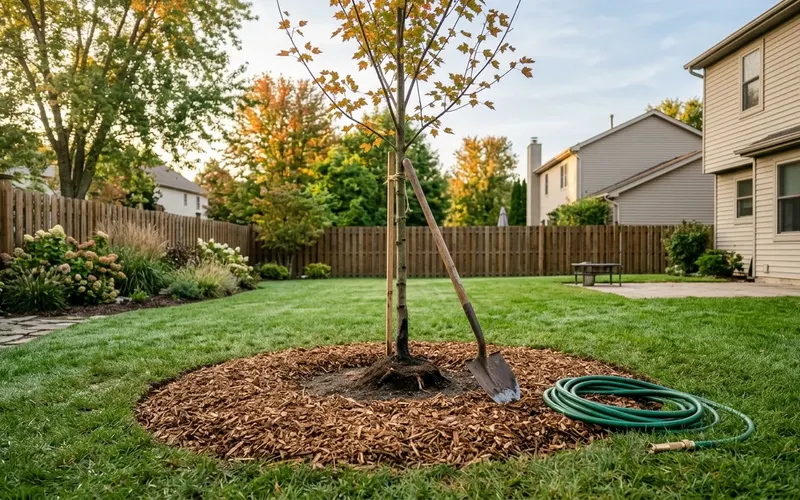
Plant in fall after leaf drop or in early spring before bud break. Dig a hole 2 to 3 times wider than the root ball but no deeper, set the root flare at or just above grade, backfill with the soil you dug out, water well and mulch 2 to 3 inches deep without touching the trunk.
October 30, 2026
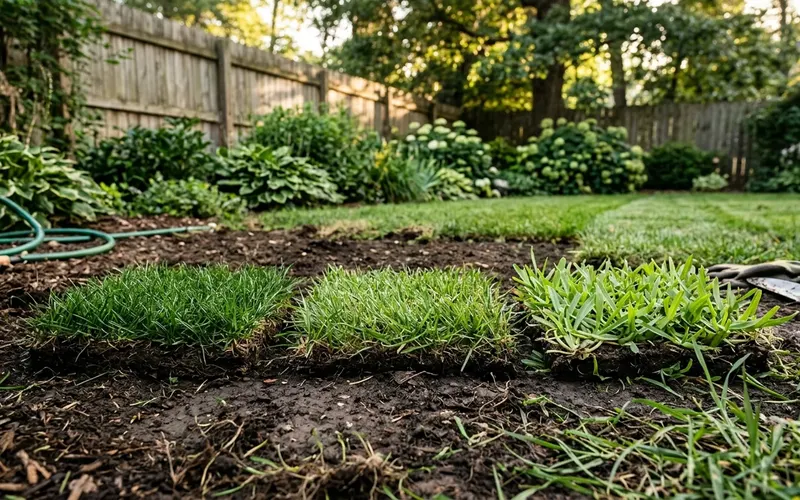
Lawn grasses are cool-season (Kentucky bluegrass, tall fescue, perennial ryegrass, fine fescue) for the North or warm-season (Bermuda, zoysia, St. Augustine, centipede, bahia, buffalograss) for the South. Pick by region first, then by sun, traffic and water.
October 28, 2026
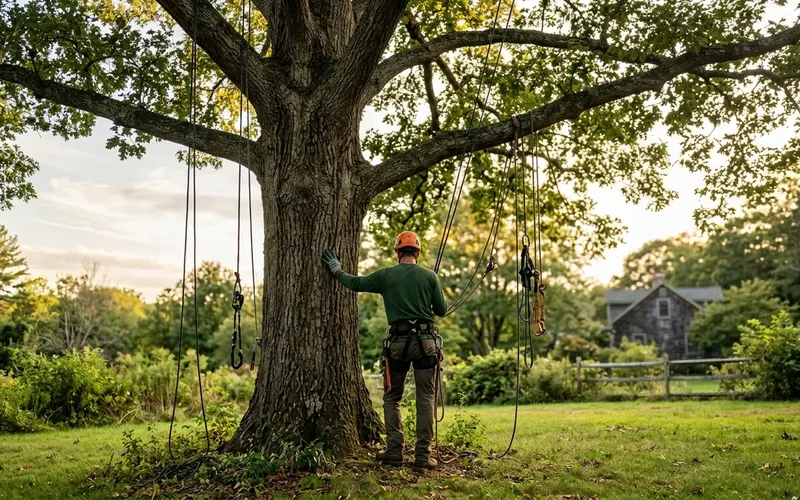
An ISA Certified Arborist has at least 3 years of tree care experience, passed a 200-question exam and keeps up with continuing education. Hire one for large-tree pruning, risk checks, removal decisions and sick trees.
October 26, 2026
For landscape pros
Claim your free listing to keep your details right, add photos and earn the Verified badge. Not listed yet? Add your business.