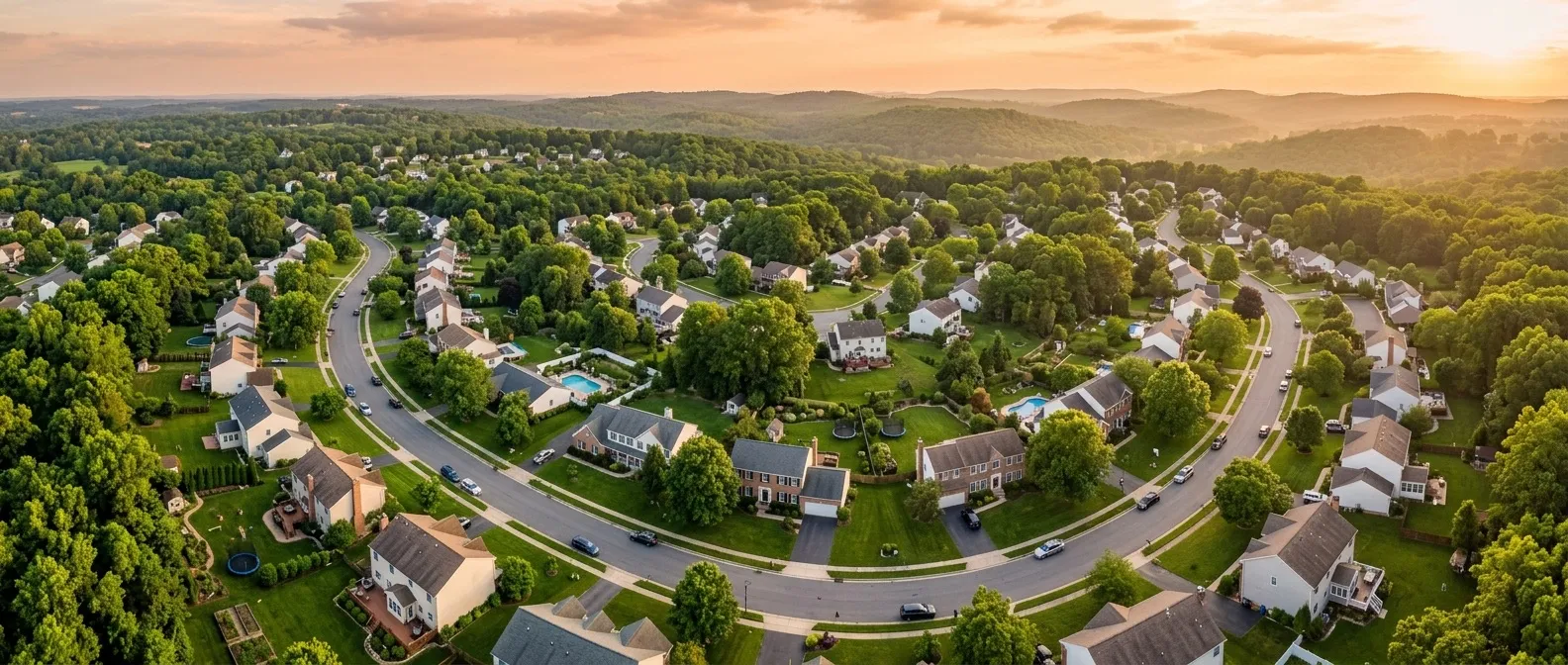
53 landscape pros in Sanford, FL, with an average Google rating of 4.6. Listings are ranked by rating weighted by review volume, so a 4.9 from hundreds of customers ranks above a 5.0 from three.
53 pros, ranked by rating and review volume













Local guide
Sanford sets its own rules for trees, historic districts and watering, follows Seminole County's fertilizer ordinance, and adds shoreline and flood zone rules near Lake Monroe. For statewide topics such as lawn grasses and licensing, see the Florida guide.
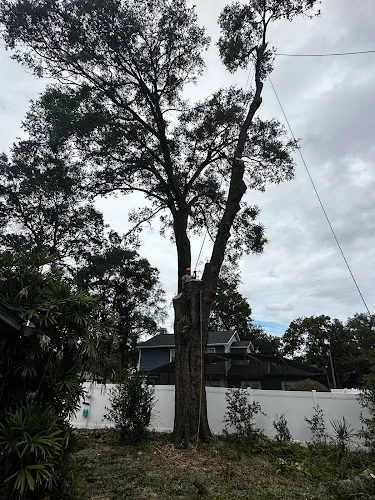
The city's planning FAQ says an Arbor Permit is required before you cut down, remove, relocate or damage any living tree. A "tree" is any woody plant that normally grows at least 15 feet tall, usually with a single trunk. The application goes to Planning and Development Services, 407.688.5140, and the city's posted fee schedule lists no fee for single-family homes.
Under the city's Schedule J:
State law lets a homeowner skip local approval when an ISA certified arborist or Florida-licensed landscape architect documents that a tree poses an unacceptable risk; see the Florida guide.
Planting or removing a tree in the public right-of-way needs a separate right-of-way utilization permit under Schedule J. The city's right-of-way trimming clears canopies to 17 feet over streets and 9 feet over sidewalks.
The city asks residents to trim early in the season and stop once a storm warning is issued, since trucks pull off the roads and curbside branch piles become projectiles. Clippings blown into the street clog storm drains and flood streets, so aim the mower chute at the lawn.
In Sanford's Downtown Commercial, Sanford Residential and Sanford Avenue historic districts, any exterior work, including site work, needs a Certificate of Appropriateness (COA) first. In the Georgetown district, only demolition and new construction do. The city's Schedule S sets the yard rules:
Seminole County's FAQ says Sanford has adopted the county's fertilizer ordinance. Its rules:
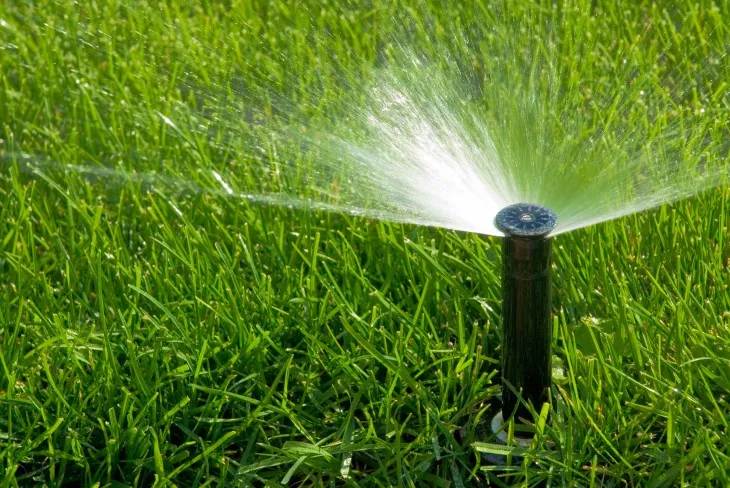
The city has adopted the St. Johns River Water Management District's schedule: two days a week during daylight saving time, one in winter, by odd or even address, never between 10 a.m. and 4 p.m. The Orlando guide lists the days. The rules cover private wells, and new irrigation systems need rain sensors. A district water shortage order can cut watering to one day a week.
The city's watering brochure adds:
Reclaimed water costs less than drinking water. Call 407.688.5100 with questions.
Sanford's environmentally sensitive lands rules set a shoreline protection zone on lakefronts reaching 50 feet landward of the water's edge, where only passive recreation is allowed. Exemptions include a cleared boat or swimming corridor (up to 15 feet wide in the water, 25 feet on land), footpaths up to 4 feet wide, and fences that need no fill.
In a mapped flood zone, the city says any development, filling or excavating needs a Floodplain Development Permit, and the water management district, the state and the Army Corps of Engineers may add requirements.
The UF/IFAS Extension Seminole County office is at 250 W. County Home Road in Sanford, (407) 665-5560. Its Master Gardener help desk (407-665-5550, [email protected]) identifies plants, bugs, weeds and diseases. A soil pH test costs $2, run on Thursdays with results within a week; full nutrient tests go to the UF/IFAS lab in Gainesville. See how to test your lawn soil.
Quotes vary with lot size, access and the work. These national ranges from our cost guides are a starting point:
Yes. The city requires an Arbor Permit from Planning and Development Services before you cut down, remove, relocate or damage any living tree, meaning a woody plant that normally grows at least 15 feet tall. The city's fee schedule lists no fee for single-family homes, and the city can require replacement trees. Some species, such as camphor, Chinese tallow and Brazilian pepper, are exempt.
Chain link and vinyl fences are prohibited in the city's historic districts. In the Downtown Commercial, Sanford Residential and Sanford Avenue districts, any exterior work, including a new, replaced or modified fence, needs a Certificate of Appropriateness before it starts. The city's design rules call for simple vertical pickets on front-yard fences, with gaps of no more than 3 inches.
Sanford has adopted Seminole County's fertilizer ordinance, so no fertilizer with nitrogen or phosphorus may be applied from June 1 to September 30. From October 1 to May 31, at least 65% of the nitrogen must be slow-release, and phosphorus is banned unless a UF/IFAS-approved soil test shows a deficiency. Keep all fertilizer at least 15 feet from ponds, lakes, canals, streams and wetlands.
Sanford follows the St. Johns River Water Management District schedule: two days a week during daylight saving time and one day a week in winter, based on whether your address is odd or even, and never between 10 a.m. and 4 p.m. Homes on reclaimed water can irrigate three days a week year-round, with the same 10 a.m. to 4 p.m. ban. New lawns and landscaping are exempt for the first 30 days.
The city issues a warning for a first violation. Further violations bring fines of $25, $50, $75 and then $100, added to the utility bill, and repeat violations after that go to code enforcement. The rules also apply to private wells and pumps.
The UF/IFAS Extension Seminole County office is at 250 W. County Home Road in Sanford. Its Master Gardener help desk runs a soil pH test for $2 per sample, with testing on Thursdays and results within a week. Full nutrient tests are sent to the UF/IFAS soil testing lab in Gainesville.
Other cities in Florida
More landscape pros in the area
Guides

Plant in fall after leaf drop or in early spring before bud break. Dig a hole 2 to 3 times wider than the root ball but no deeper, set the root flare at or just above grade, backfill with the soil you dug out, water well and mulch 2 to 3 inches deep without touching the trunk.
October 30, 2026

Lawn grasses are cool-season (Kentucky bluegrass, tall fescue, perennial ryegrass, fine fescue) for the North or warm-season (Bermuda, zoysia, St. Augustine, centipede, bahia, buffalograss) for the South. Pick by region first, then by sun, traffic and water.
October 28, 2026
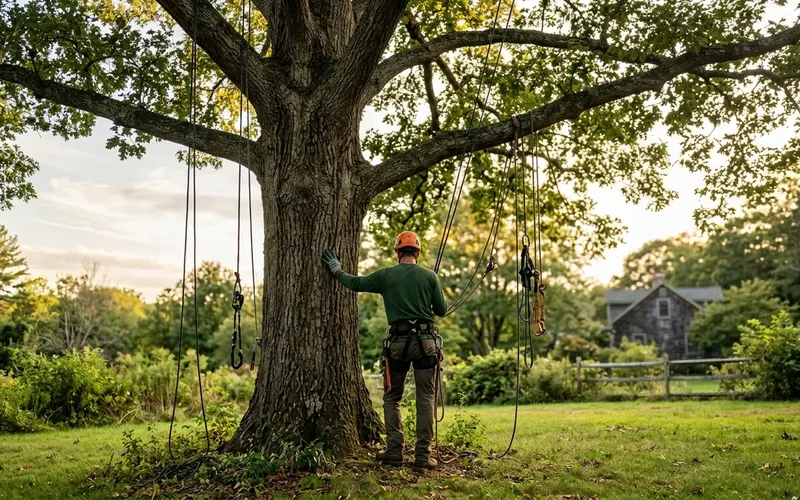
An ISA Certified Arborist has at least 3 years of tree care experience, passed a 200-question exam and keeps up with continuing education. Hire one for large-tree pruning, risk checks, removal decisions and sick trees.
October 26, 2026
For landscape pros
Claim your free listing to keep your details right, add photos and earn the Verified badge. Not listed yet? Add your business.