146 landscape pros in Savannah, GA, with an average Google rating of 4.6. Listings are ranked by rating weighted by review volume, so a 4.9 from hundreds of customers ranks above a 5.0 from three.
146 pros, ranked by rating and review volume









Local guide
Savannah sits on Georgia's Lower Coastal Plain, on ancient shorelines that the New Georgia Encyclopedia says now support Savannah, Darien and Brunswick. This guide covers sandy soil, salt, warm-season lawns, and the city's own rules for trees, tree lawns and watering. For the statewide picture, see the Georgia guide.
UGA Extension's bulletin Selecting Salt-Tolerant Native Trees for the Georgia Coast notes that many coastal soils are sandy, so they hold less water and fewer nutrients. Salt spray burns leaf margins and tips, and salty soil makes it harder for roots to draw water. Mature plants tolerate salt better than seedlings, and less tolerant plants can do well where they're protected from spray and strong wind. Drip irrigation suits plants that don't tolerate salt on their leaves.
Trees the bulletin rates high for salt tolerance include live oak, southern redcedar, cabbage palm, yaupon holly and southern waxmyrtle. Southern magnolia, red maple, river birch and flowering dogwood are rated low.
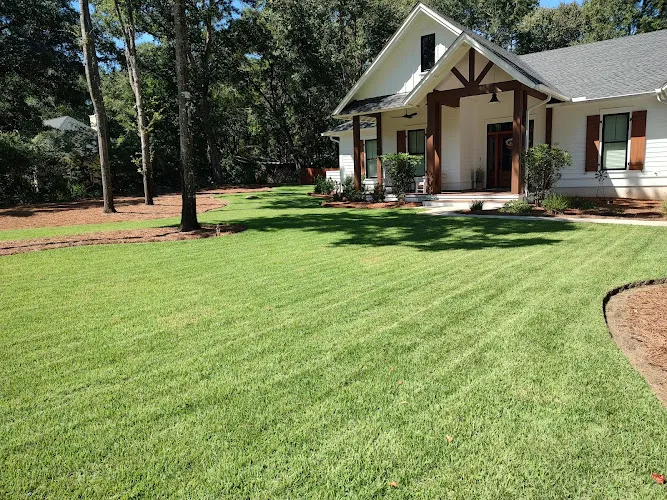
Savannah is far south of Griffin, which UGA Extension's lawn bulletin gives as the rough southern limit for tall fescue, so lawns here are warm-season grasses:
For salt, the bulletin rates bermudagrass good, zoysiagrass good to fair, and centipedegrass and St. Augustinegrass poor. Seashore paspalum suits coastal regions for its salt tolerance, but UGA doesn't recommend it for home lawns because it needs intensive management. See also when to fertilize your lawn and how much sod costs.
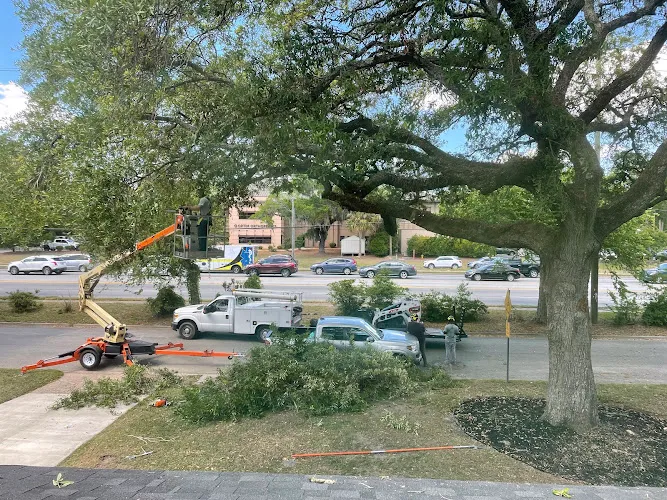
Savannah's Landscape and Tree Protection Ordinance (linked from the city's Tree Ordinance Administration page) requires a permit before trees are removed, but exempts residential lots with an existing single-family home or duplex. Two rules still matter:
A tree lawn is the strip between the curb and the sidewalk. Under the city's Tree Lawn Compliance and Policy Guide, its trees are the Park and Tree Department's exclusive jurisdiction, while the adjacent owner handles mowing, mulching and litter. Plantings must stay 36 inches tall or less; stones, gravel, planters, lawn edging and fences are prohibited, and so are herbicides. To request a tree there, call 311. Park and Tree is at (912) 651-6610. Outside city limits, check your own city or county's rules.
In the Savannah Downtown Historic District, fences and gates are a Board Review item, with a required pre-meeting, on the Metropolitan Planning Commission's Certificate of Appropriateness application. Questions go to [email protected] or 912-651-1440.
Savannah sets its own outdoor watering schedule:
The city says the Savannah area, Chatham County and southern Effingham County have a midday limit because saltwater is intruding into the Floridan Aquifer, a drinking water source. The city notes there are some exceptions. See drip irrigation vs. sprinklers.
The Chatham County UGA Extension office in Garden City (912-652-7981) offers soil and water testing and a Master Gardener help desk at [email protected]. Its page links lawn calendars for centipedegrass, zoysiagrass and St. Augustinegrass, plus the Savannah Tree Foundation's list of local arborists. See also how to test your lawn soil.
Savannah quotes vary with lot size, access and the work involved. These national ranges from our cost guides are a starting point:
Savannah's Landscape and Tree Protection Ordinance requires a permit before trees are removed, but it exempts residential lots with an existing single-family home or duplex. Trees on public property, including trees in the tree lawn between the curb and sidewalk, can't be trimmed, pruned or removed without the city's approval. The Park and Tree Department is at (912) 651-6610.
Under the City of Savannah's outdoor water schedule, even-numbered addresses water on Monday, Wednesday and Saturday, and odd-numbered addresses on Tuesday, Thursday and Sunday. There is no outdoor watering on Fridays or between 10 a.m. and 4 p.m. The city says there are some exceptions.
Under the city's Tree Lawn Compliance and Policy Guide, the adjacent property owner mows, mulches and keeps the tree lawn clean, and plantings must stay 36 inches tall or less. Stones, gravel, planters, lawn edging and fences are prohibited, and so are herbicides. Trees there are the Park and Tree Department's exclusive jurisdiction; call 311 to request one.
Savannah is far south of Griffin, which UGA Extension gives as the rough southern limit for tall fescue, so lawns are warm-season grasses. UGA rates St. Augustinegrass best adapted from the Coastal Plain to the Piedmont, and it manages with as little as 5 to 6 hours of filtered sun. Some zoysiagrass cultivars handle 4 to 4.5 hours. For salt, UGA rates bermudagrass good and zoysiagrass good to fair.
UGA Extension's bulletin on salt-tolerant native trees for the Georgia coast rates live oak, southern redcedar, cabbage palm, yaupon holly and southern waxmyrtle high for salt tolerance. Southern magnolia, red maple, river birch and flowering dogwood are rated low. Less tolerant plants can do well where they're protected from salt spray and strong wind.
In the Savannah Downtown Historic District, fences and gates are a Board Review item, with a required pre-meeting, on the Metropolitan Planning Commission's Certificate of Appropriateness application. Questions go to [email protected] or 912-651-1440.
Other cities in Georgia
More landscape pros in the area
Guides
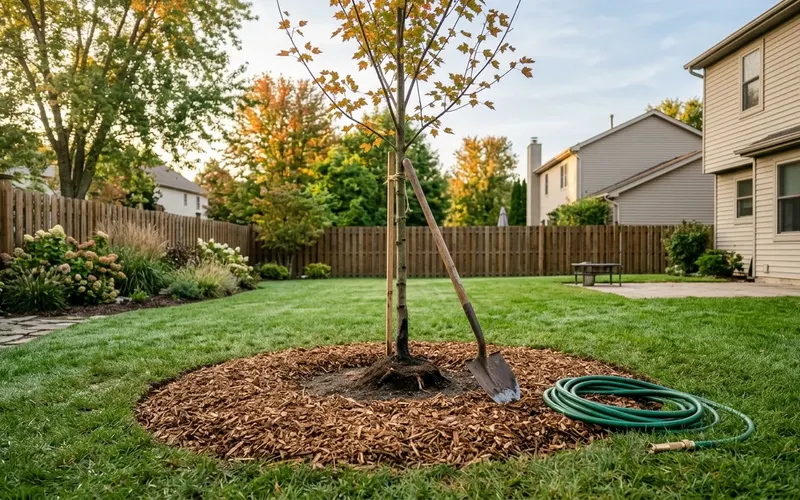
Plant in fall after leaf drop or in early spring before bud break. Dig a hole 2 to 3 times wider than the root ball but no deeper, set the root flare at or just above grade, backfill with the soil you dug out, water well and mulch 2 to 3 inches deep without touching the trunk.
October 30, 2026
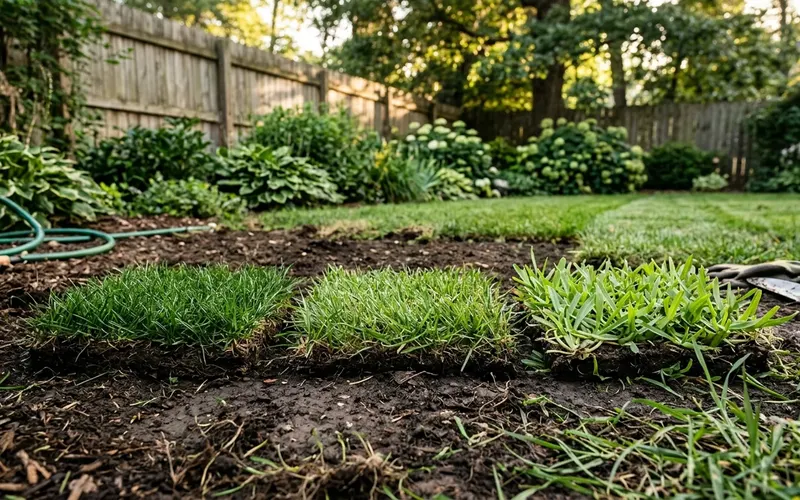
Lawn grasses are cool-season (Kentucky bluegrass, tall fescue, perennial ryegrass, fine fescue) for the North or warm-season (Bermuda, zoysia, St. Augustine, centipede, bahia, buffalograss) for the South. Pick by region first, then by sun, traffic and water.
October 28, 2026
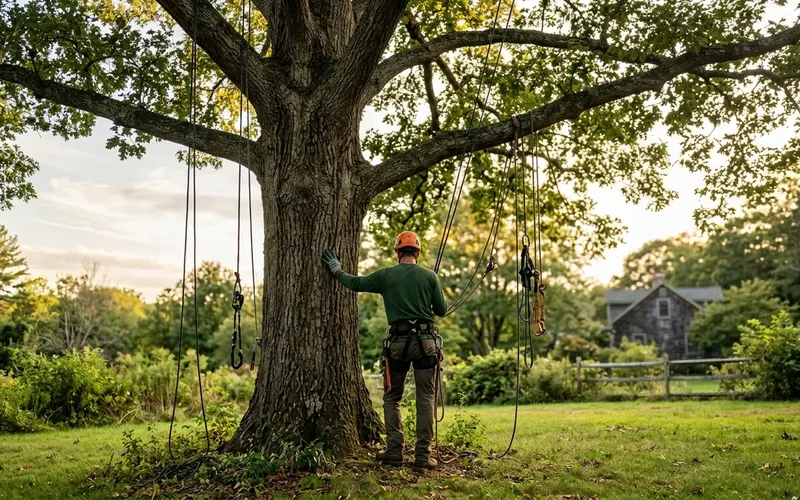
An ISA Certified Arborist has at least 3 years of tree care experience, passed a 200-question exam and keeps up with continuing education. Hire one for large-tree pruning, risk checks, removal decisions and sick trees.
October 26, 2026
For landscape pros
Claim your free listing to keep your details right, add photos and earn the Verified badge. Not listed yet? Add your business.