
160 landscape pros in Augusta, GA, with an average Google rating of 4.6. Listings are ranked by rating weighted by review volume, so a 4.9 from hundreds of customers ranks above a 5.0 from three.
160 pros, ranked by rating and review volume















Local guide
Augusta sits on Georgia's fall line, where Piedmont clay gives way to Coastal Plain sand, so the soil under one yard can differ from the next. This guide covers that, the city's tree rules, watering and yard waste, and what to check before you hire landscapers or a tree service. For the statewide picture, see the Georgia guide.
The New Georgia Encyclopedia describes the fall line as a boundary about twenty miles wide running from Columbus to Augusta, with sandy soils to the south and clay to the north.
Sandhills are also found on the fall line, with nutrient-poor quartz sand "extremely low in water-holding capacity." In practice:
UGA Extension's Richmond County office, at 501 Greene Street, sends soil samples to the UGA lab in Athens for $8.00 per routine S1 test (pH, lime and nutrients), with results in about 7 to 10 business days. It also diagnoses plant problems from photos emailed to [email protected]. See our guide to lawn soil tests.
Fall lawn advice from Campbell Vaughn, the county's Extension coordinator, in a UGA article:
The city's Illustrated Guide to Implementing the Augusta Tree Ordinance, from the Planning & Development Department, sets the standards:
The Tree Commission reviews variances, appeals and landmark petitions. Planning & Development is at (706) 821-1796.
The guide's recommended trees are hardy for zone 8 (check your ZIP on the USDA map). Its list of trees not recommended for Augusta includes Bradford pear (splits apart, invasive), Leyland cypress (canker-related dieback), silver maple and box elder (shallow roots, weak wood), water oak, mimosa and all ash trees (emerald ash borer). Worried about an older tree? See signs a tree is dying.
During drought responses, Augusta Utilities has recommended landscape watering between 4 p.m. and 10 a.m. daily, and only when necessary. New plants, seed or turf (for 30 days), drip irrigation, soaker hoses, food gardens and hand watering with a shutoff nozzle are exempt. Call 706-821-2300 for current rules.
Augusta's yard waste rules matter if your landscaper leaves debris at the curb:
Ask lawn care services and tree service crews whether hauling debris away is in the quote.
Augusta quotes vary with lot size, soil, slope and access. These national ranges from our cost guides are a starting point:
Under the city's Illustrated Guide to Implementing the Augusta Tree Ordinance, every removal of a street tree requires a Tree Disturbance Permit, and whoever does the removal must meet the ordinance's insurance and bonding requirements. Land being developed must also keep or plant at least 30 percent tree canopy. For questions, call Augusta Planning & Development at (706) 821-1796.
During drought responses, Augusta Utilities has recommended landscape watering between 4 p.m. and 10 a.m. daily, and only when necessary. New plants, seed or turf (for 30 days), drip irrigation, soaker hoses, food gardens and hand watering with a shutoff nozzle are exempt. Call Augusta Utilities at 706-821-2300 for current rules.
Use paper Kraft bags or 32-gallon open-top containers marked YARD WASTE, never plastic bags. No item can be longer than 5 feet, and bundles can be tied with string or twine. The limit is 10 cubic yards a week, in a single row or pile no longer than 10 feet, at the curb by 6 a.m. on your service day. Non-compliant piles are collected for an extra charge.
The UGA Extension Richmond County office at 501 Greene Street accepts soil samples and sends them to the UGA lab in Athens. A routine S1 test, which covers pH, lime and nutrients, costs $8.00 per sample, and results take about 7 to 10 business days. The office also diagnoses plant problems from emailed photos.
Augusta is on Georgia's fall line, which the New Georgia Encyclopedia describes as a boundary about twenty miles wide with sandy soils to the south and clay to the north. Sandhills are also found on the fall line, and their quartz sand is nutrient-poor and holds very little water. A soil test is a good first step before liming or fertilizing.
Augusta's tree ordinance guide lists trees not recommended for planting, including Bradford pear, Leyland cypress, silver maple, box elder, water oak, mimosa and all ash trees. Reasons it gives include splitting, weak wood, shallow roots, canker-related dieback and emerald ash borer. Its recommended trees are chosen as hardy for zone 8.
Other cities in Georgia
More landscape pros in the area
Guides
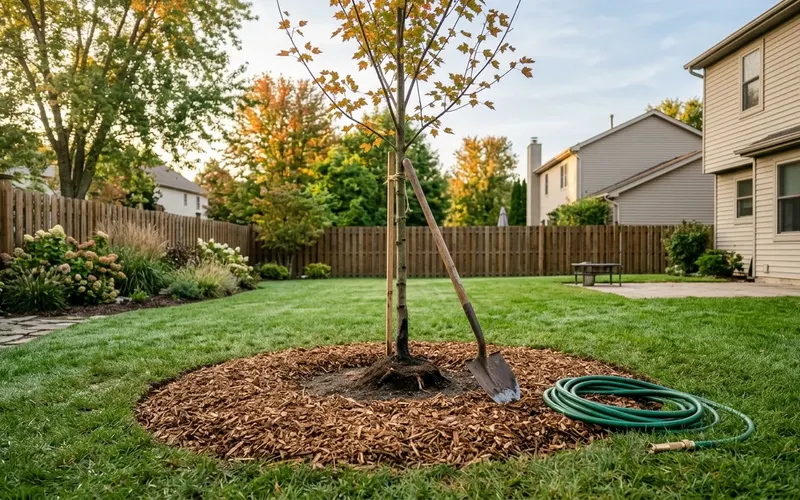
Plant in fall after leaf drop or in early spring before bud break. Dig a hole 2 to 3 times wider than the root ball but no deeper, set the root flare at or just above grade, backfill with the soil you dug out, water well and mulch 2 to 3 inches deep without touching the trunk.
October 30, 2026
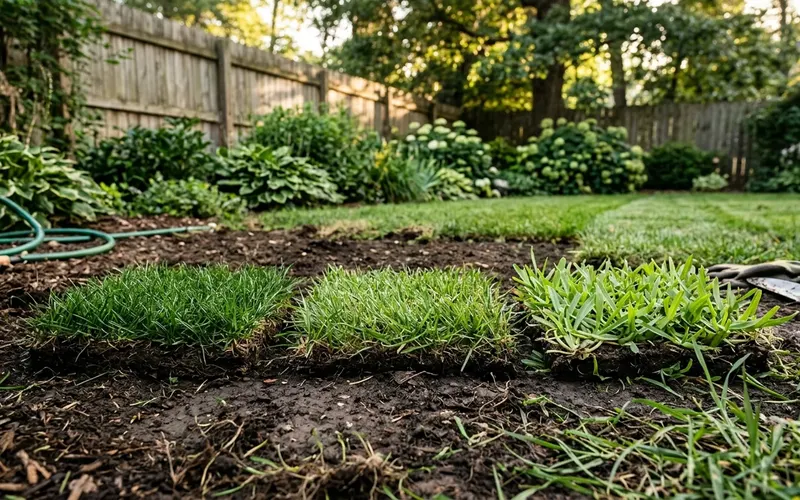
Lawn grasses are cool-season (Kentucky bluegrass, tall fescue, perennial ryegrass, fine fescue) for the North or warm-season (Bermuda, zoysia, St. Augustine, centipede, bahia, buffalograss) for the South. Pick by region first, then by sun, traffic and water.
October 28, 2026
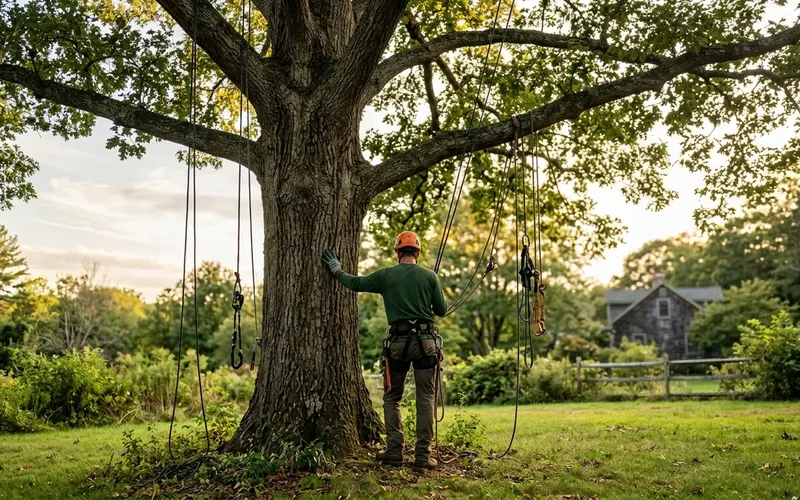
An ISA Certified Arborist has at least 3 years of tree care experience, passed a 200-question exam and keeps up with continuing education. Hire one for large-tree pruning, risk checks, removal decisions and sick trees.
October 26, 2026
For landscape pros
Claim your free listing to keep your details right, add photos and earn the Verified badge. Not listed yet? Add your business.