1,369 landscape pros in Georgia, with an average Google rating of 4.6. Listings are ranked by rating weighted by review volume, so a 4.9 from hundreds of customers ranks above a 5.0 from three.
1,369 pros, ranked by rating and review volume
















Local guide
Georgia runs from the Blue Ridge Mountains to the barrier islands, so a yard in Blairsville and a yard in Brunswick need different plants, different grass and different care. This guide covers what changes across the state: climate, soil, lawn grasses, the statewide watering rules, and what to check before you hire a pro.
The USDA Plant Hardiness Zone Map is based on the average annual extreme minimum winter temperature, which is why plant tags use it to say what survives the winter. On the USDA's updated map, GPB reported that many areas of South Georgia moved from zone 8b (15 to 20°F) to 9a (20 to 25°F), much of Middle Georgia moved from 8a (10 to 15°F) to 8b, and parts of North Georgia moved from 7b (5 to 10°F) to 8a. No part of the state moved to a colder zone.
Zones only cover winter cold. Summer heat, humidity and rainfall matter just as much in Georgia, so plant tags and a local nursery are worth checking before you buy. To find your exact zone, enter your ZIP code on the USDA map.
Georgia has three very different soil regions, according to the New Georgia Encyclopedia:
The fall line, the edge between the Piedmont and the Coastal Plain, runs through Augusta, Macon and Columbus, according to the Encyclopedia's Piedmont article. On clay lots, keep bare ground covered during projects so it doesn't wash away, and if water pools after rain, see our guide to yard drainage solutions.
UGA Extension's bulletin Lawns in Georgia: Selection and Species covers five main lawn grasses. Which one fits depends on where you live and how much sun the yard gets:
|
Grass |
Where it does best in Georgia |
Good to know |
|---|---|---|
|
Bermudagrass |
Statewide, in full sun |
Thrives in heat but typically performs poorly in shade |
|
Zoysiagrass |
Statewide |
Some cultivars hold up with as little as 4 to 4.5 hours of filtered sun a day |
|
Centipedegrass |
Best in the middle and lower state, can be grown statewide |
Avoid "decline" with proper fertilization and a 1 to 1.5 inch mowing height |
|
St. Augustinegrass |
Middle and lower Georgia |
Cold-sensitive and slow to recover after a hard winter |
|
Tall fescue |
Piedmont, roughly north of Griffin |
A cool-season grass that may need summer irrigation to stay green |
UGA puts the southern limit for tall fescue at about Griffin, although it can hang on in shaded or protected spots further south. For timing, see when to fertilize your lawn and when to aerate your lawn.
Under the non-drought outdoor water use schedule from the Georgia Environmental Protection Division (EPD), you can water lawns, trees, shrubs and other plants every day, but only between 4 p.m. and 10 a.m., if your water comes from a system permitted by EPD.
Some watering is allowed at any hour, including:
Your water provider may have its own schedule on top of this, so check with them before setting a sprinkler timer. Our guide to the best time to water your lawn covers how much to water.
Planting trees, setting fence posts, building a retaining wall or installing a sprinkler system can hit buried gas, power or water lines. Georgia 811 is free, and its guide to how it works says the homeowner or excavator should contact 811 at least three business days before digging starts. Georgia law requires notice for mechanized digging. For hand digging it isn't required by law, but Georgia 811 encourages it.
Prices depend on lot size, access, materials and the time of year, so get written quotes. As a starting point, these are the typical national ranges from our cost guides, each with its sources:
Under the state's non-drought schedule from the Georgia Environmental Protection Division, you can water plants and lawns every day between 4 p.m. and 10 a.m. New plantings are exempt during installation and for 30 days after, as are drip irrigation, soaker hoses and hand watering with a shutoff nozzle or a handheld container. Your water provider may set its own schedule too.
It depends on where you are and how much sun the yard gets. UGA Extension says bermudagrass thrives in heat but does poorly in shade, some zoysiagrass cultivars handle 4 to 4.5 hours of filtered sun, centipedegrass and St. Augustinegrass do best in the middle and lower state, and tall fescue is best adapted to the Piedmont, roughly north of Griffin.
For warm-season lawns such as bermudagrass, zoysiagrass and centipedegrass, UGA Extension's Fulton County office says May through July is the best time to seed or sod. Tall fescue is best seeded between Sept. 15 and Oct. 15, according to UGA. Trees and shrubs are usually best planted in the fall.
On the USDA's updated Plant Hardiness Zone Map, many areas of South Georgia moved from zone 8b to 9a, much of Middle Georgia from 8a to 8b, and parts of North Georgia from 7b to 8a. Enter your ZIP code on the USDA map for your exact zone.
It depends on the project, lot and season. As national starting points from our cost guides: landscaping runs about $4.50 to $17 per square foot, monthly lawn care plans about $100 to $500, and most tree removals about $385 to $1,070. Get two or three written quotes.
If the work involves mechanized digging, yes: Georgia law requires notice. Georgia 811 says to contact it at least three business days before digging starts, and the service is free. For hand digging it isn't required by law, but Georgia 811 encourages it.
Companies paid to apply pesticides on someone else's property are pesticide contractors under the Georgia Department of Agriculture, and lawn and ornamental pest control falls under its Category 24 (Ornamental and Turf Pest Control). If a company sprays weed or insect control, ask to see its Georgia license.
Guides
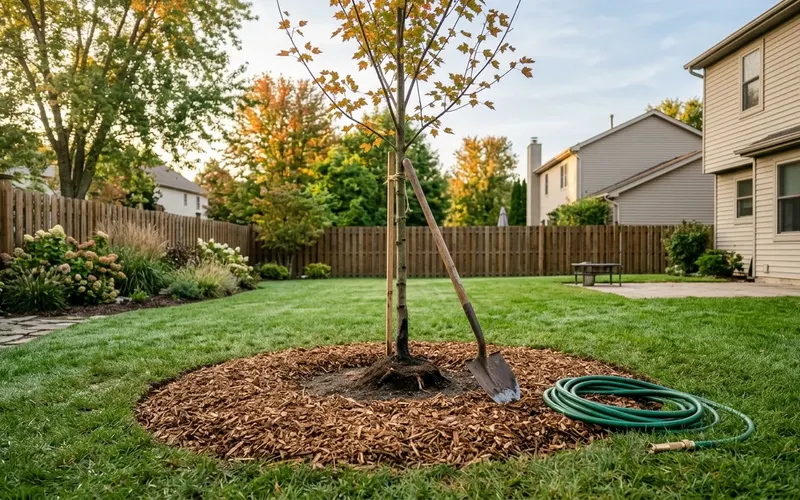
Plant in fall after leaf drop or in early spring before bud break. Dig a hole 2 to 3 times wider than the root ball but no deeper, set the root flare at or just above grade, backfill with the soil you dug out, water well and mulch 2 to 3 inches deep without touching the trunk.
October 30, 2026
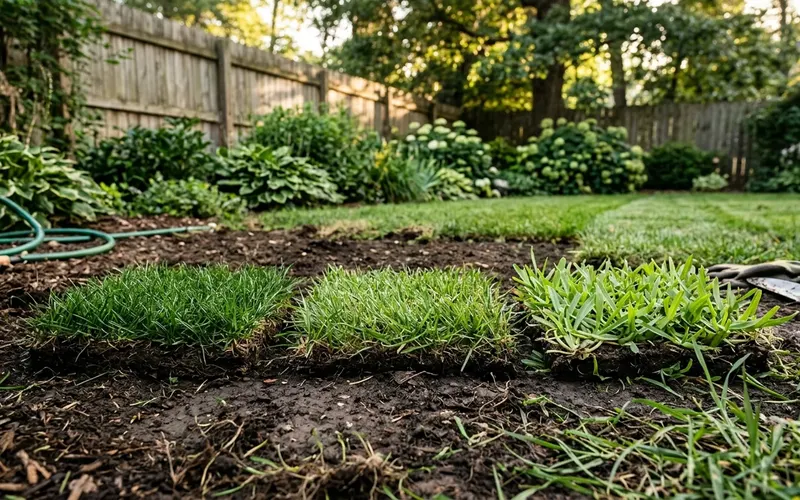
Lawn grasses are cool-season (Kentucky bluegrass, tall fescue, perennial ryegrass, fine fescue) for the North or warm-season (Bermuda, zoysia, St. Augustine, centipede, bahia, buffalograss) for the South. Pick by region first, then by sun, traffic and water.
October 28, 2026
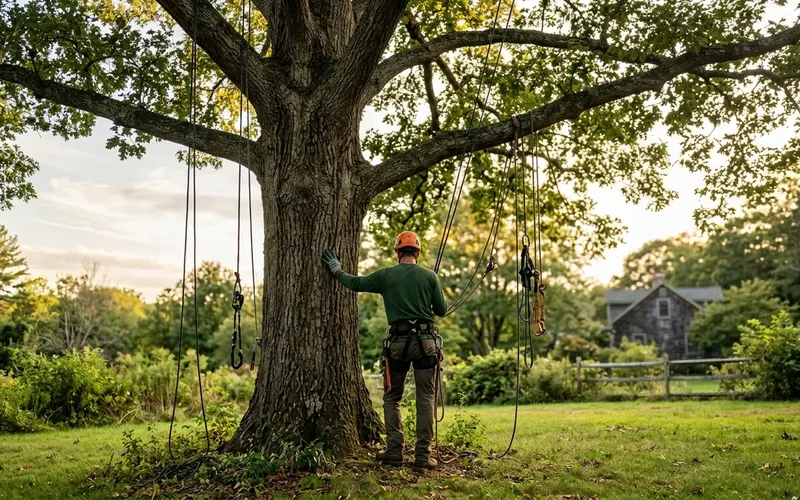
An ISA Certified Arborist has at least 3 years of tree care experience, passed a 200-question exam and keeps up with continuing education. Hire one for large-tree pruning, risk checks, removal decisions and sick trees.
October 26, 2026
For landscape pros
Claim your free listing to keep your details right, add photos and earn the Verified badge. Not listed yet? Add your business.